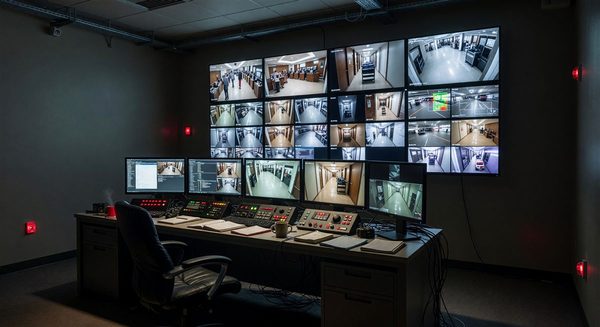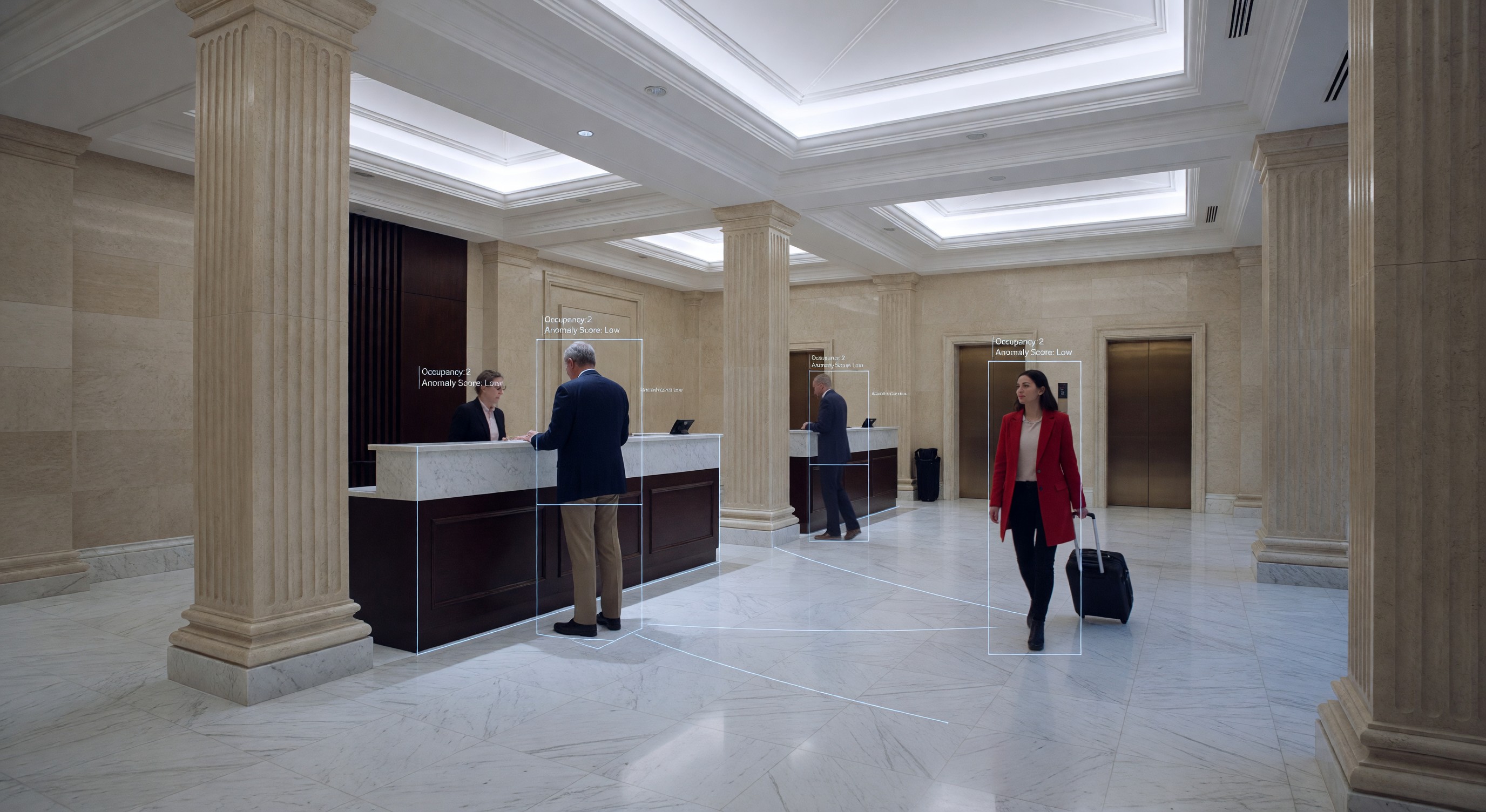
Artificial intelligence has entered the hotel security technology market aggressively. Video analytics platforms that “detect suspicious behavior,” AI-powered access control that “recognizes threat patterns,” and facial recognition systems that “identify known bad actors” are marketed to hotel security directors and facility managers at trade shows and in vendor presentations.
The reality is more nuanced. Some AI security technologies deliver genuine operational value in hotel environments. Others are solutions looking for problems that don’t quite exist in the hotel context, or products that underperform their marketing claims. Understanding the difference matters — both for making smart investments and for avoiding liability from technology that doesn’t work as advertised.
Video Analytics: The Most Deployed AI Security Application
Video analytics overlays AI analysis on CCTV footage, automating the detection of events that would otherwise require continuous human monitoring of camera feeds. For hotels, the practical applications fall into a few categories:
Crowd Density and Queue Detection
AI video analytics can accurately detect when a queue forms at the front desk, restaurant entrance, or parking pay station, and trigger alerts when queue depth exceeds a threshold. This is one of the most reliable AI video applications — it’s detecting a straightforward spatial pattern rather than inferring intent or behavior.
Practical hotel application: Lobby cameras with queue detection alert the front desk manager when the check-in queue exceeds 4 people, enabling proactive staffing response. Parking pay station cameras detect queue formation and alert when additional lanes or staffing may be needed.
Perimeter Breach Detection
AI-powered perimeter detection identifies when a person or vehicle crosses a defined virtual boundary. For hotels, applicable scenarios include:
- Detection of persons entering a restricted area (equipment room, pool area after hours)
- Vehicles stopped in a fire lane or no-parking zone
- After-hours activity in the parking structure when the lot is closed
This application is reasonably reliable in controlled conditions (good lighting, defined boundary, limited background activity) and less reliable in complex, high-traffic environments.
Object Left Behind
Detection of unattended bags or objects in lobbies and public areas. This technology is improving but still has relatively high false-positive rates in hotel environments where guests regularly leave luggage temporarily.
What Video Analytics Doesn’t Do Well in Hotels
Behavior detection: Marketing claims that AI can detect “suspicious behavior” or “pre-violent indicators” in video are significantly overstated. Human behavior recognition at the accuracy level required to avoid unacceptable false-positive rates remains a research challenge, not a deployed operational capability in commercial security products.
Cross-camera tracking: Tracking a specific individual across multiple cameras throughout a hotel as they move through the building is technically possible in controlled demonstrations but unreliable in real hotel environments with crowds, lighting changes, and camera angle variations.
Replace security staff: The most common marketing claim — that AI video analytics allows security staff reduction — is rarely validated in hotel operations. AI generates alerts that still require human review and response. The technology may change what human security staff do (respond to alerts vs. watch monitors), but doesn’t meaningfully reduce the need for security personnel.
Facial Recognition in Hotels
Facial recognition technology is the most controversial AI security application in hospitality. The technical capability exists to match faces against a database of known individuals with reasonably high accuracy under controlled conditions. The practical, ethical, and legal landscape is considerably more complex.
Privacy Regulations
The US regulatory landscape for facial recognition is fragmented and evolving:
- Illinois’ Biometric Information Privacy Act (BIPA) requires written consent before capturing biometric identifiers including facial geometry scans. Multiple states have enacted or are considering similar legislation.
- GDPR in Europe restricts biometric processing to specific legal bases, of which guest consent is the most relevant for hotel applications.
- Some municipalities (San Francisco, Portland, and others) have banned or restricted facial recognition use by private entities.
Any hotel considering facial recognition deployment must have current legal guidance specific to their jurisdiction before proceeding.
Guest Consent and Trust
Even where legally permitted, facial recognition deployment in hotels raises guest trust concerns. A hotel that deploys facial recognition without clearly disclosing it risks significant reputational harm when guests discover it — and they will discover it. The potential upside (operational convenience, security improvement) must be weighed against the trust cost.
Practical Applications
The most defensible hotel applications of facial recognition:
Guest opt-in for seamless service: Some luxury properties have piloted opt-in facial recognition for frictionless check-in and room access — guests who choose to participate can bypass the desk and access their room without any credential. The opt-in model resolves the consent issue and targets the application at guests who value the convenience.
Known-offender alert: Matching incoming guests against a database of persons with documented trespass history or other prior issues. This application is more legally defensible in some contexts but still requires careful legal review.
Our Recommendation
For most hotels, the combination of privacy complexity, regulatory risk, and guest trust implications makes facial recognition an application to approach with extreme caution. Consult legal counsel before any deployment, start with disclosed opt-in applications if proceeding, and monitor the regulatory environment in your jurisdiction.
Access Control with AI
AI-enhanced access control is a more mature category with clearer practical applications:
Anomaly detection in access events: AI analysis of the access control audit log can identify patterns that warrant investigation — a credential used to access a specific area at an unusual hour, a new employee credential being used in a high-security area for the first time, multiple failed access attempts at the same door.
This application is valuable because it processes patterns across thousands of access events that no human reviewer would identify manually. False-positive rates are manageable because the AI is flagging for human review rather than taking automated action.
Anti-tailgating detection: AI video analysis at access control points can detect when two people pass through a controlled door on a single credential authentication. This is a reliable application — the detection task is straightforward and the consequence of a false positive (a brief alert to security) is low.
Parking: AI Applications That Work
Hotel parking is an area where AI delivers clear operational value without the ethical complexity of some security applications:
License plate recognition: AI-powered optical character recognition for parking access control is a mature, reliable technology. 95%+ read accuracy on modern systems under typical conditions. This is a deployed operational technology, not a speculative capability.
Occupancy detection and guidance: AI analysis of overhead cameras can track occupied and vacant parking spaces in real time, enabling dynamic space guidance systems that direct parkers to available spaces. This reduces the circling time in large structures and improves the guest experience.
Anomaly detection: Extended dwell time alerts (a vehicle that has been stationary in the parking structure for an unusual period), anomalous vehicle presence (a van parked across multiple spaces overnight), and other pattern-based detections are reliable AI applications that genuinely help security operations.
Evaluating AI Security Claims
When evaluating any AI security technology, apply these evaluation criteria:
What is the specific task the AI is performing? Vague claims like “detects suspicious behavior” are red flags. Clear task definitions (“counts the number of people in a queue,” “reads alphanumeric characters from license plates”) are evaluable.
What’s the accuracy in your specific environment? AI accuracy claims are typically from controlled test conditions. Ask for performance data from hotel installations in conditions similar to yours (lighting, traffic patterns, camera positions).
What’s the false-positive rate and what are the consequences? High false-positive rates are manageable if the consequence is a human review alert. High false-positive rates are unacceptable if the consequence is a security intervention or guest denial of service.
What are the privacy and legal implications? Any technology that processes biometric data (faces, fingerprints, gait) requires specific legal analysis for your jurisdiction.
FAQ
Is AI video analytics worth the investment for most hotels? Queue detection for the front desk and specific perimeter applications (pool area after hours, restricted back-of-house areas) deliver clear value with manageable false-positive rates. Broader “behavior detection” applications are not yet reliable enough for production deployment in hotel environments. Focus AI investment on specific, well-defined detection tasks rather than general surveillance.
What’s the liability exposure from AI security decisions that turn out to be wrong? Significant and emerging. If a hotel denies service or takes a security action against a guest based on an AI system’s output and the output was incorrect — a false positive facial recognition match, a spurious “suspicious behavior” alert — the hotel faces both the immediate incident consequence and potential discrimination liability if the AI system has documented bias.
How do we stay current on AI security technology without being constantly sold new products? Engage with peer networks (AHLA safety and security committee, ASIS International hospitality SIG) where practitioners share real operational experience. Read trade publications that distinguish marketing claims from operational performance. Require vendor demonstrations in realistic hotel conditions before any purchase decision.
Should our physical security and IT security teams jointly evaluate AI security products? Absolutely. AI security products involve both physical security judgment (does this solve a real problem?) and IT security judgment (does this product introduce network or data security risks?). Both perspectives are required for a sound evaluation.
Further Reading from Authoritative Sources
- AHLA hotel security technology evaluation and AI deployment standards — AHLA provides hospitality industry guidance on security technology adoption, AI deployment standards, and peer benchmarking resources applicable to hotel AI security technology evaluation, deployment decision-making, and ongoing program management.
- NIST AI risk management framework and biometric technology standards — NIST provides the AI Risk Management Framework and biometric technology standards applicable to hotel AI security technology risk assessment, privacy impact evaluation, and responsible deployment guidelines for facial recognition and video analytics systems.