Hotels collect and store significant volumes of guest personal data: names, addresses, payment card numbers, government ID information, location history, behavioral preferences, and communication records. This data concentration makes hotels attractive targets for identity theft operations and payment card fraud — and creates substantial compliance and liability obligations for property management.
For facility and operations managers, guest data security is not solely an IT department function. Physical security controls — who can access server rooms, how documents are handled, how point-of-sale terminals are protected from skimming — directly affect data security outcomes. This guide addresses both the physical and organizational dimensions of hotel guest data protection.
The Hotel Data Security Landscape
Hotels handle payment card data at multiple touchpoints: online booking engines, front desk terminals, restaurant POS systems, spa booking systems, and parking payment systems. Each touchpoint must comply with PCI-DSS (Payment Card Industry Data Security Standard), the set of security requirements established by the major card brands.
PCI-DSS applies to any entity that stores, processes, or transmits cardholder data. For hotels, this typically means:
- All payment terminals must be PCI-certified devices
- Network segments handling card data must be isolated and protected
- Staff with access to cardholder data must be background-checked and trained
- Annual or quarterly vulnerability scanning and penetration testing (depending on PCI SAQ level)
- Physical security of payment terminals to prevent skimming device installation
Beyond PCI, hotels must comply with applicable privacy regulations: GDPR for guests from EU countries, CCPA for California residents, and emerging state-level privacy laws. Brand-affiliated properties often have brand-mandated data security standards that exceed regulatory minimums.
Physical Security Controls for Data Protection
The connection between physical security and data security is often underappreciated. Key physical controls:
Server room and network closet access: Wherever servers, network switches, and communication infrastructure are housed, access must be restricted to authorized personnel only. Card-access or keyed entry with access logs, combined with video surveillance, is standard. Uncontrolled access to network infrastructure allows unauthorized device installation — a common technique for network-based data theft.
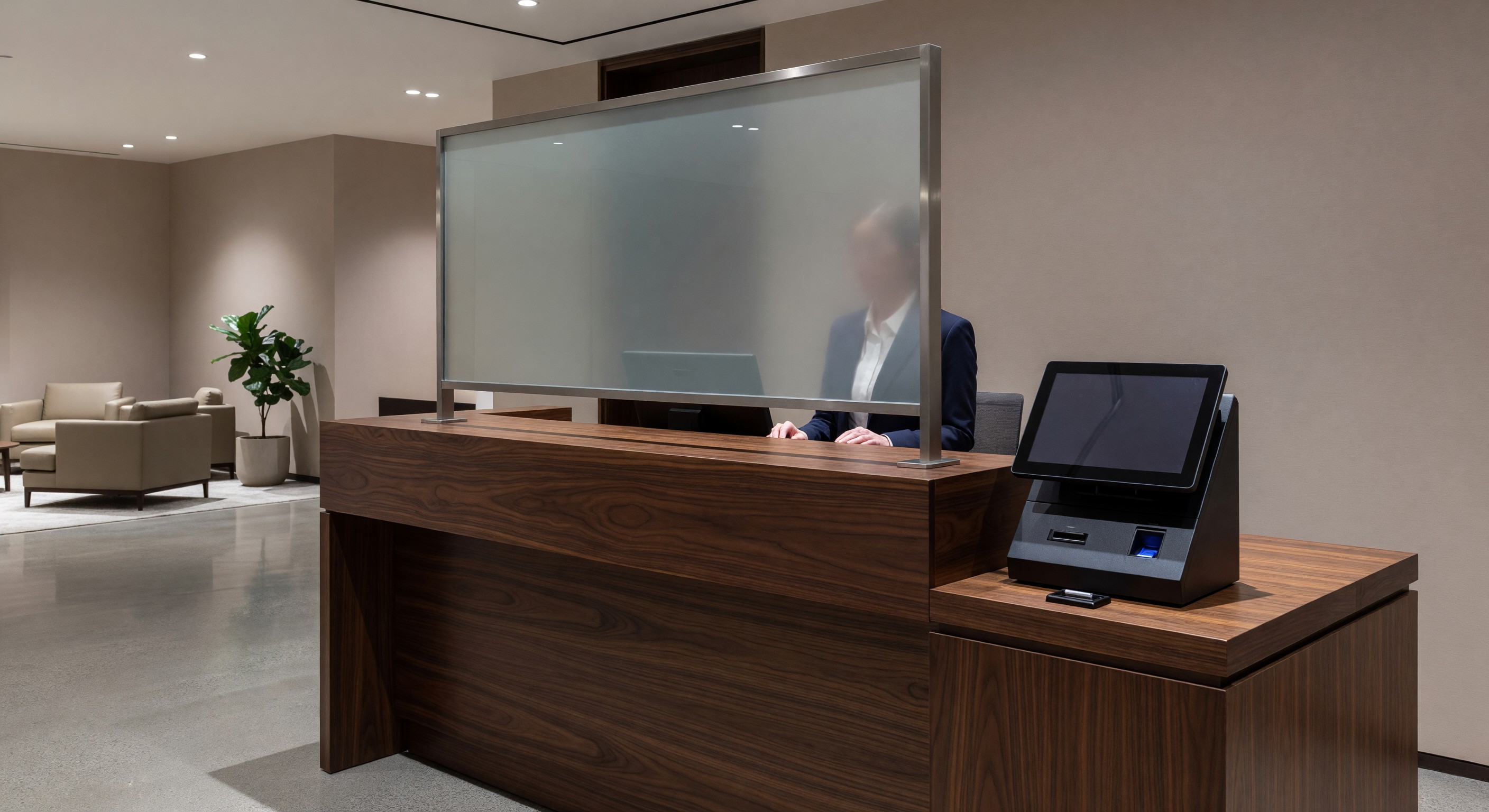
Point-of-sale terminal security: Payment terminals at front desk, restaurant, and bar are targets for physical skimming devices. Staff should be trained to inspect terminals daily for signs of tampering (loose components, unexpected attachments, damaged housing) and to report any suspicious findings immediately. Terminals should be positioned to prevent guests from having unsupervised access to the card reader or PIN pad.
Document handling: Paper-based check-in records, registration cards, and any document containing guest personal information must be securely stored and shredded when no longer needed. Unsecured recycling bins or dumpsters containing guest information are a data breach risk that has generated significant regulatory penalties.
Printed materials: Folio printouts, welcome letters with reservation details, and any materials containing guest information should not be left in publicly accessible areas. At check-in, folios should be enclosed in key envelopes or handled discreetly.
Staff workstation security: Front desk terminals should auto-lock after brief inactivity periods. Shared login credentials — a common shortcut at busy hotels — prevent accountability tracing if a data incident occurs. Individual credentials with role-based access controls are the security standard.
Network Architecture for Guest Data Protection
Hotels operate multiple network environments: the hotel’s operational network (PMS, point-of-sale, building systems), the guest WiFi network, and the payment card network (or cardholder data environment). Proper network segmentation prevents guest devices or attackers who gain access to the guest network from reaching the hotel’s operational systems or cardholder data environment.
Key architectural requirements:
- Guest WiFi must be completely isolated from hotel operational networks
- Cardholder data environment must be segmented from all other hotel networks
- Firewall rules must restrict traffic between network zones to the minimum required
- Remote access to hotel systems must use VPN with multi-factor authentication
Guest-facing WiFi should use a captive portal with terms of service acceptance, bandwidth management, and logging capability for law enforcement cooperation if needed.
Staff Training and Access Controls
The majority of data security incidents involve insider error or insider threat — not external attackers. Prevention requires:
Role-based access: Staff should only access the systems and data their role requires. A housekeeping supervisor does not need access to guest payment history; a restaurant server does not need access to room occupancy records. PMS and other systems should be configured to enforce these limits.
Data handling training: At minimum, all staff with access to guest data should understand: what data they’re allowed to access, how to handle and protect paper documents, how to recognize phishing attempts (a primary vector for credential theft), and how to report suspected data incidents.
Incident response protocol: Every hotel should have a documented process for what to do when a data incident is suspected. The protocol should cover who to notify (internal chain of command, brand IT security contacts, legal counsel), how to preserve evidence, and when regulatory notification is required (GDPR and many US state laws require breach notification within 72 hours in some cases).
PCI Compliance Practical Steps
For most limited-service and select-service hotels, PCI compliance centers on:
- Using only PCI-certified payment terminals and processing via a compliant payment gateway
- Annual completion of the appropriate Self-Assessment Questionnaire (SAQ A or SAQ B+ for most hotel configurations)
- Running network vulnerability scans quarterly (required for SAQ A-EP, B-IP, and C configurations)
- Maintaining a payment card security policy and conducting annual staff training
- Controlling physical access to payment terminals
Engage your payment processor for guidance on which SAQ applies to your configuration and what specific controls are required. Processors are motivated to help properties achieve compliance because they bear financial liability for processor-related breaches.
Frequently Asked Questions
Is a hotel required to comply with GDPR if it’s located in the United States? Yes, if the hotel markets to or accepts bookings from EU residents. GDPR applies based on the data subject’s location, not the business’s location. Hotels with OTA bookings from EU guests, EU marketing programs, or EU corporate accounts should consult legal counsel on GDPR obligations, which include privacy notices, data subject rights, lawful basis for data processing, and breach notification requirements.
What should hotels do if they discover a payment card breach? Immediately: contain the suspected breach (take affected terminals offline), notify the hotel’s acquiring bank and brand IT security, preserve all logs and evidence, and engage legal counsel familiar with data breach response. Regulatory notification timelines vary — some state laws require notification within 30–90 days of discovery, and GDPR requires notification within 72 hours if applicable. Do not conduct forensic investigation with internal staff — engage a PCI forensic investigator (PFI) to preserve investigation integrity.
How can hotels prevent payment terminal skimming? Use tamper-evident terminal mounting (secured to counter, not loose on counter). Train staff to perform daily visual inspection of terminals. Enable point-to-point encryption (P2PE) — this approach encrypts card data at the terminal before any hotel system can access it, eliminating most skimming value. Periodically replace terminals on the manufacturer’s recommended cycle.
What are the most common hotel data breach causes? Based on hospitality sector breach data: phishing attacks that capture staff credentials (most common), third-party vendor compromises (POS system providers, booking engines), malware on POS systems installed via phishing or remote access exploits, and physical skimming of payment terminals. All of these are addressable through the controls described in this article.
Further Reading from Authoritative Sources
- AHLA hotel data security and guest privacy resources — AHLA provides hospitality industry research on guest data security practices, PCI compliance guidance for hotel operations, and privacy program standards applicable to hotel data protection program development.
- NIST cybersecurity framework and data protection standards — NIST provides the Cybersecurity Framework and data protection guidance applicable to hotel network security architecture, incident response planning, and data security program development.