Hotels present unique emergency preparedness challenges. Properties house hundreds of guests — many of them unfamiliar with the building layout — alongside staff operating across multiple departments with varying training levels. Guests may be sleeping, showering, or impaired. International visitors may not understand English-language instructions. The transient nature of hotel occupancy means the faces in the building change every night.
For facility managers and directors of engineering, emergency preparedness is as much a physical systems responsibility as it is a training and protocol challenge. The fire alarm panels, emergency lighting, exit signage, elevator recall systems, and communication infrastructure must perform flawlessly when conditions are worst. This guide addresses both the physical systems and the planning frameworks that support effective emergency response.
The Emergency Planning Foundation
Every hotel should maintain a written Emergency Action Plan (EAP) that is reviewed annually and updated whenever physical conditions change (renovations, system upgrades) or after any incident that revealed gaps. The EAP should address at minimum:
- Fire and fire evacuation
- Medical emergencies
- Severe weather (tornado, hurricane, blizzard depending on geography)
- Active shooter/active threat
- Power outage and backup power
- Flooding (both from weather and internal water damage)
- Utility failures (gas leak, HVAC failure, water system failure)
- Bomb threat/suspicious package
- Civil disturbance
- Death in the facility
For each scenario, the EAP should specify: who is in command, who calls 911, who accounts for guests, who communicates with emergency services, and what actions each department takes.
Fire Safety Systems and Facility Manager Responsibilities
The facility manager owns the mechanical reliability of all life-safety systems. This encompasses:
Fire alarm systems: NFPA 72 governs installation and testing requirements. Annual inspection by a licensed fire alarm contractor is required by virtually every jurisdiction. Facility managers should understand how to navigate the fire alarm panel — acknowledge, silence, reset — and should be the designated point of contact for the monitoring service.
Sprinkler systems: NFPA 25 governs inspection, testing, and maintenance. Quarterly visual inspections, annual inspector’s test, and 5-year obstruction investigation are baseline requirements. The facility manager must know how to isolate the system to individual floors or zones in emergency situations.
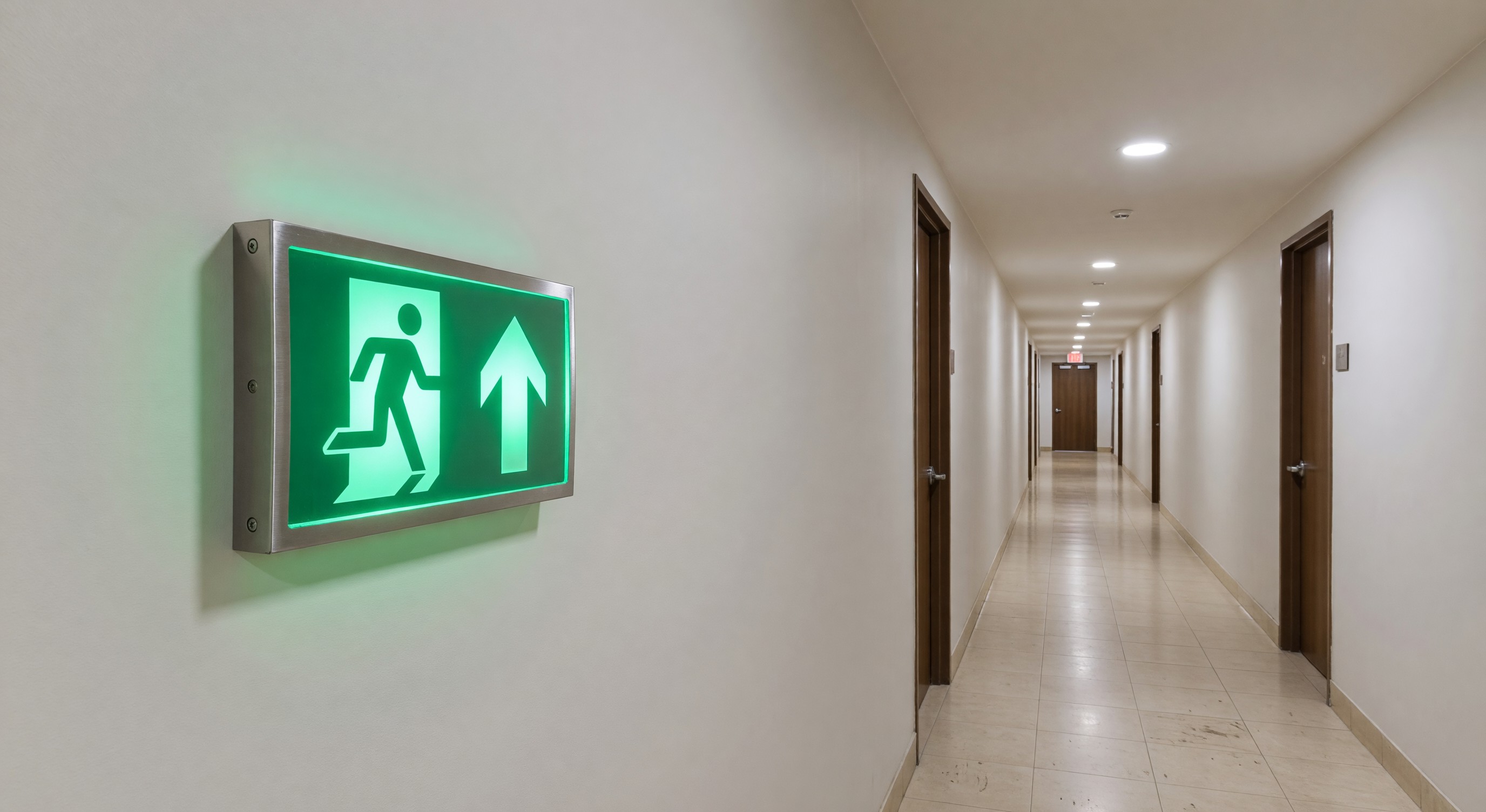
Emergency lighting and exit signs: Monthly 30-second functional tests and annual 90-minute full-duration tests are required by NFPA 101. Many properties use self-testing emergency lights that log results automatically, simplifying compliance documentation.
Elevator emergency recall: All elevators must recall to the designated floor on fire alarm activation. Monthly testing of Phase I and Phase II recall is required and must be documented. Elevator recall failures during an actual fire are catastrophic — both operationally and from a liability perspective.
Generator and emergency power: Life-safety loads (emergency lighting, fire alarm, elevator recall, exit signs, fire pump) must transfer to emergency power within 10 seconds of loss of normal power. Test the generator monthly under load and conduct annual full-transfer testing with load bank or actual load.
Evacuation Planning
Evacuation of a 200-room hotel with 350 guests and staff requires coordination that must be practiced, not improvised. Key elements:
Assembly points: Establish primary and secondary assembly areas that are far enough from the building to be safe from fire exposure (minimum 100 feet, farther for high-rises) but accessible enough for emergency responders to account for guests. Mark assembly areas with permanent signage if possible.
Guest room accountability: Most hotels cannot conduct a guest-by-guest roll call in an emergency. The most practical approach is a two-stage process: first, evacuate the building; second, attempt to account for registered guests using the PMS occupancy report once assembly is achieved.
Staff roles: Designate specific evacuation duties for each department. Front desk: capture PMS occupancy report, man the assembly point, communicate with fire department. Engineering: shut off gas if directed by fire department, meet fire department at the fire panel, operate manual door releases. Housekeeping: report to supervising department head, check occupied rooms during orderly evacuation if safe to do so.
Non-ambulatory guests: Every hotel should have a process for identifying guests who may need evacuation assistance (ADA accommodation requests, mobility equipment stored in front desk records) and pre-assigning staff to assist them. Areas of rescue assistance (stairwell landings with two-way communication) must be maintained functional and accessible.
Active Threat Response
Since the 2017 Las Vegas shooting, hotels have significantly increased active threat training. CISA’s Run/Hide/Fight framework remains the standard civilian response guidance. Facility-level considerations include:
- Interior door locks: Guest rooms equipped with deadbolts provide ballistic and forced-entry resistance. Public spaces with manual lockdown capability (ballrooms, meeting rooms) should be identified.
- Communication: Ability to lock down the building and communicate with guests via PA system (if equipped) or front desk phone calls to occupied rooms.
- Staff training: Annual active shooter awareness training, ideally ALICE or comparable methodology, for all public-facing staff.
- Law enforcement liaison: Pre-establish a relationship with the local police department. Many departments offer free facility walk-throughs and will pre-position floor plans in their dispatch systems.
Medical Emergency Response
Hotels should maintain AEDs (automated external defibrillators) in accessible locations — typically front desk, fitness center, pool area, and any large event spaces. AEDs are only valuable if staff are trained to use them. Require CPR/AED certification for all security staff, front desk managers, and engineering supervisors, with annual recertification.
Establish clear protocols for cardiac events, falls with suspected injury, guest unresponsiveness, and alcohol or drug emergencies. The protocol hierarchy should always prioritize calling 911 before attempting any treatment beyond immediate life-saving measures (CPR, AED).
Severe Weather Protocols
Geographic risk determines which severe weather scenarios need detailed protocols. Properties in tornado zones should designate interior ground-floor shelter areas (interior corridors away from exterior walls and windows), with clear communication plans for notifying guests when shelter in place is required. Hurricane-zone properties may have multi-day lockout or evacuation scenarios that require coordination with local emergency management.
Drills and Training
Tabletop exercises — scenario walkthroughs conducted in a conference room — are the most efficient training format for senior staff and department heads. Full evacuation drills should occur at least annually, with documentation of participation, timing, and lessons learned. After-action reviews following drills or actual incidents generate the improvements that keep plans effective.
Frequently Asked Questions
How often should hotels conduct fire drills? Most jurisdictions and brand standards require at least one full fire drill per year. Hotels with high-risk occupancies (senior travelers, conference centers) benefit from more frequent drills. Tabletop exercises with department heads should be conducted quarterly to review emergency procedures and reinforce staff familiarity with the EAP.
Who is responsible for maintaining the fire alarm system? The building owner or designated property manager is legally responsible for maintaining the fire alarm system in compliance with applicable codes (NFPA 72) and local authority having jurisdiction (AHJ) requirements. Practical responsibility typically falls to the director of engineering, who must ensure annual contractor inspections are completed and documented.
What life-safety systems must be on emergency power? NFPA 101 (Life Safety Code) requires fire alarm systems, emergency lighting, exit signs, fire pumps (if applicable), and elevator emergency recall to be connected to emergency power. Generator transfer must occur within 10 seconds. Many jurisdictions also require public address systems to be on emergency power in hotel applications.
How should hotels handle guests with disabilities during evacuations? Hotels should maintain records of guests who have requested accessible accommodations or identified mobility limitations during check-in. Designated staff should be assigned to assist non-ambulatory guests. NFPA 101 requires areas of rescue assistance in high-rise buildings — enclosed stairwell landings with two-way communication — where non-ambulatory guests can shelter until assisted evacuation personnel arrive.
Further Reading from Authoritative Sources
- NFPA hotel emergency preparedness standards for fire alarm, sprinkler, and generator systems — NFPA publishes and maintains the primary codes governing hotel life safety systems including fire alarm signaling, sprinkler inspection, emergency generator performance, and egress requirements — directly applicable to hotel emergency preparedness compliance, testing program development, and annual EAP review requirements.
- OSHA hotel emergency action plan and active threat response requirements — OSHA provides the legal framework for hotel Emergency Action Plans, employee emergency training requirements, and active threat response procedures applicable to hotel EAP development, drill frequency requirements, staff training obligations, and emergency equipment placement standards.