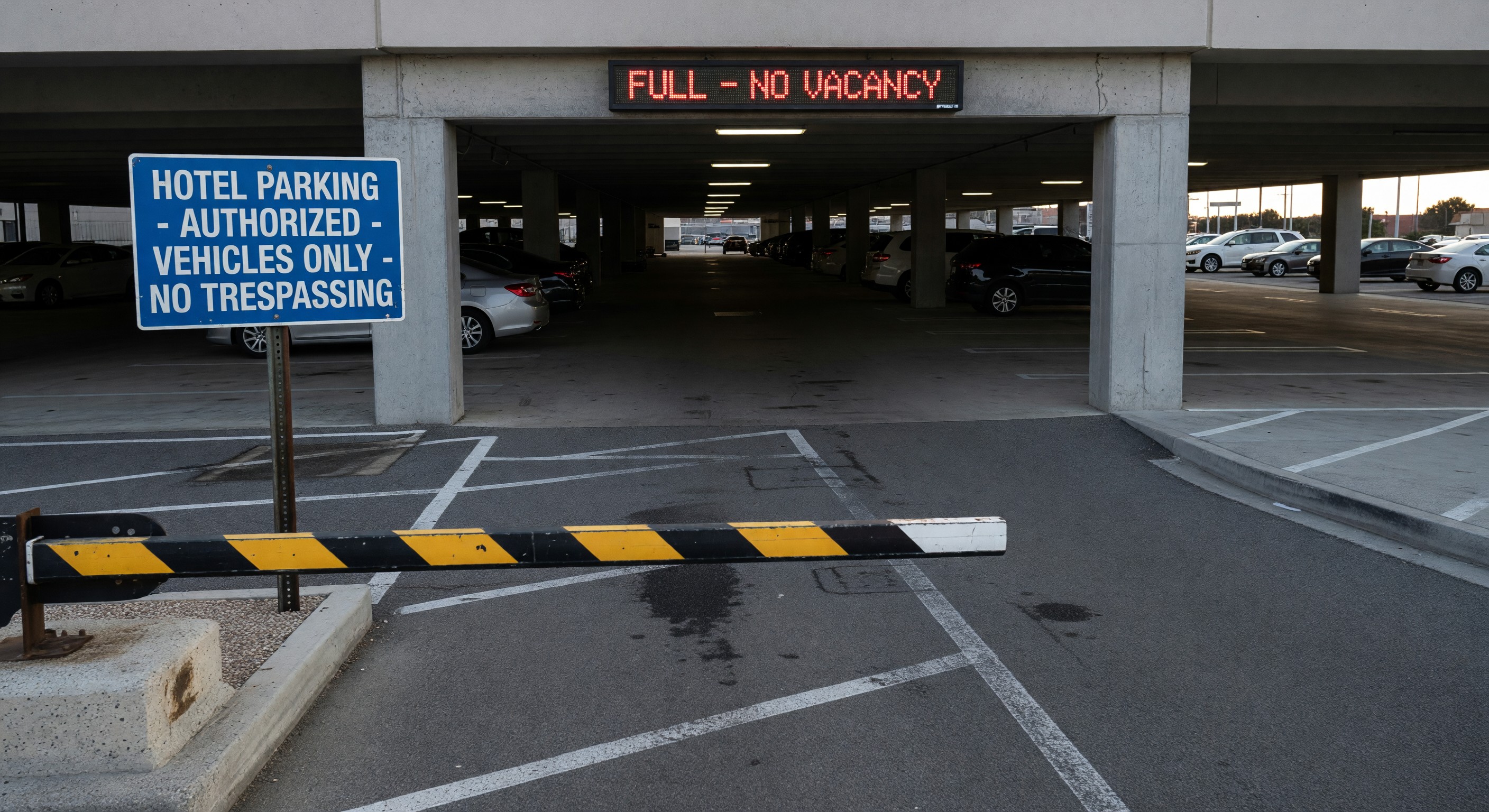
Hotel parking facilities represent one of the highest-risk areas of a property from a security perspective. Vehicles and their contents are theft targets. The semi-public nature of hotel parking (accessible to both guests and some non-guests) creates ambiguity about who belongs there. Poor lighting and limited sightlines in multi-level structures create concealment opportunities. And incidents in parking areas — theft from vehicles, assaults, hit-and-run vehicle damage — represent a significant portion of all hotel security incidents.
Despite this, parking security is often managed separately from the hotel’s overall security program, with different cameras, different access control systems, and different incident reporting. Integrating parking into the hotel’s security ecosystem produces meaningfully better security outcomes.
The Case for Integration
The operational benefits of integrated parking security:
Single pane of glass: A security officer or manager who monitors all hotel CCTV (lobby, corridors, parking) from one interface responds faster to incidents than one who has to switch between separate monitoring systems.
Correlated access events: When a hotel access control system and a parking access control system share data, an incident investigation can trace a person’s movement from parking entry through the building more completely than either system alone.
Unified incident reporting: Security incidents in the parking facility should flow through the same reporting system as incidents in the hotel — ensuring consistent documentation and enabling pattern analysis across the whole property.
Staff efficiency: A security officer who’s monitoring parking as part of a unified property security function is more cost-effective than dedicated parking-only security personnel.
CCTV Integration
Camera Coverage Requirements for Hotel Parking
A properly designed parking security camera system covers:
All vehicle entry and exit points: Cameras that capture license plates at both entry and exit lanes. These are the highest-value cameras from a security and investigation perspective — they establish who was in the parking facility and when.
Each level of a multi-level structure: Cameras with sufficient field of view to cover each row of spaces on each level. This doesn’t require a camera for every space — wide-angle cameras mounted at the corners and ends of rows can cover multiple rows simultaneously.
Elevator lobbies within the parking structure: Every elevator that accesses the parking structure should have cameras covering the lobby area and the cab interior.
Stairwells: Entry/exit points at the base and top of each stairwell, plus ideally one camera per landing in higher-risk environments.
Pedestrian exits: Any door through which a person can exit the parking structure to the exterior or to the hotel building interior.
Pay station and ticket dispenser areas: These are transaction areas with cash or card processing — higher security value.
Technical Requirements for Parking CCTV
Parking structures present specific technical challenges for CCTV:
Low-light performance: Underground or enclosed parking structures are dark environments. Cameras must perform in very low light without excessive noise or washed-out images from IR illumination. Select cameras with large image sensors (1/2.8" or larger) and wide dynamic range.
Resolution for license plate capture: Standard surveillance cameras capture useful context images; license plate capture requires sufficient resolution to identify alphanumeric characters at the relevant distance. Specify cameras purpose-designed for ANPR (Automatic Number Plate Recognition) at entry/exit points, and standard HD cameras for aisle and structure coverage.
IP rating: Cameras in parking structures are subject to car wash spray, water from wet vehicles, and temperature extremes. Minimum IP66 weatherproofing for any camera that may be exposed to water splash. In extreme cold climates, specify cameras with internal heaters.
Vandal resistance: IK10-rated vandal-resistant housings for cameras in areas accessible to pedestrians. Cameras that can be knocked off their mounting or covered with tape undermine the security program.
Integration with the Hotel CCTV System
The ideal integration connects parking cameras and hotel cameras into a single NVR platform or video management system (VMS):
- All cameras visible in a single monitoring interface
- Unified search across all cameras for investigation
- Single access control system for camera views
If separate systems are unavoidable (because the parking equipment vendor’s cameras don’t integrate with the hotel’s VMS, for example), at minimum ensure that:
- Both systems are accessible from the security desk
- Parking footage can be accessed in the same investigation workflow as hotel footage
- Recording retention policies are consistent
Access Control Integration
Credential Correlation
Hotel guests should ideally use a single credential that grants them both hotel access (guestroom, elevator, amenity areas) and parking access. In a fully integrated system:
- The guest’s room key or mobile key serves as the parking credential
- Entry to the parking structure is validated against the same reservation database as the hotel
- Checkout automatically deactivates both the hotel access credential and the parking credential
The integration between hotel lock systems and parking access control systems exists in many combinations of vendors, but it’s often a custom integration rather than a native feature. When evaluating parking system upgrades, lead with the integration requirements for the specific hotel lock system you use.
Anti-Tailgating Measures
Tailgating — a vehicle entering without presenting a valid credential by following immediately behind an authorized vehicle — is the primary access control vulnerability in hotel parking. Integration with security:
Camera-based detection: Overhead cameras at the entry gate detect when more than one vehicle passes per gate opening. Automatic alerts to security monitoring.
Occupancy count correlation: If the parking management system tracks vehicle count, and the count exceeds the number of valid credential transactions, there’s evidence of tailgating that security should investigate.
Attendant monitoring: During high-volume periods, a security officer visually monitoring the entry lane is the most reliable tailgating prevention — but also the most expensive.
Incident Response Protocols
Parking Incident Types
Define the incident types relevant to parking operations and the response protocol for each:
Theft from vehicle: Secure the scene, photograph the vehicle damage, obtain access logs to determine who was in the parking facility during the theft window, review CCTV, take a report from the guest, and contact police if requested.
Vehicle damage (hit and run): Review CCTV at time of incident and in surrounding time window, attempt to identify the responsible vehicle, provide footage to police, assist the guest with insurance documentation.
Assault or suspicious person: Immediate security response to the parking structure, contact police if the situation warrants, preserve CCTV footage, coordinate with arriving officers.
Medical emergency: Immediately call 911, send security or engineering to the parking structure to direct emergency services to the location, preserve access for emergency vehicles.
Fire or smoke: Evacuate the parking structure, contact fire department, manage vehicle access to prevent additional traffic from entering the structure during emergency.
Guest Incident Response
When a guest reports a parking security incident, the response affects not just the immediate situation but the guest’s perception of the property’s care for their safety.
Response standards:
- Security response within 10 minutes of report
- Take the report thoroughly and in writing
- Offer to assist with police reporting
- Provide video footage preservation commitment (don’t promise specific footage before you’ve confirmed it exists)
- Follow up with the guest before checkout
Documentation: Every parking incident should be documented in the security incident log regardless of severity. This documentation protects the property and identifies patterns.
Lighting as a Security Tool
Parking structure lighting is fundamental to the effectiveness of every other security measure. Cameras in dark areas produce unusable footage. Human behavior changes in well-lit environments — would-be perpetrators choose dark locations.
Lighting standards for hotel parking:
- Minimum 5 footcandles (maintained) throughout enclosed structures
- 3 footcandles minimum in surface lots
- Enhanced lighting at entry/exit points, elevator lobbies, and pedestrian paths (10+ footcandles)
- No dark zones or deep shadows between the normal-level lighting
LED lighting with motion-activated dimming (dimmed when no motion, full output when motion detected) achieves both energy efficiency and security goals — the lights at full output when someone is present ensure good camera performance and personal safety perception.
FAQ
What’s the reasonable liability expectation for a hotel when a car is broken into in their parking facility? Legal liability depends on jurisdiction, but generally hotels are not absolute guarantors of vehicle security in their parking facilities. However, liability increases when the property had inadequate security measures (poor lighting, broken cameras, no access control) that a reasonable person would have expected to be in place. Documented, functional security systems are the foundation of any liability defense.
How do we handle a guest who claims theft but our CCTV shows no evidence of anyone accessing their vehicle? Present the footage review findings factually and professionally. Not finding evidence of unauthorized access doesn’t necessarily mean there was no theft — it may mean the event happened outside camera coverage or outside the reviewed time window. Continue to assist the guest with their insurance claim and police report. Avoid implying that the guest is making a false claim.
Should hotel parking security be integrated with the valet key management system? Yes — key management is a security-critical function. Access to the key storage area and key check-out/check-in events should be logged and available in security’s incident investigation tools. If a vehicle key is used without authorization, the key management audit log is the primary investigative resource.
How do we justify the cost of integrated parking security to ownership? Frame the investment as liability management and guest retention. The cost of a single significant parking incident — vehicle theft, assault, or a liability claim — can easily exceed the annual cost of a proper security program. Additionally, parking security quality is a factor in guest satisfaction and review ratings in urban markets where parking incidents are common.
Further Reading from Authoritative Sources
- IFMA parking facility security integration and lighting standards — IFMA provides facility management professionals with parking security standards, lighting requirements, and integrated security system frameworks applicable to hotel parking facility security program design.
- AHLA hotel parking security and guest experience resources — AHLA provides hospitality industry research on parking security operations, guest satisfaction impacts of parking incidents, and security program ROI frameworks applicable to hotel parking security investment decisions.