Hotel loading docks and receiving areas are high-vulnerability access points that receive less security attention than they warrant. Every delivery creates an opportunity for unauthorized individuals, stolen goods, or contraband to enter the hotel through what is often the most permissive access point in the building. Theft — of hotel supplies, food and beverage product, linens, and amenities — frequently originates in the receiving area, through collusion between delivery drivers and hotel employees or through inadequate inventory procedures that allow shrinkage to go undetected.
This guide addresses loading dock and receiving area security from a practical operational standpoint — access control, vendor management, receiving procedures, and the security infrastructure that reduces theft and unauthorized access.
Access Control at the Receiving Dock
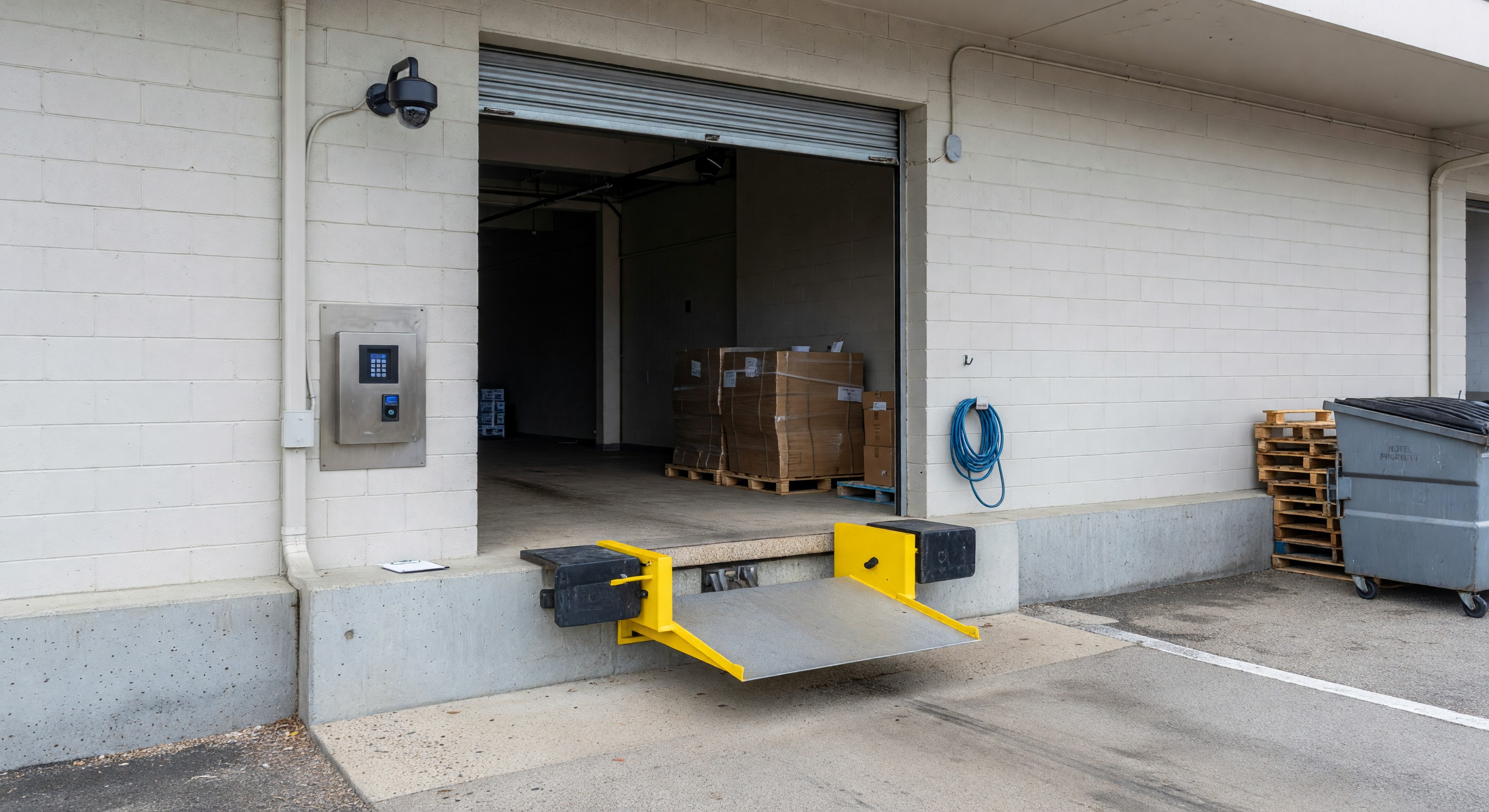
Perimeter access: The loading dock entrance from the exterior should be controlled — either by a security guard post, an intercom with camera coverage requiring authorization before gate or door opens, or a keypad/card reader controlled by receiving management. The goal is that no vendor enters the dock area before being identified and verified.
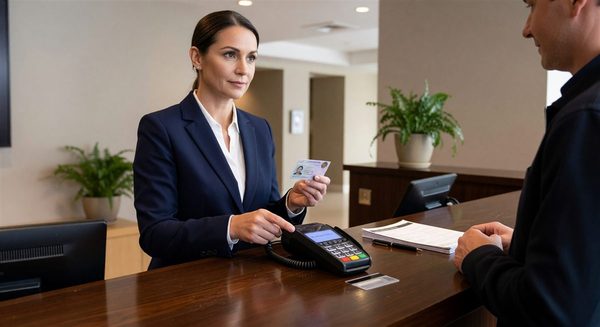
Vendor scheduling and verification: Known scheduled deliveries are lower risk than unscheduled arrivals. Purchasing and receiving management should maintain a delivery schedule; unexpected deliveries trigger additional scrutiny. For regular vendors, driver identification (driver’s license or vendor ID) should be verified against an approved vendor list.
Escort policies: Vendors who need to move beyond the receiving dock into the hotel (HVAC service, linen delivery to linen rooms, equipment repair technicians) should be escorted by hotel staff — not allowed to move independently through back-of-house areas. An unescorted vendor in the hotel’s back-of-house areas is both a theft risk and a safety concern.
Time restrictions: Deliveries should be accepted only during defined receiving hours — typically early morning to early afternoon. Deliveries outside defined hours should require management authorization. A delivery arriving at 10 p.m. claiming urgency should be viewed with appropriate skepticism.
Receiving Procedures That Prevent Theft
Blind receiving vs. invoice receiving: Best practice for high-value categories is blind receiving — the receiving clerk verifies count and condition of received goods against the purchase order (what was ordered) without access to the vendor’s invoice (what the vendor claims was delivered). This prevents the vendor from knowing what’s expected and prevents collusion between receiving staff and vendor representatives over short shipments that are invoiced as complete.
Unit count verification: Every delivery should be counted — cases, units, or items depending on the product category. Spot-counting only (checking some items and assuming the rest) creates systematic short-shipment opportunities. For high-value categories (alcohol, meat, seafood, electronics), full unit count is required.
Condition inspection: Damaged or unacceptable goods should be refused or accepted only with documented exceptions noted on the delivery receipt. Signing a delivery receipt without noting exceptions waives the hotel’s right to claim for damage.
Delivery receipt documentation: All deliveries should be documented with a signed delivery receipt retained by the hotel. Receipts should match purchase orders; unexplained additions to deliveries (items delivered that were not ordered) should not be accepted without management approval.
Segregation of receiving and purchasing functions: The employee who places purchase orders should not be the same employee who receives deliveries and verifies counts — this separation prevents a single employee from both ordering and confirming receipt (and potentially facilitating fictitious deliveries or short-shipment schemes).
Camera Coverage
The loading dock and receiving area warrant comprehensive camera coverage:
- Dock exterior: Coverage of the approach and dock area, capturing vehicle license plates and driver identity upon arrival
- Receiving dock interior: Coverage of the receiving floor where goods are counted and verified — capturing any discrepancies between delivered and documented quantities
- Refrigeration room and high-value storage access: Coverage of entries to walk-in coolers, liquor storage, and linen rooms accessible from the receiving area
Camera coverage serves both deterrence (employees and vendors who know cameras are present behave differently) and investigation (footage is the primary evidence when theft is suspected). Camera footage at receiving docks should be retained for a minimum of 30 days — theft investigations sometimes don’t begin until discrepancies are identified in inventory counts that lag deliveries by weeks.
Staff Management and Accountability
Receiving is a position of significant trust — the receiving clerk’s verification decisions determine what the hotel pays for. Practical staff management practices:
Rotation of receiving staff: Periodically rotating receiving staff (when staffing allows) disrupts the relationship-building between specific employees and specific vendor representatives that enables collusion. Long-term familiarity between a receiving clerk and a delivery driver is a risk factor.
Supervisor audit of receiving: Periodic unannounced audits — a manager or security officer observing and spot-checking a delivery without advance notice — provide an accountability layer that deters systematic theft.
Inventory reconciliation: For high-value categories, monthly physical inventory should be reconciled against purchasing records and recorded consumption. Systematic shrinkage that appears in inventory reconciliation triggers investigation into receiving procedures.
Handling personal packages: A specific and common theft vector is employees receiving personal packages at the hotel receiving dock — concealing theft as personal deliveries. Define and enforce a policy: no personal packages received at the hotel, or packages must be declared and inspected at receipt.
Frequently Asked Questions
What is the most common theft method at hotel receiving docks? The most common methods: (1) Short shipments — vendor delivers less than what is invoiced and signed for, with receiving staff either not noticing or colluding; (2) Product substitution — lower-quality product substituted for ordered product (off-brand products delivered at premium product prices); (3) “Air weight” in catch-weight items — wet ice or other fillers that inflate the weight of meat and seafood deliveries; (4) After-hours theft — employees using receiving area access to remove hotel property, concealed in personal bags or vehicles. Each of these is mitigated by different control procedures.
How should hotels handle a vendor that repeatedly delivers short or incorrect shipments? Document every discrepancy formally — note on the delivery receipt, retain a copy, and report to purchasing management. Pattern analysis of short shipments by vendor and product category is the evidence base for vendor confrontation or contract termination. Present documented evidence to the vendor representative; request credit for the shortfall. Repeated issues without resolution warrant replacing the vendor. A vendor aware that the hotel has systematic receiving controls and documented evidence of discrepancies is less likely to persist in short-shipment practices.
Should hotel receiving staff be allowed to accept vendor samples or gifts? Vendor samples and gifts to receiving staff create the appearance of impropriety and can create actual conflicts of interest that compromise objective receiving performance. A clear policy prohibiting receiving staff from accepting anything of value from vendors — gifts, meals, samples beyond those provided for evaluation through management — protects the hotel and the employee. Receiving staff should be trained on this policy at hire and reminded annually.
What security technology is most valuable at the hotel loading dock? Priority one is camera coverage — comprehensive, high-resolution coverage of the dock area with adequate retention is the highest-value security investment. Second is access control at the dock entrance — intercom or card reader that prevents unauthorized entry without identification. Third is weight scales for catch-weight product receiving — the physical ability to verify weight of delivered goods prevents the most common food and beverage receiving theft method. Electronic delivery management software that creates a digital record of all deliveries with timestamps is increasingly used at full-service hotels to create an audit trail that deters and detects discrepancies.
Further Reading from Authoritative Sources
- IFMA facility management and receiving operations security standards — IFMA provides facility management professionals with back-of-house security standards, access control guidance, and receiving operations frameworks applicable to hotel loading dock security program development.
- AHLA hotel operations and loss prevention resources — AHLA provides hospitality industry research on loss prevention, vendor management, and back-of-house security practices applicable to hotel receiving area security program development and staff training.