Key control is one of the most foundational and frequently neglected elements of hotel security. Every physical master key that exists represents potential access to every room in the hotel — and in most properties, master key tracking and accountability is far less rigorous than the value of that access justifies.
A comprehensive hotel key control program covers physical master keys (the metal keys that physically override electronic locks), electronic key cards (temporary guest credentials), staff access cards (permanent or semi-permanent access credentials for employees), and the electronic lock audit trail that documents who accessed which room and when.
The Physical Master Key Problem
Physical master keys at hotels operate in a category of risk distinct from electronic access:
- Electronic access cards can be instantly deactivated and reissued at no meaningful cost
- Electronic lock audit trails record every access event, enabling investigation of unauthorized entry
- Physical master keys, when lost or stolen, cannot be “deactivated” — the lock cylinder must be re-keyed or replaced
- Physical master key creation must be tracked to prevent unauthorized copies
Yet many hotels maintain physical master keys in regimes that would be considered inadequate in any other security context: keys hanging on hooks accessible to multiple staff, check-in/check-out logs that aren’t verified against actual key presence, and no periodic reconciliation to confirm all master keys are accounted for.
Best practices for physical master key management:
Numbered and tracked: Every physical master key should have a permanent unique serial number engraved or stamped. No unnumbered master keys should exist.
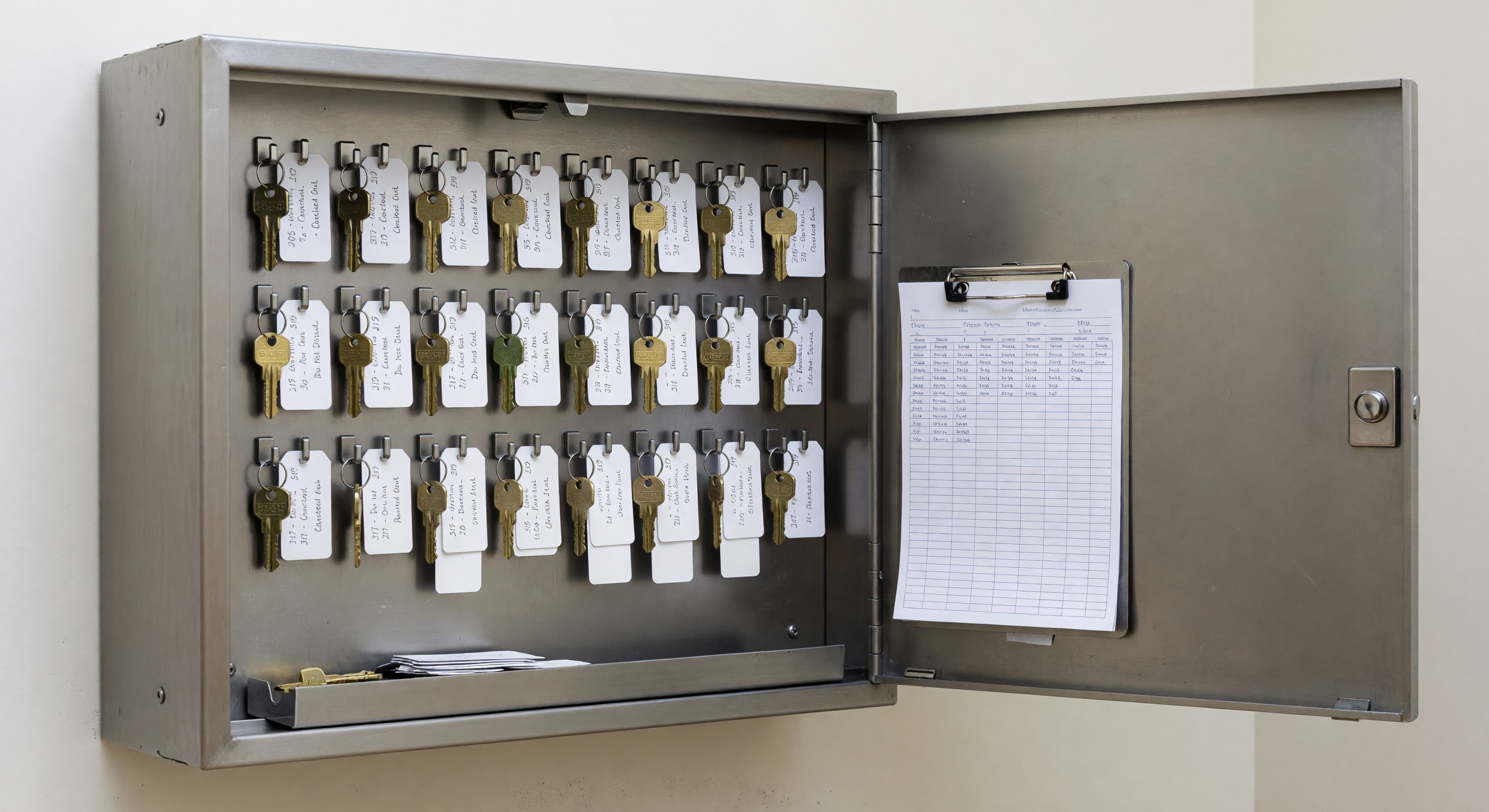
Controlled access cabinet: Physical master keys should be stored in a key control cabinet (electronic key box or manually controlled cabinet) that logs access and requires authentication before keys can be removed.
Sign-out log with verification: Every master key checkout requires the employee’s name, date, time, purpose, and authorization signature. The log must be physically reconciled against key presence in the cabinet — a log entry without the key present, or a key missing without a log entry, is an immediate security event.
Restricted issuance: Master keys should be issued only to employees with a verified need to access multiple rooms unescorted — engineering staff, housekeeping supervisors, general manager, security. Front desk agents and most guest-facing staff do not need master key access.
Regular reconciliation: Conduct a full reconciliation of all physical master keys at least monthly — and immediately when any discrepancy is suspected. Compare the master key register (every key that should exist) against keys physically present in the cabinet and checked out on current log entries.
Lost key response: If a master key is reported lost or cannot be accounted for during reconciliation, the security response is lock cylinder replacement — not a “wait and see.” The cost of cylinder replacement is substantially less than the liability exposure of operating with unaccounted-for master key access.
Electronic Lock Audit Trail Management
Modern hotel electronic locks (RFID key card, BLE mobile key) record every access event with timestamp and credential identifier. This audit trail is one of the most powerful tools available for investigating guest complaints, security incidents, and employee performance issues — and it is systematically underused at most properties.
Audit trail applications:
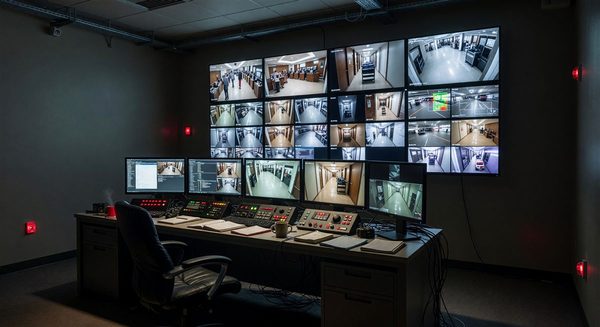
Incident investigation: When a guest reports theft from their room, the lock audit trail shows every card access in the prior 48–72 hours — staff access events (housekeeping, engineering, minibar) and any other card access. Combined with CCTV footage, the audit trail is often dispositive in identifying the responsible party.
Housekeeping accountability: Audit trail data shows which rooms were entered at what time, providing objective data on room service completion that supplements room inspection programs.
Unauthorized access detection: Access to rooms not assigned to a particular keycard (a housekeeping card accessing rooms not on the day’s assignment, an engineering card accessing rooms after hours) can be flagged as a security concern.
Forced entry documentation: Modern locks detect and log door forced-open events (door opened without valid credential) — providing evidence of forced entry that may not be immediately visible on the door hardware.
Audit trail retention: Most hotel lock systems store audit trail data locally in each lock with limited capacity (1,000–5,000 events). After the capacity limit, oldest events are overwritten. For investigations, audit trail data must be extracted promptly — a lock audit trail from 6 weeks ago may no longer be available.
Central audit trail management: Higher-end hotel lock platforms offer central audit trail collection — all lock events transmitted in real time to a central server. This eliminates the audit trail retention limitation and enables proactive monitoring rather than reactive investigation. Consider central audit trail management for properties with elevated security requirements.
Staff Access Card Management
Staff access cards (for doors beyond individual guest rooms — pools, fitness centers, employee areas, manager offices) require a separate management program:
Issuance tracking: Maintain a register of every staff access card issued — employee name, date issued, card number (or internal identifier), and what access level was granted.
Access level review: When an employee’s role changes (promotion, transfer, termination), their access level should be updated or terminated immediately. Terminated employees’ access cards should be deactivated the day of termination — before the employee leaves the building.
Regular access level audits: Conduct quarterly or semi-annual review of all active staff access credentials against current staff roster and job roles. Identify and remediate access granted beyond current job requirements (access creep).
Termination protocol: A clear written protocol for terminating all access (electronic and physical) on the employee’s last day is essential. The protocol should cover: electronic card deactivation (immediate, by manager or HR), physical key return (verified against issue log), door code reset if individual codes exist, and removal from any access-controlled list (parking, staff entrance).
Guest Electronic Key Card Security
Guest key cards represent the most numerous electronic credentials in a hotel environment. Best practices:
Key card encoding at check-in: Verify guest identity before issuing key cards to prevent unauthorized persons from obtaining a guest’s room key. This sounds obvious but is a consistent vulnerability — phone requests for duplicate keys, social engineering at the front desk, and requests from “family members” without identification are all common attack vectors.
Lock out on checkout: Ensure checkout processes deactivate all key cards associated with the departed guest. PMS systems should automatically invalidate guest key cards on checkout; verify this process works correctly with your specific PMS/lock system integration.
Key card recycling: Many hotels reuse key cards. Erased and reissued key cards present minimal security risk — a prior guest’s card, once erased from the system, cannot access their former room. However, if a guest retains a key card from a prior stay, it will not function after checkout (assuming proper checkout invalidation). Don’t accommodate requests to “keep the card as a souvenir” — it’s a security control issue as well as a cost issue.
Frequently Asked Questions
How often should hotel master key cylinders be replaced? Hotel master key cylinders are typically rekeyed (new key code, new keys, same cylinder body) every 3–5 years as part of a proactive security refresh program, or immediately following a lost key incident. Properties with high employee turnover may warrant more frequent rekeying. The cost of rekeying a hotel — replacing master key cylinders throughout the property — typically ranges from $5,000–$25,000 depending on property size and lock type.
What electronic lock system features should hotels prioritize for security? Key features: (1) Comprehensive local audit trail with at least 2,000 event capacity per lock, (2) Anti-tailgating capability (detection of door held open too long), (3) Forced-entry event logging, (4) Central audit trail collection capability, (5) Real-time alerts for security events (door forced open, repeated incorrect credentials). Ask lock vendors for audit trail specifications — this data is often underspecified in marketing materials but is critical for security program effectiveness.
Can hotels require employees to return key cards at the end of each shift? Yes — and this is best practice for general staff. Requiring shift-based key card issuance and return creates a daily reconciliation event that catches losses immediately rather than days or weeks later. Engineering and management staff who carry cards across shifts should have individually assigned cards that are tracked to the individual, and should be required to report loss immediately.
How should hotels handle a guest who claims unauthorized entry into their room? Take the complaint seriously immediately. Pull the lock audit trail for the room covering the prior 48–72 hours before the report. Cross-reference each access event with CCTV coverage of the floor corridor (if available) at the corresponding time. The audit trail typically reveals whether anyone other than the expected guests and scheduled staff accessed the room. If unexplained access events appear, escalate to management and security immediately and preserve all audit trail data before it’s overwritten.
Further Reading from Authoritative Sources
- AHLA hotel key control program standards and credential management requirements — AHLA provides hospitality operations standards for hotel key control programs, physical credential management, employee termination procedures, and guest security protocols applicable to master key issuance policy, electronic credential deactivation requirements, and property rekey decision frameworks.
- HFTP hotel electronic lock audit trail and access control management standards — HFTP provides hospitality technology standards for electronic lock systems, access control audit trail management, key cabinet technology specifications, and cloud-based credential management applicable to hotel key control program technology selection, audit trail extraction procedures, and remote deactivation capabilities.