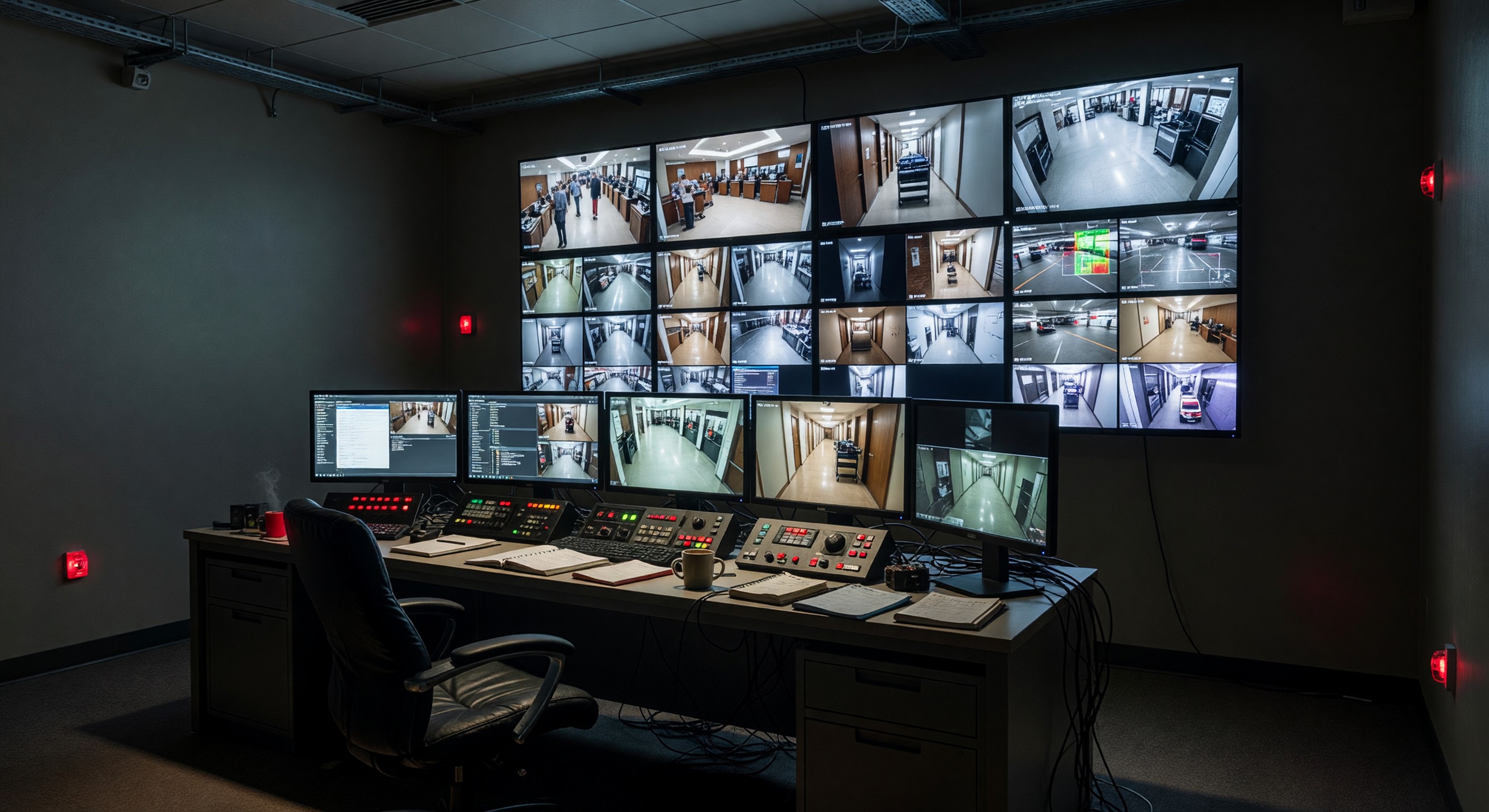
Traditional hotel CCTV systems operate on a fundamentally reactive model: cameras record what happens, and recordings are reviewed after an incident occurs. This model has served the industry adequately for decades, but it has inherent limitations — a property with 200 cameras cannot have a human monitoring every feed in real time, and the most valuable security function (preventing incidents before they happen) is largely unavailable in a purely passive recording model.
AI-powered video analytics is fundamentally changing what hotel surveillance systems can do. By applying machine learning models to video streams in real time, these systems can detect specific behaviors, identify anomalies, count and track people and vehicles, and generate alerts that allow security teams to respond to developing situations rather than reviewing footage afterward.
What AI Video Analytics Can Do in Hotel Applications
The capabilities of modern video analytics platforms relevant to hotel security and operations:
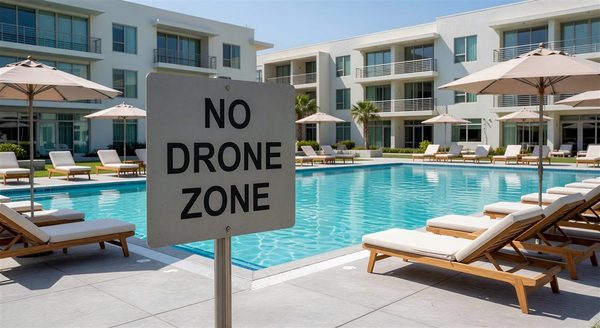
Perimeter intrusion detection: Cameras covering parking areas, pool areas, and restricted-access entrances can be configured to trigger alerts when motion is detected in areas or at times when no movement should occur. More sophisticated models distinguish humans from animals and vehicles, reducing false alarms from the environmental motion that generates constant false triggers with simple motion detection.
Loitering detection: Extended presence of individuals in sensitive areas — back-of-house corridors, parking garage elevator lobbies, pool equipment areas — can be flagged when dwell time exceeds a defined threshold. This capability is relevant for both security (identifying individuals casing the property) and safety (identifying guests who may be disoriented or experiencing a medical event).
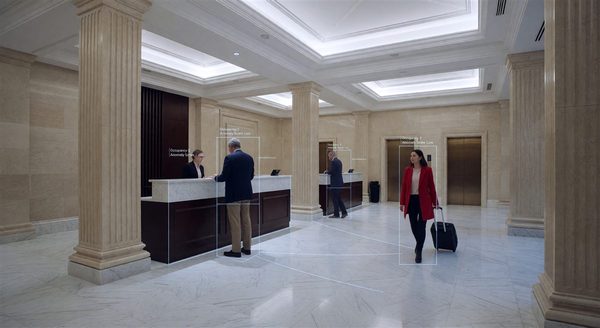
Crowd analytics and occupancy counting: AI counting algorithms provide accurate real-time occupancy data for lobby areas, pool decks, fitness centers, and dining spaces. This data has both safety applications (occupancy limit monitoring) and operational applications (F&B staffing triggers, housekeeping deployment based on pool occupancy levels).
Slip-and-fall and incident detection: Behavioral AI models can identify the body position signatures associated with falls — a capability with significant liability and guest safety applications in pool areas, corridors, and lobby spaces. When a fall is detected, alerts reach security and management in seconds rather than waiting for another guest to report the incident.
License plate recognition integration: Vehicle analytics at parking entry and exit points — covered in detail in the parking technology content on this site — provides both access control data and security intelligence on vehicles of interest.
Package and object detection: Unattended bag detection in public areas (lobbies, conference spaces) generates alerts consistent with security best practices for identifying suspicious items.
Heat mapping and traffic flow analysis: Aggregate analytics on where people move through hotel public spaces provide operational insight for signage placement, staff positioning, and space design optimization.
Privacy, Legal, and Ethical Considerations
AI surveillance capabilities create significant privacy, legal, and ethical questions that hotel operators must address deliberately:
Facial recognition: The most powerful and most contentious AI surveillance capability. Some jurisdictions (Illinois BIPA, several municipal laws) impose strict requirements on biometric data collection that effectively prohibit commercial facial recognition without explicit consent. Even where legally permissible, facial recognition at hotels raises substantial guest trust concerns. Many hospitality operators have chosen not to deploy facial recognition specifically to maintain guest privacy expectations — a policy decision, not purely a technical one.
Data retention and storage: AI video systems generate substantial data. Establish clear retention policies (most hotels delete CCTV footage after 30–90 days absent an open investigation), data storage security requirements, and access controls that prevent unauthorized review of surveillance data.
Notice and transparency: Hotel privacy notices and lobby signage should disclose video surveillance practices. If AI analytics are used for purposes beyond traditional security recording — particularly behavioral analysis or occupancy tracking — guests should have clear notice.
Staff notice: Employees working in surveilled areas have legal rights to notice of surveillance in many jurisdictions. Consult employment counsel when deploying AI analytics that could monitor employee performance or behavior.
Integration with Hotel Operations
The most mature hotel video analytics deployments have moved beyond security use cases to operational integration:
Front desk traffic monitoring: Alert managers when lobby queues exceed defined lengths, triggering additional check-in staff deployment or mobile check-in promotion.
Housekeeping deployment: Real-time pool and fitness center occupancy data allows housekeeping supervisors to prioritize towel replenishment and cleaning based on actual usage rather than scheduled rounds.
F&B staffing: Restaurant and bar occupancy analytics enable real-time staffing adjustments that improve service during unexpected rushes without maintaining excess staff during slow periods.
Maintenance alerts: Asset monitoring cameras (monitoring equipment like cooling towers, generators, and mechanical room equipment for unusual visual indicators of failure) are an emerging application that has demonstrated value in industrial settings and is beginning to appear in hospitality.
Technology Selection Considerations
The AI video analytics market includes both established security companies (Axis, Bosch, Avigilon/Motorola Solutions) that have added AI analytics to camera and VMS platforms, and analytics-focused software companies (Evolv, Verkada, Arcules, Rhombus) that overlay on existing camera infrastructure.
Evaluation criteria for hotel applications:
- Integration with existing VMS: Can analytics layer onto your current camera infrastructure, or does it require hardware replacement?
- False alarm rate: The operational viability of alert-based systems depends on alert quality. High false positive rates cause security staff to tune out alerts — defeating the purpose. Demand data on false alarm rates in comparable hotel deployments.
- Cloud versus on-premises processing: Cloud-based analytics offer lower infrastructure cost and simplified updates; on-premises processing keeps video data within the property and avoids ongoing cloud subscription costs for video storage.
- Transparency in AI model limitations: Responsible vendors disclose accuracy rates and known failure modes for their detection algorithms. Proprietary “black box” claims of perfect accuracy should be viewed skeptically.
Frequently Asked Questions
How much does AI video analytics cost for a hotel? Costs vary significantly by approach. Analytics software licenses for an existing camera system typically run $50–$200 per camera per year for cloud-based SaaS platforms. Full integrated systems with new cameras, VMS, and AI analytics for a 200-room hotel may represent $100,000–$300,000 in initial investment plus ongoing licensing. Many platforms are now offered on subscription models that reduce upfront capital outlay.
Can hotel AI surveillance systems detect weapons? Weapon detection AI — systems that identify firearms or bladed weapons in video feeds — exists and is deployed in some hotel applications, particularly in Las Vegas properties following the 2017 incident. Accuracy and false alarm rates for weapon detection in hotel settings are variable. Walk-through weapon detection systems (from companies like Evolv) are increasingly deployed at major hotel entrances for events, providing a different approach to the same risk.
What should hotels disclose to guests about AI surveillance use? At minimum, include video surveillance disclosure in your privacy notice and lobby signage (standard practice). For AI analytics beyond basic recording — particularly occupancy tracking, behavioral analysis, or any biometric capability — expanded disclosure aligned with applicable state privacy laws is advisable. If facial recognition is deployed, compliance with BIPA (Illinois) and similar laws requires explicit consent and data handling protocols.
How do hotels balance guest privacy expectations with security requirements? The industry norm — security cameras in public areas, no cameras in private areas (guest rooms, restrooms) — is well-established and broadly accepted by guests. AI analytics that operate on camera feeds in public areas fall within guest expectations if disclosed. The line that most hospitality operators do not cross: tracking individual guests by identity (facial recognition or gait recognition) in ways that guests have not consented to and would not expect. Aggregated, anonymized analytics (occupancy counts, traffic patterns) raise far fewer privacy concerns than identity-linked tracking.
Further Reading from Authoritative Sources
- AHLA hotel security technology and guest privacy resources — AHLA provides hospitality industry research on security technology adoption, guest privacy standards, and AI surveillance governance applicable to hotel video analytics deployment decisions.
- NIST AI and facial recognition standards for commercial applications — NIST provides AI system evaluation frameworks, facial recognition performance standards, and algorithmic bias research applicable to hotel AI surveillance vendor evaluation and selection.