Reliable hot water delivery is one of the most guest-visible functions of any hotel’s mechanical plant. A shower that runs cold at 7 a.m. generates immediate complaints and negative reviews. Yet domestic hot water (DHW) systems are among the most underinvested infrastructure categories in lodging — often neglected until a failure forces emergency replacement at premium cost.
This guide covers the full lifecycle of hotel water heating systems: equipment selection, capacity sizing, integration with building management systems, Legionella risk management, and maintenance protocols that extend equipment life and protect guests.
Equipment Types for Hotel Applications
Hotels typically use one of three primary system configurations:
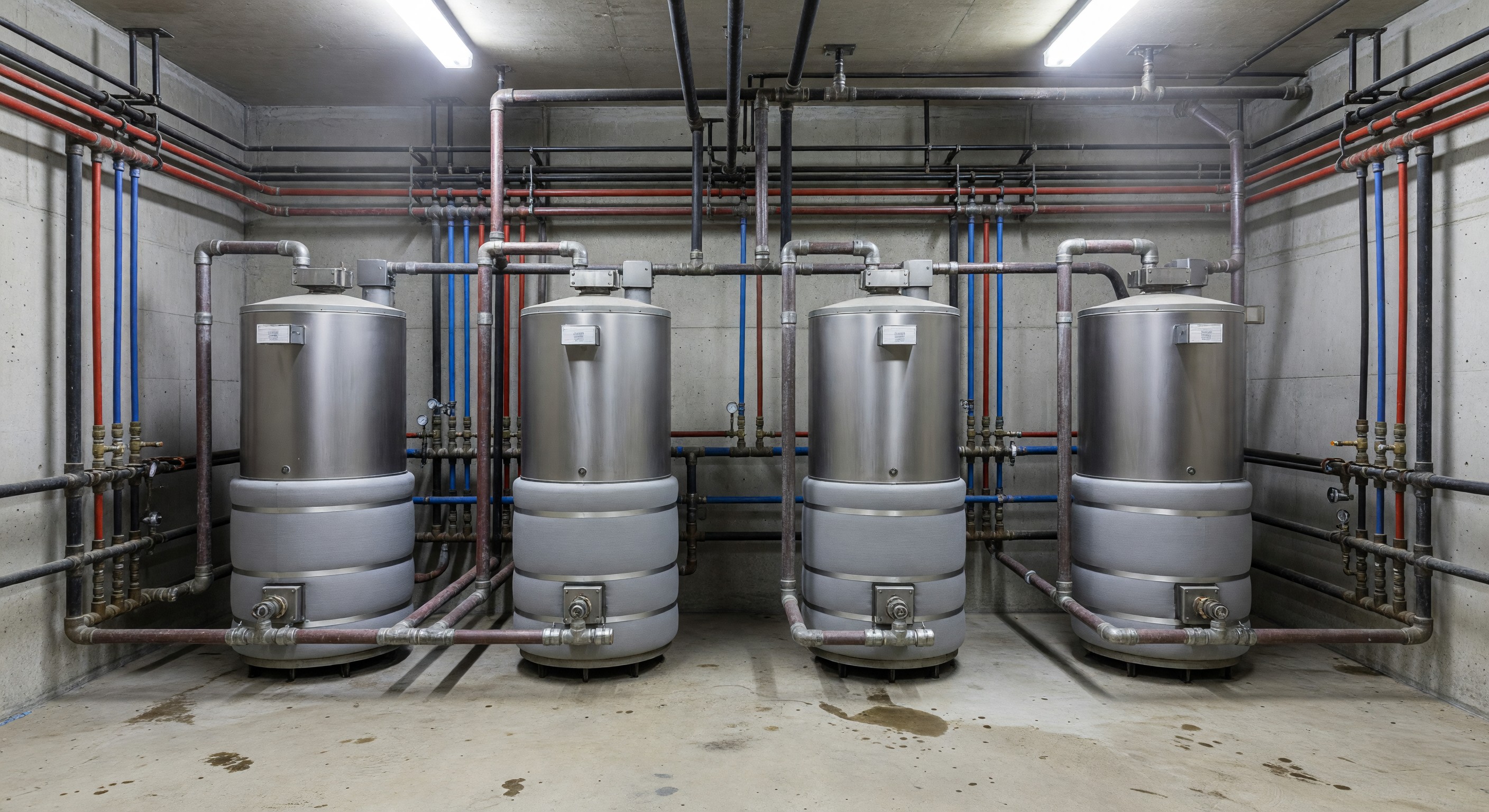
Central storage water heaters use large-capacity tanks (200–2,000 gallons depending on property size) heated by gas burners, electric elements, or heat exchangers connected to boilers. These systems provide high reserve capacity but require substantial mechanical room space and careful pipe insulation to minimize standby losses.
Instantaneous (tankless) water heaters heat water on demand without storage. Commercial tankless units can handle high flow rates, but hotels with simultaneous peak demand — early morning checkout rushes, post-event laundry surges — may require multiple units in parallel or hybrid configurations.
Heat pump water heaters extract heat from ambient air to heat water, achieving efficiency factors (coefficient of performance) of 2.0–4.0 versus 0.8–0.95 for conventional gas units. They work best in climates where mechanical rooms stay above 50°F year-round and can reduce DHW energy costs by 40–60%.
For midscale and upscale hotels above 150 rooms, central systems with dedicated recirculation loops typically outperform distributed approaches. The recirculation loop keeps hot water within seconds of every fixture, eliminating the cold-water waiting period that frustrates guests.
Sizing Domestic Hot Water Capacity
Undersized systems cause guest complaints; oversized systems waste energy through standby losses. Proper sizing requires accurate peak demand modeling.
Industry benchmarks by property type:
- Budget/limited-service: 12–15 gallons per room per day
- Midscale: 16–20 gallons per room per day
- Upscale/full-service: 22–28 gallons per room per day
- Resort properties with pools, spas, fitness centers: 30–45 gallons per room per day
These figures must be adjusted for food and beverage operations (commercial kitchens add 5–10 gallons per meal served), laundry (on-premises laundry adds 2–4 gallons per pound of linen processed), and pool/spa heating loads.
Peak hour demand — not daily average — drives tank sizing. A 200-room upscale property with 90% occupancy serving breakfast may need to deliver 800+ gallons between 7:00 and 8:00 a.m. Storage capacity of at least 30–40% of peak hour demand, combined with adequate recovery rate, prevents supply shortfalls during high-demand windows.
Legionella Prevention: A Non-Negotiable Priority
Legionella pneumophila, the bacterium responsible for Legionnaires’ disease, thrives in water temperatures between 77°F and 113°F (25–45°C) — exactly the range found in poorly maintained DHW systems, cooling towers, and decorative fountains. Hotels represent high-risk environments because of large, complex water distribution systems, variable usage patterns that create stagnant sections, and vulnerable guest populations.
ASHRAE Standard 188-2018 (Legionellosis: Risk Management for Building Water Systems) requires hotels to implement a written Water Management Plan (WMP). Key elements include:
System mapping: Document all water system components — tanks, heaters, distribution lines, fixtures, dead legs, and any decorative water features. Identify low-flow or stagnant sections where Legionella is most likely to proliferate.
Temperature control: Maintain storage water at 140°F (60°C) minimum. Distribution should deliver water at or above 122°F (50°C) at the return loop, with ASSE 1017 thermostatic mixing valves providing 110–120°F at fixtures to prevent scalding.
Disinfection protocols: Monthly flushing of low-use outlets (guest rooms occupied fewer than 5 days in the prior month), quarterly testing of representative outlets, and annual third-party verification are industry-standard minimums.
Dead leg elimination: Any section of pipe that dead-ends or sees minimal flow is a Legionella risk. Periodically flush these sections or — better — redesign distribution routing to eliminate them.
Hotels that lack a documented WMP face significant liability exposure. In the wake of several high-profile Legionella outbreaks at hotels (some resulting in fatalities), plaintiff attorneys routinely subpoena WMP documentation. Absence of a compliant WMP is treated as per se negligence in many jurisdictions.
Building Management System Integration
Modern DHW systems can integrate with building automation systems (BAS) to optimize operation. Useful integration points include:
- Demand scheduling: Boost water temperature before high-demand periods (early morning, post-event) and reduce setpoints during low-occupancy nights
- Leak detection: Flow sensors on major distribution mains can detect abnormal flow rates indicating pipe breaks or fixture failures
- Remote monitoring: Alert facility managers to temperature deviations, pump failures, or low-pressure events without requiring physical inspection
- Occupancy correlation: Link DHW demand to PMS occupancy data to reduce standby losses during low-occupancy periods
Maintenance Schedule
Monthly:
- Inspect anode rods (storage tanks) for depletion — replace when 50% consumed
- Verify recirculation pump operation and flow rates
- Flush low-use outlets per WMP protocol
- Check expansion tank pre-charge pressure
- Test pressure relief valves (brief manual test only — do not fully cycle if valves are original and more than 3 years old)
Quarterly:
- Test outlet temperatures at representative fixtures
- Clean inlet strainers on mixing valves
- Check heat exchanger performance (if applicable)
- Calibrate thermostats and controllers
Annually:
- Inspect and clean heat exchanger tubes (scale buildup reduces efficiency by 10–15% annually in hard-water markets)
- Perform full WMP verification with water sampling
- Replace anode rods if depleted
- Service recirculation pumps (bearings, seals, impeller inspection)
- Review and update system map if any plumbing modifications were made
Capital Planning Considerations
Commercial water heaters have expected service lives of 15–25 years for gas storage units, 10–15 years for instantaneous units, and 12–15 years for heat pumps. However, hard water markets (above 7–8 grains per gallon hardness) significantly accelerate scale buildup and component wear, often reducing actual service life by 25–40%.
When units approach 12–15 years of age, conduct a condition assessment before failure occurs. Consider water quality (hardness, pH, chlorine levels), operating efficiency (recovery time versus nameplate specification), maintenance history, and repair costs over the prior 24 months. A unit consuming 25% more energy than specifications and requiring quarterly repairs is a capital replacement candidate regardless of chronological age.
Heat pump water heaters offer compelling ROI in many markets — often 4–6 year simple payback with current utility rates — and should be evaluated against direct-fired replacements during any capital planning cycle.
Frequently Asked Questions
How often should hotel water heaters be replaced? Gas storage commercial water heaters typically last 15–25 years with proper maintenance. Plan for capital replacement in the 15–18 year range for budget purposes, though actual replacement depends on condition assessment, water quality, and operating efficiency trends.
What temperature should hotel hot water be stored at to prevent Legionella? ASHRAE 188 recommends maintaining storage at a minimum of 140°F (60°C). Distribution should return at no less than 122°F (50°C). Thermostatic mixing valves at the point of use deliver 110–120°F to prevent scalding while the distribution system maintains temperatures that inhibit bacterial growth.
How can hotels reduce domestic hot water energy costs? Key strategies include: heat pump water heater replacement, solar thermal pre-heating (in applicable climates), recirculation pump controls tied to occupancy schedules, pipe insulation upgrades to reduce standby losses, and BAS integration for demand-based temperature management.
What is a Water Management Plan and is it required for hotels? A Water Management Plan (WMP) is a documented program for preventing Legionella and other waterborne pathogens in building water systems. ASHRAE Standard 188-2018 effectively makes WMPs the professional standard of care for buildings such as hotels. While federal law does not explicitly mandate WMPs, most risk management and legal counsel consider them required given the liability exposure of Legionella outbreaks.
Further Reading from Authoritative Sources
- ASHRAE 188 hotel water heater Legionella prevention and water management standards — ASHRAE Standard 188 (Legionellosis: Risk Management for Building Water Systems) establishes the Water Management Plan requirements, temperature control specifications, and testing protocols that govern hotel commercial water heater operation, Legionella prevention compliance, and maintenance program standards.
- DOE commercial water heater efficiency and heat pump water heater resources — The DOE Buildings program provides commercial water heater efficiency standards, heat pump water heater performance data, and building energy optimization guidance applicable to hotel water heater capital planning, heat pump conversion analysis, and BAS integration for demand-based temperature management.