Hotel access control technology is in its most significant transition period since the shift from metal keys to RFID card access in the 1990s. Multiple access modalities now coexist — physical key cards, mobile BLE keys, NFC wallet keys, and emerging biometric approaches — and the management challenge has become not just securing access but orchestrating an access experience that feels seamless to guests and staff while maintaining the security integrity the property requires.
This guide addresses the current state and near-future direction of hotel access control technology as of 2026: the practical landscape of available technologies, the security and privacy considerations that govern adoption decisions, and how hotels should think about the access control investments that will serve them through the next decade.
The Current Access Control Technology Stack
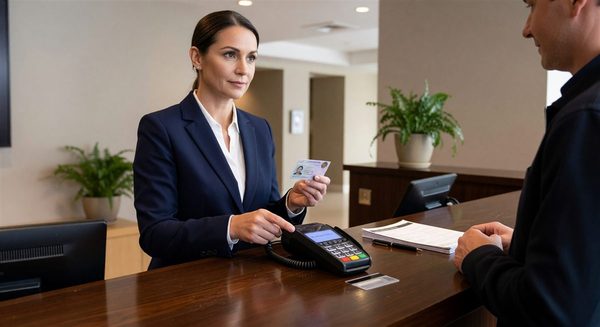
RFID key cards (Mifare, DESFire, HID iClass): Still the most common hotel guest credential — issued at check-in, returned at checkout, reissuable. RFID cards have improved significantly in encryption security over the magnetic stripe cards they replaced; modern DESFire EV3 and HID Seos technologies provide robust cryptographic protection against cloning. Expected to remain a standard option for the foreseeable future, particularly for guests who prefer physical credentials.
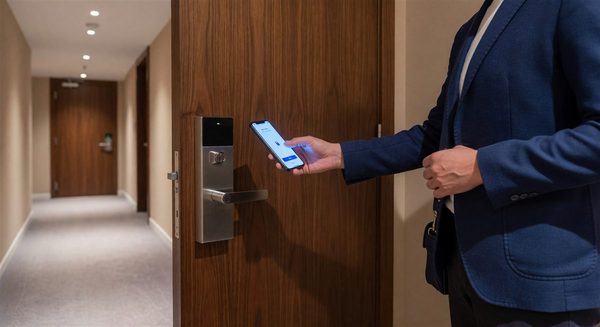
Mobile BLE keys: Bluetooth Low Energy room keys issued through brand loyalty apps or hotel apps. Require compatible BLE-capable locks throughout the property. Adoption has stabilized in the 25–40% range for eligible check-ins at properties with mature mobile key programs. Strong preference among frequent business travelers; lower adoption among leisure and international travelers.
Apple Wallet and Google Wallet hotel keys: NFC-based keys stored in the phone’s digital wallet — no app download required, same interface as transit passes and payment cards. Available at select Hilton and Hyatt properties as of 2025. Expected to expand as wallet-based credentials become more broadly supported by lock manufacturers.
Wearable credentials: RFID wristbands at resort properties (particularly pool and beach operations) and fitness tracker-integrated credentials for guest room access are deployed at a small number of premium resort properties.
Biometric Access Control: Where Hotels Stand in 2026
Biometric authentication — face recognition, fingerprint, iris scan — offers the theoretical ideal of access credentials that cannot be lost, stolen, or shared. The practical adoption in hotel settings has been limited by several factors:
Privacy regulation: BIPA (Illinois Biometric Information Privacy Act), CPRA (California Privacy Rights Act provisions on biometric data), and multiple other state and emerging federal regulations impose strict requirements on biometric data collection — including explicit informed consent, retention limits, security requirements, and prohibition on selling biometric data. Hotels that collect facial recognition or fingerprint data for access control must navigate a complex and evolving regulatory landscape.
Guest acceptance: Consumer research consistently shows lower guest comfort with biometric authentication at hotels than with RFID cards or mobile keys — particularly for facial recognition. Guests who understand that their face is being captured and associated with their stay credentials express concern about data security and use case expansion (concerned that data will be used for other purposes beyond access).
Technology maturity for hotel applications: Fingerprint readers on external hotel doors (exposed to weather, varying temperatures, and rough handling by thousands of guests) have higher failure rates than controlled-environment readers. Facial recognition at hotel entry doors must perform reliably across wide ranges of lighting, hat/glasses/mask variations, and for guests of diverse backgrounds.
Current biometric deployments: The most widespread biometric deployment in hotel security is facial recognition for employee access control to back-of-house areas — a more controlled application with fewer regulatory concerns than guest-facing use. A smaller number of luxury properties offer opt-in facial recognition for guest room access as a premium feature with explicit enrollment.
Staff Access Control
Employee access control has received less innovation attention than guest access but has significant security implications. Best practices for 2026:
Role-based access control (RBAC): Access permissions defined by job role, not individually assigned. A new housekeeping hire automatically receives the same access profile as all housekeeping staff — no manual programming required. Role changes trigger automatic access updates.
Time-based access: Staff access can be time-limited to scheduled shift windows, preventing access with valid credentials outside of scheduled work periods. A housekeeper whose shift is 8 a.m.–4 p.m. has active credentials only during that window.
Tailgating detection: Access control readers that detect multiple people entering on a single credential presentation (using people-counting sensors integrated with access control) alert security when unauthorized tailgating occurs at restricted access points.
Cloud-based access management: Cloud-managed access control platforms (SALTO KS, Openpath, Verkada Access) allow credential issuance and management from any location, real-time audit trail visibility, and automatic credential expiration at employee termination — eliminating the need to physically visit an on-premises access control server for credential management.
The Future: Friction-Free Access
The trajectory for hotel access control points toward increasingly friction-free guest experiences:
Walk-up facial recognition for enrolled loyalty members: Voluntary enrollment by loyalty program members, combined with on-property facial recognition cameras at key access points, could eventually enable the check-in and room access experience that requires no physical credential presentation — just walking to the door. Regulatory and consumer acceptance barriers are substantial, but the technology is ready for this application.
Continuous authentication: Rather than one-time authentication at access points, AI systems that continuously verify identity through behavioral biometrics (gait analysis, device interaction patterns) maintain authentication without guest interaction. This technology is in development for high-security hospitality applications.
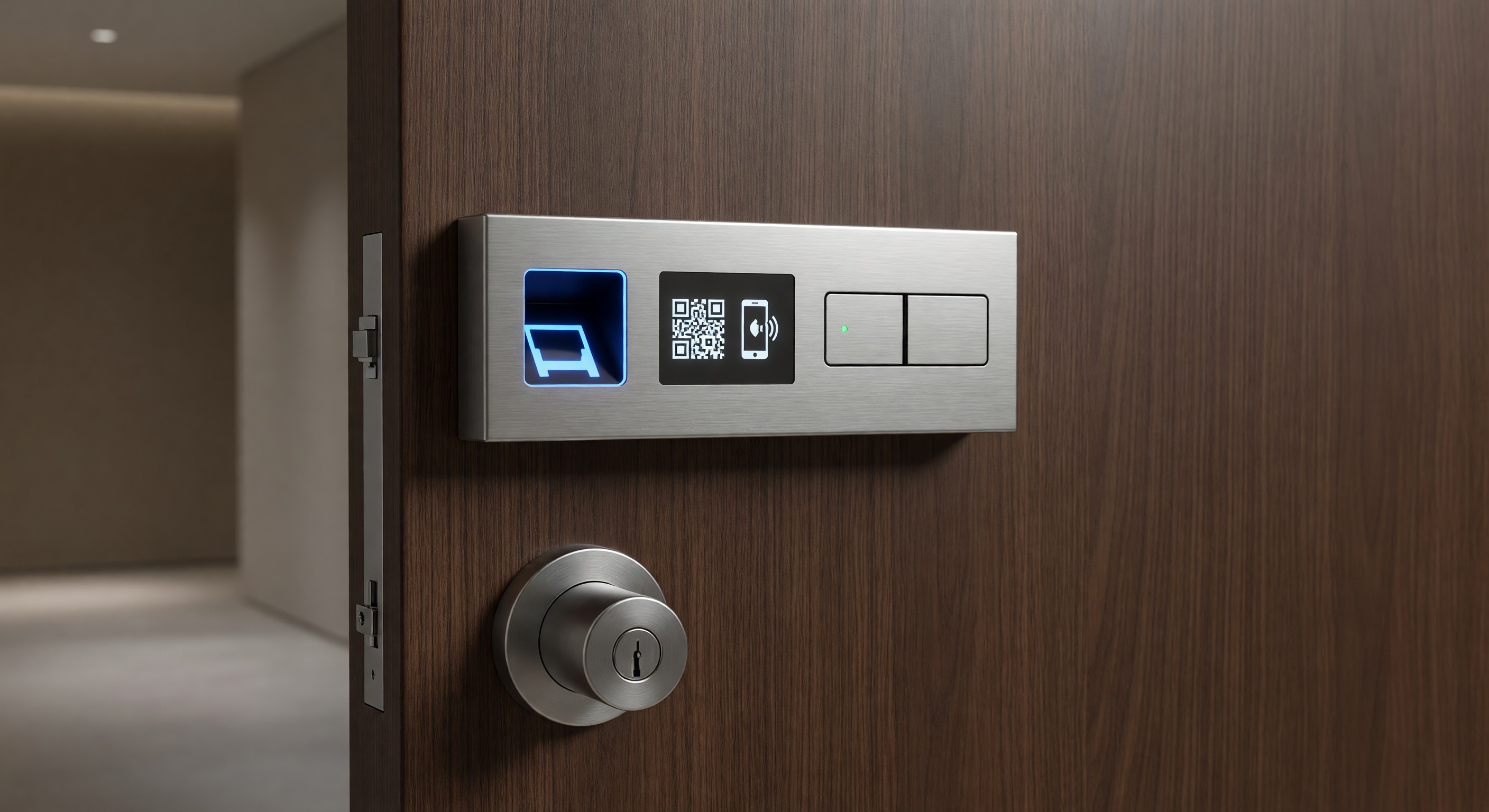
Multi-modal credential: Systems that accept any of multiple credential types (card, mobile, face, fingerprint) at the same reader give guests choice while maintaining security — the guest uses their preferred modality without the hotel needing to operate multiple incompatible systems.
Implementation Priorities for 2026
For hotels investing in access control in 2026:
Ensure BLE mobile key capability: If not already deployed, BLE-capable locks throughout the property are the most valuable access control upgrade for guest experience — enabling mobile key workflows that guests increasingly expect.
Upgrade to cloud-managed access for staff: Cloud-managed access control for staff and employee back-of-house areas improves security and reduces IT dependency for credential management.
Evaluate Apple/Google Wallet integration: For brand-affiliated hotels, check whether the brand’s lock vendor supports wallet-based key issuance — this reduces mobile key adoption friction for guests who prefer not to download brand apps.
Do not rush biometric: The regulatory environment for biometric data in hospitality is still developing. Properties that deploy facial recognition for guest access in 2026 must navigate significant legal complexity and risk of regulatory changes that may require system modifications.
Frequently Asked Questions
Are mobile keys more secure than RFID key cards for hotel guest rooms? Modern mobile BLE keys using industry-standard cryptography (similar to what locks from ASSA ABLOY, Dormakaba, and Allegion use) are generally more secure than older RFID card technologies that used less sophisticated encoding. Both are more secure than legacy magnetic stripe cards. The primary mobile key security advantage is that credentials can be immediately revoked remotely (unlike a lost physical card that requires a lock audit trail to monitor) and cannot be physically cloned (unlike some RFID card formats).
What should hotels consider before implementing facial recognition for guest access? Required considerations: (1) Legal review of applicable biometric privacy laws in the state(s) of operation; (2) Explicit consent mechanism for guest enrollment; (3) Data retention, security, and deletion policy; (4) Consent withdrawal process; (5) Privacy notice updates; (6) Data breach response protocol specific to biometric data. Do not deploy facial recognition for guest access without legal counsel review — the regulatory landscape is complex and penalties for violations (BIPA liquidated damages, CPRA enforcement) are significant.
How should hotels handle staff who lose or forget their access credentials? Define a clear temporary access protocol: supervisor verification of identity, issuance of a temporary credential with limited validity (end of that shift), and documentation of the event. Multiple credential losses by the same employee should trigger investigation — credential loss can sometimes be intentional (losing a card to give to an unauthorized person while maintaining plausible deniability). Track credential loss events per employee in HR records.
What is the ROI of upgrading to cloud-managed access control? Primary ROI drivers for cloud-managed access control: (1) Reduced IT labor for credential management (provisioning, termination) — cloud platforms allow remote management versus requiring on-premises server access; (2) Faster response to security events — immediate remote credential deactivation versus waiting to access the physical access control server; (3) Improved audit trail visibility — real-time access event monitoring from any location. ROI is typically most compelling for properties with multiple buildings or locations managed by a central security or HR team.
Further Reading from Authoritative Sources
- HFTP hotel mobile key technology and access control standards — HFTP provides hospitality technology standards for mobile key systems, BLE access control implementation, cloud platform evaluation, and guest technology adoption guidance applicable to hotel access control modernization, mobile key program planning, and biometric technology assessment.
- AHLA hotel access control program standards and guest technology adoption — AHLA provides hospitality operations guidance on guest technology programs, staff access control configuration, regulatory compliance for biometric applications, and mobile key adoption strategies applicable to hotel access control program development, employee credential management, and digital key guest experience design.