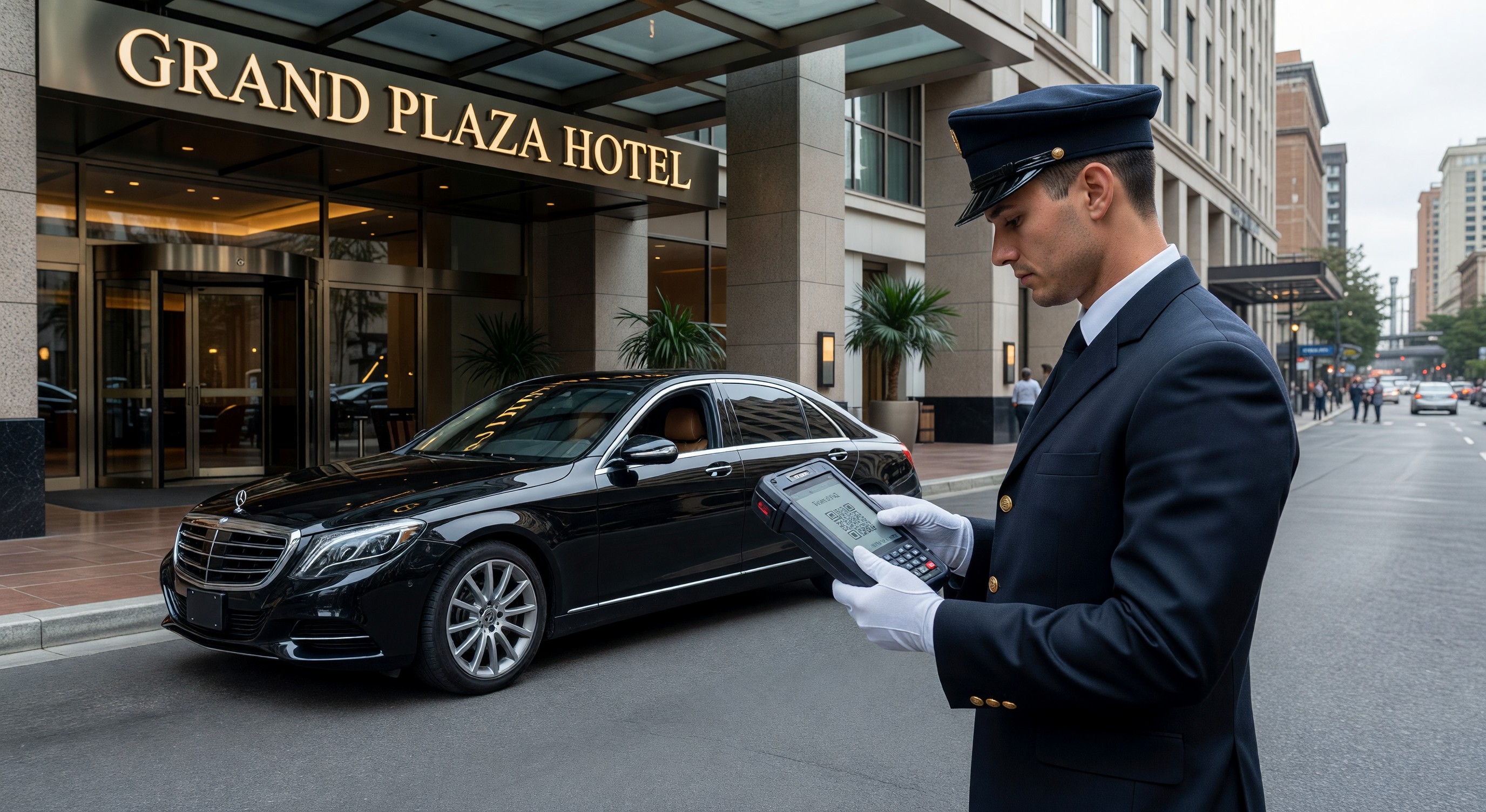
Valet parking is a guest-facing operation that sets the tone for the hotel experience — for many full-service and luxury properties, valet parking is the first meaningful interaction a guest has with the hotel. A smooth, fast valet arrival experience creates confidence; a disorganized, slow, or damage-prone valet operation creates an immediate and difficult-to-recover-from negative impression.
Managing valet parking well requires more than friendly attendants — it requires systematic vehicle tracking, damage documentation, technology integration, and operational standards that scale across multiple shifts and variable demand volumes.
Digital Valet Management Systems
The fundamental advance in valet operations over the past decade is the shift from paper tickets to digital valet management platforms. Paper ticket valet operations have irreducible problems: lost tickets creating retrieval delays, no visibility into lot location, manual damage documentation, and no data for service analytics.
Digital valet management platforms (Valets.com, Volvere, Digital Valet, and integrations in broader hospitality platforms) provide:
Mobile ticket issuance: Attendants use smartphones or purpose-built devices to issue tickets, photograph the vehicle on arrival, and record any pre-existing damage. The ticket includes a QR code or unique number the guest receives via SMS — eliminating the paper ticket the guest might lose.
Vehicle location tracking: Each vehicle’s parking position is recorded when it’s parked. When a guest requests their vehicle, the system identifies the exact location — reducing retrieval time from 10–15 minutes (typical for lot-searching without tracking) to 4–7 minutes.
Retrieval request workflow: Guests request vehicle retrieval via SMS, app, or a lobby kiosk — specifying a desired time. The system routes the retrieval request to available attendants and tracks request-to-delivery time for each transaction.
Damage documentation: Pre-arrival photographs with timestamp and attendant ID create an accurate record of vehicle condition on arrival. Post-retrieval damage claims can be compared against arrival documentation — either confirming pre-existing damage or triggering the damage claim process.
Revenue integration: Digital valet systems integrate with the hotel’s PARC system or PMS for automated folio posting. The guest’s vehicle retrieval triggers the parking charge post to their room folio — eliminating the manual charge posting step.
Arrival and Departure Procedures
Arrival standards:
- Meet the vehicle within 30 seconds of guest stopping at the valet entrance (staffing should reflect arrival demand pattern — adding attendants during check-in peak hours)
- Issue ticket, record license plate, photograph vehicle condition (all pre-existing damage documented)
- Move vehicle promptly — guests shouldn’t observe their car waiting for more than 2–3 minutes
- Greet arriving guests by name when possible (room reservation lookup on arrival device)
Departure standards:
- Vehicle presented at the curb within the committed retrieval time (typically 5–10 minutes)
- Vehicle condition exactly as received (attendants must not adjust mirrors, presets, or seat positions without returning them to original position)
- Inform guest of any parking charges applied and provide receipt
- Assist with loading luggage at departure
Peak demand management: Departure peaks (Sunday morning checkout at business hotels, afternoon checkout at resort properties) can overwhelm valet capacity. Staggering guest departure through checkout incentives (discount for late checkout, express checkout incentives for specific times), pre-staging frequently needed vehicles, and surge staffing during predictable peaks maintain service standards under high demand.
Vehicle Damage Management
Vehicle damage claims are the most significant liability exposure in valet operations. A structured damage management program minimizes both the incidence of damage and the hotel’s liability when damage occurs:
Pre-arrival documentation: Photograph every vehicle upon arrival, capturing all four sides and the roof. Time-stamp and attach to the guest’s valet ticket in the digital system. This documentation is the hotel’s evidence in disputed damage claims.
Attendant training: Valet driving standards — speed limits in the lot, prohibited maneuvers, seat/mirror adjustment protocols — reduce damage incidence. Parking in areas with adequate clearance (particularly for large SUVs and trucks) requires judgment training.
Damage discovery and reporting: When damage is discovered on retrieval (whether caused during the valet stay or pre-existing but not photographed on arrival), the procedure must be consistent: photograph the damage, notify a supervisor, complete a damage report before delivering the vehicle to the guest, and notify the guest transparently.
Damage claim process: When a guest claims damage, review arrival photographs immediately. If damage is clearly pre-existing (visible in arrival photo), inform the guest with the documented evidence. If damage is not in arrival photos, initiate the hotel’s damage claim process — which should include notation of the damage, collecting contact information, and referring to the hotel’s insurance process.
Insurance: Valet operations require garage keepers liability insurance — standard commercial general liability does not cover damage to vehicles in the hotel’s care, custody, and control. Confirm adequate coverage limits ($1M per occurrence minimum) and verify that the valet operation is within the coverage scope.
Staffing and Scheduling
Valet staffing requirements fluctuate dramatically with hotel occupancy, time of day, and special events. Under-staffing creates service failures; over-staffing is costly.
Demand forecasting: Use PMS arrival data to project check-in volume by 30-minute interval. Valet staffing should be scheduled to match the arrival pattern — not fixed-shift staffing that’s either over- or under-deployed throughout the day.
Position roles: Minimum valet team includes a podium attendant (manages guest interactions, ticket issuance, retrieval coordination) and driving attendants (move vehicles). For high-volume operations, a dispatcher role (coordinates retrieval requests and attendant assignments) improves throughput.
Tipping policy: Define and consistently apply a gratuity policy. Hotels vary: some collect and pool tips among all valet staff (more equitable but reduces individual motivation); others allow individual tipping (more motivating but creates perception issues for guests about expected tip amounts). Communicate the policy clearly to guests.
Modern valet technology platforms that integrate with barrier gate and access control systems allow seamless flow between valet delivery lanes and automated parking areas — providing guests flexibility between valet and self-park options with unified entry/exit management.
Frequently Asked Questions
What is the typical ROI on digital valet management technology? Digital valet platforms are priced on a per-property or per-transaction basis — typically $200–$500 per month for a full-service hotel valet operation. ROI comes from: reduced vehicle retrieval time (labor efficiency), damage claim reduction (documentation protects against fraudulent claims), and revenue capture improvement (digital integration with PMS eliminates manual folio posting gaps). Properties that have quantified valet technology ROI typically report 10–20% labor efficiency improvement and significant reduction in disputed damage claims. Payback period is typically 6–12 months.
How should hotels set valet parking rates? Valet rates should reflect the convenience premium over self-parking plus the labor cost of the attendant service. In markets where self-parking is $20–$25 overnight, valet parking at $35–$50 captures the convenience premium while remaining in the guest’s expected range. For luxury properties where valet is the only parking option, rates can be higher — $50–$80 overnight — when the alternative is street parking at a distance. Research competitive valet rates in the immediate market before setting rates; significant deviations from market norms (either high or low) affect guest satisfaction.
Should hotels offer a choice between valet and self-parking? Yes, when the physical layout allows it. Guests have different preferences — some enjoy the convenience and brand interaction of valet; others prefer the control and cost savings of self-parking. Hotels that offer only valet or only self-parking miss the preference distribution of their guest mix. When physical layout forces a choice (no self-park access separate from valet lanes), communicate the parking options clearly during booking so guests arrive informed.
What should hotels do when a guest disputes a valet damage claim that is supported by arrival documentation? Present the evidence respectfully — show the guest the time-stamped arrival photographs that document the pre-existing damage. Acknowledge the guest’s perspective while explaining what the evidence shows. If the damage is genuinely pre-existing per documentation, decline the claim politely but firmly. If there is any ambiguity in the documentation, err toward the guest relationship — the reputational cost of a guest who believes their car was damaged during valet and their claim was unfairly denied is higher than the cost of a modest goodwill resolution. Significant damage claims where there is factual dispute should involve management and potentially legal counsel before resolution.
Further Reading from Authoritative Sources
- AHLA hotel valet operations and guest experience resources — AHLA provides hospitality industry research on valet operations standards, guest experience management, and parking revenue practices applicable to hotel valet program development and performance benchmarking.
- IFMA parking facility operations and valet management standards — IFMA provides facility management professionals with parking operations standards, valet risk management guidance, and key control frameworks applicable to hotel valet program operations and liability management.