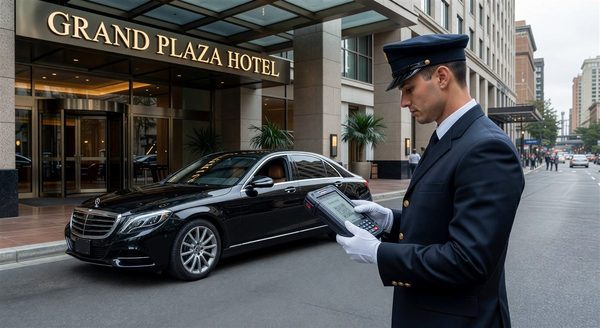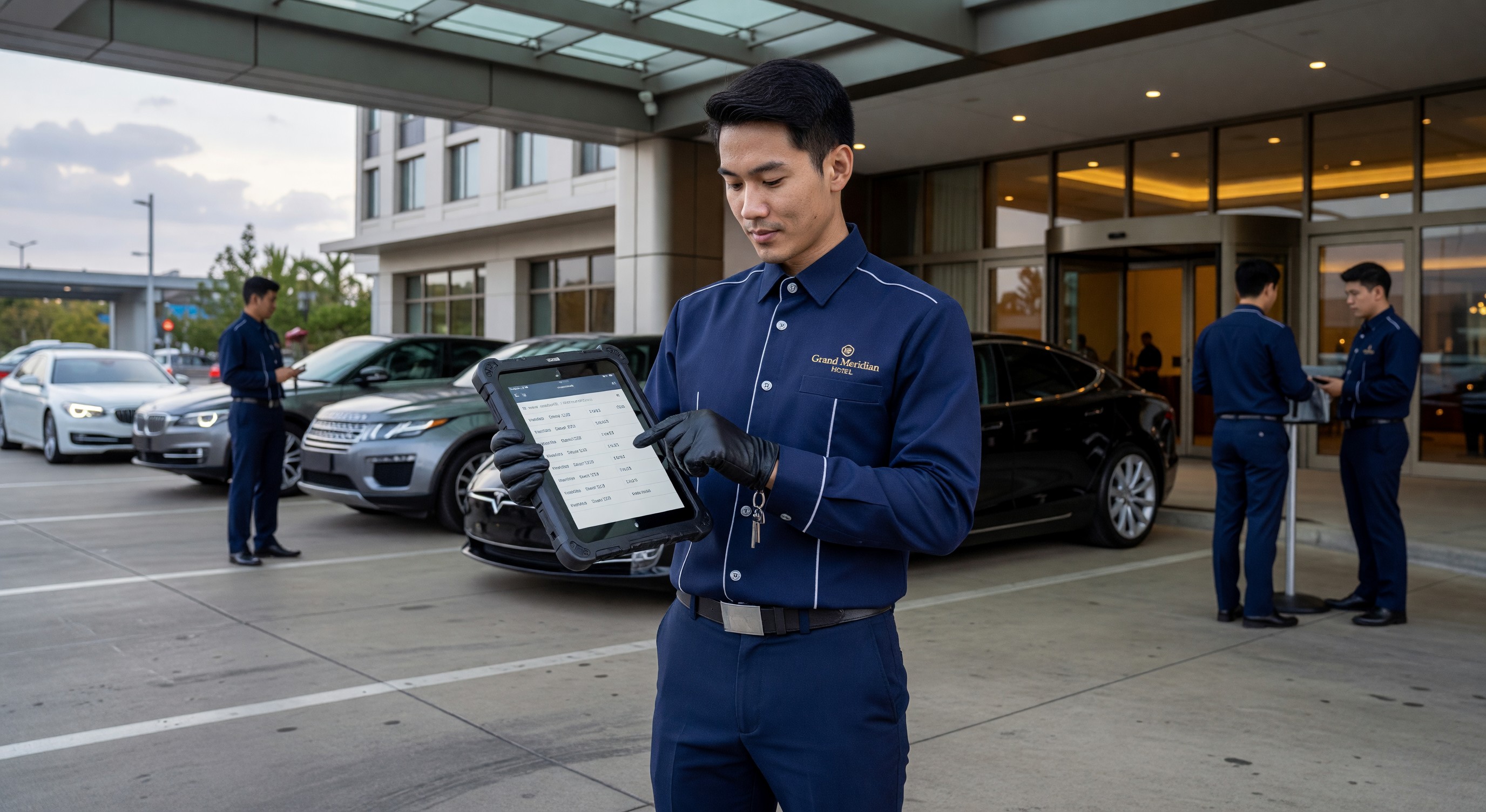
Hotel valet operations have historically been among the least technology-enabled functions in the property. While the front desk processes reservations on enterprise software and the kitchen manages orders through POS systems, many valet programs still run on paper ticket books, pegboard key racks, and the valet attendant’s memory of where car #47 was parked.
The consequences are operational: tickets get lost, keys get misplaced, retrieval times are inconsistent, and revenue reconciliation is inexact. Modern valet technology platforms address all of these systematically, and the investment case has become increasingly compelling as labor costs have risen and guest expectations have increased.
Digital Ticketing Platforms
Moving from Paper to Digital
Paper valet tickets work on a simple premise: a numbered ticket is issued to the parker, the same number hangs on the key, and the key hangs on a numbered peg. When the parker returns the ticket stub, the attendant retrieves the key and the car.
The failure modes of paper ticketing are numerous: tickets get wet or torn; numbers are smudged or illegible; carbon copy paper produces illegible third copies; tickets get misplaced in pockets; and revenue reconciliation requires counting and matching stacks of paper.
Digital valet management platforms replace paper with a mobile-first workflow:
- Attendant uses a smartphone or tablet to create a ticket
- A unique code or QR code is associated with the vehicle (photographed by the attendant)
- The vehicle’s location in the garage is logged (bay, row, level)
- The key is tagged with an RFID or barcode linked to the digital ticket
- Vehicle status is updated in real-time as cars are moved
Key Capabilities to Evaluate
Vehicle documentation: Digital systems should capture vehicle condition photos at intake. This documentation protects the property from damage claims and provides accountability. Paper systems almost never document vehicle condition consistently.
Location tracking: Logging where each vehicle is parked eliminates the “where is car #47?” problem that creates retrieval delays. Some systems support GPS or zone-based location tracking; simpler systems use attendant-entered zone codes.
Vehicle search: When a retrieval is requested, the system should immediately tell the attendant where the car is parked. The time from retrieval request to locating the vehicle should be under 30 seconds.
Queue management: For properties with high peak-hour volume, the platform should manage a retrieval queue — showing all pending retrievals, their wait times, and their locations — so multiple attendants can work efficiently without duplication.
Revenue capture: Digital tickets tied to a payment system ensure every completed transaction is recorded. Paper systems have no enforcement mechanism for unrecorded exits.
Key Management System Integration
Digital ticketing should integrate with a RFID-based key management system:
- Each key is placed in a lockable key cabinet
- Key cabinet drawer assignment is linked to the digital ticket
- Retrieving a key requires scanning the ticket QR code, which unlocks the specific drawer
- All key access is logged with timestamp and attendant credential
Key cabinet systems eliminate ad-hoc key storage (keys in pockets, loose in a box, on random hooks) and the associated theft and mix-up risks.
Guest-Facing Technology
SMS Retrieval
The highest-impact guest experience improvement in modern valet is the ability for guests to request their vehicle via SMS or a QR code without waiting at the valet podium.
The workflow:
- Guest receives a text message with a retrieval link when they park (or displays a QR code from the valet ticket)
- When ready to leave, guest taps the link or scans the QR code
- Request is sent to the valet system
- Attendant receives the request, retrieves the vehicle, and parks it in the staging area
- Guest receives an SMS notification when the vehicle is ready
The operational benefit: vehicles can be retrieved before guests arrive at the lobby door. When a guest approaches, their vehicle is staged and ready — the experience is nearly instantaneous rather than requiring a 5–10 minute wait.
The guest experience benefit: guests who are in a meeting, at the restaurant bar, or in the spa can request their vehicle 10 minutes before they’re ready. They feel in control of their departure time.
Implementation note: SMS retrieval requires that guest phone numbers are collected at ticket issuance. In most implementations, the attendant asks for the guest’s phone number and enters it into the system when creating the ticket. Some systems integrate with the PMS to pull the registered guest’s phone number automatically.
In-App Retrieval
For properties with a hotel app that guests use for check-in, room keys, and service requests, valet retrieval integrated into the app creates a seamless guest experience. The guest requests their car from the same interface they use for everything else.
App integration typically requires the valet management platform to expose an API that the hotel’s app team can connect to. Not all valet platforms offer this.
Analytics and Performance Management
Digital valet platforms generate data that paper systems cannot — and that data is valuable for managing the operation.
Key Metrics Available from Digital Platforms
Average retrieval time by time of day: Identifies peak-demand periods where additional staffing is needed. If retrieval time spikes from 4 minutes to 12 minutes between 5:30 PM and 6:30 PM, that’s the staffing gap to address.
Revenue per transaction: Flags exceptions — below-average transactions that might indicate unauthorized free exits or validation abuse.
Damage claims rate: Track incidents per 1,000 transactions. Increasing rates warrant investigation. Condition photos from digital intake are the first resource when a damage claim is made.
Attendant productivity: Transactions per attendant per shift. Useful for identifying staffing imbalances and scheduling improvements.
Validation usage: How many transactions were validated? By which outlets? Are validation patterns consistent with expected usage?
PMS Integration for Revenue Management
Valet management platforms that integrate with the PMS enable:
- Automatic posting of valet charges to the guest folio
- Guest authentication for complimentary valet (verify reservation status before honoring comp)
- Revenue reporting by room type, rate code, or channel
Without PMS integration, valet revenue must be manually reconciled with folio charges — an error-prone process that creates accounting gaps and comps that aren’t properly tracked.
Selecting a Valet Management Platform
Leading Platforms
The hotel valet technology market includes both specialized valet-only platforms and modules within broader parking management systems. Platforms commonly deployed in hotel environments include Towne Park Digital, ValetAnywhere, ParqEx, and valet modules within parking management systems from Genetec, ParkWhiz partners, and others.
Evaluation Criteria
Mobile first: Attendants work on a phone or tablet, not a desktop. The mobile experience must be intuitive enough to learn in 30 minutes and fast enough to keep up with peak arrival rates.
PMS integration: Is the specific integration with your PMS documented and production-tested?
Reliability: Valet technology that crashes during a busy Friday evening check-in is worse than no technology at all. Ask about uptime SLAs and what the fallback procedure is during a system outage.
Hardware requirements: What hardware is required (key cabinet, handheld scanner, receipt printer)? Who owns and maintains the hardware?
Pricing model: Per transaction, per property monthly, or per user? Model the cost against your annual transaction volume to compare options accurately.
FAQ
What’s the minimum transaction volume that justifies valet management technology? Any property running more than 1,000 valet transactions per month will see a meaningful efficiency and revenue integrity improvement from digital valet management. Below that volume, the paper system’s limitations are manageable. But given that full-service hotels often run 3,000–8,000+ monthly transactions, the technology case is clear at most full-service properties.
Can we use a consumer app for valet management or do we need a commercial platform? Consumer solutions (some hospitality management apps have basic valet functionality) may work for very small operations. For full-service hotel valet with significant transaction volume, key management requirements, and PMS integration needs, a purpose-built commercial valet platform is a more durable investment.
How do we communicate the transition from paper to digital to valet staff? Involve senior valet staff in the system evaluation and selection process. Their buy-in significantly affects adoption quality. Provide hands-on training before go-live and run a parallel period (paper + digital simultaneously) for at least one week. Identify a champion on the team — a tech-comfortable attendant who helps peers troubleshoot.
What’s a reasonable ROI timeline for valet management technology? At a property running 5,000+ monthly transactions, a digital platform that improves revenue capture by 2–3% and reduces retrieval time by 30% (improving throughput by 10–15%) typically pays back within 12–18 months.
Further Reading from Authoritative Sources
- HFTP hotel valet technology integration and operations standards — HFTP provides hospitality technology professionals with valet management platform standards, PMS integration requirements, and operations technology governance frameworks applicable to hotel valet technology selection, implementation, and performance management.
- AHLA hotel valet operations and guest experience standards — AHLA provides hospitality industry standards on valet operations management, guest experience expectations, and technology adoption practices applicable to hotel valet technology program evaluation and guest satisfaction improvement.