Transportation management at full-service hotels extends well beyond the parking garage. Many properties operate valet services, airport shuttle fleets, hotel vehicle programs (courtesy cars, guest bicycles, e-bikes), and coordinate with third-party transportation providers — all of which must function as a seamless system from the guest’s perspective.
For facility managers, vehicle-related infrastructure (parking structures, shuttle loading areas, charging infrastructure, fleet maintenance programs) intersects with the operational transportation programs managed by front desk and guest services teams. This guide addresses the facility and operational dimensions of hotel transportation coordination.
Valet Operations: The Parking-Service Interface
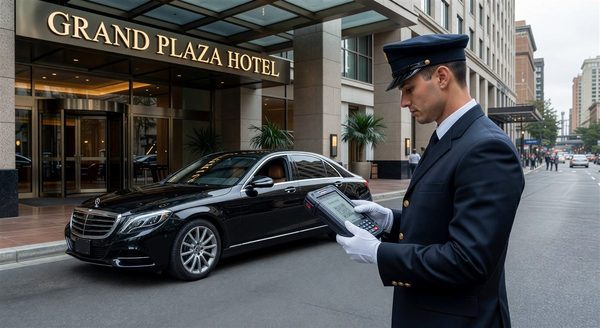
Valet parking is both a parking management tool (enabling denser vehicle storage through tandem parking) and a premium service offering that can command $10–$30 in daily fee premium over self-park. The valet experience quality depends on several facility and operational factors:
Porte-cochère design: The physical space where guests hand off and retrieve vehicles determines valet service speed and quality. Adequate drop-off and pick-up lane depth (minimum 60 feet for simultaneous vehicle staging), protection from weather, clear traffic flow, and visual separation from taxi/rideshare zones all contribute to a functional valet arrival experience.
Valet storage area: Valet operations require dedicated storage for keys and vehicles — often in spaces unsuitable for self-park (tight maneuvering areas, tandem arrangements, remote sections of a garage). Key storage (secure key cabinet or valet management software with key tracking) is a security and liability requirement.
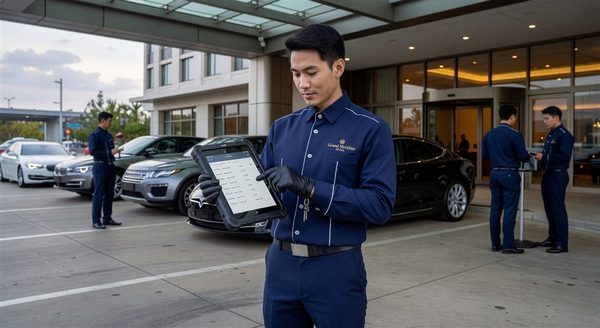
Valet management technology: Modern valet management platforms (Zingle, ParqEx, Veripark valet, or integrated features in PARC systems) enable:
- Digital ticket creation at vehicle drop-off
- Guest text messaging when vehicle is ready (reducing lobby congestion from guests waiting at the valet stand)
- Vehicle retrieval request via app or SMS (guest requests pickup from the restaurant before finishing dessert)
- Vehicle status tracking (where the car is, who has the keys)
- Damage documentation before vehicle acceptance (photo documentation at check-in prevents disputes)
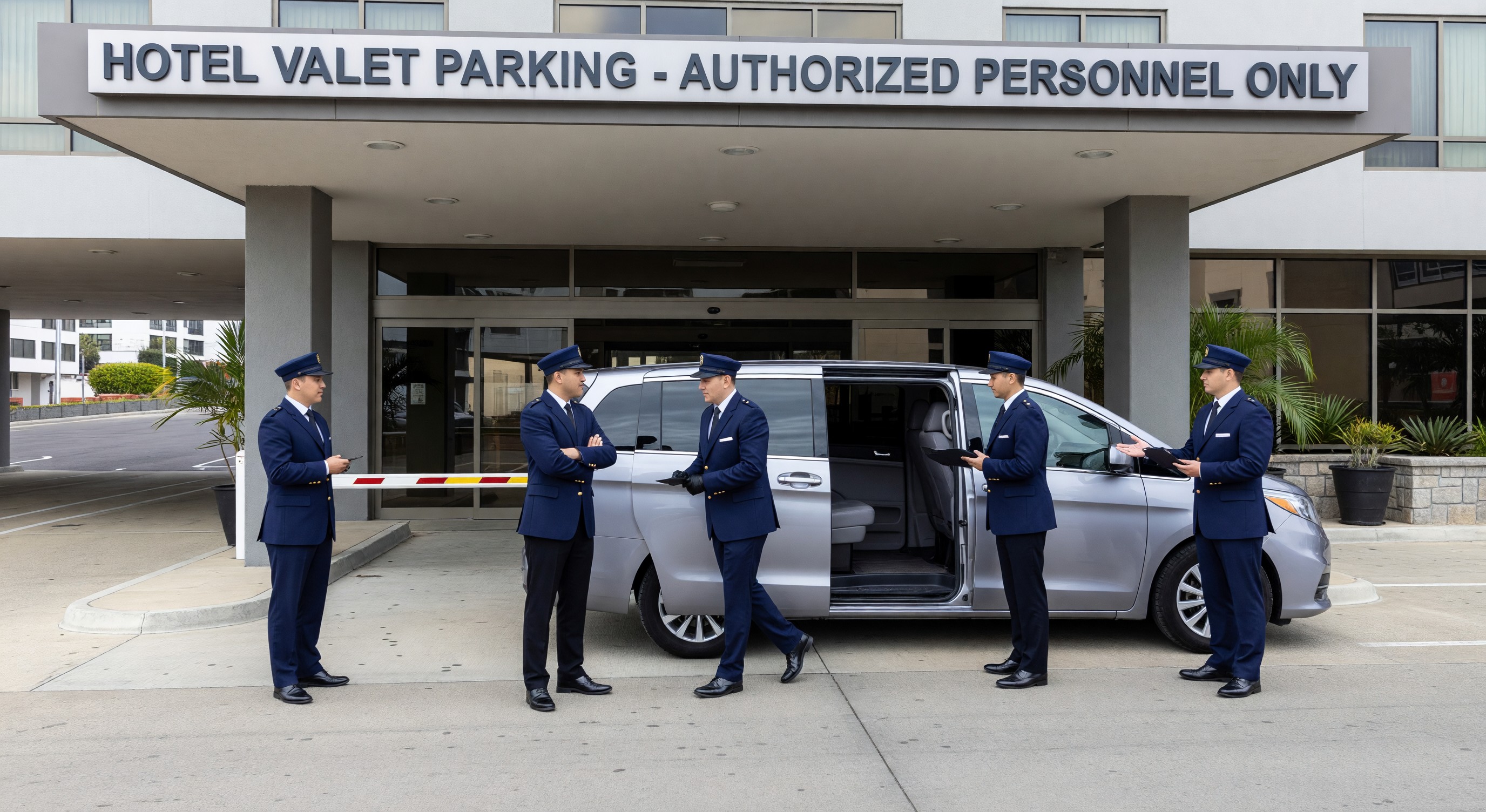
Staffing and scheduling: Valet demand peaks at hotel arrival and departure windows (7–10 a.m. and 3–7 p.m. typically) and is heavily event-dependent. Accurate demand forecasting — using hotel occupancy, event calendar, and historical valet volume data — enables scheduling that matches labor to actual demand rather than maintaining consistent headcount regardless of demand.
Shuttle Fleet Management
Airport shuttle service is a significant guest amenity differentiator at properties near airports and a source of operational complexity. Fleet management involves:
Vehicle specification and acquisition: Hotel shuttle vehicles must balance passenger capacity (typically 8–14 passengers in standard hotel shuttle configurations), accessibility (ADA ramp or lift requirement for most commercial shuttle applications), and durability for commercial use cycles (often 200,000+ miles). Commercial van platforms (Ford Transit, Mercedes Sprinter, Chevrolet Express) dominate hotel shuttle applications.
EV shuttle transition: As of 2025, EV transit vans (BYD, Blue Bird, Proterra) and EV conversions of common shuttle platforms are available at hotel-relevant price points. EV shuttles reduce fuel and maintenance costs but require charging infrastructure at the hotel (typically Level 2 charging, with overnight charging completing a full charge from partial depletion). Properties transitioning shuttle fleets to EV should plan charging infrastructure alongside vehicle acquisition.
Driver scheduling and compliance: Commercial driver’s licenses (CDL) are required for vehicles above certain weight thresholds and/or passenger capacities in most states. Verify that all shuttle drivers hold required licenses and comply with hours-of-service requirements applicable to commercial vehicle operation.
Maintenance programs: Commercial shuttle vehicles in constant-use hotel applications require more frequent maintenance than typical consumer vehicles. Oil changes at 5,000–7,500 mile intervals, brake inspections every 15,000 miles, tire rotation and pressure management, and regular safety inspections are baseline requirements. Fleet management software (Fleetio, Samsara, Verizon Connect) tracks maintenance schedules, driver behavior, fuel consumption, and vehicle location.
GPS and fleet tracking: Real-time GPS tracking of shuttle vehicles enables accurate guest pickup estimates (no more “the shuttle is 10 minutes away” as a guess), driver behavior monitoring, route optimization, and vehicle retrieval if a vehicle breaks down or is delayed.
Guest Bicycle and Micro-Mobility Programs
Bicycle rental and e-bike loan programs are popular amenities at urban and resort hotels. Facility considerations:
Secure storage: Bicycles and e-bikes require secure, weather-protected storage when not in use. A dedicated bike room or locked bike cage prevents theft and protects from weather damage.
E-bike charging: E-bikes require 120V electrical access for charging. A dedicated charging station in the bike storage area with sufficient outlets for the full fleet ensures bikes are charged and ready for guest use.
Maintenance program: Bicycle fleets require periodic maintenance — tire pressure, brake adjustment, chain lubrication, and annual comprehensive service. Many hotels contract with a local bike shop for quarterly service visits and on-call repair.
Helmet and accessory inventory: Helmets (matching the fleet’s bike sizes), locks, baskets, and rain covers require inventory management and periodic replacement. These items have high loss and wear rates in guest-use applications.
Rideshare and Transportation Network Company Coordination
Hotels generate significant rideshare and taxi pickup/drop-off traffic that must be managed separately from hotel valet operations to prevent congestion. Best practices:
- Designate a specific rideshare/taxi pickup and drop-off zone separate from valet lanes — clearly signed and geofenced if the hotel provides its app with in-app navigation to the pickup zone
- Communicate the pickup zone address (not just the hotel address) to rideshare platforms — many hotels are in locations where the default GPS destination brings drivers to the wrong access point
- Monitor pickup zone for blocking and double-parking; brief front door staff on rideshare coordination protocols
Parking + Transportation as an Integrated Guest Arrival Experience
The best-managed hotel transportation programs treat parking, valet, shuttle, and rideshare coordination as one integrated arrival experience rather than siloed operations. From the first point of contact (pre-arrival transportation communication) through parking confirmation, valet receipt, and shuttle scheduling, the guest should encounter a coordinated experience that communicates “this hotel has thought about how guests arrive.”
Modern parking access and revenue control systems integrate with hotel management platforms to coordinate the parking component of this arrival experience — from LPR recognition at entry to automated folio posting — as part of the broader guest transportation ecosystem.
Frequently Asked Questions
How many valet staff does a hotel typically need? Valet staffing depends on vehicle volume per hour and target vehicle delivery time. A typical calculation: if peak hour sees 40 vehicle retrievals and target retrieval time is 10 minutes, and each valet can retrieve 4 vehicles per hour (accounting for walking time, paperwork, and customer interaction), you need 10 valets at peak. Add 20% buffer for variable retrieval times. Most hotels staff valet in tiers — minimum coverage at off-peak hours, full team at arrival and departure windows.
What are the insurance requirements for hotel shuttle operations? Commercial vehicle insurance for hotel shuttle operations typically requires minimum $1 million per occurrence liability coverage; many brand standards and some state regulations require $2 million minimum. Umbrella liability coverage of $5–$10 million is standard for properties with shuttle operations. Verify your insurance broker has commercial transportation experience — standard hotel general liability policies often exclude or underfund commercial vehicle operations.
How should hotels handle the transition to EV shuttle fleets? Phase the transition rather than replacing all vehicles simultaneously. Replace vehicles as they reach end of useful life (typically 200,000–250,000 miles for shuttle applications) with EV alternatives. Ensure charging infrastructure is installed before the first EV shuttle arrives — Level 2 charging at 7.2 kW fully replenishes a typical shuttle battery from 20% in 6–8 hours of overnight charging. Evaluate whether existing electrical service to shuttle parking areas supports the added charging load.
What is the ADA requirement for hotel shuttles? Under the Americans with Disabilities Act, hotels that provide shuttle service as a public accommodation must ensure that shuttle service is accessible to persons with disabilities. For fixed-route shuttle service, accessible vehicles are required. For demand-responsive service (guests call for pickup), equivalent service must be provided for guests who cannot use a non-accessible vehicle (equivalent service can mean a different accessible vehicle dispatched, not necessarily that every shuttle must be accessible). Consult your ADA compliance advisor for your specific shuttle operation configuration.
Further Reading from Authoritative Sources
- ADA hotel shuttle accessibility and transportation requirements — ADA.gov provides the authoritative guidance on transportation accessibility requirements for hotel shuttle operations including fixed-route and demand-responsive service requirements applicable to hotel fleet planning and compliance.
- AHLA hotel transportation management and guest arrival experience standards — AHLA provides hospitality industry standards on transportation operations management, valet program guidelines, and guest arrival experience practices applicable to hotel parking and fleet management program design and operational improvement.