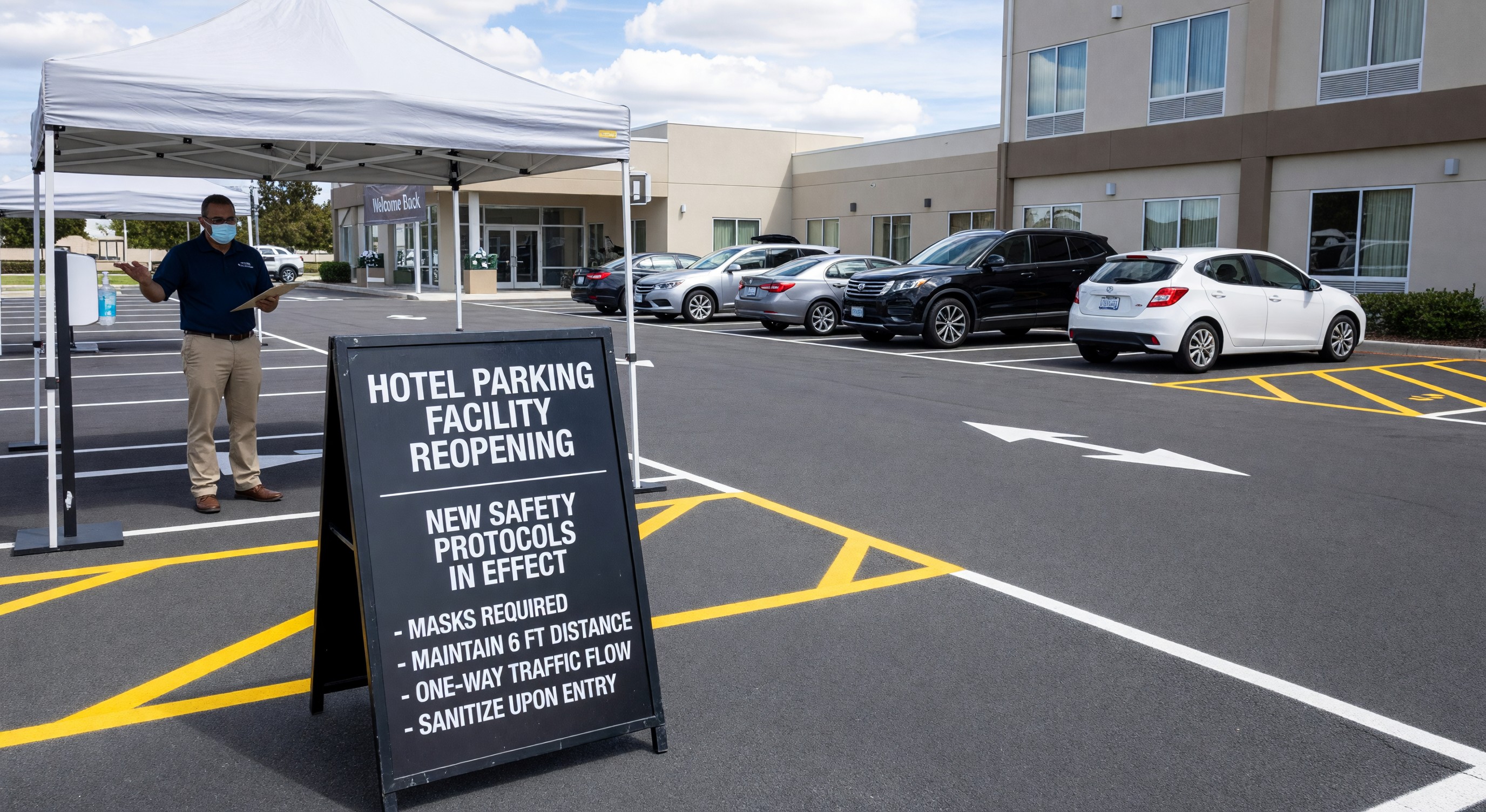
As hotels across the country began reopening and ramping occupancy in early 2021, the parking operation faced a specific set of challenges beyond the general operational restart. Equipment that sat dormant for months, staffing models that needed to be rebuilt, and the opportunity to implement contactless upgrades under cover of the restart all required deliberate management attention.
This guide addresses the practical steps for safely and effectively reopening a hotel parking operation after extended closure or significantly reduced operations.
Equipment Restart Procedures
Parking equipment that has been dormant requires a systematic inspection before returning to active service. Assume nothing works until you’ve verified it.
Gate Systems and Barriers
Gate arm mechanisms that have sat idle for months may have seized bearings, deteriorated grease, or hydraulic fluid that has separated. A proper restart checklist:
- Visual inspection of all gate arms for cracks, warping, or damage
- Manual operation test: raise and lower each arm manually to check for binding or unusual resistance
- Motor function test: verify motor starts smoothly without unusual sounds
- Full cycle test: run each gate through 20–30 complete open/close cycles to verify consistent operation
- Safety loop test: verify that the vehicle detection loops in the pavement respond to a vehicle (place a metal object over the loop to simulate a vehicle if no traffic is available)
- Intercom function test: verify that every lane intercom connects to the correct location and is clearly audible
If a gate system has been offline for an extended period (6+ months), contact the manufacturer or service vendor for a recommended startup procedure specific to your equipment model.
Pay Stations and Ticket Dispensers
Pay stations have electronics, coin mechanisms, and bill validators that all require inspection after dormancy:
- Power-on self-test: most modern pay stations run a self-diagnostic at power-on
- Coin mechanism inspection: empty the coin hopper, inspect for corrosion or debris, run test cycle
- Bill validator: clean the transport path, verify sensor function
- Receipt printer: check paper supply, run a test receipt
- Card reader: verify PCI compliance certification hasn’t expired; if using an older reader with an expired certification, prioritize replacement before accepting payments
- Display screen: verify all elements display correctly
- Communication test: verify the pay station is communicating with the central management system
Software and Integration
Cloud-based parking management platforms may have pending software updates that accumulated during the closure period. Apply updates before returning to full operation and verify that all integrations (PMS, payment processor) are functioning correctly post-update.
Verify your PCI DSS compliance status — payment card industry compliance requirements haven’t paused during the shutdown. If your compliance certification has expired, renew before accepting card payments.
Parking Lot and Structure
Physical inspection of the parking lot or structure after extended low-use period:
- Lighting: test every fixture; replace burnt bulbs and verify that photocells (dusk-to-dawn sensors) operate correctly
- Signage: inspect for damage, fading, or displacement; verify that wayfinding is clear
- Pavement markings: inspect stall markings, arrows, and any ADA stall markings for visibility
- Drainage: clear any debris from drains; standing water from spring rains should drain freely
- Structural inspection: for parking structures, have a qualified engineer inspect for any changes (cracking, spalling, settlement) that may have occurred during the reduced maintenance period
Staff Restart
Rehiring and Retraining
Many properties furloughed or laid off parking staff during the pandemic. Rebuilding the staffing model for the reopening period requires:
- Advance notice to returning staff sufficient to allow hiring to compete with other reopening businesses
- Retraining on updated COVID-era procedures (sanitization protocols, PPE requirements, contactless transaction processing)
- Training on any new technology implemented during the closure (LPR systems, mobile payment, updated pay stations)
- Refresher training on the PMS integration and parking management software
Valet Restart Considerations
Properties that suspended valet service are making one of three decisions in 2021:
- Fully restart valet at pre-COVID staffing and service levels
- Restart at reduced valet staffing with self-park as the primary option
- Keep valet suspended indefinitely
The data from 2020 showed that many guests were comfortable with self-parking during the pandemic, and the labor cost and operational complexity of valet is significant. Properties that were running valet primarily as a service expectation rather than because guests actively preferred it are reevaluating.
If restarting valet, update the vehicle sanitization protocol: at minimum, staff should sanitize the steering wheel, shift knob, and door handles when taking and returning a vehicle. Document the protocol and train all staff.
Implementing Contactless Upgrades
The reopening period is an ideal time to implement contactless parking improvements that may have been deferred. With occupancy ramping gradually, there’s tolerance for the temporary service friction that comes with any new technology deployment.
License plate recognition (LPR): If the property has been managing guest validation manually or via ticket systems, this is the moment to evaluate LPR as a contactless alternative. LPR captures the vehicle’s license plate at entry and links it to the reservation, enabling hands-free entry and exit for hotel guests.
Mobile payment integration: Adding the ability for transient parkers to pay via a mobile app or QR code at exit eliminates the need to use a shared keypad at the pay station. Most major parking management platforms have mobile payment capability — activating it is often a software configuration rather than a hardware change.
Contactless ticketing: For properties that still use paper tickets, evaluating a shift to keypad-entry or credential-only systems that eliminate the shared ticket dispenser touchpoint is worth the analysis.
Pricing Strategy for the Recovery Period
Coming out of the pandemic with an established pricing structure isn’t the right approach. Consider:
Dynamic recovery pricing: Keep base overnight rates competitive during the recovery period when hotel occupancy is still building. Avoid raising parking rates during the initial recovery phase when guests are already cautious about value.
Transient opportunity: With many nearby parking operations also recovering, there may be an opportunity to attract transient parkers who would normally go elsewhere. If the property has excess capacity (likely during early recovery), actively marketing to nearby workers and visitors can accelerate revenue recovery.
Monthly programs: The hybrid work model emerging from the pandemic creates new demand for flexible monthly parking. Office workers who commute to nearby buildings 2–3 days per week may find hotel parking rates attractive compared to dedicated monthly parking in urban structures.
Financial Recovery Tracking
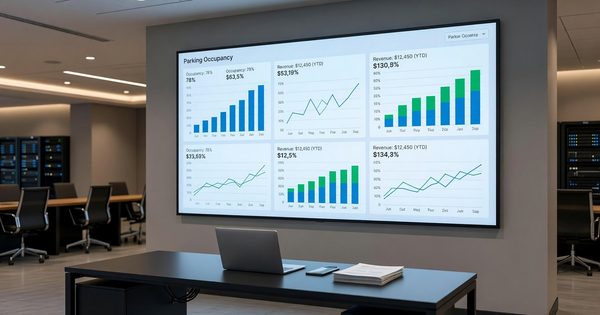
Establish a parking revenue recovery tracking framework from day one of reopening. Key metrics to track weekly during the recovery phase:
- Revenue vs. pre-COVID baseline (same week in 2019 is a better comparison than 2020)
- Occupancy rate (spaces used vs. available)
- Average rate per transaction
- Guest penetration rate (parking guests as % of hotel guests)
- Transient revenue as a percentage of total parking revenue
Share these metrics with ownership/management in the weekly revenue review. Parking revenue recovery often lags room occupancy recovery by 4–6 weeks as the mix of demand (groups vs. transient, business vs. leisure) normalizes.
FAQ
How long should we expect parking revenue to take to recover to pre-COVID levels? Based on the patterns from previous hospitality industry disruptions, parking revenue typically follows room revenue recovery with a 4–8 week lag. Urban business hotels may see slower recovery if business travel is still below pre-COVID levels. Drive-to leisure properties may recover faster or even exceed 2019 levels if regional drive-to demand is strong.
Should we reinstate any complimentary parking programs we suspended during COVID? Evaluate each program on its merits before reinstating. Programs that existed primarily as accommodation to pressure rather than genuine value drivers may be better left suspended. Programs tied to brand loyalty tier benefits or meaningful package offers warrant reinstatement as guest programs recover.
What’s the priority order for equipment issues found during the restart inspection? Life safety first (emergency call systems, lighting in occupied areas), then guest-facing equipment (entry/exit gates, pay stations), then revenue control systems, then monitoring and reporting. Back-office equipment issues can wait for normal service scheduling.
Is this a good time to negotiate new terms with our parking management software vendor? Yes — many parking technology vendors are also in recovery mode and open to discussions about pricing, contract terms, and feature additions. The leverage from being a continuing customer during a period of industry stress is real. Raise any conversations about contract improvements while the vendor’s motivation to retain customers is heightened.
Further Reading from Authoritative Sources
- HFTP hotel parking operations restart and contactless technology standards — HFTP provides hospitality technology standards for parking system restart procedures, payment compliance requirements, and contactless technology implementation guidance applicable to hotel parking operations reopening protocols, equipment inspection requirements, and technology upgrade planning.
- AHLA hotel parking reopening operational protocols and revenue recovery standards — AHLA provides hospitality operations guidance on facility reopening protocols, revenue recovery tracking, and parking operations management standards applicable to hotel parking restart planning, pricing strategy during recovery, and performance measurement for post-pandemic parking operations.