As hotel properties worked through the first year of the COVID-19 pandemic, indoor air quality became a guest safety concern that facility managers had to address concretely. Guests returning to hotels in 2020 asked questions that rarely came up before: “How is the air cleaned?” “Do rooms recirculate air from other rooms?” “Are there HEPA filters?”
Answering these questions accurately required facility managers to understand their HVAC systems at a level of detail they hadn’t previously needed. And in many cases, the honest answers revealed opportunities for genuine improvement — not just for COVID mitigation, but for the long-term indoor air quality standards that the industry should have been applying more rigorously.
The Aerosol Transmission Context
The emerging scientific consensus throughout 2020 increasingly pointed to aerosol transmission as a significant pathway for COVID-19. Unlike large respiratory droplets that fall quickly to surfaces, aerosols — tiny particles that can remain suspended in air — can accumulate in poorly ventilated indoor spaces.
The HVAC implications: ventilation quantity (how much fresh air enters a space) and filtration quality (how effectively recirculated air has particles removed) both directly affect aerosol concentration.
Hotels were relatively well-positioned compared to some indoor environments because:
- Guestrooms with PTAC units typically take 100% outdoor air — there’s no recirculation from other rooms
- Building codes require minimum outdoor air delivery in public spaces
- The transient nature of occupancy means less long-term aerosol accumulation than workplaces with fixed seating arrangements
However, many properties fell short of best practices in specific areas that merited attention.
PTAC Systems: Mostly Good News
Properties with PTAC units in guestrooms had a natural advantage in the COVID context: standard PTAC operation draws 100% outdoor air for cooling and heating, rather than recirculating air from other rooms through a central system.
This architecture means there is no pathway for air from one guestroom to enter another via the HVAC system — a significant reassurance that could be communicated accurately to guests.
The caveat: this is true for PTAC units operating in cooling or heating mode using the outdoor air coil. When operating in “fan only” mode, a PTAC recirculates room air through the filter without exchanging outdoor air. This mode should not be used in a pandemic context.
Recommended actions for PTAC properties:
- Verify that all PTAC units are drawing outdoor air properly (inspect the outdoor air dampers — dampers that are stuck closed convert a PTACinto a recirculation-only unit)
- Increase filter replacement frequency from quarterly to monthly during peak pandemic periods
- Upgrade to MERV-8 or MERV-11 filters where the unit supports it (check the manufacturer specifications — using too restrictive a filter can reduce airflow below minimum levels)
Central HVAC Systems: More Complex
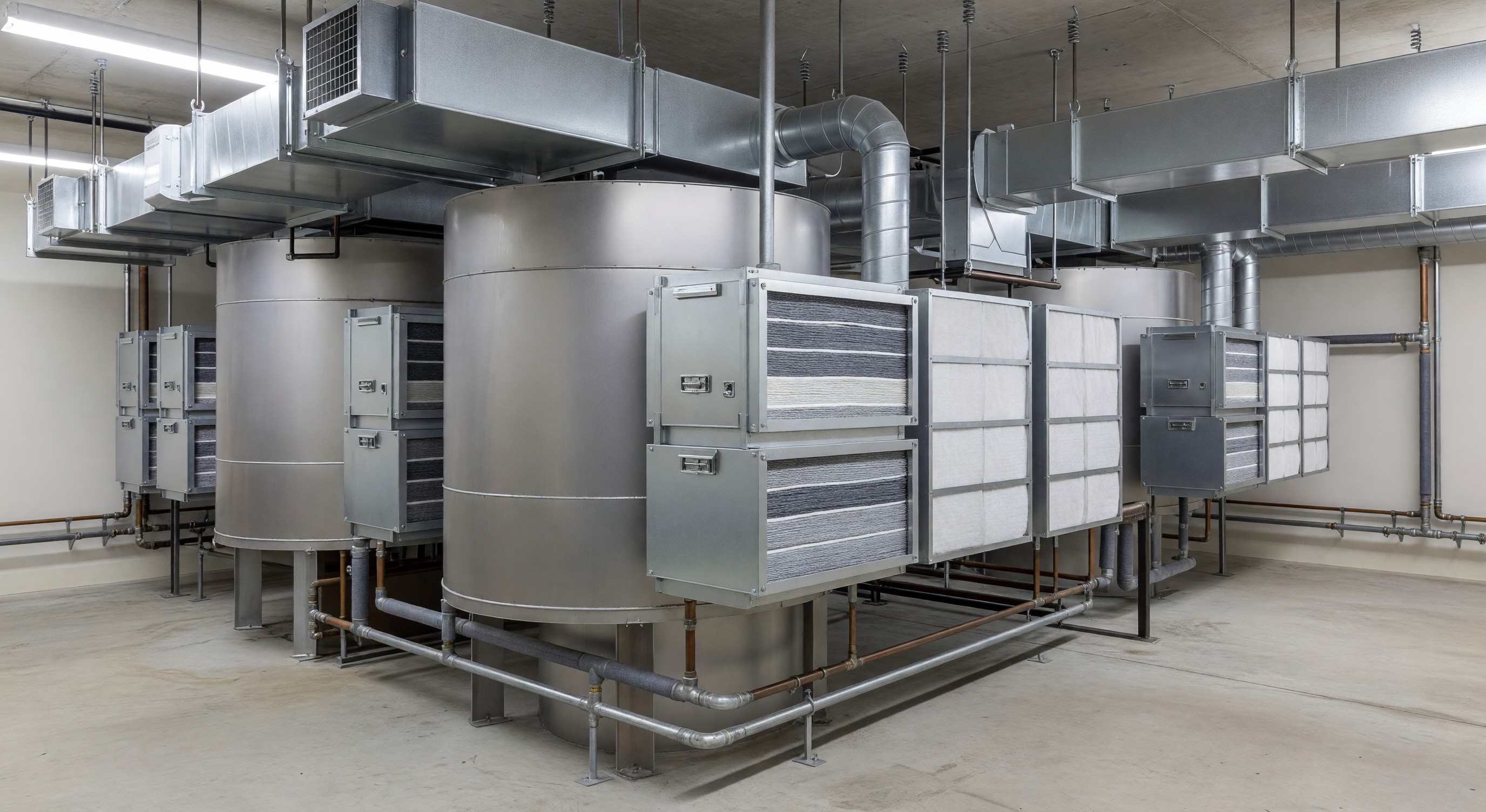
Properties with fan coil units connected to a central air handling system, or with dedicated outdoor air systems, required more careful analysis.
Central systems recirculate air within the building. The degree to which this creates cross-contamination risk depends on:
- How much outdoor air is mixed with recirculated air
- The filtration efficiency of the filters in the air handling unit
- The airflow paths and pressure relationships between spaces
ASHRAE Guidance
ASHRAE (the leading engineering organization for building systems) published specific COVID-19 guidance beginning in April 2020. Key recommendations for central systems:
- Increase outdoor air delivery to the maximum the system can provide without compromising thermal comfort
- Disable demand-controlled ventilation (DCV) that might reduce outdoor air based on CO2 sensors during the pandemic
- Upgrade filters to MERV-13 or higher where the system supports it
- Run AHU fans continuously (or at high speed) rather than cycling with occupancy
For many properties, implementing these recommendations was straightforward. For systems at the limit of their capacity, increasing outdoor air delivery created thermal comfort challenges — bringing in more cold winter air or hot humid summer air than the system could condition adequately.
Filtration Upgrades
Filter upgrade was the most accessible short-term HVAC improvement for COVID mitigation.
MERV ratings (Minimum Efficiency Reporting Values) measure how effectively a filter removes particles:
- MERV-8: Removes 70-85% of particles in the 3–10 micron range. Standard hotel specification prior to COVID.
- MERV-11: Removes 85-95% of 1–3 micron particles. Better COVID-relevant filtration.
- MERV-13: Removes 90%+ of 1–3 micron particles. Recommended by ASHRAE for COVID mitigation. Requires adequate system airflow capacity.
- HEPA: Removes 99.97% of particles 0.3 microns and larger. Typically used in portable air purifiers rather than built into hotel HVAC systems.
Limitations: Upgrading to a higher-MERV filter in a system designed for MERV-8 can reduce airflow significantly — potentially below minimum ventilation requirements. The pressure drop across a MERV-13 filter is roughly 3x that of a MERV-8. Always consult with a mechanical engineer before upgrading filter specifications in central systems.
UV-C Germicidal Irradiation
UV-C ultraviolet light inactivates microorganisms including viruses and bacteria. UV-C systems in HVAC applications come in two main configurations:
Coil irradiation: UV-C lamps mounted to continuously irradiate the cooling and heating coils, preventing biofilm and mold growth on coil surfaces. This is primarily a maintenance benefit (cleaner coils, better heat transfer) rather than an air quality intervention.
Upper-room germicidal UV: UV-C fixtures that irradiate the upper portion of a room space, creating a disinfection zone above head height. Air circulating through this zone is exposed to germicidal UV. Requires careful placement to avoid human exposure to UV-C.
In-duct UV-C: UV-C lamps installed in air handling units or ductwork to treat air as it passes through. Efficacy depends on the exposure time (air moving quickly through a duct has limited exposure), lamp intensity, and maintenance of the lamps.
UV-C installations require professional design and installation — improper placement creates human exposure risk. Source the installation from contractors with specific UVGI (Ultraviolet Germicidal Irradiation) experience.
Portable Air Purifiers
For common areas, lobby spaces, and meeting rooms where the central HVAC may not achieve MERV-13 equivalent filtration, HEPA-rated portable air purifiers provided a practical supplement.
Selection criteria:
- Clean Air Delivery Rate (CADR) appropriate for the room volume
- True HEPA filtration (not “HEPA-type”)
- Reasonable noise level for the application (lobby and meeting room placements need quiet units)
- Filter replacement cost and frequency
A practical calculation: for an occupied meeting room of 1,000 sq ft with 10-foot ceilings (10,000 cubic feet), achieving 6 air changes per hour requires a CADR of approximately 1,000 CFM. Most portable HEPA units deliver 100–500 CFM, meaning multiple units are needed for adequate coverage of larger spaces.
Communication Strategy
Whatever improvements were made to HVAC systems, communicating them accurately to guests and groups was a separate management task.
Effective communication:
- Specific and accurate (cite the MERV rating, not just “upgraded filters”)
- Referenced to recognized standards (ASHRAE guidance)
- Honest about limitations (“our guestrooms use 100% outdoor air” is accurate for PTAC properties; “our air is completely HEPA filtered” is accurate only for specific systems)
- Verifiable (have documentation available if asked)
Over-claiming was both a guest trust risk and a potential legal exposure. Under-communicating left legitimate competitive advantages on the table.
FAQ
Do guestroom PTAC units spread air between rooms? No — standard PTAC units in cooling or heating mode draw outdoor air and do not circulate air between rooms. This is one of the hygiene advantages of PTAC-based systems relative to central systems with significant recirculation.
What’s the most cost-effective COVID HVAC upgrade for most hotels? For PTAC properties, increasing filter replacement frequency and verifying outdoor air dampers are open is the highest ROI action. For central system properties, increasing outdoor air delivery and upgrading to MERV-11 or MERV-13 (where the system supports it) provides meaningful improvement at relatively low cost.
Should we invest in bipolar ionization technology that was heavily marketed in 2020? Bipolar ionization was aggressively marketed in 2020 as a COVID mitigation tool. The evidence base for effectiveness in real-world hotel applications is mixed. ASHRAE’s position is that ionization and similar technologies are supplementary to (not replacements for) adequate filtration and ventilation. Prioritize ventilation and filtration upgrades before investing in supplemental technologies.
How do we balance increased outdoor air delivery with the energy cost increase? Increased outdoor air delivery increases HVAC energy consumption — sometimes significantly. At low occupancy (the 2020 reality for most hotels), the energy cost impact is partially offset by the reduced thermal load from fewer guests. When occupancy recovers, the decision of whether to maintain elevated outdoor air levels should be made with both energy cost and indoor air quality objectives in mind.
Further Reading from Authoritative Sources
- ASHRAE COVID-19 guidance and building ventilation standards — ASHRAE published specific COVID-19 building guidance and maintains the indoor air quality and ventilation standards (ASHRAE 62.1) applicable to hotel HVAC system operation, filtration specifications, and outdoor air delivery requirements.
- CDC ventilation and indoor air quality guidance for buildings — The CDC provides indoor air quality guidance, aerosol transmission research applicable to hotel building operations, and ventilation recommendations that complement ASHRAE standards for hotel HVAC COVID-era and ongoing air quality programs.