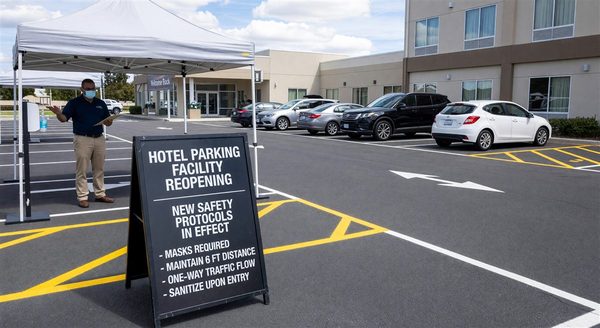
The COVID-19 pandemic has reduced hotel occupancy across the industry to levels not seen in the modern era of hospitality. With occupancy at many properties in the 15–30% range for extended periods in 2020, hotel parking operations have been transformed — from revenue centers to nearly empty structures, with staff reductions, suspended services, and a fundamental reassessment of how parking amenities should be managed.
This article examines the immediate operational challenges and the strategic opportunities that the pandemic has created for hotel parking operations.
The Demand Collapse and Its Parking Implications
In a normally occupied hotel, parking demand tracks closely with room occupancy. A 200-room property at 70% occupancy might see 100+ cars in its parking structure on a given night. At 20% pandemic occupancy, that same property might have 20–30 vehicles on the lot.
The financial impact is substantial. Parking operations that generated $30,000–$60,000 monthly in a pre-COVID environment might now produce $5,000–$8,000 — insufficient to cover operating costs even after staffing reductions.
Operational Responses to Reduced Demand
Hotels have taken several approaches to managing parking operations during the pandemic:
Closing sections of parking structures: In multilevel structures, closing upper levels and routing all parkers to the ground floor reduces lighting, ventilation, and elevator costs associated with maintaining a full structure.
Suspending valet service: Valet has been among the first services suspended, both for cost reasons and because valet creates physical proximity that conflicts with social distancing protocols. Properties that suspended valet have found that guests adapted to self-parking with minimal complaints — a finding with longer-term implications for valet program design.
Reducing staffed hours: Properties that previously maintained 24-hour parking attendants have moved to reduced-hours staffing, relying on automated systems during off-peak times.
Mothballing parking structures: Some urban properties with multiple parking facilities have temporarily closed satellite structures entirely, consolidating operations to a single facility.
The Contactless Parking Opportunity
One meaningful positive outcome of the pandemic pressure on hotel operations is an accelerated adoption of contactless parking technologies. Properties that had been considering system upgrades were pushed by the pandemic into making decisions that might otherwise have taken 3–5 more years.
Contactless parking technologies relevant to hotels:
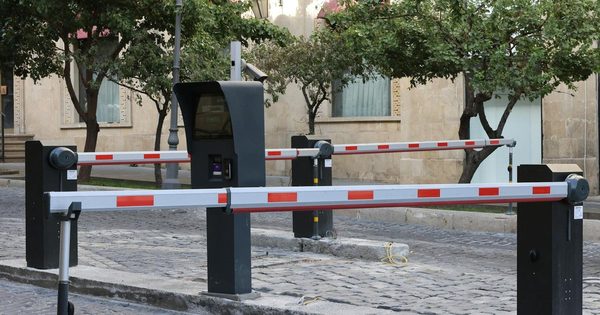
License plate recognition (LPR): Cameras read the vehicle’s plate at entry and exit, eliminating the need to interact with a ticket dispenser or card reader. The vehicle itself becomes the credential. Particularly valuable now because it eliminates a frequent-touch surface.
Mobile payment: Guests pay via a smartphone app rather than at a physical pay station. Reduces touch surfaces and staffing requirements.
QR code access: A QR code credential — emailed to the guest at reservation confirmation — scans at the entry reader from the phone screen, enabling entry without touching the dispenser.
Remote intercom: Properties upgrading from in-person parking management to remote-managed automation are deploying intercom systems that connect to a central station or the front desk rather than an on-site attendant.
The contactless pivot has proven broadly positive for guest experience even independent of the health rationale. Faster entry, reduced staff interaction, and mobile-friendly experiences align with the direction guest expectations were already heading.
Parking as COVID-Era Travel Differentiator
One unexpected finding from 2020 parking operations: the mode of transportation shift. As air travel collapsed dramatically in the spring and summer of 2020, drive-to leisure travel became relatively more important. Properties that remained open and maintained accessible self-driving accommodations found stronger demand from drive-market guests than from fly-market business travelers.
For hotels in drive-to markets — highway corridor properties, beach resorts, mountain destinations — parking availability has in some cases become a competitive differentiator. Properties with reliable, well-managed, contactless parking operations have communicated this clearly in their marketing with measurable effect on conversion.
Staff Safety and Parking Operations
For properties maintaining any staffed parking presence — whether valet or attended self-park — adapting operations to protect staff health has been a necessary operational exercise.
Measures adopted widely:
- PPE requirements for all parking staff (masks, gloves)
- Plexiglass barriers at payment windows and valet podiums
- Vehicle sanitization protocols before and after valet service (commonly wipe-down of high-contact surfaces — steering wheel, door handles, gear shift)
- Reduced vehicle occupant interaction for valet (keys left in the vehicle rather than hand-to-hand transfer)
- Health screening for staff before each shift
The vehicle sanitization protocols, in particular, have created a service narrative: “We clean your car before and after parking” has become a genuine service differentiator that some properties have incorporated into their guest communication and signage.
Financial Management of Parking During the Pandemic
For CFOs and property owners evaluating parking operations during the pandemic, the cost analysis is challenging. The incremental cost of keeping a parking facility operational (utilities, basic maintenance, minimal staffing) is often lower than the cost of fully decommissioning and then recommissioning it. This argues for maintaining reduced operations rather than complete closure.
Fixed costs to maintain during reduced parking operations:
- Gate system and equipment power and maintenance
- Lighting (minimum code-required levels)
- Security (the structure remains a security responsibility regardless of volume)
- Insurance (typically property coverage continues regardless of occupancy)
Variable costs that scale down with volume:
- Parking attendant and valet labor
- Validation and transaction processing fees
- Supplies
The break-even analysis typically favors staying open at reduced operations unless the property is fully closed.
Looking Ahead: What Sticks After COVID
Several changes adopted under pandemic pressure are likely to persist because they’re operationally better, not just pandemic-responsive:
Contactless technology: LPR, mobile payment, and app-based parking management improve the guest experience and operational efficiency independently of any health rationale. Properties that have upgraded will not revert.
Valet rationalization: Properties that suspended valet and found guest satisfaction maintained have data to make more informed decisions about whether to fully restore pre-COVID valet staffing levels or operate at a leaner model with technology supporting the reduced staff.
Parking revenue as a management priority: With revenue down dramatically across all departments, parking revenue recovery has received more executive attention in 2020 than in many prior years. Properties that emerge from the pandemic with a more systematic approach to parking revenue management will be better positioned.
FAQ
Should we invest in parking technology upgrades during a period of low occupancy? Low occupancy is actually a reasonable time for technology deployment — there are fewer guests to be inconvenienced by installation work, and the staff time required for system configuration and training is more available. The key is ensuring the investment pencils out at the reduced revenue level of the near term and recovers well as occupancy recovers.
Are guests currently comfortable with self-parking vs. valet? Survey data from 2020 shows that guest willingness to self-park has increased significantly during the pandemic, as guests are generally accepting of reduced contact scenarios. The percentage who specifically request valet has decreased in most surveys. This may partially normalize post-pandemic but the trend toward guest acceptance of self-parking is likely durable.
How do we handle parking security with reduced on-site staffing? Remote video monitoring — using CCTV cameras connected to a central monitoring station or the front desk — can partially substitute for on-site presence. Increased lighting in areas where staffing has been reduced, and clear wayfinding to reach the front desk via intercom, are appropriate complements.
Should we repurpose hotel parking spaces for other uses given the drop in hotel demand? Some urban properties have explored agreements with commercial operators to use excess parking capacity during the day for nearby office workers or retail customers. This can generate incremental revenue from otherwise idle capacity. The agreement needs to preserve the ability to reclaim the spaces as hotel occupancy recovers.
Further Reading from Authoritative Sources
- AHLA hotel parking operations and contactless technology pandemic response — AHLA provides hospitality industry guidance on parking operational responses to demand disruptions, contactless technology adoption, and revenue management applicable to hotel parking COVID impact analysis and post-pandemic operational strategy development.
- HFTP hotel parking contactless technology and automation standards — HFTP provides hospitality technology standards for contactless parking systems, LPR and mobile payment integration guidance, and automation technology applicable to hotel parking COVID-response technology deployment and long-term contactless parking program management.