Parking is one of the most underleveraged ancillary revenue streams in hospitality. Most hotels treat it as a utility — something guests need, priced at a flat rate, managed separately from everything else. But forward-looking properties are connecting parking directly into their loyalty ecosystems, property management systems (PMS), and dynamic pricing engines to squeeze meaningful incremental revenue out of every stall.
This guide is written for hotel facility managers, directors of engineering, and general managers who want a practical roadmap for making that connection — without a multi-year IT project.
Why Parking and Loyalty Are a Natural Fit
Loyalty programs thrive on two things: earning opportunities and redemption moments. Parking delivers both, at scale, every day. A 300-room full-service hotel with 150 parking spaces sees thousands of guest parking transactions per month. Every one of those is a touchpoint where you can reward a member, recognize a status tier, or capture data that improves the next stay.
The brands already know this. Marriott Bonvoy, Hilton Honors, IHG One Rewards, and Hyatt World all have provisions for parking benefits tied to elite status — free self-parking for Platinum/Diamond tiers is table stakes at most full-service properties. The opportunity is in going further: extending loyalty-linked parking to all members (with tiered discounts rather than full waivers), creating earn-on-parking transactions, and using parking behavior data to inform revenue management decisions.
For independent hotels and soft-brand properties operating their own loyalty programs, the opportunity is even broader because you control the rules.
The Four Integration Points
Connecting parking to loyalty requires touching four systems. Understanding where the complexity lives helps you prioritize.
1. The Parking Access and Revenue Control System (PARCS)
This is the gate, pay station, and back-office management layer. Modern PARCS platforms from vendors like SKIDATA, Passport, Flash, and T2 Systems support API connections that allow real-time validation of loyalty member credentials. When a member pulls a ticket or presents a credential at entry, the system can query your loyalty platform, confirm their tier, and apply the appropriate benefit — complimentary access, discounted rate, or reserved-space unlock — before the gate arm ever rises.
Older PARCS without API capability can still be integrated through license plate recognition (LPR). The guest’s plate is captured on entry, matched against a loyalty database lookup, and the appropriate rate applied at exit — no new hardware at the entry lane required.
2. The Property Management System (PMS)
The PMS is the source of truth for reservations, folio management, and guest profile data. Parking charges need to post to the folio — both for accounting accuracy and so that guests see the full value of their loyalty benefits on checkout. If you’re waiving parking for elite members, the waived amount should appear as a “complimentary” line on the folio, not an invisible omission. That visibility reinforces the value perception that drives loyalty program enrollment.
PMS-PARCS integration also enables in-reservation parking add-ons. When a guest books online or through your reservation team, a parking package can be offered and pre-paid. On arrival, the PARCS validates against the reservation record rather than requiring the guest to interact with a pay station at all.
Most major PMS platforms (Opera Cloud, Maestro, Mews, Agilysys) support two-way parking integration through standard APIs or certified middleware. Ask your PARCS vendor for their PMS integration matrix before selecting a system.
3. The Loyalty Platform
For branded hotels, loyalty platform changes require coordination with the brand’s technology team and may require a formal enhancement request or pilot program participation. For independent properties with proprietary loyalty programs, you have direct control and can configure earn/burn rules for parking transactions as you would any other revenue center.
Key rules to configure:
- Earn rate for parking spend: Most programs apply the same base earn rate as room spend (e.g., 10 points per $1). Some properties set a lower earn rate for parking to protect margin, which is defensible but reduces the perceived benefit.
- Tier-based access rules: What does each status tier receive? A common structure: base members pay full rate, silver/gold members receive 15–20% discount, platinum and above receive complimentary self-parking. Valet may be handled separately with a flat discount rather than a full waiver.
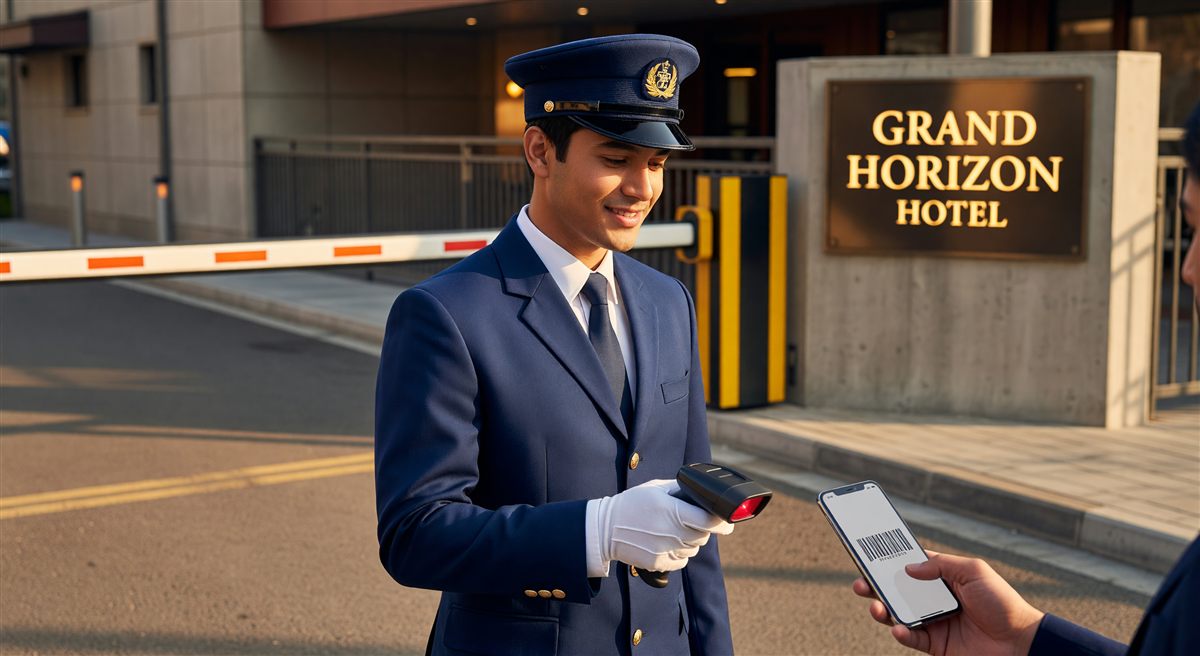
- Parking-only members: Some properties accept loyalty enrollment at the parking entry touchpoint (via QR code on ticket or pay station screen). This captures a guest segment — local commuters, event attendees, restaurant visitors — who may never stay overnight but can be converted to hotel guests through targeted offers.
4. The Revenue Management System (RMS)
Parking rates can and should flex with occupancy, just like room rates. Your RMS — whether that is IDeaS, Duetto, Atomize, or a manual process — should incorporate parking demand signals. A property running 95% hotel occupancy on a Saturday night with a convention in-house should not be offering the same parking rate as a Tuesday in January at 40% occupancy.
Dynamic parking pricing is a separate topic covered elsewhere on this site, but the loyalty angle adds a wrinkle: your elite member benefit structure needs to be defined as a fixed offset or percentage discount from the dynamic rate, not a fixed dollar cap. Otherwise, a $10 discount promise on a $12 normal rate day becomes a $10 discount on a $35 peak-demand rate, and you either give away more than planned or disappoint the member.
Revenue Scenarios by Property Type
The financial case for loyalty-integrated parking looks different depending on your property type. Here are three representative models.
| Property Type | Parking Inventory | Loyalty Benefit Structure | Revenue Opportunity |
|---|---|---|---|
| Full-service urban (300 rooms) | 150 spaces, surface/garage | Elite tiers: complimentary self-park; base members: 20% discount | $180K–$340K annual parking revenue; loyalty program increases capture rate of transient parkers by 15–25% |
| Select-service suburban (120 rooms) | 80 surface spaces | Free surface parking as standard; loyalty bonus: guaranteed spot reservation | Parking revenue minimal, but loyalty reservation guarantee reduces walkaway during events |
| Extended-stay (150 suites) | 100 surface spaces | Weekly/monthly parking package bundled with rate; loyalty members earn points on bundle | Parking bundled into extended-stay rates; loyalty data enables upsell to longer stays |
For full-service properties, the math on loyalty-linked transient parking is compelling. If parking lot utilization averages 60% on non-peak days and you can drive that to 75% by promoting parking access to local loyalty members (residents, commuters, diners), the incremental revenue on 22 additional spaces at $15/day across 180 low-occupancy days approaches $60,000 annually before any rate optimization.
ADA and Compliance Considerations
Any loyalty-based parking benefit program must not create accessibility disparities. Reserved spaces designated as loyalty benefits cannot encroach on ADA-required accessible stall minimums. Under the Americans with Disabilities Act, accessible stall counts are a function of total lot size and must be maintained regardless of how many spaces are committed to loyalty or valet programs.
| Total Lot Spaces | Minimum ADA Accessible Stalls Required | Van-Accessible (of that total) |
|---|---|---|
| 1–25 | 1 | 1 |
| 26–50 | 2 | 1 |
| 51–75 | 3 | 1 |
| 76–100 | 4 | 1 |
| 101–150 | 5 | 1 |
| 151–200 | 6 | 1 |
| 201–300 | 7 | 2 |
| 301–400 | 8 | 2 |
| 401–500 | 9 | 2 |
| 501–1,000 | 2% of total | 1 per 6 accessible stalls |
A loyalty program that reserves the closest 10 spaces for platinum-tier members needs to account for accessible stall placement within that reserved zone — the program design cannot effectively push accessible parking to the far end of the lot.
Similarly, any mobile app or QR-code driven parking validation flow must have an accessible alternative. Guests who cannot operate a smartphone or kiosk must still be able to claim loyalty benefits through a staffed lane or intercom.
Implementation Roadmap
Most properties can reach a functional loyalty-linked parking program in 60–120 days, depending on integration complexity and brand requirements.
Phase 1 (Weeks 1–4): Assessment and System Audit
- Document your current PARCS vendor and version. Confirm API capability or LPR availability.
- Pull a 12-month parking revenue and utilization report. Identify low-utilization windows.
- Confirm PMS version and available parking integration modules.
- Review your loyalty program rules for existing parking provisions. For branded properties, engage brand loyalty team to confirm pilot participation options.
Phase 2 (Weeks 5–8): Integration Design
- Define benefit tiers and rate rules. Get finance sign-off on projected revenue impact.
- Confirm PMS-to-PARCS integration path (API, middleware, or manual folio posting).
- Design the guest enrollment flow for transient parkers — QR code on ticket, pay station screen prompt, or dedicated URL.
- Plan staff training for front desk agents who will field loyalty parking questions.
Phase 3 (Weeks 9–12): Pilot and Testing
- Activate integration in test mode. Run sample transactions through all member tiers.
- Audit folio posting accuracy. Confirm complimentary transactions post correctly for accounting.
- Test ADA lane and intercom fallback for loyalty validation.
- Soft-launch to loyalty members only — hold off on external marketing until the flow is verified.
Phase 4 (Ongoing): Measurement and Optimization
- Track parking revenue per available space (RevPAS) as your primary KPI, broken out by member vs. non-member transactions.
- Monitor loyalty enrollment at parking touchpoints monthly. This metric tells you whether the program is reaching local, non-overnight guests.
- Review elite tier benefit costs quarterly. If complimentary parking for platinum members is running above budget, adjust the tier threshold or add a per-stay cap (e.g., complimentary self-parking for stays of two nights or more).
Common Pitfalls to Avoid
Benefit design before system audit. It is tempting to design the loyalty benefit structure first and figure out the technology later. That sequence almost always leads to promised benefits that the PARCS system cannot actually deliver — such as automatic lane-open for license plate recognition when your gates don’t have cameras.
Ignoring the local parker segment. Hotels routinely focus loyalty-linked parking benefits on hotel guests and overlook the local commuter, remote worker, and event attendee segments. These guests may never book a room, but they visit the lot regularly and represent a direct-mail and email remarketing audience for future stays and F&B promotions.
Static rates on dynamic days. If your property hosts conventions, graduations, concerts, or large events, flat loyalty discount rates can produce unintended revenue compression on your highest-demand days. Build rate floors into your loyalty discount rules so that even elite-tier complimentary parking can be capped at a maximum waiver value on high-demand dates.
Neglecting staff communication. The front desk agent who doesn’t understand how loyalty parking works is a customer service risk. Every interaction where a member is told “I don’t know how parking works with your points” erodes the program’s value. A one-page reference card posted at the front desk resolves most of this — it does not require formal training.
Getting Started Without a Full Integration
If a full PARCS-PMS-loyalty integration is not in the budget or timeline for this year, there are manual approaches that capture most of the benefit at lower cost.
Validation tickets: Issue pre-validated parking tickets to loyalty members at check-in. The ticket is honored at exit without payment. This requires no system integration and works with any PARCS. The downside is manual reconciliation and no data capture.
QR code redemption: Print a loyalty-linked QR code on the reservation confirmation. At the pay station, the guest scans to apply their member discount. Many modern pay stations support QR scanning natively. This gets you data capture without a PMS integration.
Reservation add-on packages: Offer a “Parking Included” rate package through your booking engine. All guests who book it get complimentary parking; the rate package revenue offsets the lost parking revenue. No PARCS integration required — staff simply wave package guests through.
These manual approaches are not permanent solutions. The data gaps they create — you lose transaction-level visibility, folio accuracy suffers, and you cannot do meaningful revenue management — will become costly as program volume grows. But they let you prove the concept and build the business case for proper integration investment.
The Broader Picture
Parking is not a commodity for hotels that choose to manage it strategically. It is a daily revenue event, a loyalty touchpoint, a data asset, and increasingly a sustainability and mobility statement as EV charging becomes woven into parking infrastructure. The properties that are connecting these systems — parking, loyalty, PMS, revenue management — are capturing an estimated 10–20% more per available parking space than those treating the lot as a break-even utility.
For facility managers, the practical takeaway is straightforward: your parking system vendor and your PMS vendor both want to sell you more capability. Put them in the same room, ask for the integration spec, and make sure the result posts correctly to the folio. The loyalty platform will follow.
That is the whole project. The complexity is in the details, but the direction is not complicated.
Frequently Asked Questions
What are the four key integration points for hotel parking loyalty programs? A complete hotel parking loyalty integration connects four systems: the PARCS for transaction data, the PMS for guest stay recognition, the loyalty platform for points and status management, and the revenue management system for rate eligibility. Each connection requires a validated API link with defined data fields and error handling. Missing any one of these four integrations creates guest-facing gaps — for example, awarding points without applying the correct loyalty rate, or recognizing status without reflecting it in parking transactions.
What ADA parking stall minimums apply to hotel parking facilities? ADA Standards for Accessible Design require accessible parking spaces proportional to total facility capacity: 1 accessible space per 1–25 total spaces, 2 for 26–50, 3 for 51–75, 4 for 76–100, and 5 for 101–150 spaces, scaling upward. Van-accessible spaces are required at one per six accessible spaces. Hotel parking facilities with valet-only operations have different ADA requirements — at least one van-accessible space must be available for guests who cannot use valet service.
How long does hotel parking loyalty program integration typically take to implement? A full PARCS-to-loyalty integration project typically requires 60–120 days from contract execution to go-live, including API development, testing, and staff training. Projects with custom API development take longer than those using pre-built connectors between major PARCS platforms and loyalty systems. The implementation timeline should include a parallel-operation testing period of at least two weeks where the integrated system runs alongside existing processes before manual procedures are retired.
How should loyalty elite members be recognized in hotel parking operations? Elite status recognition in parking operations typically includes complimentary or discounted parking, guaranteed space availability during their stay, preferred parking locations nearest the hotel entrance, and priority valet queue access. These benefits should be automatically triggered by loyalty credential recognition at the PARCS entry lane or valet point of contact — requiring guests to verbally claim elite parking benefits degrades the recognition experience. Automated recognition at the access point is the standard that loyalty programs at major brands deliver.
What data privacy requirements apply to parking loyalty program data? Parking loyalty data combining stay history, vehicle information, and location patterns constitutes sensitive personal data subject to applicable privacy regulations including state consumer privacy laws. Hotels must obtain appropriate consent for loyalty data use in parking applications, define retention periods for combined parking and loyalty transaction records, and honor guest data deletion requests that extend to parking transaction history. Loyalty program terms of service should explicitly disclose parking data collection and use.
How can hotels measure the revenue impact of parking loyalty benefits? Measuring parking loyalty ROI requires comparing the revenue foregone through loyalty parking discounts against the incremental room night revenue attributable to loyalty-driven hotel selection. Properties that offer complimentary parking to elite members should track whether elite members book direct and at higher rates than comparable transient guests — the parking benefit’s value is captured in the room booking, not the parking transaction. Properties offering complimentary parking without this analysis may be subsidizing guests who would have chosen the property regardless.
Further Reading from Authoritative Sources
- ADA accessible parking space requirements for hotel facilities — ADA.gov provides the official ADA Standards for Accessible Design including parking facility requirements applicable to hotel parking operations, valet services, and loyalty program space allocation.
- AHLA hotel loyalty program integration and parking operations resources — AHLA provides hospitality industry research on loyalty program operations, parking benefit design, and guest recognition practices applicable to hotel parking loyalty integration program development.