The shift from intuition-based to data-driven parking operations is one of the most significant improvements available to hotel facility managers and revenue teams. Historically, parking decisions — pricing, staffing, gate hours, valet deployment — were made based on experience and observation. Today, modern parking access and revenue control (PARC) systems generate transaction-level data on every vehicle entering and exiting the property. The hotels that extract insight from this data and act on it consistently outperform those that treat parking as a fixed-cost utility.
This guide covers the data types available from hotel parking systems, the key metrics that should drive operational decisions, and how analytics integration with hotel revenue management can create a more unified guest experience.
The Data Modern PARC Systems Generate
A fully instrumented hotel parking installation captures substantial operational data at each transaction touchpoint:
Entry/exit timestamps: Every vehicle entry and exit creates a time-stamped record. Aggregated, these records reveal peak demand periods, average dwell times, and occupancy patterns with granularity not possible through visual inspection.
Revenue data by rate category: Transient versus hotel guest versus validation versus contract/monthly parking — each revenue stream should be trackable separately, enabling yield analysis by segment.
License plate data (if LPR-equipped): Repeat visitor frequency, dwell time by vehicle, and permit compliance become reportable metrics with LPR systems.
Gate events: Failed transactions, exit without payment, equipment overrides, and manual interventions all generate logs. High intervention rates indicate equipment problems, rate structure confusion, or revenue leakage.
Occupancy at intervals: Integrated occupancy counts enable real-time space availability reporting and historical demand curve analysis.
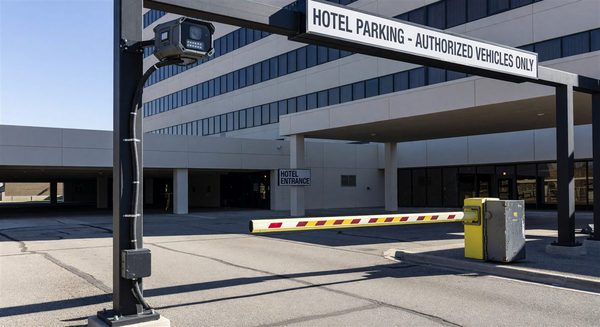
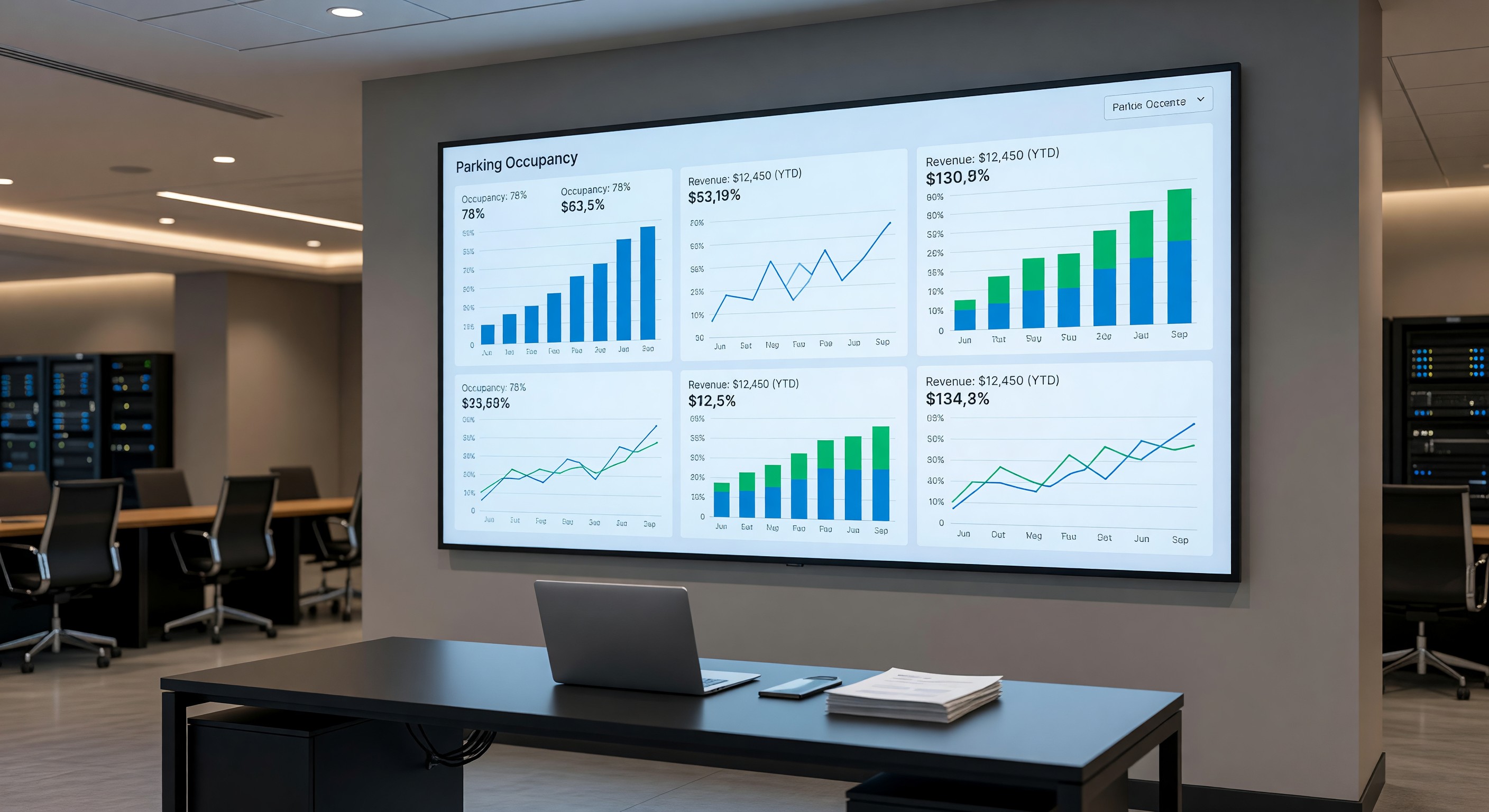
Modern PARC systems from vendors including Skidata, TIBA, Flowbird, and others expose this data through web dashboards and, increasingly, via APIs that can feed property-level business intelligence tools.
Key Metrics That Drive Better Decisions
Revenue per available parking space (RevPAS): Analogous to RevPAR in rooms, RevPAS measures how efficiently the hotel monetizes its parking inventory. Calculated as total parking revenue divided by total available spaces, RevPAS allows comparison across time periods, properties, and rate scenarios.
Occupancy rate by hour and day: Parking demand is rarely uniform. Understanding when the facility hits 90%+ occupancy — and when it sits at 30% — informs dynamic pricing decisions, valet deployment scheduling, and event coordination. If the Saturday afternoon peak exceeds capacity while Tuesday overnight sits at 25%, different pricing strategies should apply.
Average revenue per transaction: Calculated separately for transient and hotel guest segments, this metric tracks the effectiveness of rate structure changes. If raising the overnight self-park rate from $18 to $22 doesn’t change occupancy, RevPAS improved. If occupancy drops proportionally more than price increased, the rate move was counterproductive.
Validation and complimentary rate: Hotel restaurants, spas, and meeting facilities that offer parking validation transfer revenue from parking to other departments — sometimes appropriately (as a guest service tool) and sometimes excessively (as a poorly controlled cost). Tracking validation volume and cost by originating department enables better management of what is often a significant revenue leak.
Turnaround time (valet operations): For valet operations, vehicle delivery time from retrieval request to guest receipt drives satisfaction scores. Tracking vehicle delivery times by shift and period identifies staffing gaps and operational inefficiencies.
Integrating Parking Data with Hotel Revenue Management
The most sophisticated applications of parking analytics involve integration with the hotel’s revenue management and PMS systems. Practical integrations include:
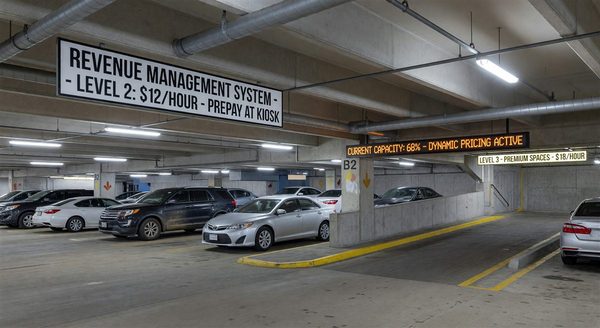
Occupancy-correlated parking pricing: Room rates change based on demand; parking rates at most hotels do not. When the hotel approaches full occupancy, parking demand typically peaks as well. Automated pricing rules that raise parking rates during high-occupancy periods — and lower them to stimulate demand during low periods — can improve parking RevPAS by 15–25%.
Booking-phase parking upsell: Connecting PARC system inventory to the hotel’s booking engine or pre-arrival communication workflow allows parking to be offered at booking, at pre-arrival email, and via web check-in — capturing revenue before arrival from guests who would otherwise pay on exit.
Event-correlated demand modeling: Hotels that host events (conferences, weddings, concerts) experience predictable parking demand spikes. Connecting event calendar data to parking capacity management prevents the operational chaos of arrival peaks at an already-full facility.
Guest parking history: For loyalty members, knowing a guest’s parking preferences — self-park versus valet, preferred entry times — enables personalized service communication and pricing offers.
Starting the Analytics Journey
Many hotels operate PARC systems that generate this data but lack the reporting infrastructure to extract insight from it. A practical starting point:
- Export and review your current reporting: Most PARC systems include standard reports on revenue, transactions, and occupancy. If you are not reviewing these monthly, start there.
- Identify your demand curve: Pull hourly occupancy data for the past 90 days. When are you at capacity? When are you under 50%? This single analysis often reveals immediate pricing and staffing opportunities.
- Benchmark RevPAS against your competitive set: If your parking rate is $15 while comparable properties charge $22, and your lot is consistently at 80%+ occupancy, you have clear evidence for a rate increase.
- Establish one KPI review cadence: Monthly review of RevPAS, occupancy rate, and average transaction value with the parking operations team creates accountability and surfaces trends before they become problems.
Modern parking technology provides the reporting infrastructure that makes data-driven management achievable for properties of all sizes, without requiring dedicated analytics staff.
Data Privacy Considerations
License plate data collected by LPR systems is subject to increasing regulation in some states. California’s CLPA and similar emerging regulations govern how vehicle location data can be retained, shared, and used. Review applicable state regulations with legal counsel before implementing LPR-based analytics programs, and ensure your privacy notice covers parking data collection if LPR is deployed.
Frequently Asked Questions
What data should hotels track monthly for parking operations? At minimum, track total parking revenue, revenue by segment (hotel guest vs. transient), total transactions, average revenue per transaction, occupancy rate (average and peak), and validation/complimentary costs. These six metrics, reviewed monthly with trend analysis, provide the operational intelligence needed for proactive management.
How can parking data improve guest satisfaction? Occupancy data enables real-time availability displays at entry (reducing guest anxiety about finding spaces), accurate wait time estimates for valet, and pre-arrival communication about parking options. Historical data enables proactive staffing during high-demand periods, reducing valet delivery times when guests are most impatient.
Can small hotels benefit from parking analytics? Yes. Even properties with 50–100 spaces generate enough transaction data to improve pricing and operations. The key question is whether you have a reporting interface that makes the data accessible. Most modern PARC systems — even entry-level platforms — include basic reporting. The discipline of reviewing that data regularly creates value regardless of property size.
What is RevPAS and how does it compare to hotel RevPAR? RevPAS (Revenue per Available Space) is a parking yield metric analogous to RevPAR (Revenue per Available Room) in hotel revenue management. Like RevPAR, RevPAS combines occupancy and rate into a single efficiency metric. A facility with 100 spaces earning $1,500/day has a RevPAS of $15. Increasing RevPAS over time — through rate optimization, demand stimulation during low periods, and reduced revenue leakage — is the primary financial objective of parking analytics programs.
Further Reading from Authoritative Sources
- AHLA hotel parking revenue management and analytics resources — AHLA provides hospitality industry research on parking revenue management, yield optimization metrics, and analytics best practices applicable to hotel parking data program development.
- IFMA parking facility management and data analytics standards — IFMA provides facility management professionals with parking analytics standards, PARCS data governance guidance, and performance benchmarking frameworks applicable to hotel parking operations programs.