Hotel parking revenue is consistently under-managed relative to its potential. While rooms revenue management has become a sophisticated discipline with its own technology stack, dedicated personnel, and established best practices, most hotel parking operations still use fixed pricing set by gut feel and adjusted annually.
The gap between what parking generates and what it could generate is often 20–40% at properties without active revenue management. Closing that gap doesn’t require exotic technology — it requires applying systematic management attention to a function that’s been operating on autopilot.
Baseline: Know Your Current Performance
Before optimizing, establish where you are. Pull these metrics from your parking system or accounting records:
Revenue per available space per day (RevPASP): Total parking revenue divided by total spaces divided by days in period. This is the parking equivalent of RevPAR for rooms.
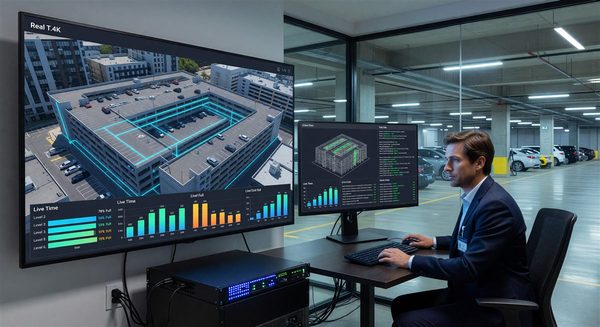
Occupancy by time block: How full is the garage at 8am? 2pm? 6pm? 10pm? Most parking systems can report this. The answer tells you where capacity is being wasted and where demand may exceed supply.
Guest penetration rate: What percentage of hotel guests park on property versus off-site or via alternative transportation? At urban properties, this may be low by design. At suburban properties, it should be high.
Transient revenue mix: What percentage of parking revenue comes from non-guests? Properties in dense areas often have significant transient demand that they’re either capturing (by opening to the public) or losing to competitors.
Pricing Structure
Setting Base Rates
Hotel overnight parking rates should be benchmarked against:
- Comparable hotels in your competitive set
- Public parking options within a 5-minute walk
- Your own cost of providing the amenity
Undercutting the market is usually a mistake — guests making a hotel choice rarely select based on a $5/night difference in parking rates. Overcharging relative to alternatives creates friction that damages guest satisfaction. The sweet spot is approximately 10–15% above the most convenient public alternative, reflecting the convenience premium of on-site parking.
Tiered Pricing
Most hotels don’t differentiate parking rates by stay type, which leaves revenue on the table. Consider:
- Overnight hotel guest rate: Standard daily rate tied to room reservation
- Extended-stay rate: Discounted monthly or weekly rate for long-term guests
- Event rate: Premium rate applied when the property is hosting a major event
- Transient hourly rate: Rate for non-guests by the hour — often the highest per-hour rate
- Early bird / daily rate: A flat rate for a full day, often used to capture nearby office workers
Each tier should have its own revenue attribution so you understand the composition of your parking revenue.
Dynamic Pricing
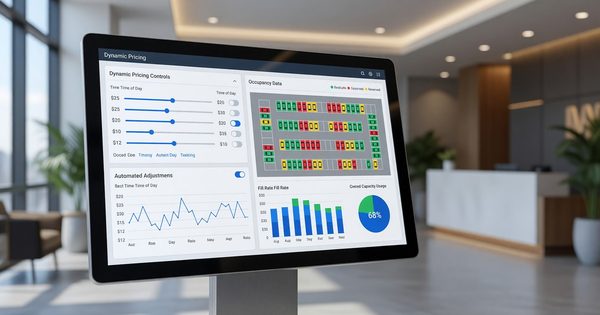
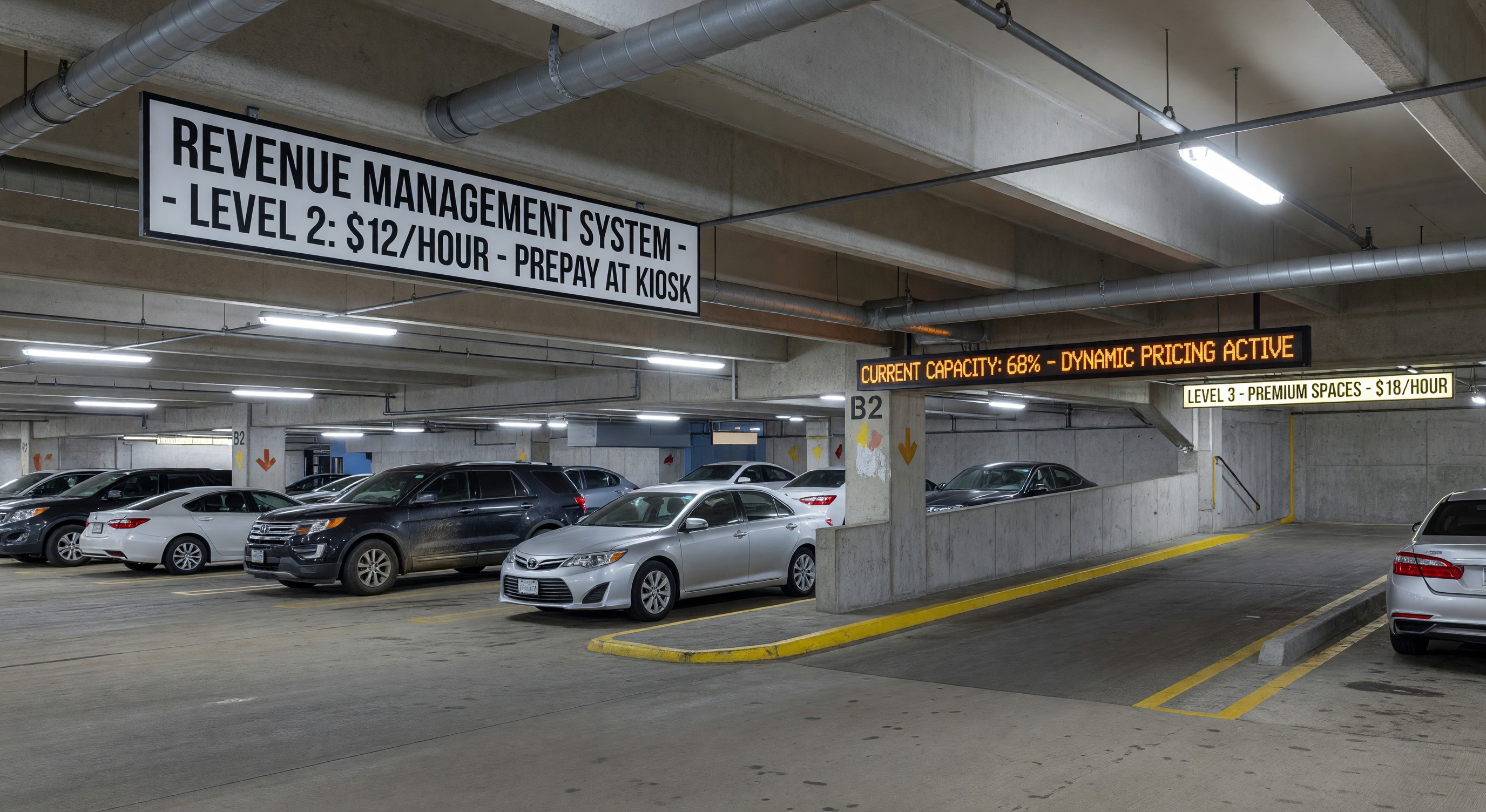
Dynamic pricing adjusts rates in real time or advance based on demand signals. The signals most relevant to hotel parking:
- Hotel room occupancy forecast (high occupancy = high parking demand)
- Local events calendar (concerts, conventions, sporting events)
- Day of week patterns (weekday vs. weekend in most markets)
- Weather (extreme weather reduces transient parking)
Even a simplified dynamic pricing approach — setting a “high demand” rate and a “standard” rate and applying them based on a weekly forecast — can improve revenue 10–15% compared to fully static pricing.
Demand Management
Opening to the Public
Properties with excess capacity during certain time periods — typically business hotels on weekends, or weekday morning periods before checkout — should evaluate opening to public transient parking.
The revenue case is straightforward: an empty space generates nothing. A transient parker generates $10–$25+ depending on market. The management question is whether the operational complexity and potential impact on guest parking availability is worth the revenue.
Technology makes this easier: parking management systems can limit transient entry based on available space counts, automatically close to the public when occupancy exceeds a threshold, and manage pricing separately for guests and transients.
Event Parking Management
Events — both on-property and nearby — are high-value demand periods that many hotels fail to price or manage effectively. A hotel adjacent to a convention center, sports venue, or concert hall has pricing power during events that goes entirely uncaptured without a deliberate management approach.
Event management best practices:
- Subscribe to the local event calendar for nearby venues
- Set premium pricing in advance for known high-demand events
- Create a dedicated transient entry lane or time window for event parkers
- Train front desk and parking staff on event pricing so they can communicate it accurately
Monthly Parker Programs
Nearby businesses and remote workers represent a stable, recurring revenue stream that smooths out occupancy volatility. Monthly parking programs for non-guests work best in urban properties with excess capacity during business hours.
Setting up a monthly program requires defining access hours, a separate access credential for monthly parkers, and a reliable payment collection mechanism. The revenue per space is lower than transient rates but the predictability has real operational value.
Validation and Complimentary Parking Management
Parking validation programs — where guests of a restaurant, spa, or other hotel outlet receive discounted or free parking — are a legitimate revenue management tool when properly controlled.
Without controls, validation programs become revenue leakage channels. Common problems:
- Validation tickets used by non-customers or after hours
- Staff over-validating to avoid customer complaints
- Unlimited validation for purchased minimum spending thresholds that don’t actually cover the cost
Best practices:
- Issue validation through the POS system with a required minimum transaction
- Set system limits on the discount level (full validation is rarely appropriate except for specific services)
- Report validation usage weekly and review for anomalies
- Audit periodically by comparing validated transactions to POS receipts
Revenue Control and Leakage Prevention
Revenue leakage in parking occurs through:
- Informal “wave-throughs” at staffed exit lanes
- Voided transactions without documented authorization
- Expired ticket extension without payment
- Staff parking on guest credentials
- Complimentary parking without proper authorization
Technology solves most of these: automated systems with full transaction logging, no ability to open the gate without a valid credential, and reporting that flags every exception. The investment in a modern parking access and revenue control (PARC) system almost always pays back through leakage recovery.
Properties still using staffed exit lanes with cash payment should seriously evaluate transitioning to automated systems with proper revenue controls. The right parking system infrastructure makes revenue integrity the default rather than the exception.
Reporting and Performance Management
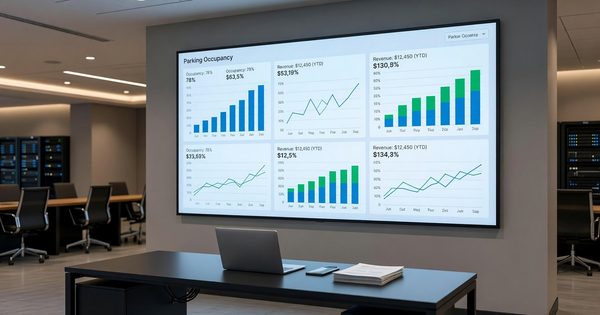
A parking revenue management program requires regular reporting. Minimum reporting cadence:
- Daily: Revenue, transactions, average rate per transaction
- Weekly: Occupancy trend, transient vs. guest mix, validation usage
- Monthly: RevPASP vs. prior month and prior year, revenue by tier, cost analysis
Review parking revenue in the regular finance meeting alongside rooms and F&B. Parking shouldn’t be a line item that only appears in the annual audit.
FAQ
How much can dynamic pricing realistically increase hotel parking revenue? Properties implementing dynamic pricing for the first time typically see 10–20% revenue improvement. The gains are highest at properties with strong demand variability — resort properties, urban hotels near event venues, and business hotels with strong weekday peaks.
Is it worth investing in automated parking systems purely for revenue control? In most cases, yes. A basic automated system with proper transaction controls pays back in 18–36 months at a mid-size property through leakage recovery alone, without counting the labor savings from reduced manual handling.
Should parking revenue be tracked separately from rooms revenue? Yes — always. Bundling parking into the room rate obscures both the revenue opportunity and the cost of providing the amenity. Even for properties where parking is marketed as “complimentary,” tracking the actual transactions provides the data needed to make informed pricing decisions.
What’s a reasonable occupancy target for hotel parking? For self-parking operations, target 70–80% average occupancy across the week. Consistently below 60% suggests excess capacity or weak demand management. Regularly exceeding 90% suggests you should raise prices or consider overflow agreements.
Further Reading from Authoritative Sources
- AHLA hotel parking revenue management and yield optimization resources — AHLA provides hospitality industry research on parking revenue management, dynamic pricing practices, and yield optimization applicable to hotel parking revenue program development and performance benchmarking.
- IFMA parking facility revenue management and validation control standards — IFMA provides facility management professionals with parking revenue management standards, validation control guidance, and performance benchmarking frameworks applicable to hotel parking operations programs.