Artificial intelligence has arrived in hotel parking revenue management. The same algorithmic approaches that transformed hotel rooms revenue management — dynamic pricing driven by demand signals, occupancy forecasting, yield optimization — are now being applied to parking. For hotel facilities and operations directors who manage parking, understanding what’s actually being deployed (vs. what’s being marketed) helps separate useful tools from hype.
This article examines the current state of AI parking optimization for hotels in 2024: what works, what’s still emerging, and how to evaluate whether these tools are right for your operation.
From Static Rates to Dynamic Pricing
Traditional hotel parking pricing is essentially static: an overnight rate, a transient daily rate, and perhaps a few event-rate adjustments made manually when someone remembers to set them. The rate reflects the general demand level and the property’s pricing philosophy but doesn’t respond to real-time demand signals.
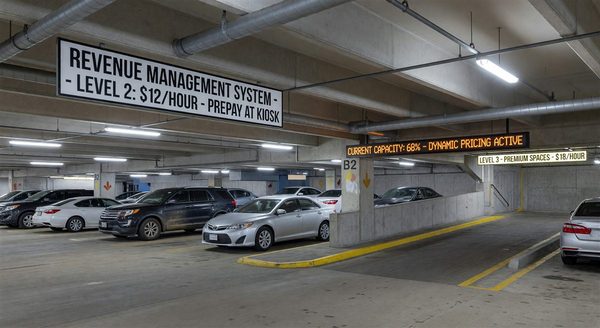
AI-driven dynamic parking pricing applies revenue management logic to the parking product:
Demand inputs the algorithm uses:
- Hotel room occupancy forecast (strong predictor of parking demand)
- Local events calendar (concerts, conventions, sports events that drive transient demand)
- Day of week and time of day patterns
- Historical parking occupancy at comparable demand conditions
- Weather forecast (severe weather affects drive-to parking demand)
- Competitive pricing in the local market (where data is available)
What the algorithm produces:
- Recommended pricing for the next 1–14 days, updated daily or more frequently
- Pricing differentiation by time period (morning, afternoon, overnight) and parker type (hotel guest vs. transient)
- Occupancy targets that the algorithm is pricing toward
In mature implementations, the algorithm adjusts prices in real time — the rate for a transient parker arriving at 10 AM today is different from the rate for the same parker arriving tomorrow afternoon.
Occupancy Forecasting
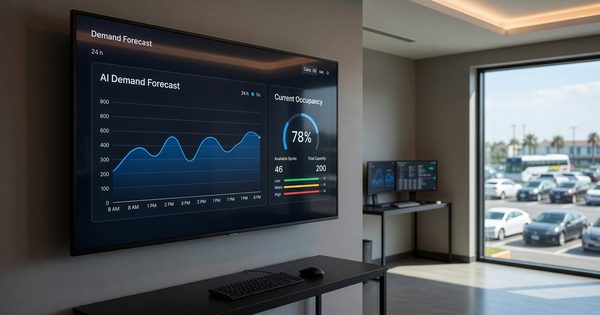
Parking occupancy forecasting uses historical patterns and current booking data to predict future parking demand. For hotels, the primary demand signal is room reservations:
The correlation model: Properties with sufficient historical data can build regression models that relate room occupancy to parking occupancy with reasonable accuracy. If 70% room occupancy historically produces 65% parking occupancy on a Tuesday, and Tuesday’s room forecast is 75%, the model predicts approximately 69% parking occupancy.
The limitations: This simple correlation works reasonably well for typical hotel guest patterns. It breaks down when the mix changes significantly — a group that’s mostly local (driving in but not staying), a convention that’s generating significant transient parking from non-hotel-guests, or a leisure period with more fly-in guests who don’t park.
Machine learning improvements: More sophisticated models learn from more data points — not just room occupancy but group bookings, local events, historical transient patterns — to improve forecast accuracy. These models outperform simple correlation models in high-variability environments.
Automated Validation and Rate Application
One AI application with immediate practical value: automated rate application based on guest profile and validation entitlements.
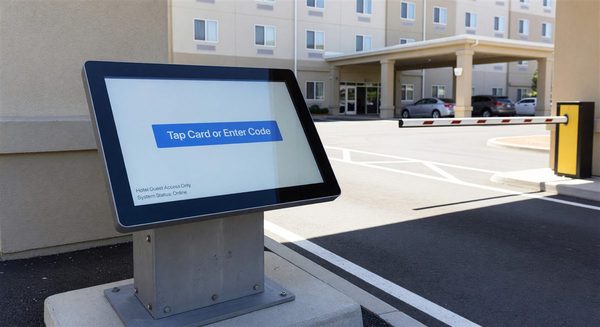
When a credentialed guest presents at the parking exit, the AI-enhanced system:
- Identifies the guest from their credential (LPR, RFID, or keycard)
- Retrieves their reservation details from the PMS
- Determines their applicable parking rate (standard, package-included, loyalty tier complimentary)
- Applies any valid validations (restaurant, spa, loyalty benefit)
- Calculates the net charge and posts to the folio
This automation eliminates manual rate calculation and validation checking — a common source of both revenue leakage and guest disputes at the cashier window.
Machine learning element: The system learns from exception patterns. If a specific validation type is consistently being reversed by management (because guests are using it incorrectly or it’s being misapplied), the ML algorithm can flag these transactions for review before they’re processed.
Real-Time Inventory Management
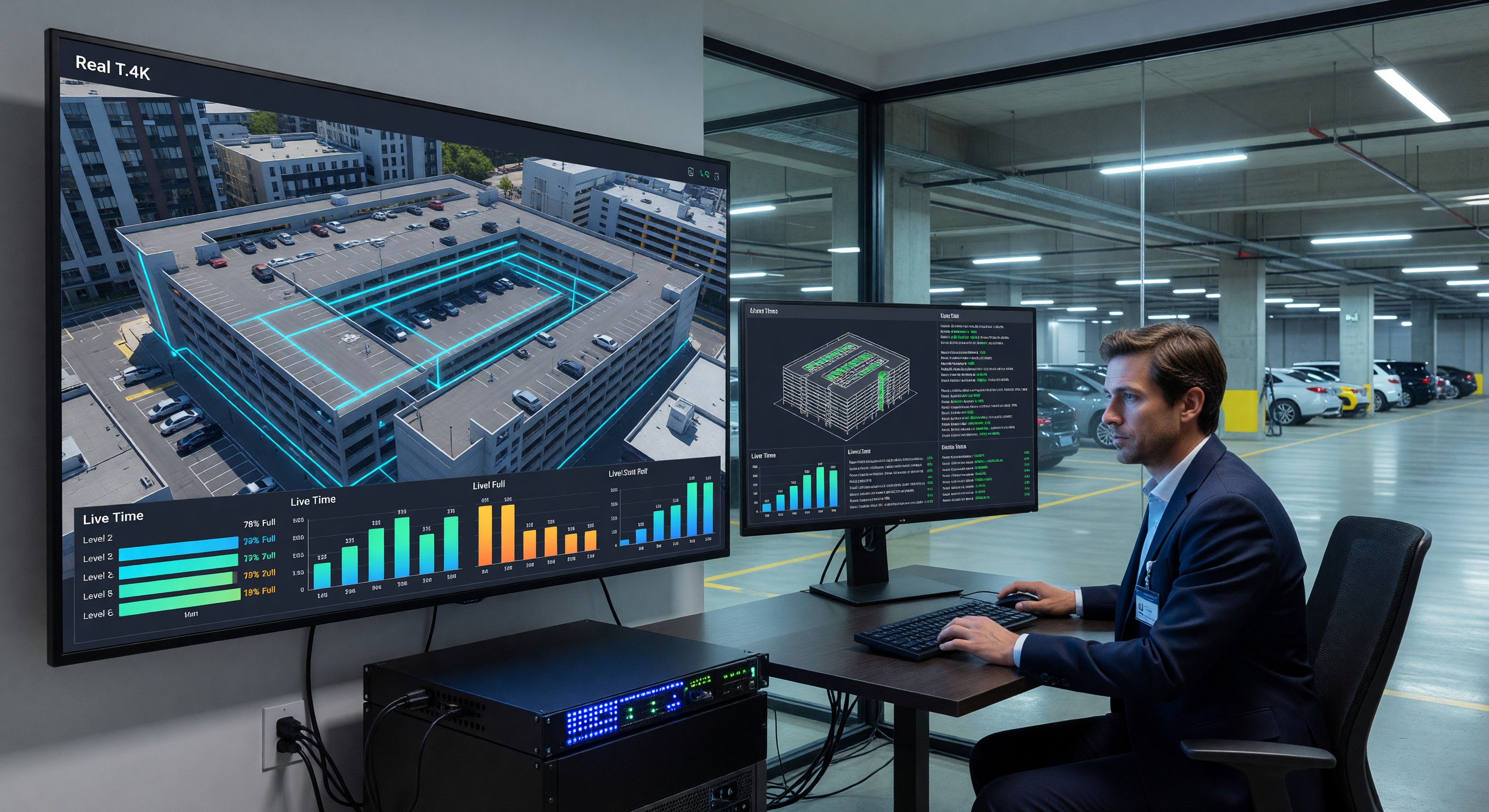
AI-assisted inventory management goes beyond tracking how many spaces are occupied to actively managing how inventory is allocated:
Guest reservation blocking: The system pre-allocates spaces for hotel guests based on room reservations. Rather than having all spaces in a common pool, it ensures that hotel guests always have availability — even during periods when transient demand is high — by holding spaces in reserve.
Dynamic public space release: When hotel occupancy is below forecast, spaces that were held in reserve for guests can be released for transient parkers in real time. When hotel occupancy spikes, those spaces are withdrawn from public availability.
Overflow management: Integration with nearby parking structures or valet staging areas enables the system to manage overflow dynamically — directing excess transient demand to alternatives while maintaining guest inventory.
License Plate Recognition with ML Enhancement
LPR accuracy has improved significantly with machine learning:
Deep learning OCR: Current ML-based optical character recognition systems trained on millions of plates deliver 95%+ accuracy on US and Canadian plates in standard conditions. Earlier rule-based systems were significantly less accurate.
Adaptive learning: ML-based LPR systems improve over time with exposure to local plate patterns, including specialty plates, damaged plates, and lighting conditions specific to the installation.
Vehicle make/model recognition: Some current systems can identify not just the plate but the vehicle make and model from the camera image — useful for fleet tracking and for validating that the plate matches the vehicle on record.
Confidence scoring and exception routing: The AI system assigns a confidence score to each plate read. High-confidence reads are processed automatically. Low-confidence reads are routed to a human operator for review — an intelligent triage that maintains accuracy without requiring manual review of every transaction.
Predictive Maintenance for Parking Equipment
AI-driven predictive maintenance is emerging as a practical application for parking equipment:
Gate failure prediction: Sensors monitoring gate arm motor current, cycle time, and controller diagnostics can identify patterns that precede failures. A gate arm motor that’s taking 15% longer to complete its cycle and drawing 10% more current is approaching failure — the system alerts engineering before the gate stops working.
Pay station fault prediction: Transaction failure patterns at pay stations — increasing card read errors, intermittent connectivity losses, receipt printer jamming — are predictable maintenance signals. AI analysis of transaction logs identifies pay stations approaching failure before they fail during a busy evening.
LPR camera degradation: Camera image quality degrades gradually as lenses accumulate road film, IR illuminators age, and focus drifts. ML-based image quality assessment can flag cameras whose read accuracy is declining before the degradation causes operational problems.
Current Limitations
Honest assessment of where AI parking optimization falls short in 2024:
Data dependency: AI models require substantial historical data to perform well. A newly opened hotel, a property that recently changed its parking operation significantly, or a property in a highly variable demand market may not have the data depth for reliable forecasting.
Integration complexity: Many of the most valuable AI parking applications require deep integration with the hotel PMS, the parking management system, and potentially other data sources. These integrations add cost and complexity, and integration failures undermine the system’s performance.
Small property ROI: The cost of sophisticated AI parking optimization tools — typically SaaS pricing of $500–$2,000/month plus implementation — pencils out at hotels with significant parking revenue. Properties with small parking operations may not generate sufficient additional revenue to justify the technology.
Human override discipline: AI pricing recommendations require human discipline to actually implement. A system that recommends premium event pricing that staff override “because it seems too high” provides little value. Organizational alignment on revenue management principles is a prerequisite.
Evaluating AI Parking Tools
When evaluating AI-enhanced parking systems:
Ask for back-tested performance data: How did the system’s pricing recommendations perform against actual revenue on historical data? What’s the revenue uplift vs. the baseline (static pricing)?
Understand the data requirements: What historical data does the system need to perform well? How long before it achieves full performance?
Verify the PMS integration: The AI system is only as good as the data it receives from your PMS. Confirm the integration works with your specific PMS version.
Pilot before full deployment: Most vendors support a pilot period. Pilot at your property before committing to multi-year terms.
FAQ
How much additional revenue can AI parking optimization realistically generate for a hotel? Documented case studies from properties implementing dynamic pricing with demand-based algorithms show 10–25% revenue improvement over static pricing. The range is wide — higher improvement in markets with more demand variability (urban properties, properties near event venues) and lower improvement in markets with more stable demand.
Can we implement dynamic parking pricing without AI tools? Yes — a manual dynamic pricing approach using the hotel revenue manager’s room forecast and a few defined rate tiers (standard, high demand, event) is achievable without AI tools. The AI adds incremental improvement through more granular demand signals and more frequent rate adjustments. Start with manual dynamic pricing and add technology when the revenue case justifies it.
What’s the right team structure for managing AI parking revenue optimization? In most hotels, the existing revenue management function can absorb parking optimization with modest additional time commitment. The technology provides recommendations; the revenue manager reviews, approves, and takes responsibility for the pricing decisions. Engineering manages the operational system; revenue management owns the pricing strategy.
Is AI parking optimization from the parking system vendor or a separate revenue management tool? Both models exist. Some parking system vendors have built revenue optimization into their platform. Third-party revenue management tools that integrate with multiple parking systems are also available. For hotels that already use a third-party hotel revenue management system, an integrated parking module from that vendor may be the path of least resistance.
Further Reading from Authoritative Sources
- HFTP hotel parking AI optimization technology standards and guidance — HFTP provides hospitality technology standards for parking revenue management systems, AI and machine learning application guidance, and integration frameworks applicable to hotel AI parking optimization tool evaluation, implementation planning, and ROI analysis.
- AHLA hotel parking revenue optimization and technology investment standards — AHLA provides hospitality operations guidance on parking revenue management frameworks, technology investment ROI analysis, and organizational structure for parking optimization programs applicable to hotel AI parking tool evaluation and revenue management team integration.