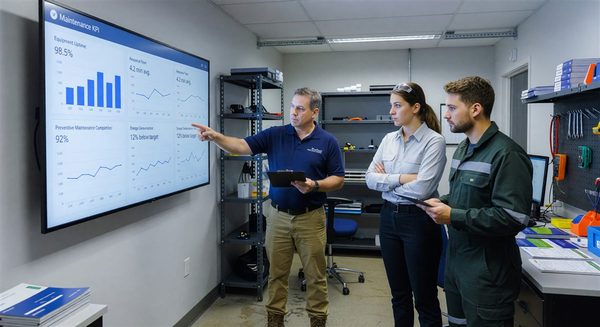
Traditional hotel preventive maintenance programs operate on fixed schedules: change the PTAC filter on the 15th of every month, inspect the fire extinguishers on the first Monday of each quarter, lubricate the elevator door operators every six months. Calendar-based PM is a significant improvement over purely reactive maintenance — but it is inherently blunt. It services equipment that may not need service and may miss developing problems between scheduled intervals.
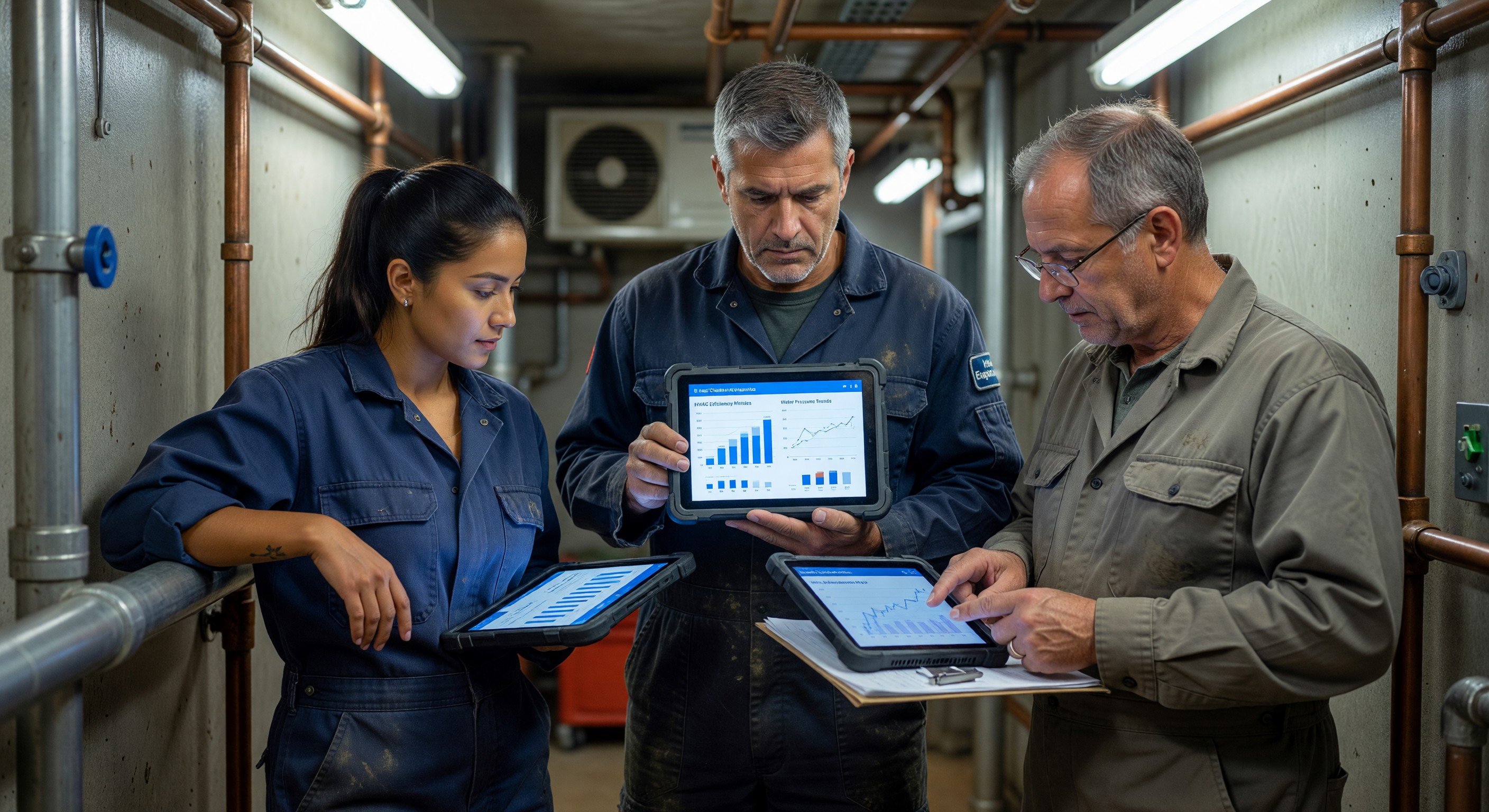
Data-driven preventive maintenance replaces or supplements calendar schedules with condition-based triggers: change the filter when pressure differential indicates it’s loaded, not on the 15th regardless of loading. Inspect the elevator door when acoustic signature trends indicate wear, not because the calendar says it’s time. This approach requires data — from IoT sensors, from CMMS records, from equipment monitoring — and the analytical capability to derive PM scheduling decisions from that data.
From Calendar PM to Condition-Based PM: The Framework
The transition from calendar-based to condition-based PM is not binary. Most mature hotel maintenance programs operate on a hybrid model:
Calendar PM tasks that make sense regardless of condition: Safety inspections (fire extinguisher visual inspection, emergency lighting test) have minimum required frequencies in codes and standards — these should remain calendar-based. Lubrication intervals may also be calendar-appropriate when equipment runs continuously at consistent loads.
Calendar PM tasks that can be condition-optimized: Filter changes, cleaning intervals, and inspection frequency for equipment whose condition varies with use intensity or environmental factors are candidates for condition-based adjustment.
Condition-based tasks: Equipment where sensor data can reliably indicate service need — HVAC filter pressure differential, bearing vibration trends, heat exchanger differential pressure — are the highest-priority targets for condition-based maintenance conversion.
The Data Requirements for Condition-Based PM
IoT sensor data: Pressure differential sensors on HVAC filter housings provide direct indication of filter loading. Vibration sensors on rotating equipment track bearing condition. Current transducers on motors track electrical draw that changes with mechanical loading. Temperature sensors track heat exchanger performance degradation.
CMMS maintenance history: Historical records of when PM tasks were completed and what conditions were found (filter loading at change, bearing condition notes, lubricant consumption) build the dataset that allows statistical PM interval optimization.
Operational data: Equipment runtime hours, production cycles, or environmental conditions (outdoor temperature, humidity) that predict component wear rates. A PTAC filter in a coastal environment with airborne salt may load 2× faster than the same filter in a dry interior location.
Failure history: Understanding which PM tasks prevent which failure modes — and at what interval — requires correlating PM completions with subsequent failures. Did failures occur more frequently in the months following PM deferrals? This correlation validates PM interval adequacy.
Key Performance Metrics for PM Program Evaluation
PM completion rate: The percentage of scheduled PM tasks completed on schedule within the defined compliance window. Target: 90%+. This metric measures program discipline — low completion rates indicate scheduling problems, labor resource shortfalls, or tasks that aren’t being prioritized appropriately.
Reactive maintenance ratio: Percentage of total maintenance work orders that are reactive (unplanned, responding to failures) versus preventive. Target: less than 20% reactive. Higher reactive rates indicate that preventive maintenance is inadequate — equipment is failing between PM intervals.
Mean time between failures (MTBF): For equipment with recurring failure history, tracking how long equipment operates between failures measures whether PM intervals are appropriate. If MTBF is decreasing, PM frequency or scope is insufficient for current operating conditions.
PM effectiveness rate: Did the PM work prevent a failure? This is the most difficult metric to measure directly (you must infer what would have happened without the PM) but can be estimated from failure rates before versus after PM implementation or by comparing failure rates on equipment with different PM intervals.
Cost per PM task: Tracking actual labor and parts cost by PM task type identifies tasks that are consuming disproportionate resources and warrants investigation of whether the scope or frequency is calibrated correctly.
Using CMMS Analytics to Optimize PM Intervals
Modern CMMS platforms can generate the analysis needed to optimize PM intervals from historical data:
Filter change interval analysis: Extract all PTAC filter change records for the past 24 months. For each change, note what condition the filter was in (if recorded). If 80% of filters are clean at monthly changes, the interval is too frequent. If 20% of filters are overloaded at monthly changes (loading faster than the interval accommodates), the interval is too long.
Equipment failure correlation: For equipment categories with recurring failures (guest room PTAC units with coil freeze-ups, cooling tower fans with bearing failures), correlate failure events against PM completion history. If failures are predominantly occurring in equipment where PM was deferred more than 30 days, this quantifies the PM value.
Seasonal load adjustment: Equipment in hot-climate hotels works harder in summer, requiring more frequent PM. Equipment in cold climates works harder in winter. CMMS data can support seasonal interval adjustment — quarterly filter changes in mild-load shoulder seasons, monthly changes during high-load periods.
Building the Data Culture
Data-driven PM requires a culture change alongside the technology investment. Engineers must:
- Record actual conditions found at each PM (filter condition on a 1–5 scale, not just “filter changed”)
- Report deviations from normal during PM (note the motor that’s running hotter than usual, even if it’s not failure-imminent)
- Complete PM documentation in the CMMS immediately, not at week’s end when details are forgotten
The supervisory role shifts from tracking PM completion (did it happen?) to analyzing PM findings (what did we learn, and what do we adjust?). Monthly review of PM data — completion rates, findings trends, failure correlations — creates the organizational feedback loop that continuously improves program effectiveness.
Connecting PM Data to Capital Planning
PM data provides early signals of capital equipment approaching end of useful life:
Increasing PM cost per asset: When a specific asset requires progressively more frequent service (the fire pump that used to need quarterly inspection now needs monthly attention to maintain performance), this trend often precedes a capital replacement need.
Parts availability changes: When PM requires parts that are becoming difficult to source (discontinued manufacturer, long lead times), this is an early indicator of equipment obsolescence.
Mean time between failures declining: Decreasing MTBF for a specific asset despite appropriate PM indicates the asset is approaching end of useful life — a capital replacement signal.
Sharing PM data trends with ownership and asset management demonstrates the connection between maintenance investment and capital planning outcomes — and makes the case for adequate maintenance staffing and parts inventory investment.
Frequently Asked Questions
How much data history is needed before PM intervals can be optimized? Meaningful statistical patterns require at least 12–24 months of consistent data collection with reasonable volume (at least 20–30 PM completions per task type per analysis period). With 24+ months of data across multiple equipment categories, interval optimization typically reveals 10–25% opportunities to extend intervals on well-performing equipment and 5–15% opportunities to shorten intervals on equipment experiencing failures between PM cycles.
What is the difference between preventive and predictive maintenance? Preventive maintenance (PM) involves performing maintenance tasks on a schedule — calendar-based or condition-based — to prevent failures before they occur. Predictive maintenance (PdM) uses continuous monitoring and data analysis to predict when a specific piece of equipment will fail, allowing maintenance to be scheduled precisely when needed. PdM requires more sophisticated sensor infrastructure and analytical capability than PM but provides more precise maintenance timing. Most hotel properties operate primarily on PM with selective PdM for high-value equipment.
How should hotels prioritize which equipment gets condition-based PM? Prioritize based on: (1) consequence of failure — equipment whose failure causes guest experience impact (guest room HVAC, elevators, domestic hot water) or safety risk (fire suppression, emergency lighting) warrants more sophisticated PM; (2) sensor availability — equipment that already has sensors or BAS monitoring can immediately benefit from condition-based PM; (3) PM cost variance — equipment with highly variable PM intervals (sometimes loaded, sometimes not) gains the most from condition-based timing.
Can a hotel implement condition-based PM without purchasing new IoT sensors? Partially. BAS systems already connected to hotel HVAC equipment provide real-time operational data that can support condition-based PM for that equipment without additional sensors. Guest complaints and work order data serve as indirect condition indicators — rising frequency of guest complaints about a specific floor’s HVAC suggests PM frequency should increase. IoT sensors extend condition visibility to equipment not currently BAS-connected, but the transition to condition-based PM can begin with existing data sources.
Further Reading from Authoritative Sources
- IFMA hotel data-driven preventive maintenance and CMMS analytics standards — IFMA provides facility management standards for preventive maintenance program development, CMMS analytics methodologies, and condition-based maintenance frameworks applicable to hotel PM program optimization, data collection requirements, and integration with capital planning processes.
- ASHRAE hotel HVAC preventive maintenance and condition monitoring standards — ASHRAE provides HVAC equipment maintenance standards, building automation system guidance, and condition monitoring frameworks applicable to hotel HVAC preventive maintenance program development, sensor-based condition monitoring, and data-driven PM interval optimization.