Hotel guest messaging platforms have become core operational infrastructure at most full-service and upscale properties. The shift from phone calls and paper service requests to digital messaging has been driven by a combination of guest preference (many guests, particularly under 45, prefer messaging to calling), operational efficiency (digital requests are trackable, routable, and measurable in ways that phone calls are not), and the availability of mature hospitality-specific platforms that integrate with PMS and departmental systems.
This guide covers the current landscape of hotel guest messaging technology, implementation considerations, and how to structure messaging operations for both guest experience and operational effectiveness.
How Hotel Guest Messaging Works
Guest messaging platforms create a digital communication channel between hotel guests and hotel staff. Depending on the platform and property configuration, communication happens through:
SMS text messaging: The guest’s mobile phone number from the PMS reservation is used to send automated pre-arrival messages and enables two-way text communication during the stay. No app download required — the guest communicates through their native messaging app. This is the most accessible channel for guests who haven’t downloaded the hotel’s app.
App-based messaging: Hotels with branded apps or participating in brand loyalty apps provide in-app messaging. App messaging enables richer interactions (images, service catalog browsing, mobile key) but requires guests to have the app installed.
Web-based messaging: Some platforms provide a web link (delivered via SMS or email) that opens a messaging interface in the mobile browser without requiring app installation. A middle ground between SMS and app messaging.
WhatsApp and regional platforms: International hotels serving guests who predominantly use WhatsApp (Europe, Latin America, Southeast Asia) or LINE (Japan, Thailand) integrate with those messaging platforms rather than relying solely on SMS.
Pre-Arrival and In-Stay Automated Messaging
Guest messaging platforms enable automated communication workflows that improve guest preparation and reduce front desk load:
Pre-arrival sequence: 24–48 hours before arrival, automated messages provide check-in time information, parking instructions, any property updates (pool closure notice, construction notice), and upsell opportunities (room upgrade offers, restaurant reservations, pre-ordered amenities). Pre-arrival communication reduces check-in desk congestion and sets guest expectations.
Arrival acknowledgment: When the guest checks in (triggered by PMS check-in event), an automated welcome message provides: WiFi credentials, housekeeping schedule, key amenity hours, and an invitation to message with any needs.
Mid-stay check-in: A check-in message 12–24 hours into the stay asking if the guest has everything they need. This proactive touchpoint surfaces issues before they escalate to complaints — a guest who responds “actually, our room air conditioning isn’t working well” gives the hotel the opportunity to resolve the issue before checkout.
Checkout and feedback: Automated checkout message providing express checkout option, folio delivery to email, and a feedback request (often linking to the hotel’s preferred review platform or internal satisfaction survey).
Service Request Routing and Operational Integration
The operational value of guest messaging platforms is realized when they integrate with the hotel’s service delivery system:
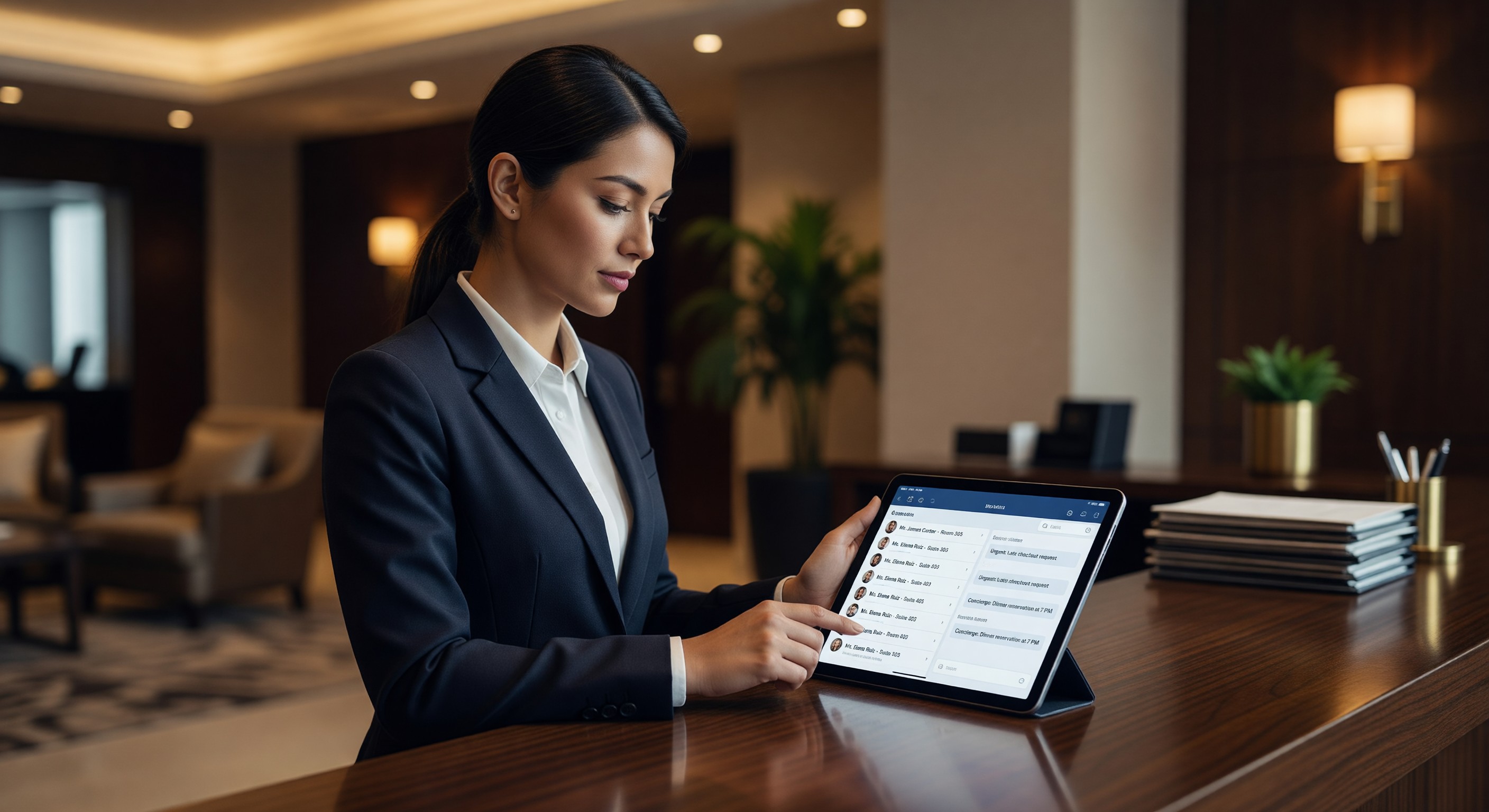
PMS integration: Incoming guest messages are matched to PMS reservation records — the staff member receiving the message sees the guest’s name, room number, length of stay, and tier status. Context transforms an anonymous message into an informed interaction.
Service request routing: Guest requests (“Can I get extra pillows?” or “Is late checkout available?”) are routed to the appropriate department — housekeeping, front desk, maintenance — through the platform’s workflow. The request is tracked from receipt to completion, with completion notification to the guest.
Escalation rules: Platforms can be configured to escalate unanswered messages after defined time windows — a service request that hasn’t been acknowledged in 10 minutes triggers an alert to a supervisor. This prevents messages from falling through the cracks during busy periods.
Response templates: Standard responses to common requests (WiFi password, check-out time, directions to the gym) can be saved as templates — staff send accurate, consistent responses quickly rather than typing individual replies.
AI-assisted response: Some platforms include AI response drafting that generates suggested responses to guest messages that staff can send with one click or edit before sending. For high-volume operations, AI drafting reduces staff response time for routine requests.
Staffing for Messaging Operations
Messaging platforms require dedicated staffing capacity — unmonitored messaging channels are worse than no messaging at all. Considerations:
Coverage hours: Guest messaging should be monitored and responded to during all hours the hotel is in operation. For 24-hour front desk properties, messaging can be managed continuously. For properties without overnight staff, define coverage hours clearly and set automated responses that acknowledge after-hours messages with expected response timing.
Response time standards: Set internal targets (respond within 5 minutes during staffed hours) and communicate them. Guest satisfaction with messaging correlates directly with response speed — a 30-minute response to a simple question will generate less satisfaction than a phone call would have.
Staff training: The tone, language, and content of messaging communications should be trained — messaging is a brand communication channel. Casual spelling and grammatical errors in guest messages reflect on the property.
Workload integration: At small properties, messaging may be managed by the front desk team alongside other duties. At larger properties, dedicated messaging coordination roles or hospitality operations centers (managing messaging across multiple properties) provide focused coverage.
Frequently Asked Questions
What are the leading hotel guest messaging platforms? The most widely deployed hospitality-specific messaging platforms include: Quore (service operations plus messaging), Kipsu (SMS-focused guest messaging with strong PMS integrations), Zingle (now Medallia Zingle, broader customer messaging), Actabl/ALICE (operations and guest messaging combined), and brand-specific platforms (Marriott Bonvoy App messaging, Hilton Honors App messaging for brand-affiliated hotels). Platform selection should prioritize PMS integration compatibility and the specific communication channels your guest base prefers.
How much does a hotel guest messaging platform cost? Pricing varies by platform and hotel size. Most platforms are priced on a per-room or per-property basis, typically $200–$600 per month for a 100–200 room hotel. Enterprise pricing for multi-property management companies varies based on volume. Most platforms include PMS integration, automated messaging workflows, reporting, and staff-facing dashboard in the base subscription. Evaluate total cost including implementation and training against the expected operational benefit.
Can hotel guest messaging replace phone calls entirely? Not entirely — some guests prefer phone calls (older demographic travelers, international guests less comfortable with messaging), and some situations (guest in distress, complex complaint management) are better handled by voice. The goal of guest messaging is to handle the majority of routine service requests and information exchanges through the more efficient digital channel, reserving phone and in-person interaction for situations where human connection is most important. Properties that have implemented messaging well typically see 40–60% of service requests shift to digital channels within 12 months of implementation.
How should hotels handle guest complaints received through messaging? Complaints received via messaging should receive an empathetic, immediate acknowledgment — not a template response. Escalate complaint messages to a supervisor or manager who can both respond with authority and take action. Do not attempt to fully resolve a significant complaint through text messaging — follow up the messaging interaction with a phone call or in-person contact if the situation warrants. Document complaint messages in the guest’s PMS record for post-stay review and pattern identification. A complaint that was well-handled through messaging often converts to positive feedback; a complaint that received an inadequate messaging response amplifies dissatisfaction.
Further Reading from Authoritative Sources
- AHLA hotel operations technology and guest service standards — AHLA provides hospitality industry research on guest communication preferences, technology adoption benchmarks, and best practices for hotel service delivery operations.
- HFTP guest messaging technology integration standards — HFTP provides hospitality technology professionals with standards and best practices for guest-facing communication platforms including PMS integration requirements and operational deployment frameworks.