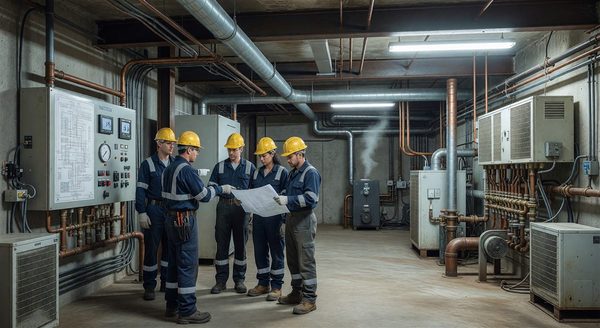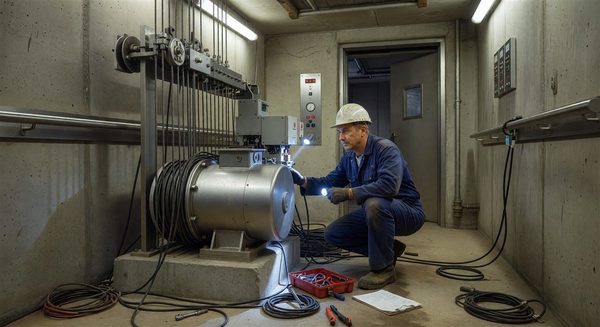
Preventive maintenance tells you to service equipment on a schedule. Predictive maintenance tells you to service equipment when the data says it needs attention. The difference is significant: preventive maintenance services equipment that may not yet need service, and misses the equipment that has deteriorated faster than expected. Predictive maintenance applies resources where they’re actually needed — which means less unnecessary maintenance, fewer unexpected failures, and equipment that’s serviced before a problem affects guests.
Predictive maintenance technology has historically required specialized equipment and expert analysts. The IoT revolution has changed this — affordable sensors and cloud analytics platforms have put basic predictive maintenance capability within reach of hotel engineering teams that couldn’t have considered it five years ago.
The Predictive Maintenance Technology Stack
A hotel predictive maintenance program uses some combination of:
IoT Sensors
Continuously monitoring sensors attached to equipment or monitoring ambient conditions:
Vibration sensors: Accelerometers attached to motors, pumps, fans, and rotating equipment. Changes in vibration frequency and amplitude are early indicators of bearing wear, imbalance, and misalignment — weeks or months before the equipment fails.
Temperature sensors: Non-contact infrared or contact thermocouple sensors monitoring motor temperatures, bearing temperatures, and electrical connection temperatures. Elevated temperature is an early indicator of wear and overload.
Current sensors: Hall-effect sensors on motor power feeds that monitor current draw. Increasing current on a constant load indicates increasing mechanical resistance — another early failure indicator.
Sound/ultrasonic sensors: Ultrasonic detectors identify high-frequency emissions from bearing wear, refrigerant leaks, electrical arcing, and steam/air leaks that are inaudible without specialized equipment.
Pressure sensors: Monitor fluid pressure in HVAC systems, plumbing, and compressed air systems. Pressure deviations from established baselines indicate system changes.
Water sensors: Leak detection sensors in mechanical rooms, elevator pits, and under kitchen equipment. Alert immediately when water is detected where it shouldn’t be.
Thermal Imaging
Infrared cameras capture heat signatures that reveal problems invisible to the naked eye:
Electrical thermography: Annual thermal imaging of electrical panels, switchboards, and motor control centers identifies hot spots from loose connections or overloaded circuits before they cause fires or failures.
Mechanical thermography: Hot bearings, overheated motors, and friction points in mechanical equipment show as thermal anomalies.
Building envelope: Thermal imaging of the exterior building envelope identifies insulation gaps, moisture intrusion, and HVAC duct leakage.
Roof moisture detection: Infrared scanning of the roof after dark can identify areas of wet insulation beneath the membrane.
Oil Analysis
For equipment with lubricating oil (large HVAC compressors, generators, gearboxes), periodic oil analysis detects:
- Wear metals (iron, copper, aluminum) that indicate component wear
- Contamination (water, coolant, dirt)
- Oil degradation (acidity, viscosity change)
This is a laboratory analysis — oil samples are sent to a lab that returns a report interpreting the findings. Annual oil analysis on critical compressors and generators is standard best practice.
Performance Monitoring
For HVAC equipment especially, tracking operational performance over time is a form of predictive maintenance:
- Chiller kW/ton trending upward indicates fouling or compressor degradation
- PTAC units cycling more frequently than baseline may indicate low refrigerant charge
- Pump head pressure declining from baseline indicates impeller wear
This data typically comes from the building automation system or from manually recorded data, not from dedicated sensors.
Implementing Predictive Maintenance: A Phased Approach
Full predictive maintenance deployment across all hotel systems simultaneously is neither necessary nor practical. A phased approach applies predictive methods where they deliver the highest value first.
Phase 1: High-Value Assets with High Failure Cost
Start with equipment where failure is expensive and disruptive:
Chillers: Commission continuous kW/ton monitoring via the building automation system. Annual oil analysis and refrigerant analysis. Annual vibration analysis of the compressor.
Cooling towers: Continuous water quality monitoring (conductivity, ORP, pH) with automated alerts. Monthly biological testing.
Emergency generator: Monthly fuel analysis, annual oil analysis, semi-annual vibration analysis.
Primary pumps: Annual vibration analysis on chilled water, condenser water, and domestic hot water pumps.
Domestic water system: Install water flow monitoring on the main supply to detect abnormal flow rates that indicate leaks.
Phase 2: High-Volume Equipment
For equipment where you have large quantities and managing the fleet matters:
PTAC fleet: Individual sensor deployment on hundreds of PTAC units is expensive. Instead, use fleet performance data — tracking which rooms consistently generate maintenance calls, which units have required refrigerant repeatedly, and which units are oldest — to target replacement before failure.
Fan coil units: Monitor room temperature deviation from setpoint across the building. FCUs in rooms that consistently run warm or cool warrant inspection.
Phase 3: Infrastructure Systems
As the program matures:
- Electrical panel thermal imaging (annual)
- Roof moisture mapping (tri-annual or when renovation presents the opportunity)
- Building envelope thermal imaging (when energy performance analysis identifies concerns)
- Water leak sensors in high-risk locations (elevator pits, mechanical rooms, below kitchen equipment)
Data Analysis and Alert Management
Sensors generate data; the value comes from the analysis. A predictive maintenance program that generates alerts that engineering staff ignore is worthless. Design alert management carefully:
Threshold alerts: Simple rule-based alerts trigger when a parameter exceeds a defined threshold. Easy to configure and understand. Risk of false positives if thresholds are set too conservatively.
Trend alerts: Alert when a parameter is trending toward a threshold rather than when it crosses it. More sophisticated and more actionable — tells you to investigate before failure rather than at the moment of failure.
Baseline deviation alerts: Alert when a parameter deviates from its established normal range rather than from an absolute threshold. More accurate because it accounts for the specific equipment’s normal operating characteristics.
Alert routing: Route alerts to the appropriate person with the right context. A chiller kW/ton alert should go to the chief engineer with the current reading, the baseline, and the trend. A motor temperature alert should include the motor location and the service history. Context makes alerts actionable.
Alert Fatigue Prevention
The most common failure mode of IoT predictive maintenance programs is alert fatigue — too many alerts, many of them low-quality, training staff to ignore the system. Prevention:
- Set realistic alert thresholds (not the most conservative possible)
- Review alert history monthly and adjust thresholds for sensors generating excessive false positives
- Close the loop: when an alert leads to investigation that finds nothing, note that finding and recalibrate the threshold
- Prioritize alert quality over quantity
ROI Framework
Predictive maintenance ROI comes from:
Failure prevention: Every major equipment failure that’s prevented by early detection has a quantifiable cost avoided. A chiller failure in August that would have cost $80,000 in emergency service, rental equipment, and guest compensation, detected 6 weeks early and addressed for $15,000 in planned maintenance, represents $65,000 in ROI on that event alone.
Maintenance cost reduction: Servicing equipment when it needs service — rather than on a fixed schedule — reduces unnecessary PM costs. Equipment serviced annually that could go 18 months without attention represents 33% maintenance cost reduction on that equipment.
Equipment life extension: Equipment that never fails catastrophically typically has a longer useful life. A chiller that is monitored continuously and addressed at the first sign of degradation commonly outlasts its rated lifespan significantly.
Energy savings: Equipment operating normally is more efficient than equipment in incipient failure. A compressor with a developing bearing issue draws more current than a healthy compressor. Early detection and repair restores efficiency.
Getting Started: Low-Cost Entry Points
If full IoT sensor deployment isn’t yet in the budget, start with these accessible predictive maintenance practices:
Thermal imaging cameras: A quality thermal imaging camera ($300–$2,000) enables annual electrical panel scanning and periodic mechanical equipment scanning without ongoing sensor costs. Return the camera’s cost on the first electrical issue it identifies.
Ultrasonic detector: A handheld ultrasonic detector ($200–$500) enables the engineering team to identify refrigerant leaks, compressed air leaks, and bearing issues during PM rounds.
Oil analysis subscriptions: For each major oil-lubricated piece of equipment (generator, large compressors), a $50–$150 per-sample oil analysis subscription provides early warning of internal wear.
Chiller performance logging: If the chiller has BAS integration, set up automated performance data logging. Review monthly. This is free to implement on an already-integrated system.
FAQ
How do we convince ownership to invest in predictive maintenance technology? Frame the conversation around risk and ROI. Calculate the cost of your most expensive recent equipment failure (including all associated costs). Calculate what monitoring technology that could have predicted that failure would cost. If the ratio is greater than 3:1 (failure cost vs. monitoring cost), the investment case is straightforward.
What’s the minimum viable IoT predictive maintenance deployment for a 200-room hotel? Start with water leak sensors in the highest-risk locations ($200–$500 for a basic sensor kit), a thermal imaging camera for annual electrical and mechanical scanning ($1,000–$2,000), and chiller performance monitoring through your BAS at zero additional cost. This foundation catches the highest-consequence failure modes for under $5,000.
How do we manage predictive maintenance data when we have multiple properties? Cloud-based platforms that aggregate data from multiple properties create portfolio-level visibility. You can compare bearing vibration trends across similar equipment at different properties, identify which properties’ equipment is most at risk, and prioritize capital investment across the portfolio based on condition data rather than age alone.
Do we need dedicated staff to manage a predictive maintenance program? Not necessarily at a single property. The technology can be configured to generate alerts without requiring continuous monitoring. The chief engineer reviews the dashboard weekly, responds to alerts when they occur, and drives the monthly analysis review. At the portfolio level, a facilities director with access to the consolidated platform can identify emerging issues across properties without dedicated data analysts.
Further Reading from Authoritative Sources
- IFMA predictive maintenance and condition monitoring resources for facility managers — IFMA provides facility management professionals with predictive maintenance program design frameworks, condition monitoring standards, and IoT sensor deployment guidance applicable to hotel predictive maintenance program development and phased implementation.
- DOE building systems predictive maintenance and energy efficiency resources — The DOE Buildings program provides commercial building predictive maintenance research, equipment performance monitoring standards, and energy efficiency guidance applicable to hotel predictive maintenance program ROI analysis and energy impact assessment.