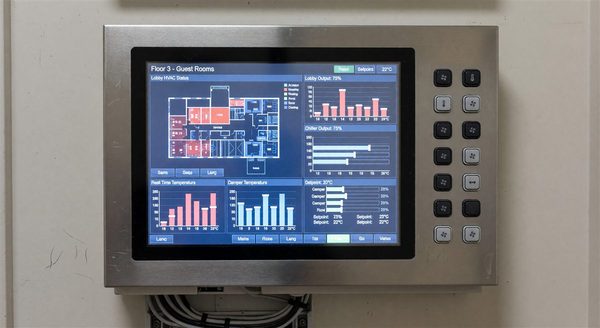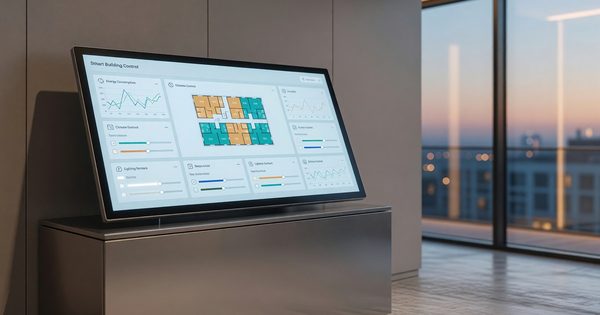
Hotel building automation systems (BAS) typically have a software and hardware lifecycle of 12–15 years before they become obsolete — unable to receive security updates, losing vendor support, and incapable of integrating with modern systems. Many hotel properties are operating on BAS platforms from the 2005–2012 era that are past this threshold, running on obsolete Windows versions, using deprecated communication protocols, and requiring legacy hardware components that are increasingly difficult to source.
Upgrading a hotel BAS is a complex project. The system touches HVAC, lighting, energy management, and potentially parking and security systems. It operates in an occupied building where disruption must be minimized. And the work requires coordination among the building automation vendor, the HVAC mechanical contractor, the hotel’s engineering team, and potentially IT.
This guide provides a framework for planning and executing a hotel BAS upgrade.
Assessing Your Current System
Is an Upgrade Warranted?
Signs that your BAS has reached or passed its useful life:
Software obsolescence: The BAS software runs on Windows XP, Windows 7, or another end-of-life operating system that no longer receives security updates. This is a significant cybersecurity risk.
Hardware parts unavailability: The replacement field controllers, DDC boards, or communication modules for the existing system are discontinued or available only from used equipment sources.
Vendor support status: The BAS vendor has end-of-lifed the platform and no longer provides software updates, technical support, or new features.
Integration failures: The existing system can’t integrate with modern systems — new HVAC equipment with IP-based controls, cloud energy management platforms, or the hotel’s current PMS — because it uses deprecated protocols or lacks current APIs.
Performance deterioration: Control loops are slower than designed, setpoints aren’t being maintained reliably, or the system generates frequent alarms that staff have learned to ignore.
Cybersecurity assessment: If the BAS has any network connectivity to the hotel’s IT network or the internet, a system running end-of-life software is a cybersecurity vulnerability.
Documentation Gathering
Before specifying a replacement, gather all available documentation on the existing system:
- As-built drawings showing the BAS points list (every sensor, every actuator, every control point)
- Original sequence of operations (the programming logic that defines how each system is controlled)
- Network architecture (how BAS controllers communicate with each other and the supervisory workstation)
- Equipment schedules (what HVAC equipment each controller manages)
This documentation is often incomplete or outdated after years of modifications. A thorough survey of the existing system to verify and update this documentation is the foundation of a successful upgrade.
Defining the Upgrade Scope
Full Replacement vs. Partial Upgrade
The upgrade scope decision is driven by the condition of existing field-level infrastructure (wiring, sensors, actuators) and the compatibility of that infrastructure with the replacement system.
Full replacement: New controllers, new sensors and actuators, new wiring where needed, new supervisory platform. This is the most reliable path and the best long-term result, but also the highest cost and longest implementation timeline.
Controller and software replacement, retain wiring: Replace the DDC controllers and supervisory software while retaining the existing wiring, sensors, and actuators (where they’re in acceptable condition). This is cost-effective when existing wiring is sound and sensors are functional, and when the replacement controllers support the same wiring topology.
Supervisory software upgrade only: Replace the management software while retaining the field-level hardware. Applicable when the field hardware is still serviceable and compatible with a modern supervisory platform. The least disruptive and least expensive approach but produces the least improvement in capability.
Determining Points to Include
Not every BAS point needs to be included in the upgrade. Evaluate each control point on:
- Operational value: Does this point contribute to energy savings, guest comfort, or equipment protection?
- Condition: Is the existing sensor or actuator functional and accurate?
- Access: Can the field equipment be accessed for replacement or verification without excessive disruption?
Create an updated points list that includes all new points being added (new sensors for occupancy, new equipment being installed) and clearly identifies which existing points are being retained vs. replaced.
Vendor Selection
The Protocol Compatibility Question
Hotel BAS are typically built on one of a few standard protocols: BACnet (the dominant open protocol for commercial buildings), Modbus (common for industrial and electrical equipment), or proprietary protocols from specific vendors (Johnson Controls’ Metasys, Siemens’ Desigo, Honeywell’s Niagara Framework, etc.).
For a replacement system, prioritize:
- BACnet compliance: BACnet is the ANSI/ASHRAE standard that ensures interoperability between systems from different vendors. A BACnet system can communicate with third-party BACnet equipment and integrate with modern cloud platforms.
- Niagara Framework: Many hotel BAS upgrades use the Niagara/JACE platform as the integration layer because of its broad device support and active vendor ecosystem.
- Open APIs: The supervisory platform should expose standard APIs (REST, MQTT) for integration with cloud analytics, energy management, and hotel operational systems.
Evaluating Vendors
Evaluate BAS vendors on:
- Experience with hotel property upgrades (not just new construction)
- Availability of ongoing support in your market
- Track record with the specific HVAC equipment brands at your property
- Ability to integrate with your current PMS and energy management systems
- Cybersecurity practices (software update frequency, secure communication protocols, access control architecture)
Request references specifically from hotel property BAS upgrade projects in the past 3 years.
Implementation Planning
Managing the Occupied Building Challenge
A hotel BAS upgrade in an occupied building requires careful phasing to minimize guest impact:
Zone-by-zone approach: Upgrade one HVAC zone or one floor at a time. During the cutover of any zone, that area’s HVAC may operate in manual mode or with degraded automated control for a brief period. Schedule zone cutovers during low-occupancy periods.
Parallel operation period: Where practical, run the new BAS controllers alongside the existing system for a period before full cutover. This validates the new control sequences before the old system is decommissioned.
HVAC fallback plan: For every piece of HVAC equipment, define what happens if the BAS controller loses communication. Equipment should fail to a safe, comfortable state — not full heating in summer or off position in winter.
Scheduling considerations:
- Chiller plant upgrades: Spring or fall, when cooling demand is low
- Boiler plant upgrades: Late spring or early fall, before or after heating season
- Guestroom zone upgrades: Coordinate with front office to minimize occupied rooms in the affected zone
Commissioning
Thorough commissioning is the most important and most often under-resourced aspect of a BAS upgrade. Commissioning involves:
Functional testing: Test every control point — every sensor, every actuator, every control sequence — to verify it operates as designed.
Sequence verification: Verify that each sequence of operations (economizer control, demand response, occupancy setback) executes correctly under simulated conditions.
Alarm response testing: Verify that alarms reach the appropriate destinations (engineering workstation, on-call personnel) reliably.
Integration verification: Test the integration with PMS, energy management systems, and any other connected systems.
Energy performance baseline: Establish documented energy performance at commissioning to enable future comparison.
Documentation Requirements
After the upgrade, maintain complete updated documentation:
- Updated as-built drawings with new controller locations and wiring
- Updated points list
- Updated sequences of operations (in plain language that engineers who didn’t participate in the project can understand)
- Network architecture diagram
- Vendor contact information and support agreement terms
- Training records for engineering staff
Post-Upgrade Operations
Training
BAS upgrades require retraining for all engineering staff. The new system’s interface, alarm response procedures, and common troubleshooting approaches are specific to the new platform. Training should occur before go-live, not after.
Training content minimum:
- How to navigate the new supervisory interface
- How to review alarm history and acknowledge alarms
- How to adjust setpoints and schedules within authorized parameters
- How to identify and interpret common fault conditions
- Who to call for advanced troubleshooting
Ongoing Optimization
A BAS upgrade provides a capability — but ongoing performance improvement requires active management:
- Monthly review of energy performance data
- Quarterly tuning of control parameters (setpoints, schedules, sequences)
- Annual commissioning review to verify continued performance
- Cybersecurity patching per vendor release schedule
FAQ
How do we handle a BAS upgrade when we don’t have good as-built documentation of the existing system? Start with a discovery phase before the upgrade project formally begins. A BAS technician surveys the existing system, creates a documented points list, and verifies the actual wiring and control sequences. This typically adds 2–4 weeks and $10,000–$30,000 to a project, but is essential for a successful upgrade.
Can we upgrade the BAS in phases over multiple years? Yes, and for larger properties this is often the appropriate approach. Prioritize the upgrade of HVAC systems with the most guest impact (chiller plant, cooling tower, guestroom HVAC) and systems with obsolete or failing hardware. Phase the completion of less critical zones in subsequent capital cycles.
What’s a typical cost range for a full hotel BAS upgrade? For a 200-room full-service hotel with a complete replacement of field controllers and supervisory system: $300,000–$700,000 depending on the scope, the number of control points, and market labor costs. Software-only or partial upgrades are significantly less.
How do we ensure the upgraded BAS remains cybersecure over time? Establish a cybersecurity management plan for the BAS: subscribe to the vendor’s security advisory notifications, apply patches within 30 days of release for critical vulnerabilities, review user access accounts annually, and conduct an annual security audit of the BAS network configuration.
Further Reading from Authoritative Sources
- ASHRAE BACnet standard and building automation guidance — ASHRAE develops and maintains BACnet (ASHRAE Standard 135), the open building automation protocol standard applicable to hotel BAS upgrades, vendor selection, and long-term system interoperability planning.
- DOE building automation and controls performance resources — The DOE Buildings program provides research and guidance on building automation system performance, controls optimization, and energy efficiency outcomes applicable to hotel BAS upgrade planning and post-upgrade operations.