Variable refrigerant flow (VRF) — also called VRV, Daikin’s brand name that has become a generic descriptor — has become one of the dominant HVAC technologies for hotel properties built or renovated in the past 15 years. Its combination of energy efficiency, zoning flexibility, quiet operation, and design flexibility (no central plant required) made it the go-to solution for boutique hotels, mid-rise full-service properties, and extended-stay brands.
Now, properties that were among the first hotel VRF installations in the early-to-mid 2000s are seeing their systems approach end of first-life. And facilities teams that inherited VRF systems without deep training on the technology are managing maintenance programs that may not fully meet the system’s specific requirements.
This guide addresses the operational reality of managing hotel VRF systems.
VRF Technology Fundamentals
How VRF Works
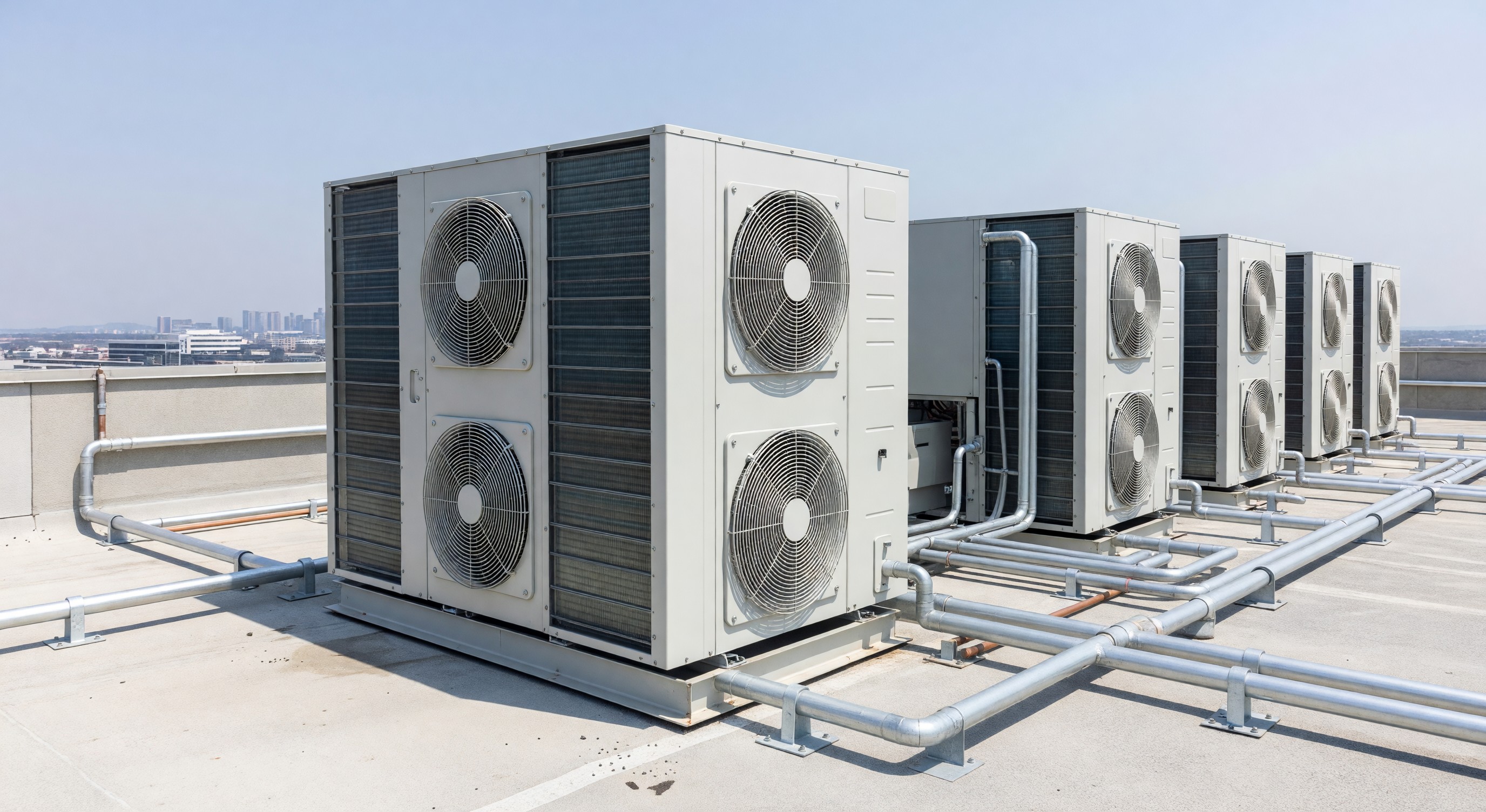
VRF systems use refrigerant — rather than chilled water or hot water — as the heat transfer medium between outdoor units and indoor units. A network of refrigerant piping connects outdoor condensing units (typically on the roof or mechanical yard) to multiple indoor units (fan coil units in guestrooms, corridors, public spaces) throughout the building.
The outdoor unit’s compressor(s) vary their output speed (hence “variable”) to match the combined cooling or heating load of all connected indoor units simultaneously. This is the efficiency advantage: the compressor only does as much work as current conditions require.
Heat recovery VRF: The most capable (and most complex) VRF configuration allows some indoor units to be in heating mode while others are in cooling mode simultaneously — with the outdoor unit facilitating heat transfer between the zones. For hotels where south-facing rooms need cooling while north-facing rooms need heating on a mild day, heat recovery VRF is highly efficient.
2-pipe vs. 3-pipe configurations: 2-pipe systems support either all heating or all cooling at any given time (selected by a changeover mode). 3-pipe heat recovery systems support simultaneous heating and cooling.
Refrigerant Types
Most hotel VRF systems installed since 2010 use R-410A refrigerant. Older systems may use R-22 (HCFC, phased out of new equipment in 2010, now no longer manufactured). Systems using R-22 face increasing refrigerant cost and availability challenges.
The phasedown of R-410A under the Kigali Amendment (the same dynamic affecting chiller systems) means that new VRF installations are beginning to use lower-GWP alternatives: R-32, R-454B, and R-410A blends. This has implications for replacement planning on aging systems.
Refrigerant Charge and Piping
VRF systems use large refrigerant charges — a hotel-scale VRF system may have hundreds of pounds of refrigerant distributed across the building in refrigerant piping that may run hundreds of feet. This creates important service considerations:
- Refrigerant leaks anywhere in the piping network affect system performance
- EPA 608 requirements apply to all VRF refrigerant work
- The extended piping creates more potential leak points than a self-contained unit like a PTAC
- Any indoor unit refrigerant leak creates a code-required room ventilation obligation under ASHRAE 15
Maintenance Requirements
The Manufacturer-Specific Service Challenge
VRF systems are significantly more complex to service than PTAC units or even conventional chilled water systems. Each major VRF manufacturer (Daikin, Mitsubishi, LG, Samsung, Fujitsu, Trane/Carrier) uses proprietary communication protocols, proprietary diagnostic software, and — for advanced troubleshooting — proprietary training that only manufacturer-certified technicians have.
This creates a practical maintenance challenge: while a qualified HVAC technician can handle many VRF maintenance tasks, some diagnostics and repairs genuinely require manufacturer-certified service. Establish a relationship with an authorized service provider for your specific VRF manufacturer before you need emergency service.
Preventive Maintenance Schedule
Monthly (owner/property staff):
- Check outdoor unit for debris, vegetation obstruction, or physical damage
- Verify that all condensate drain lines are flowing freely (blocked drains cause indoor unit water damage)
- Check that all indoor unit filters are clean — VRF indoor units have filters that clog more quickly than PTAC units in some installations
- Review the system controller for any active alarms
Quarterly (qualified HVAC technician):
- Inspect refrigerant piping connections for signs of oil residue (indicates a refrigerant leak)
- Test each zone’s cooling and heating function
- Clean outdoor unit coils if vegetation or debris contamination is observed
- Check refrigerant pressure at outdoor unit (requires EPA 608 certification)
- Inspect all indoor unit coils for dust accumulation and clean as needed
- Check condensate pans and drain lines in all indoor units
Annual (VRF-experienced or manufacturer-certified technician):
- Full refrigerant system check including leak detection
- Oil return check on compressors (VRF systems require refrigerant oil to return to the compressors — poor oil return damages compressors)
- Compressor operation analysis
- Electrical component inspection (contactors, capacitors, wiring)
- Fan motor inspection in all outdoor and indoor units
- Controls calibration and software review
Common Failure Modes
Refrigerant leaks: The most common VRF service issue. Oil staining at flared connections, brazed joints, or refrigerant piping supports indicates a leak. Leaks cause progressive performance decline and eventually compressor damage from inadequate lubrication.
Compressor failure: VRF compressors work hard and are expensive to replace ($3,000–$15,000+ for a compressor). They’re most vulnerable to: insufficient refrigerant charge (liquid refrigerant entering the compressor), poor oil return, and electrical supply issues. Preventive maintenance that catches refrigerant and oil issues early significantly extends compressor life.
Expansion device failure: Electronic expansion valves (EEVs) in both outdoor and indoor units regulate refrigerant flow. EEV failures often manifest as single indoor units with poor performance even when the rest of the system is working well.
Communication failure: VRF systems rely heavily on communication between indoor and outdoor units. A communication failure may put one or more indoor units offline. Often triggered by wiring issues (loose connections, corrosion) or after power events.
Condensate issues: Indoor unit condensate pans can clog, overflow, and cause water damage to the ceiling, wall, or floor below the indoor unit. Monthly inspection and proactive drain line cleaning prevents this common failure.
VRF System Diagnostics
One of the advantages of VRF technology is the built-in diagnostic capability. Modern VRF systems log operational data — temperatures, pressures, operating modes, alarm codes — that a qualified technician can retrieve via the system’s central controller or diagnostic software.
When a room or zone reports an HVAC problem, the diagnostic approach with VRF is different from PTAC systems:
- Check the system controller for active alarm codes related to the affected indoor unit
- Connect diagnostic software (if available) to retrieve operational data history
- Test the affected indoor unit’s cooling and heating function directly
- Inspect the indoor unit physically (coil, drain, filter)
- If the unit tests normally but the guest reports intermittent issues, review the system log for recent alarm events
This systematic approach, leveraging the system’s own diagnostic data, is more efficient than the trial-and-error approach that works for simpler systems.
Refrigerant Phasedown Planning
For hotel properties with R-410A VRF systems installed before 2020, the refrigerant phasedown creates a planning challenge:
- R-410A production is being limited, which will increase prices over time
- Systems needing refrigerant top-up will face higher costs
- Replacing aging VRF outdoor units will require newer refrigerants in new equipment, creating a mixed refrigerant situation if indoor units are retained
Planning implications:
- VRF outdoor unit replacement (without replacing all indoor units) becomes more complex when refrigerant types differ
- Full system replacement allows specifying current-generation lower-GWP refrigerants with full lifecycle planning
- Prioritize refrigerant leak repair more aggressively than in the past — every pound of R-410A that leaks represents both a compliance cost and an increasing future replacement cost
Capital Planning for VRF Systems
VRF outdoor units (the compressor-bearing components) have a useful life of 15–20 years in a hotel environment. Indoor units typically last longer if coils are maintained. Signs that outdoor unit replacement should be in the capital plan:
- System age approaching 15 years
- Compressor replacement history (second compressor replacement usually signals end of practical life)
- Refrigerant consumption requiring recharge more than once per year
- Declining performance vs. original specifications
Full system replacement (outdoor + indoor units) is more expensive but allows specifying current refrigerants and technology. Outdoor-only replacement (retaining indoor units) is less expensive but requires refrigerant compatibility evaluation.
FAQ
Can any HVAC technician service our VRF system? Any EPA 608-certified technician can legally work on VRF refrigerant. However, the system diagnostics, control calibration, and complex troubleshooting typically require technicians trained specifically on your VRF manufacturer’s equipment. For annual maintenance and complex repairs, use an authorized service provider.
Our VRF system’s outdoor units are on the roof. What special maintenance considerations apply? Rooftop exposure means more frequent coil cleaning (debris accumulation from wind), more frequent inspection of refrigerant piping penetrations through the roof membrane, and attention to the roof drainage around outdoor units (water must drain freely, not pool around unit bases). Any work on the rooftop outdoor units must follow the property’s roof access protocol.
Can we expand our VRF system to add new zones? Yes, within the outdoor unit’s rated capacity. Most VRF systems support adding indoor units up to the outdoor unit’s maximum connected capacity. The expansion requires refrigerant piping extension and must be within the manufacturer’s design parameters for pipe lengths and elevation differences. Get an engineering assessment before planning expansion.
What’s the cost range to replace a VRF outdoor unit for a 50-room hotel section? A VRF outdoor unit serving 50 hotel rooms (approximately 15–25 tons of capacity) typically costs $15,000–$35,000 for the equipment plus $5,000–$15,000 for installation labor, refrigerant, and commissioning. Total project cost: $20,000–$50,000 depending on market conditions and installation complexity.
Further Reading from Authoritative Sources
- ASHRAE VRF system refrigerant safety and hotel HVAC standards — ASHRAE provides the refrigerant safety standards (ASHRAE 15), ventilation requirements, and HVAC system selection guidance applicable to hotel VRF system planning, refrigerant compliance, leak detection requirements, and heat recovery configuration decisions.
- DOE VRF system energy efficiency and refrigerant transition resources — The DOE Buildings program provides VRF system energy efficiency data, refrigerant transition guidance under EPA HFC phasedown regulations, and building electrification resources applicable to hotel VRF system capital planning, refrigerant management, and energy efficiency analysis.