Preventive maintenance — servicing equipment on fixed schedules regardless of actual condition — has been the hotel industry standard for decades. It was a significant improvement over purely reactive maintenance (fixing things after they break), but it has inherent inefficiencies: time-based PMs service equipment that doesn’t need it while potentially missing developing failures between scheduled intervals.
Predictive maintenance uses condition data — vibration, temperature, pressure, current draw, acoustic signatures — to identify equipment that is developing a fault before that fault causes failure. Combined with AI and machine learning platforms that can identify subtle patterns across thousands of data points, predictive maintenance is transitioning from industrial manufacturing practice to accessible hotel facility management tool.
This guide covers the practical landscape of hotel predictive maintenance: what it can detect, what instrumentation it requires, how AI platforms process the data, and how to think about implementation and ROI.
Equipment Categories Most Suited to Predictive Maintenance
Not all hotel equipment benefits equally from predictive monitoring. The highest-value applications concentrate on:
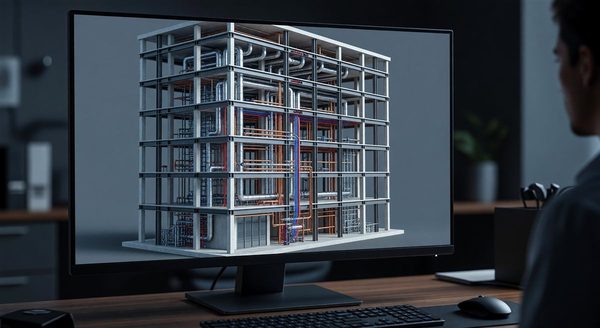
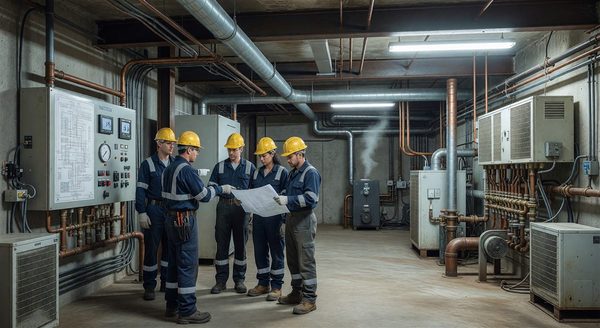
Rotating machinery with measurable wear signatures: HVAC compressors, circulation pumps, chilled water pumps, cooling tower fans, and air handling unit fans all exhibit measurable changes in vibration, bearing temperature, and current draw as components wear. Bearing failure is a leading cause of HVAC equipment downtime — vibration monitoring can detect bearing wear 2–8 weeks before catastrophic failure, allowing planned replacement during a maintenance window rather than emergency repair during peak occupancy.
Refrigeration and cooling systems: Chiller efficiency degradation, refrigerant leak development, and condenser fouling all manifest as measurable deviations in operating parameters (entering/leaving water temperatures, refrigerant pressures, compressor current draw). AI platforms that learn equipment’s normal operating envelopes can flag anomalies that indicate developing issues weeks before the system fails or becomes significantly inefficient.
Variable-speed drives and motors: VFDs (variable frequency drives) on large HVAC equipment, elevators, and pumps generate electrical harmonic signatures that change as drive health degrades. Current analysis (monitoring the electrical waveform at the drive input) can detect insulation degradation, grounding issues, and drive component wear before they cause failures.
Domestic hot water systems: Water heater efficiency, pump performance, and heat exchanger fouling are all monitorable. Temperature differential monitoring across heat exchangers detects fouling development that reduces efficiency before it reaches the service call threshold.
Elevators: Modern elevator controllers generate extensive operational data — ride quality, door cycle times, leveling accuracy, current draw — that can be analyzed for developing mechanical issues. Elevator predictive maintenance is a mature application at high-rise properties with modern elevator control systems.
IoT Sensor Deployment
Predictive maintenance requires data, which requires sensors. The sensor landscape for hotel applications:
Vibration sensors: Accelerometers mounted directly on equipment housings measure vibration amplitude and frequency across multiple axes. Wireless versions (battery-powered with mesh radio transmission) reduce installation cost by eliminating wired data connections. Vibration signature changes indicate bearing wear, imbalance, misalignment, and looseness.
Temperature sensors: Non-contact infrared thermometers and contact thermocouples monitor equipment surface and fluid temperatures. Bearing temperature rise is an early failure indicator for rotating equipment; fluid temperature differentials across heat exchangers track fouling.
Current transducers (CTs): Clip-on current sensors measure electrical current draw without interrupting wiring. Changes in motor current draw indicate mechanical loading changes, winding insulation issues, and developing motor faults.
Acoustic/ultrasonic sensors: Airborne ultrasonic sensors detect the high-frequency signatures of developing leaks (refrigerant, compressed air, steam) and bearing defects at their earliest stages — detectable by ultrasound before they generate measurable vibration or temperature changes.
Pressure sensors: Differential pressure monitoring across filters, heat exchangers, and circulation loops tracks fouling and flow restrictions.
Installation costs vary widely. A comprehensive vibration and temperature monitoring program for a typical hotel’s mechanical equipment might involve 50–200 sensors costing $100–$500 each, plus communication infrastructure and platform subscription costs.
AI Platform Functions
The value of sensor data is only realized through platforms that can analyze it intelligently. AI predictive maintenance platforms for building applications:
Baseline learning: During an initial learning period (typically 2–12 weeks of normal operation), the AI establishes normal operating patterns for each monitored asset — accounting for operational variability like load cycling, seasonal temperature changes, and occupancy-driven demand.
Anomaly detection: The AI continuously compares current sensor readings against the established baseline. Deviations that fall outside normal variability ranges trigger alerts — ranked by severity (informational, advisory, urgent) and contextualized by the type of deviation detected.
Fault isolation: Advanced platforms move beyond simple anomaly detection to fault isolation — identifying which specific failure mode is most likely based on the pattern of sensor deviations. A bearing fault produces a different vibration signature pattern than an imbalance issue; the platform’s ML models distinguish between them, allowing maintenance teams to order the correct parts before opening the equipment.
Integration with CMMS: Predictive maintenance platforms should connect to the hotel’s computerized maintenance management system (CMMS) to automatically generate work orders when alert thresholds are crossed, close work orders when issues are resolved, and maintain complete maintenance history in one system.
Energy analytics: Many predictive maintenance platforms include energy efficiency analysis — detecting when equipment is consuming more energy than normal for current operating conditions (a leading indicator of developing mechanical issues).
Platform Options for Hotels
The hotel predictive maintenance technology market includes:
- Facility-specific platforms: Siemens eMaintenance, Honeywell Forge, Johnson Controls OpenBlue — integrated with their BAS offerings
- Independent platforms: SparkCognition, SpinalTwin, Facilio — multi-brand, multi-equipment support
- Equipment OEM monitoring: Many chiller and AHU manufacturers (Carrier, Trane, Daikin) offer proprietary remote monitoring services for their equipment
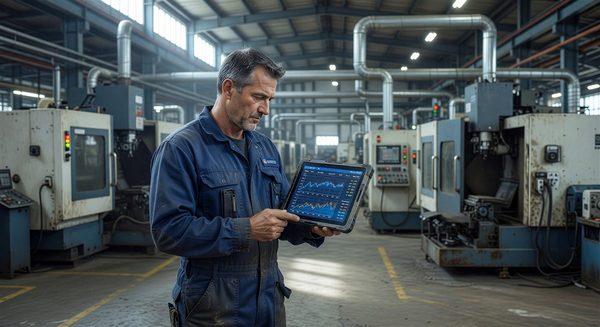
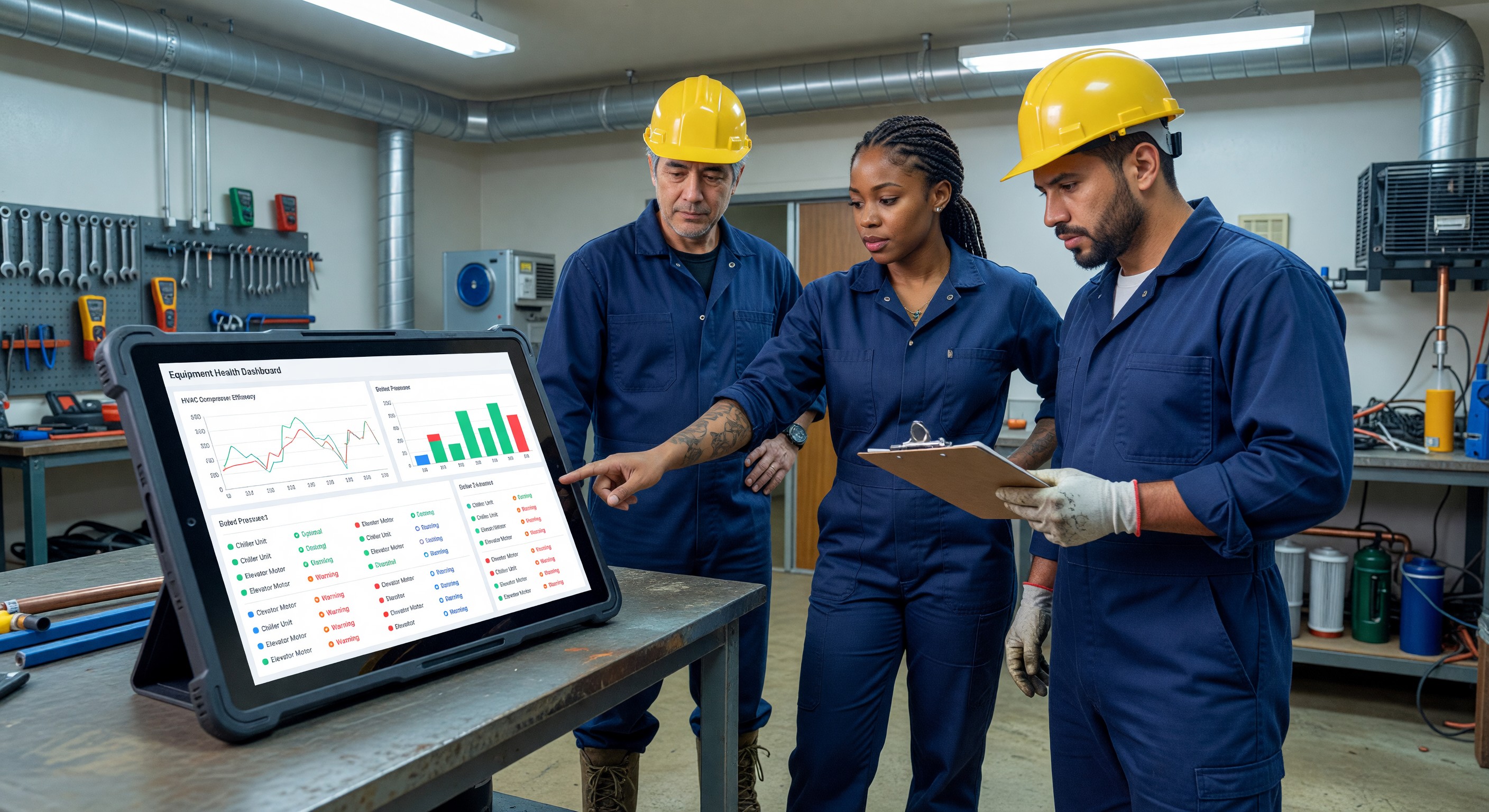
Smaller hotels often use simpler platforms that provide equipment health dashboards without the full AI anomaly detection capability — these “monitoring-first” approaches provide value by centralizing equipment data even without sophisticated predictive capability.
ROI Measurement
Predictive maintenance ROI comes from:
Failure avoidance: Calculate the avoided cost of reactive failures — a chiller failure at a peak summer occupancy period includes emergency repair premium, parts expediting, and the revenue and reputation impact of rooms that can’t be cooled. Even one major failure avoided per year can justify the entire program cost.
PM optimization: Condition-based maintenance allows extension of PM intervals on equipment operating in good health, reducing labor cost and parts consumption. Tracking PM deferrals against baseline schedules quantifies this benefit.
Energy efficiency: Earlier detection of equipment efficiency degradation reduces the duration of above-baseline energy consumption before corrective action.
Hotels implementing predictive maintenance programs typically report:
- 20–35% reduction in unplanned equipment downtime
- 10–15% reduction in maintenance labor costs through optimized PM scheduling
- 8–12% reduction in energy costs through earlier detection of efficiency degradation
Frequently Asked Questions
What size hotel can benefit from predictive maintenance technology? Properties with 100+ rooms and significant mechanical plant (central HVAC, chillers, cooling towers, multiple AHUs) have the most compelling ROI from predictive maintenance. The higher the replacement cost and operational impact of monitored equipment, the better the business case. Limited-service properties with simpler HVAC (PTAC units, smaller central systems) may find the technology economics more challenging, though water leak detection and basic equipment monitoring remain valuable at any size.
How long does it take for AI to learn normal equipment behavior? Most predictive maintenance platforms require 4–12 weeks of historical data to establish reliable baselines. During this learning period, the platform is collecting data and building the normal operating model — alert quality improves as the baseline matures. Many platforms begin generating basic alerts immediately based on absolute limit violations while the AI model develops nuanced anomaly detection capability over time.
Can predictive maintenance be applied to guest room equipment? In-room equipment monitoring is a growing application. PTAC (packaged terminal air conditioner) monitoring — detecting units drawing abnormal current, failing to reach setpoint, or generating unusual acoustic signatures — can identify guest room HVAC issues before guests report them. Water leak sensors in guest room bathrooms are the most widely deployed in-room predictive sensor. Voice-complaint detection (AI monitoring of in-room voice assistants for phrases indicating guest dissatisfaction) is an emerging application that raises distinct privacy considerations.
How does predictive maintenance change the hotel engineering team’s daily workflow? The engineering team shifts from primarily scheduled preventive maintenance rounds to condition-based investigation and intervention. The daily workflow includes reviewing predictive maintenance dashboards, investigating alerts, and executing targeted repairs rather than executing comprehensive scheduled PM routes. This transition requires both technology adoption and a cultural shift from schedule-based to condition-based thinking — which is the primary implementation challenge at most properties.
Further Reading from Authoritative Sources
- IFMA predictive maintenance and facility technology standards — IFMA provides facility management professionals with predictive maintenance standards, IoT sensor deployment guidance, and technology ROI frameworks applicable to hotel equipment monitoring programs.
- DOE advanced building operations and predictive analytics resources — The DOE Buildings program provides research and case studies on predictive maintenance, fault detection diagnostics, and advanced operations analytics for commercial building equipment including hotel HVAC and mechanical systems.