Hotel plumbing fixtures — the showerheads, faucets, shower valves, and toilets that guests interact with in every stay — represent a maintenance category where the unit of work is small but the aggregate scale is large. A 200-room hotel has 200 showers, 200+ toilet tanks, 400+ faucets, and hundreds of cartridges, aerators, and valve stems that wear out over time.
Managing this distributed fleet requires a systematic program that combines routine PM during occupied room service, reactive response to guest complaints, and a proactive replacement cycle that gets ahead of failures before they become complaints.
Understanding Fixture Failure Modes
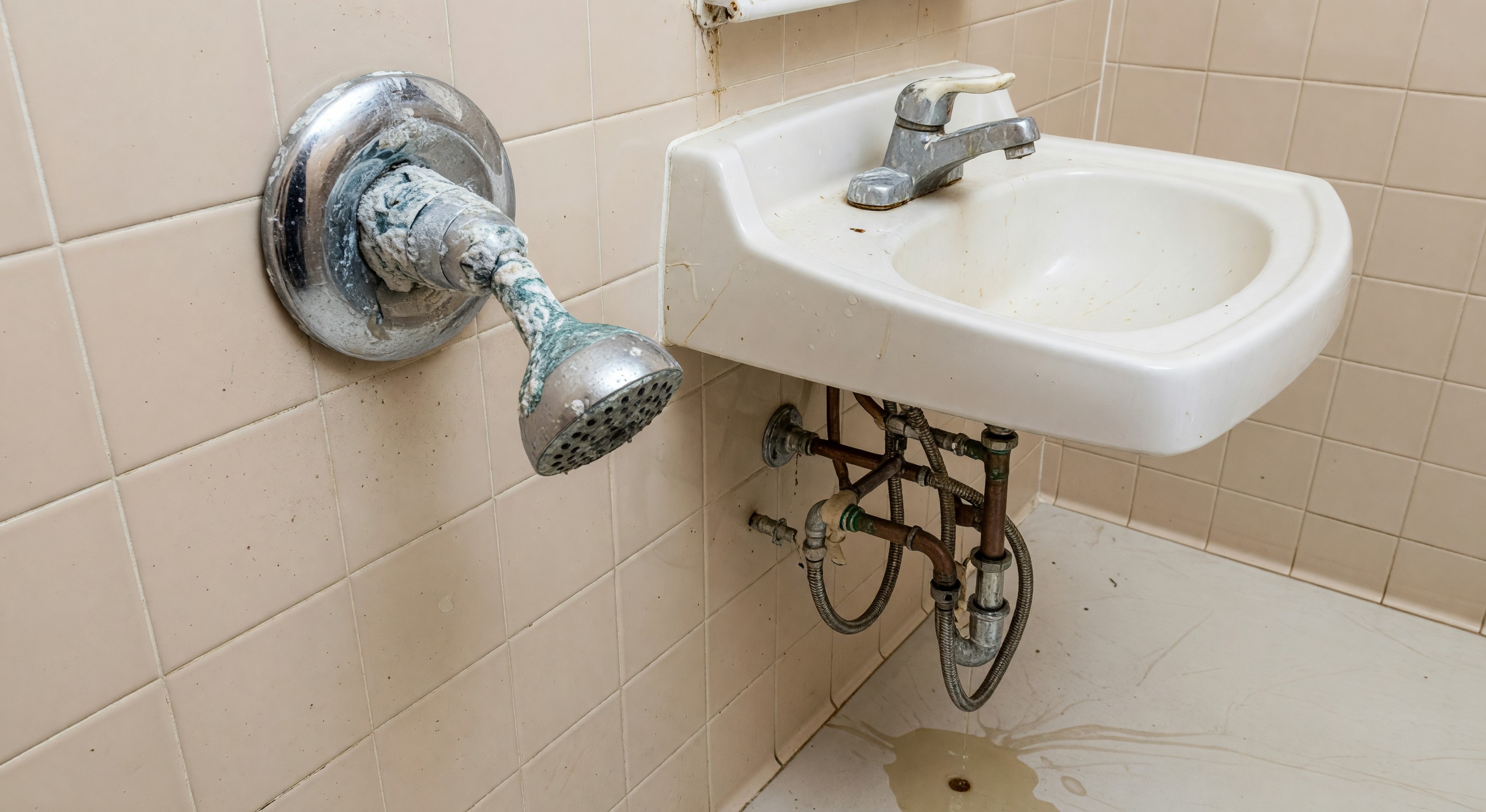
Showerheads: Scale accumulation from calcium carbonate deposits (mineral hardness in water) clogs spray nozzles progressively, reducing flow and spray pattern uniformity. In hard water markets, showerheads may need descaling every 6–12 months. Showerhead replacement is typically more economical than descaling at scale — budget for periodic fleet replacement (every 3–5 years) rather than individual descaling.
Shower valve cartridges: The cartridge inside a single-handle shower valve controls both temperature and flow. Cartridge failure manifests as: inability to maintain temperature (hot/cold variation during showering), difficulty turning the valve on or off, or dripping when closed. Cartridge replacement is a 15–30 minute repair once the correct cartridge is identified. Most hotel rooms use one of a small number of valve brands (Moen, Delta, Kohler, American Standard) — maintaining a cartridge inventory for the brands in use eliminates wait times for parts.
Faucet aerators: Aerators at sink faucets accumulate mineral scale and debris, reducing flow rate and introducing splash patterns. Remove and clean or replace aerators quarterly during PM cycles. Replacement aerators for standard faucet thread sizes are inexpensive and widely available.
Toilet flush valves and fill valves: Toilet running (fill valve not shutting off, or flapper not sealing) is one of the most common hotel room maintenance complaints — and one of the most significant water waste sources. Fill valve failure causes continuous running; flapper failure causes phantom flushing and continuous trickle into the bowl. Both are inexpensive repairs ($15–$40 in parts, 20 minutes labor) that are often deferred to the point of guest complaint rather than caught in PM.
Toilet flushing performance: Mineral buildup in the siphon jet and rim wash holes reduces flushing effectiveness over time. Annual cleaning of flush pathways maintains performance. Chronic flushing problems in markets with very hard water may require periodic decalcification.
Preventive Maintenance Schedule
Monthly (during room inspection or occupied room service):
- Check faucet aerators for flow restriction
- Check showerhead for flow and spray pattern issues
- Check toilet for running (listen for fill valve cycling) and flush performance
- Inspect under-sink areas for any slow drips from supply lines or drain connections
Quarterly:
- Clean or replace faucet aerators
- Check shower valve for smooth operation and temperature control
- Inspect toilet flapper for seal quality (add dye to tank — any color in the bowl indicates flapper leak)
- Check shut-off valves under sinks and at toilets for valve handle movement (frozen shut-offs create problems during maintenance events)
- Descale showerhead in hard-water markets
Annual:
- Inspect shower valve cartridges (replace if stiff, temperature-inconsistent, or leaking)
- Replace toilet flappers on a fleet cycle (regardless of visible failure — flappers have a predictable service life)
- Inspect supply lines for bulging, corrosion, or brittleness — flexible supply line failures are a common cause of significant in-room water damage
- Clean toilet siphon jet and rim wash holes in hard water markets
Proactive Fleet Replacement vs. Reactive Repair
For individual fixture components with predictable service lives, proactive fleet replacement is often more economical than reactive repair:
Toilet flappers: Service life 2–5 years depending on water chemistry and usage. At $3–$8 per flapper, replacing all flappers on a 3-year cycle ($1,800–$4,800 for a 200-room property) prevents the guest complaints and repeat maintenance visits that reactive flapper replacement generates.
Faucet aerators: Service life 2–4 years. At $2–$5 per aerator, fleet replacement is highly economical.
Showerheads: Service life 5–8 years before scale damage and spray pattern deterioration require replacement. At $25–$75 per showerhead (hospitality grade), fleet replacement on a 5-year cycle is economical relative to the guest satisfaction impact of degraded shower performance.
Supply line hoses: Braided stainless flexible supply lines have a rated service life of 10 years. Water damage from supply line failure ($5,000–$50,000 in room damage including structural repair, mold remediation, and multiple rooms affected when the failure occurs in an upper-floor room) is many times the cost of fleet replacement at 10 years. Replace all flexible supply lines when rooms are renovated or on a 10-year schedule.
Water Pressure Management
Consistent water pressure across all guest floors is a plumbing infrastructure requirement that affects fixture performance:
Pressure reducing valves (PRVs): Hotels with municipal water pressure exceeding 80 psi require pressure reducing valves at the building entry to protect fixtures from excess pressure. PRV failure (stuck open, stuck closed, or fluctuating) causes: fixture damage and shortened service life from over-pressure; or inadequate flow and pressure at upper floors from under-pressure. PRVs should be tested annually and replaced at 10–15 year intervals or when pressure variation is detected.
Upper floor pressure: In tall buildings, water pressure at the top floor may be inadequate unless the system includes booster pumps or a gravity feed from a rooftop tank. Guest complaints about low shower pressure concentrated on upper floors indicate a pressure balancing issue — not a showerhead problem.
Frequently Asked Questions
How should hotels track fixture condition across a large room inventory? CMMS-based asset tracking is the most systematic approach — each room has a record of installed fixture types, installation dates, and maintenance history. When a cartridge is replaced or a toilet flapper swapped, the work order is closed against the specific room, building a history of which rooms have had service and identifying rooms that haven’t had PM in too long. Without CMMS tracking, a maintenance log book per floor or a spreadsheet with room-by-room fixture history provides a workable alternative for properties without full CMMS deployment.
What is the most cost-effective way to reduce hotel toilet water consumption? For properties with older toilets (pre-1994, 3.5+ gallon per flush), replacement with current 1.28 gpf (HET — High Efficiency Toilet) models reduces toilet water consumption by 60%+. ROI on HET replacement at hotels with high water costs is typically 3–6 years. For current-generation toilets, maintaining flapper condition (preventing phantom flushing) is the primary conservation measure — a running toilet can waste 200–400 gallons per day. Install tank-mounted leak detection tablets (dye tablets that color the bowl water when flapper leaks) during quarterly PM rounds to identify and address running toilets before they waste significant water.
Should hotels standardize plumbing fixture brands across the property? Yes — fixture brand standardization reduces parts inventory requirements (stocking Moen cartridges rather than cartridges for 5 different brands), simplifies technician training (engineers learn one brand’s repair approach), and enables volume purchasing. When selecting the standard for renovations or new properties, evaluate: availability of replacement parts through standard distributors, local service support for warranty claims, compatibility with the property’s water chemistry and pressure, and total cost of ownership over the fixture’s service life.
How do hotels handle frequent in-room plumbing complaints in specific rooms? A room with recurring plumbing complaints (repeated toilet running, repeated showerhead complaints, chronic drain issues) has an underlying condition that surface repairs aren’t resolving. Flag these rooms for a systematic evaluation: What is the water pressure at that room? Is the drain configuration original or modified? Is the issue occurring in adjacent rooms (floor or corridor water supply issue rather than room-specific)? A chief engineer walk-through with a maintenance history review often identifies the root cause. Some rooms have idiosyncratic issues (oversized through-wall sleeve creating PTAC vibration-induced valve loosening, for example) that require understanding the room’s history to diagnose.
Further Reading from Authoritative Sources
- EPA WaterSense hotel water efficiency and fixture standards — EPA WaterSense program provides water efficiency standards for plumbing fixtures, hotel water conservation benchmarks, and fixture specification guidance applicable to hotel plumbing fixture replacement and water management program development.
- IFMA plumbing maintenance program and asset lifecycle resources — IFMA provides facility management professionals with plumbing system maintenance program frameworks, fixture lifecycle standards, and systematic maintenance scheduling guidance applicable to hotel plumbing fixture program design and implementation.