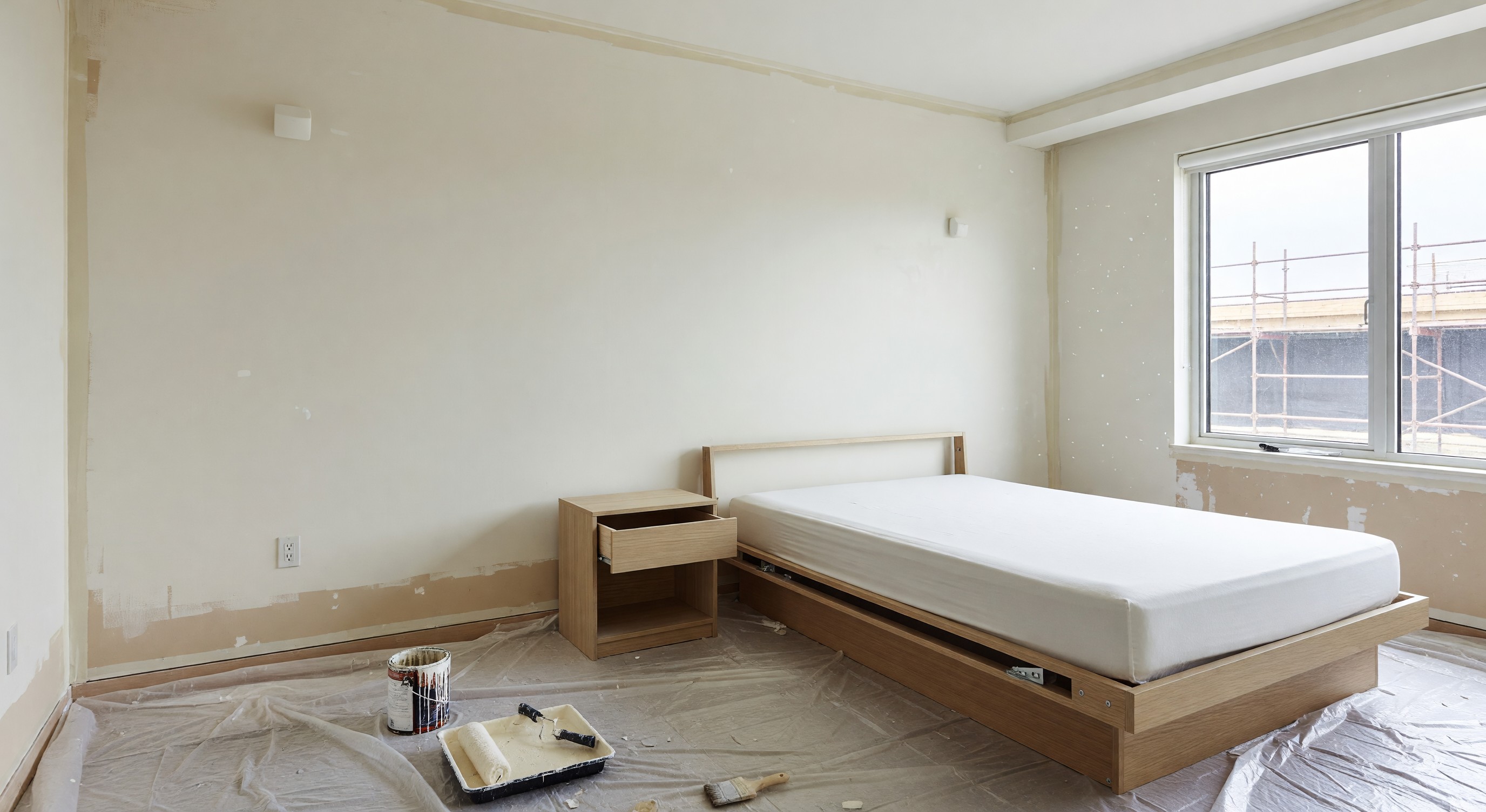
Guest room refresh and renovation programs are among the most complex operational challenges for hotel engineering teams. Unlike mechanical room equipment replacements that happen largely out of guest sight, room renovations occur in occupied property — requiring careful coordination with reservations and housekeeping to manage room out-of-service inventory, quality control across dozens or hundreds of sequential rooms, and integration of new technology and mechanical systems alongside aesthetic improvements.
Engineering departments play a central role in room renovation programs: scoping electrical and mechanical work within the renovation, coordinating contractor access and safety compliance, and conducting quality control walkthroughs that determine when rooms return to service.
Types of Room Renovation Programs
Deep refresh (soft goods): Replacement of soft goods — bedding, pillows, window treatments, carpet or area rugs — without structural or mechanical changes. Typically executed by housekeeping and purchasing teams, with engineering involvement limited to any electrical or fixture repairs discovered during the process. Cycle: every 5–7 years.
Full soft goods and FF&E renovation: Complete soft goods replacement plus furniture replacement (beds, case goods, seating, desks) and potential artwork and décor updates. Engineering involvement: any furniture repositioning that requires outlet relocation, mounting of new artwork or fixtures, TV mounting for new entertainment systems. Cycle: every 8–12 years.
Hard goods renovation: The most comprehensive renovation category — includes hard goods (case goods, headboards) plus hard surfaces: wall vinyl or paint, flooring (tile, LVT, or carpet replacement), bathroom tile and fixture updates. Engineering involvement is substantial: plumbing rough-in for fixture replacements, electrical work for lighting upgrades, PTAC replacement (often coordinated with room renovations to amortize room downtime), TV/technology infrastructure updates. Cycle: every 15–20 years.
PIP-driven renovation: Property Improvement Plans (PIPs) required by hotel brands at flag change, franchise renewal, or brand standard update cycles. PIP scope is defined by the brand’s franchise representative and covers both hard goods and brand-specific technology and design requirements.
Engineering Scope Within Renovations
Engineering work that commonly accompanies guest room renovations:
Electrical:
- Outlet relocation or addition (USB-C, accessible outlet placement)
- Lighting fixture replacement and dimmer installation
- Smart room control system installation (GRCU replacement)
- TV wiring and mounting (HDMI, coax, power behind wall)
- PTAC replacement (if coordinating with renovation)
Plumbing:
- Shower valve cartridge replacement
- Showerhead replacement to current brand standards
- Toilet replacement (for water efficiency or brand standard compliance)
- Vanity fixture replacement (faucets, drain hardware)
- Water pressure testing and balancing
Technology:
- Network jack and WiFi AP location verification
- Phone system jack replacement or removal
- Safe installation and securing
- Alarm clock and charging unit installation
Mechanical:
- PTAC or fan coil unit replacement (if not done independently)
- Bathroom exhaust fan replacement
- Thermostat replacement for smart room control compatibility
Sequencing and Scheduling for Occupied Hotels
Renovating guest rooms in an occupied hotel requires careful sequencing to minimize revenue impact while maintaining renovation momentum:
Block booking strategy: Reserve room renovation blocks with reservations in advance — typically 90–180 days ahead for major renovation programs. Coordinate with revenue management to block the renovation rooms in periods of lowest projected demand, minimizing the revenue impact of out-of-service inventory.
Floor-by-floor vs. scattered renovations: Floor-by-floor renovation (completing all rooms on one floor before moving to the next) is logistically simpler — contractor setup, material storage, and debris removal are concentrated in one location. Scattered renovation (renovating rooms throughout the property in blocks of 5–10) minimizes the visual impact on other guests of an entire floor under construction. The choice depends on property configuration and the nature of the renovation.
Days-to-complete per room: Establish realistic completion timelines per room type. A soft goods refresh might complete in 2–3 days (coordinated with housekeeping); a hard goods renovation with plumbing and electrical work may take 10–15 days per room. Timeline planning determines the pace at which rooms can be released back to inventory.
Quality control walkthrough process: Engineering should conduct a formal walkthrough of each completed room before release to housekeeping, verifying: all mechanical and electrical items operational (PTAC, lighting, outlets, TV), no construction debris or damage, all new fixtures functional, room meets renovation scope specification. A written room release checklist signed by the chief engineer creates accountability and documentation.
Contractor Management
Renovation contractors working in an occupied hotel require specific management:
Access protocols: Contractor access credentials (temporary key cards for room access), supervision of access to areas beyond their work scope, and enforcement of escort requirements in back-of-house and mechanical areas.
Noise and disruption limits: Construction noise regulations within the hotel — typically no power tools before 8 a.m. or after 6 p.m., with quiet hours respecting neighboring occupied rooms. Coordinate with guest relations on proactive notification to guests in adjacent rooms.
Debris management: Construction debris (removed furniture, flooring, drywall) creates housekeeping and aesthetics challenges. Define debris removal routes (service corridors and service elevators only), debris container placement, and removal frequency to prevent accumulation.
Life safety compliance during construction: OSHA requirements for occupied construction adjacent to occupied spaces — particularly dust containment, temporary egress provision, and fire watch when fire protection systems are impaired during work.
Frequently Asked Questions
How does a hotel manage the revenue impact of room renovations? Revenue impact mitigation strategies: (1) Schedule major renovation phases during low-demand periods identified by revenue management — shoulder seasons, historically low-occupancy months; (2) Use demand forecasting to minimize renovation room blocks during projected high-demand periods; (3) Negotiate group blocks for other floors/room types that compensate for reduced room inventory; (4) Capture renovation ROI data (rate improvement post-renovation) to demonstrate that the short-term revenue impact is recovered through higher RevPAR post-renovation. Most renovations achieve a premium in ADR that pays back the revenue loss from out-of-service rooms within 12–24 months.
What is the most common engineering mistake during hotel room renovations? The most common engineering mistake is inadequate pre-construction scope definition — starting renovation without resolving all decisions about electrical, mechanical, and technology scope. Undecided scope items (will the outlets be relocated? will the PTAC be replaced? will smart controls be installed?) that emerge mid-renovation require schedule disruption, subcontractor coordination at premium cost, and sometimes completed work being undone to accommodate the undecided scope. Engineering should drive complete scope definition for all MEP items before the first room is pulled off inventory.
How long does a full hard goods renovation take for a 200-room hotel? A full hard goods renovation — bathroom tile, flooring, wall finishes, furniture, and mechanical upgrades — at a rate of 10–15 days per room for a crew working 6 days per week can complete approximately 15–20 rooms per month. A 200-room hotel would require 10–14 months at this pace for the full property. Most hotels phase renovations over 18–24 months to spread capital, maintain higher room inventory throughout the program, and allow revenue from renovated rooms to partially fund ongoing renovation costs.
What documentation should engineering maintain during a room renovation? Engineering documentation during room renovations: (1) Punch list per room — all engineering scope items, completion status, and who signed off; (2) As-built documentation — any electrical, plumbing, or technology changes from original conditions that future maintenance needs to know; (3) Equipment installation records — model numbers and installation dates for PTAC units, thermostats, and any other replaceable equipment installed; (4) Photo documentation of behind-wall conditions (rough-in, before drywall closure) that future maintenance may need; (5) Room release sign-off record documenting who authorized return to service.
Further Reading from Authoritative Sources
- OSHA construction safety in occupied hotel facilities — OSHA provides federal construction safety standards applicable to hotel renovation projects including requirements for work adjacent to occupied spaces, contractor safety programs, and hazard communication.
- AHLA hotel renovation and capital improvement resources — AHLA provides hotel industry guidance on capital improvement programs, PIP requirements, brand renovation standards, and ROI measurement for guest room renovation investments.