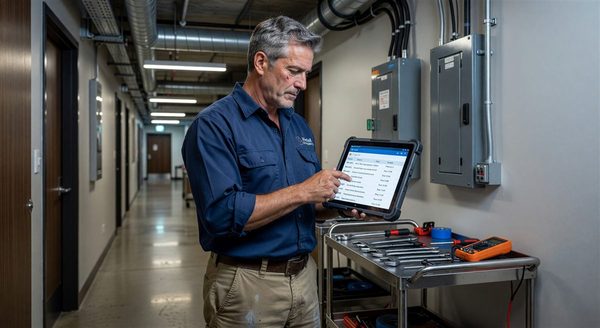
HVAC air filtration has received more operational scrutiny in hotel facilities since 2020 than in any prior period. The COVID-19 pandemic transformed indoor air quality from a background technical specification into a guest-visible concern, with hospitality brands publishing air quality pledges and guests specifically asking about filtration standards during booking. Post-pandemic, higher filtration standards have largely persisted — both because the operational infrastructure to support them was put in place and because the data on aerosol transmission of multiple pathogens (not just SARS-CoV-2) supports the investment.
This guide covers HVAC air filtration from a practical hotel facility management perspective: how to specify the right filters for each application, establish effective change schedules, manage costs, and document your filtration program in ways that support both operations and guest communication.
Understanding MERV Ratings
The Minimum Efficiency Reporting Value (MERV) scale (ASHRAE Standard 52.2) rates filter efficiency at capturing particles of specified sizes. Key reference points:
- MERV 1–4: Minimal efficiency — fiberglass panel filters that capture large particles only. Not appropriate for hotel guest areas.
- MERV 6–8: Standard residential/light commercial range — captures larger dust, pollen, dust mite debris. Minimum practical standard for hotel return air filters and pre-filters.
- MERV 11–13: High efficiency — captures smaller particles including mold spores, legionella, pet dander, fine dust. Post-COVID standard recommendation for hotel air handling units serving guest areas.
- MERV 14–16: Very high efficiency — captures fine particles including tobacco smoke, bacteria, and some viruses in droplet nuclei. Used in healthcare settings; represents the upper practical limit for most hotel HVAC equipment without system modifications.
- MERV 17–20 (HEPA): True HEPA filtration captures 99.97% of particles at 0.3 microns. Used in healthcare and clean room applications. Not appropriate for standard hotel air handling units — requires equipment designed for high static pressure drop.
The pressure drop tradeoff: Higher MERV filters create greater resistance to airflow (higher static pressure drop). HVAC systems designed for lower-efficiency filters may not be able to maintain adequate airflow with higher-efficiency filters without fan motor, drive, or ductwork modifications. Before upgrading from MERV 7 to MERV 13, consult the air handling unit manufacturer’s specifications for maximum allowable filter pressure drop.
Recommended Hotel Filter Standards
Post-pandemic industry consensus (supported by ASHRAE, CDC Ventilation Guidance, and major hospitality brands):
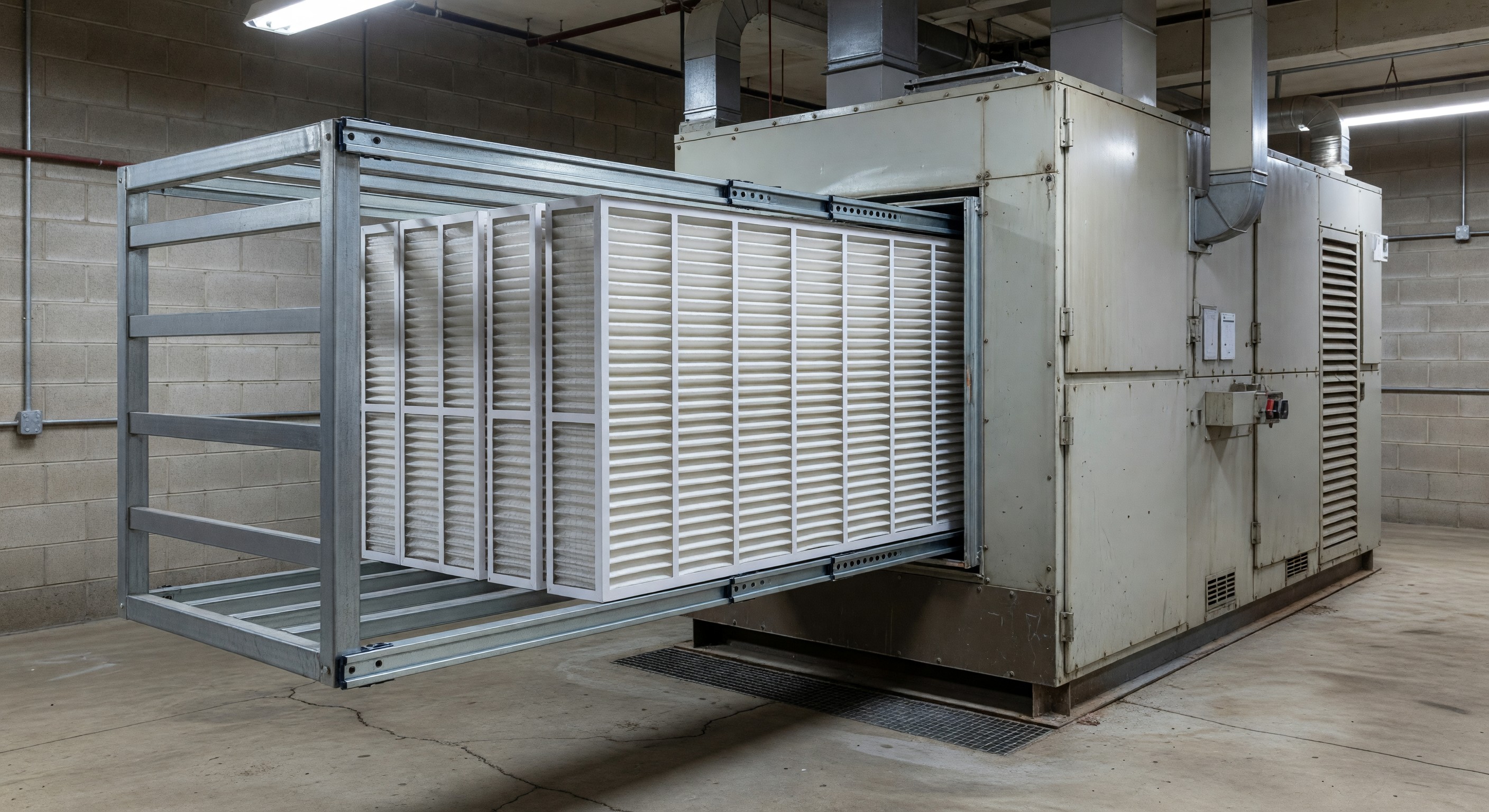
Air handling unit final filters (serving guest rooms and public areas): MERV 13 minimum. This rating captures the aerosol size range most relevant to respiratory pathogen transmission.
Pre-filters (protecting coils in multi-filter AHU configurations): MERV 8 sufficient — pre-filters extend final filter life by capturing larger particles before they load the downstream MERV 13 filter.
Fan coil units and PTACs: These smaller units serving individual guest rooms are limited by the filter sizing that fits within the equipment housing. Manufacturer-specified MERV ratings apply; many hospitality-grade PTACs support MERV 7–8 filters. Some manufacturers offer enhanced filter kits that allow MERV 11–13 filters within existing equipment.
Commercial kitchen exhaust: Kitchen exhaust is not recirculated — makeup air supplied to kitchens should meet the AHU filtration standard; the exhaust itself passes through grease filters (NFPA 96 compliant) and exits the building.
Parking garage ventilation: Garage ventilation exhausts to exterior — standard pre-filter efficiency (MERV 6–8) is appropriate.
Filter Change Schedules
Filter change frequency depends on MERV rating, airflow volume, particle loading (based on location and occupancy), and target pressure drop limits.
Practical schedules for typical hotel applications:
Pre-filters (MERV 8): Every 30–60 days in high-occupancy urban locations; every 60–90 days at suburban or resort properties with lower ambient dust loading.
Final filters (MERV 13): Every 60–90 days in high-occupancy locations; every 90–120 days at lower-dust locations. Monitor actual pressure drop versus manufacturer maximum — in high-dust environments, filters may need more frequent replacement.
PTAC/fan coil filters: Monthly in occupied rooms; quarterly for low-use rooms or extended stays.
Pressure drop monitoring: The most accurate change trigger is actual pressure drop measurement, not calendar schedule. Many modern air handling units have differential pressure gauges or transducers that monitor filter loading in real time. BAS integration can provide alerts when any monitored AHU filter reaches the maximum allowable pressure drop — preventing both the efficiency loss of over-loaded filters and the unnecessary cost of premature replacement based on fixed schedules.
Cost Management
Higher MERV filters cost more per unit and may require more frequent replacement. Annual filter cost comparison:
- MERV 8 final filter, 120-day change interval: baseline cost
- MERV 13 final filter, 90-day change interval: approximately 2.5–4× baseline cost per filter, plus 1.3× frequency = 3–5× total annual cost
For a 200-room full-service hotel with 20 large AHUs, upgrading from MERV 8 to MERV 13 might increase annual filter cost from $8,000–$12,000 to $30,000–$50,000. This is a meaningful operating cost increase that should be budgeted.
Strategies to manage filter cost without compromising performance:
- Pre-filter + final filter two-stage systems protect expensive MERV 13 filters, extending their service life
- Energy savings from higher-efficiency filtration (fewer filter change interruptions to HVAC operation, potentially improved coil cleanliness) partially offset filter cost increases
- Bulk procurement contracts with filter suppliers reduce per-unit cost
Documentation and Guest Communication
Document your filtration program with the specificity that supports both internal accountability and external communication:
- Maintain a log of each filter change (date, filter type, MERV rating, location, condition at removal)
- Record pressure drop readings at each change
- File product data sheets for specified filter products
For brands that have made public air quality commitments (Marriott’s commitment to MERV 13 minimum in all properties, Hilton’s CleanStay program standards), compliance documentation may be required for QA reporting.
When communicating with guests who ask about air quality:
- Specific filter specifications (“We use MERV 13 filters in our air handling units”) are more credible than vague claims
- ASHRAE certification (hotels certified to ASHRAE standard 170 or ASHRAE 241 for commercial buildings) provides third-party validation
Frequently Asked Questions
What is the minimum MERV rating for hotel guest rooms? Post-pandemic, the industry standard has shifted to MERV 13 minimum for air handling units serving hotel guest areas. This is consistent with ASHRAE recommendations and has been adopted by major brand programs. Individual PTAC and fan coil units in guest rooms typically support MERV 7–11 within their designed filter housing — manufacturers offer higher-efficiency filter kits for some models.
How can hotels tell if their HVAC system can handle MERV 13 filters? The key test is whether the air handling unit can maintain design airflow with MERV 13 filters at maximum loading (maximum expected pressure drop before replacement). Obtain the AHU manufacturer’s maximum filter pressure drop specification and compare against the MERV 13 filter’s rated pressure drop at the design airflow rate. If the MERV 13 filter’s maximum pressure drop exceeds the AHU’s rating, fan upgrades, drive modifications, or more frequent filter changes to control maximum pressure drop are required.
Should hotels use UV-C germicidal lights in addition to high-efficiency filtration? UV-C irradiation in air handling units (UV-C lamps in the air stream at the coil section) is a complementary measure that inactivates airborne pathogens on a different mechanism than filtration. UV-C is effective against many respiratory viruses and mold. The combination of MERV 13 filtration plus UV-C irradiation represents the current best-practice recommendation from ASHRAE (Standard 241, published 2023) for commercial spaces with elevated airborne infection risk. UV-C installation cost for existing AHUs typically runs $500–$2,000 per unit.
What happens if HVAC filters are changed less frequently than recommended? Overloaded filters create three problems: reduced airflow (reducing HVAC capacity and increasing energy consumption), increased fan strain from elevated static pressure (potentially reducing equipment life), and eventual bypass of air around the overloaded filter (ironically reducing filtration effectiveness when the filter appears to be in service). The most visible symptom of chronically over-loaded filters is reduced airflow to guest rooms — guests report insufficient heating or cooling that appears to be thermostat/HVAC equipment failure but is actually filter-induced airflow restriction.
Further Reading from Authoritative Sources
- ASHRAE MERV rating standards and ventilation guidance for commercial buildings — ASHRAE Standard 52.2 defines the MERV scale and filter efficiency ratings; ASHRAE’s ventilation and indoor air quality guidance including Standard 241 provides the technical basis for hotel HVAC filter program standards applicable to hotel air quality management.
- CDC ventilation and indoor air quality guidance for commercial buildings — CDC provides evidence-based ventilation and indoor air quality guidance for commercial buildings applicable to hotel HVAC filter program standards, particularly the post-pandemic recommendations that informed major brand air quality commitments.