Stormwater management is an often-overlooked component of hotel facility operations — until a drainage failure floods the parking lot during a heavy rain, or a regulatory inspection finds a non-compliant stormwater discharge. Hotels are significant impervious surface sites: buildings, parking lots, driveways, and pool decks cover large areas, generating substantial stormwater runoff that must be collected, controlled, and discharged in compliance with local stormwater regulations.
This guide covers the practical management of hotel stormwater and drainage systems — from catch basin maintenance to retention pond management to MS4 permit compliance.
Hotel Drainage System Components
Roof drainage: Drains, gutters, and downspouts collect precipitation from the roof and route it to the storm drainage system or grade-level discharge points. Roof drain blockage from leaves, debris, and biomass is the leading cause of roof ponding — standing water that accelerates roof membrane deterioration and can cause structural overload. Roof drains require quarterly cleaning minimum; monthly during fall leaf-fall seasons.
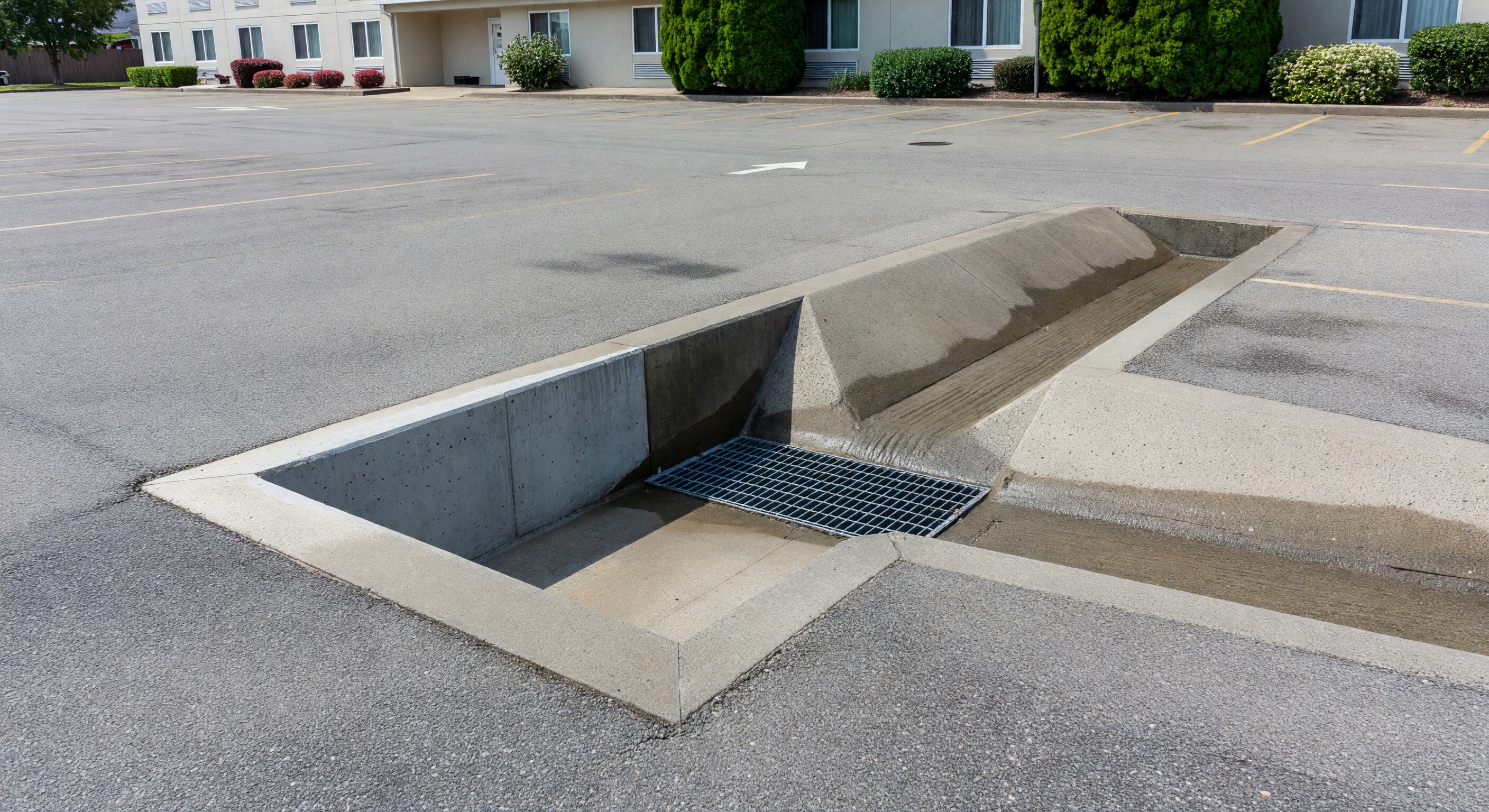
Area drains and catch basins: Surface drains throughout the parking lot, driveways, courtyard, and outdoor amenity areas collect runoff and route it to the storm drainage system. Catch basins (deeper collection sumps with debris traps below the outlet pipe) accumulate sediment, debris, and hydrocarbons (from parking lot runoff). Annual cleaning of catch basins is standard practice; twice annually at high-traffic properties.
Storm sewer piping: Underground piping network connecting surface drains and catch basins to the municipal storm sewer system or on-site retention. Storm piping should be inspected periodically (every 5–7 years using CCTV pipe inspection) for root intrusion, joint failures, and sediment accumulation.
Grease interceptors and oil-water separators: Hotels with commercial kitchens require grease interceptors on kitchen drainage. Parking structures may require oil-water separators on floor drain systems before discharge to storm sewer — petroleum contamination of stormwater is a regulatory concern and enforcement priority in most jurisdictions. Grease interceptors require regular pumping (frequency depends on kitchen throughput — typically monthly to quarterly).
Retention and detention ponds: Many hotel properties constructed since the 1990s include on-site stormwater retention or detention ponds designed to reduce peak stormwater discharge rates and provide treatment of runoff before discharge. These are engineered features that require ongoing maintenance.
Retention Pond Management
Stormwater retention ponds are significant maintenance responsibilities that hotel engineering teams often underestimate:
Sediment accumulation: Ponds accumulate sediment from incoming runoff over time. As sediment builds, pond capacity decreases, reducing the detention function the pond was designed to provide. Most ponds require sediment removal (dredging) every 10–20 years depending on watershed conditions and inlet protection effectiveness.
Vegetation management: Pond banks require maintained vegetation cover (typically grass or planted native species) to prevent erosion. Aquatic vegetation in the pond requires management — some is desirable (providing biological treatment), excessive growth reduces hydraulic capacity and can create mosquito habitat.
Inlet and outlet structure maintenance: Inlet structures (where stormwater enters the pond) are subject to erosion and sediment deposition. Outlet structures (control structures that limit discharge rate) require inspection and maintenance of control devices, trash racks, and anti-seep collars.
Mosquito management: Standing water in retention ponds is potential mosquito breeding habitat. Properly designed and maintained ponds with good circulation and predatory fish populations (mosquito fish, bluegill) naturally suppress mosquito populations. Aeration systems maintain dissolved oxygen and circulation. Where natural controls are insufficient, approved larvicide treatments (Bacillus thuringiensis israelensis, mosquito dunks) are the standard approach.
Water quality monitoring: Some stormwater permits require periodic water quality sampling from pond outlets. Hotels subject to these requirements should establish sampling protocols and maintain records for regulatory reporting.
Stormwater Regulatory Compliance
Hotels are subject to stormwater regulations at federal, state, and local levels:
MS4 Phase II Permit compliance: Hotels in urbanized areas are typically covered by Municipal Separate Storm Sewer System (MS4) permits that require industrial/commercial operators to implement best management practices (BMPs) for stormwater quality. Common required BMPs include: regular catch basin cleaning, spill prevention plans, vehicle maintenance area runoff controls, and training documentation.
Industrial Stormwater Permit (NPDES): Hotels with certain industrial activities on-site (large vehicle maintenance, significant outdoor material storage, fuel storage above threshold quantities) may need an individual NPDES stormwater permit with monitoring, reporting, and discharge limitations.
Spill prevention: Stormwater systems create direct pathways for spills to reach receiving waters. Hotels should have spill response kits positioned near areas where spills could reach storm drains — mechanical rooms, loading docks, fuel storage areas. Staff training on spill response and drain protection is a regulatory requirement in many MS4 programs.
Local stormwater fees and credits: Many municipalities charge stormwater utility fees based on impervious surface area. Hotels with on-site stormwater management facilities (retention ponds, permeable paving, green roofs) may be eligible for fee credits that offset maintenance costs.
Parking Lot Drainage Maintenance
Hotel parking lots are the largest impervious surface area most properties manage, and they concentrate petroleum contamination from vehicle leaks and atmospheric deposition:
Catch basin cleaning frequency: Annual minimum; semi-annual for high-traffic lots or lots with significant petroleum contamination. Cleaning should be documented with disposal records for sediment removed from oil-contaminated sumps (may be classified as contaminated waste requiring proper disposal).
Pavement condition and drainage function: Pavement failure (cracking, settling) can create low spots that pond water rather than draining to catch basins — leading to slip hazards, pavement deterioration acceleration, and mosquito habitat. Annual pavement inspection should document areas of poor drainage and prioritize correction in pavement maintenance programs.
Deicing material management: Hotels in cold climates that apply road salt or sand to parking lots generate runoff with high chloride concentrations and suspended solids. Excess sand application contributes to catch basin and pipe sediment loading. Liquid deicer alternatives (which reduce overall material application) reduce the stormwater quality impact of winter maintenance.
Frequently Asked Questions
How often should hotel catch basins be cleaned? Annual cleaning is the standard minimum for most properties. Properties with high impervious surface area, significant tree cover (leaf accumulation), or parking lot petroleum contamination should consider semi-annual cleaning. After major storm events, inspection and cleaning of inlets known to accumulate debris is advisable. Catch basin cleaning generates waste that must be properly manifested and disposed of — confirm waste characterization requirements with your local regulatory agency.
What should hotels do if a stormwater inspection finds a violation? Contact legal counsel before responding to regulators if the violation is significant. For minor deficiencies (catch basin cleaning documentation gaps, signage deficiencies), self-correct promptly, document the correction, and respond to the regulator demonstrating corrective action. For significant violations (illicit discharges, permit condition exceedances), attorney involvement protects the hotel’s interests in regulatory response. Implement a corrective action plan with documented milestones.
Are hotel swimming pools subject to stormwater regulations when water is discharged? Pool water discharge requires special handling in most jurisdictions — pool water contains disinfectants (chlorine, bromine) that are toxic to aquatic life if discharged directly to storm drains or receiving waters. Pool discharge should be dechlorinated (by holding the water until chlorine naturally dissipates, or using sodium thiosulfate neutralization) before discharge to storm drainage. Consult local stormwater regulations for pool discharge requirements — some jurisdictions require discharge to sanitary sewer rather than storm sewer.
What is the difference between a retention pond and a detention pond? Retention ponds maintain a permanent pool of water — they permanently store water and release it slowly through infiltration or controlled outlet. Detention ponds are normally dry, filling temporarily during storm events and draining completely between events. Hotels are more commonly associated with retention ponds (wet ponds), which provide both hydraulic control and biological stormwater treatment through settling and biological activity. Detention basins (dry ponds or basins) are used where infiltration conditions are appropriate and ongoing maintenance of a wet pond is not desirable.
Further Reading from Authoritative Sources
- EPA stormwater MS4 permit requirements for commercial facilities — The EPA administers the NPDES stormwater permit program and provides MS4 compliance guidance directly applicable to hotel stormwater management obligations.
- IFMA facility operations and stormwater management resources — IFMA provides facility management professionals with operational guidance on stormwater management, site infrastructure maintenance, and regulatory compliance for commercial properties.