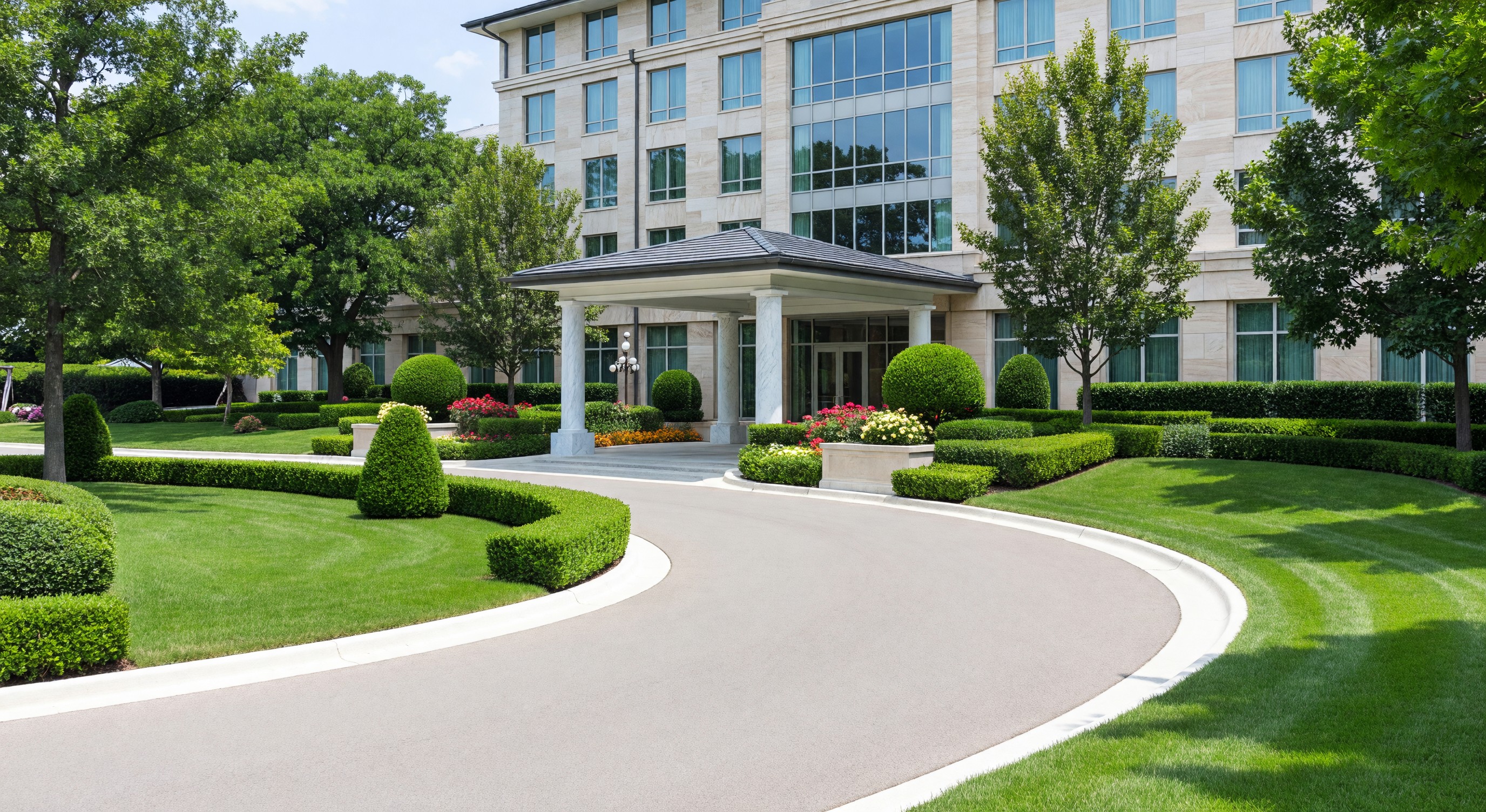
Hotel grounds maintenance encompasses everything from the guest’s first visual impression at the driveway entrance to the functionality of irrigation systems, exterior lighting, and hardscape elements. For most properties, grounds are contracted to specialist vendors, but facility managers who understand what quality grounds maintenance requires are far better positioned to write contracts, conduct quality inspections, and hold vendors accountable.
This guide covers the major categories of hotel exterior maintenance: turf and planting, irrigation systems, hardscape, exterior lighting, and seasonal considerations — with particular attention to the vendor management practices that ensure consistently high curb appeal at predictable cost.
The Strategic Importance of Curb Appeal
Research on hotel guest psychology consistently finds that exterior first impressions influence perceived value before the guest steps through the lobby door. Overgrown plantings, dead annuals, cracked hardscape, broken irrigation heads creating mud puddles, or faded exterior paint are all signals that a property is poorly managed — regardless of interior quality.
Brand standards at franchise properties specify grounds maintenance requirements in franchise disclosure documents. QA inspections typically include exterior scoring, and grounds deficiencies can generate PIPs (Property Improvement Plans) with mandatory remediation timelines. For independent properties, competitive positioning against renovated nearby hotels makes exterior investment equally important.
Turf Management
Hotel lawns and turf areas require programs that are appropriate to grass species, climate, and use:
Cool-season grasses (bluegrass, fescue, ryegrass) grow best in spring and fall and go dormant or slow significantly during summer heat. Aeration and overseeding in fall prepares turf for the following season. Avoid heavy fertilization in summer heat — it burns dormant grass.
Warm-season grasses (Bermuda, zoysia, St. Augustine) grow vigorously in summer and go dormant in winter, often turning brown in cooler climates. Winter ryegrass overseeding maintains green color through dormancy periods in mild-climate markets where year-round green turf is expected.
Core aeration: Annual or semi-annual aeration reduces compaction in high-traffic turf areas (entrance walkways, event lawn areas), improving water infiltration and root depth. This is one of the highest-return turf maintenance investments and is frequently skipped by vendors to reduce labor costs.
Integrated pest management (IPM): Reducing pesticide use on hotel grounds aligns with sustainability certifications and guest expectations. IPM approaches — monitoring, cultural practices, and targeted treatments only when threshold conditions are met — typically maintain turf quality at lower chemical cost than calendar-based spray programs.
Planting and Seasonal Color
Seasonal color programs — planted annuals that provide blooms through rotating seasons — are among the most visible hospitality landscaping investments. High-impact locations include entrance drives, porte-cochère areas, courtyards, and pool surrounds.
Effective seasonal color programs require:
- Spring install (typically April/May for cool-season annuals)
- Summer refresh (late May/early June to summer annuals)
- Fall color (chrysanthemums, ornamental kale, pansies from September)
- Holiday/winter display (where climate permits)
Plan seasonal color budgets as an annual line item — this is a recurring operational cost, not a one-time capital expense. Three to four seasonal changes per year at a 150-room property with extensive plantings typically runs $8,000–$25,000 per year depending on plant density and market.
Irrigation System Management
Irrigation systems are often the most maintenance-intensive grounds infrastructure component and the most frequently mismanaged. Key issues:
Controller programming: Schedules should change monthly based on evapotranspiration rates. Many hotel irrigation systems run on spring programming through summer — significantly under-watering turf and plantings during peak heat. Automated ET-based controllers adjust schedules automatically based on weather data.
Winterization: In freeze-climate markets, failing to winterize irrigation by blowing compressed air through all zones before first hard freeze results in broken heads, cracked valves, and supply line damage. This is one of the most preventable maintenance failures at northern hotels.
Head inspection and adjustment: Broken heads, clogged nozzles, and heads knocked askew by mowers are the most common irrigation failures. A quarterly walk of all irrigation zones while running generates a repair list that prevents the chronic under-watering and overwatering associated with unidentified head failures.
Water usage monitoring: Many hotel operations have reduced irrigation water use by 30–50% through system audits, pressure regulation, and controller upgrades — while improving plant health by delivering water more precisely. In drought-prone markets, irrigation efficiency is both a cost and a brand issue.
Hardscape Maintenance
Hotel hardscape — entry drives, walkways, courtyards, pool decks, parking lot borders — requires ongoing maintenance to maintain safety and appearance:
Concrete and asphalt: Crack sealing at first sign of cracking (before water infiltration causes subbase damage), periodic joint resealing, and surface sealing on pavers and decorative concrete extend service life substantially. Neglected cracks in walkways are also a trip-and-fall liability.
Paver systems: Sand-set pavers require periodic re-sanding of joints (polymeric sand) to prevent weed growth and paver shifting. Lifted or settled pavers should be releveled promptly — uneven paver joints are a common trip-and-fall source.
Pressure washing: Entry drives, porte-cochère areas, sidewalks, and pool decks accumulate organic material, staining, and gum that requires periodic pressure washing. Annual or semi-annual washing maintains appearance and removes slip hazards on pool deck surfaces.
Exterior Lighting
Exterior lighting serves both safety/security and aesthetic functions. Landscape lighting — uplighting on feature trees, path lighting, architectural accent lighting — enhances property appearance and extends the impression of quality into evening hours.
Grounds maintenance inspection should include a nighttime walk of exterior areas to identify burned-out landscape lighting, path lights with failed bulbs or tilted fixtures, and unlit areas that may create safety or security concerns. LED conversion of landscape lighting fixtures dramatically reduces maintenance frequency — LED landscape lights carry 25,000–50,000 hour rated lives versus 1,000–2,000 hours for incandescent alternatives.
Vendor Contract Structure
Hotel grounds contracts typically take one of two forms: comprehensive maintenance contracts (all-inclusive labor and materials for defined scope) or unit-price contracts (pricing by measurable unit: per mow, per visit, per planted flat). Comprehensive contracts provide budget predictability; unit-price contracts provide flexibility as scope changes.
Key contract elements regardless of structure:
- Defined visit frequency by season (weekly mowing in growth season, bi-monthly in winter)
- Specific quality standards for turf height, edging, bed maintenance, and cleanup
- Irrigation service inclusion or exclusion (many landscape contractors subcontract irrigation)
- Response time requirements for storm damage cleanup
- Insurance requirements (minimum $2 million general liability, workers’ compensation)
- Chemical application notification requirements
Frequently Asked Questions
How should hotels evaluate grounds maintenance contractors? Request three references from comparable-size hotel properties. Visit at least one reference property unannounced to observe actual maintenance quality — not just the day after a scheduled visit. Review their equipment: well-maintained commercial mowers, edgers, and trimmers indicate a professional operation. Verify insurance certificates and ensure all required pesticide applicator licenses are current.
How much should hotels budget for grounds maintenance? Grounds maintenance costs vary enormously by property size, climate, and specifications. A rough benchmark for suburban US hotels: $15,000–$40,000/year for a limited-service property with moderate landscaping, $40,000–$120,000 for a full-service property with extensive grounds. Resort properties with multiple acres of landscaped amenities can exceed $500,000/year in grounds costs.
What is the most common cause of irrigation system failures at hotels? The most common causes are: (1) failed winterization creating broken heads and cracked valves in freeze climates, (2) heads broken or knocked out of position by mowing equipment that are not promptly reported and repaired, and (3) controller programming that hasn’t been updated for seasonal changes. An annual system audit — running each zone and documenting head function — prevents most chronic irrigation issues.
When should hotel grounds plantings be replaced versus maintained? Tree and shrub replacements are warranted when plants are diseased, structurally compromised, past their aesthetic prime, or have outgrown their location (overgrown shrubs at building foundation or blocking sight lines are safety and maintenance issues). Annual color should be refreshed on schedule regardless of condition — dead or declining annuals are a curb appeal liability that persists between seasonal change visits.
Further Reading from Authoritative Sources
- IFMA hotel grounds maintenance standards and vendor management frameworks — IFMA provides facility management standards for grounds and landscaping vendor contracts, exterior maintenance program development, and irrigation system management applicable to hotel grounds maintenance program structure, contractor qualification, and seasonal planning.
- EPA WaterSense hotel irrigation efficiency and water conservation standards — EPA provides water conservation standards, WaterSense irrigation product certification, and integrated pest management guidance applicable to hotel grounds maintenance water use reduction, irrigation system efficiency programs, and sustainable landscaping practices.