Flooring is among the most visible indicators of property condition for hotel guests. Worn carpet, stained grout, or scuffed LVT in a guest room corridor communicates property neglect as effectively as any single visual cue. Yet flooring is also a major capital expense — a full carpet replacement at a 200-room property can run $500,000–$800,000 — that must be planned carefully and executed with minimal operational disruption.
This guide covers the full lifecycle of hotel flooring systems: product selection for each space type, maintenance programs that extend useful life, replacement cycle planning, and the scheduling strategies that keep renovations from disrupting occupancy.
Flooring Systems by Space Type
Guest room carpet: The dominant guest room flooring material for most hotel tiers. Commercial carpet tile and broadloom are the primary formats. Carpet tile (modular, typically 24" × 24" squares) allows replacement of individual damaged squares without re-carpeting an entire room — a significant lifecycle advantage. Broadloom provides seamless aesthetics preferred at upscale properties but requires full-room replacement when worn. Face weight and fiber content (solution-dyed nylon is the durability standard for hospitality) drive both performance and cost.
Guest room hard flooring: Luxury vinyl tile (LVT), ceramic tile, and hardwood are used in higher-tier guest rooms, particularly in bathrooms and entry foyers. LVT has dominated new hotel flooring installations since approximately 2018 due to its combination of durability, realistic wood/stone aesthetics, waterproof performance, and lower installation cost versus ceramic or wood.
Corridors: Corridors experience the highest foot traffic and luggage cart abuse of any hotel space. Corridor carpet is typically specified in heavier-duty construction than guest room carpet — 40+ oz face weight, with commercial backing systems and corner-turn protection details. Hospitality-grade carpet in high-traffic corridors typically achieves 5–8 year service lives versus 7–12 years in guest rooms.
Lobby and public areas: High-traffic public area flooring must balance aesthetics with durability. Ceramic and porcelain tile, natural stone, engineered hardwood, and commercial LVT are all appropriate depending on tier and design concept. Slip resistance is a critical selection criterion — DCOF (Dynamic Coefficient of Friction) of 0.42 or higher is the industry standard minimum for wet areas, and 0.6+ is recommended for exterior entry and pool areas.
Restaurants and food service: Flooring in F&B areas must be slip-resistant, cleanable to commercial kitchen standards, and appropriately durable for high foot traffic. Commercial kitchen areas require smooth, impervious surfaces (quarry tile, epoxy, or commercial sheet vinyl) that meet health department requirements.
Preventive Maintenance Programs
Flooring maintenance investment dramatically affects useful life:
Carpet maintenance: Entry mats at all exterior entries are the single most effective carpet protection investment — commercial walk-off mats capture 80% of the soil that would otherwise be tracked onto corridor and room carpet. Deep extraction cleaning (hot water extraction, not dry encapsulation) of corridor carpet quarterly and guest room carpet semi-annually or at room renovation removes embedded soils that abrade fibers and accelerate wear. Spot treatment protocols for immediate spill response prevent permanent stains that force premature carpet replacement.
Hard floor maintenance: Commercial LVT and ceramic tile requires regular dust mopping (daily in high-traffic areas), damp mopping with appropriate pH-neutral cleaners, and periodic deep scrubbing. LVT in hotel corridors should be stripped and refinished (if a protective finish coat is used) on a semi-annual to annual basis depending on traffic. Grout in tile installations requires periodic resealing (annually in high-moisture areas) to prevent staining and deterioration.
Furniture protection: Area rugs under seating groups protect carpet from focused wear at furniture pivot points. Felt pads on furniture legs prevent hard floor scratching. These small investments significantly extend flooring useful life in public areas and guestrooms.
Replacement Cycle Planning
Typical service lives for hotel flooring by space type:
- Guest room broadloom carpet: 7–12 years
- Guest room carpet tile: 8–15 years (with modular replacement of damaged tiles)
- Corridor carpet: 5–8 years
- LVT (guest rooms, corridors): 12–20 years
- Ceramic/porcelain tile: 20–30+ years (grout and sealer require more frequent maintenance)
- Lobby hardwood or engineered hardwood: 15–25 years (with periodic refinishing)
These ranges depend on maintenance program quality, traffic intensity, and initial product quality. Properties that invest in appropriate-specification product, install protective measures (walk-off mats, furniture pads), and maintain regular deep cleaning programs consistently achieve the higher end of these ranges.
Build flooring replacement into the capital reserve model with accurate cost assumptions. Brand standards typically require replacement on specified cycles, and PIP (Property Improvement Plan) requirements often trigger flooring replacement at franchise renewal even if the property’s internal capital plan would have deferred it.
Corridor Carpet Replacement: The High-Stakes Project
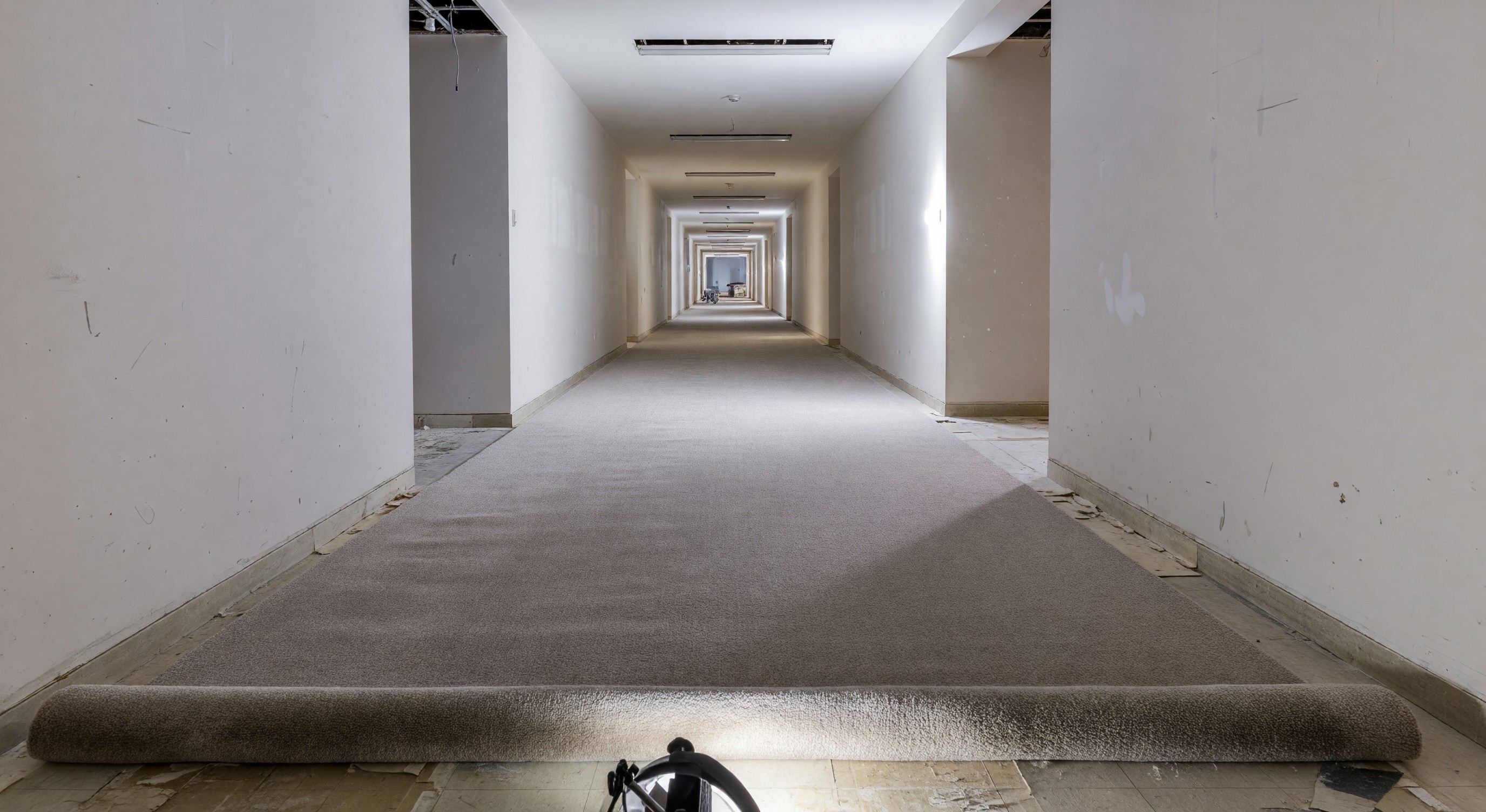
Corridor carpet replacement is one of the most disruptive renovation activities at any hotel. Unlike guest room projects (one room at a time), corridor work affects all guests on the floor for multiple days. Strategies to manage the impact:
Night work: Corridor carpet installation can be scheduled for nighttime (11 p.m.–6 a.m.) to minimize guest exposure to installation noise, adhesive odors, and construction debris in corridors. This approach extends project timeline but is the most guest-considerate execution model.
Floor-by-floor sequencing: Rather than disrupting the entire building simultaneously, complete one floor at a time. Guests can be concentrated on unaffected floors through revenue management, and the impact of any single night’s noise is limited to one floor.
Low-season scheduling: Corridor carpet replacement should be scheduled during the property’s lowest occupancy period. For resort properties this may be a shoulder-season window; for urban business hotels it may be the summer leisure season when weekend occupancy compensates for weekday softness.
Communication with arriving guests: Brief guests at check-in if any renovation work is occurring. Guests who receive advance notice are significantly more tolerant of construction presence than those who encounter it without warning.
Cost Planning for Major Flooring Projects
Commercial hospitality carpet costs range widely by specification and region:
- Budget broadloom (standard commercial): $5–$9/square yard installed
- Mid-grade hospitality broadloom: $12–$20/square yard installed
- Premium hospitality broadloom: $22–$35/square yard installed
- Commercial carpet tile (quality range): $4–$8/square foot installed
- Commercial LVT: $6–$12/square foot installed (higher for glue-down commercial formats)
Material cost is typically 40–60% of total installed cost — labor, subfloor preparation, transition strips, furniture moving, and waste disposal make up the balance. Always obtain multiple bids for significant flooring projects and include a detailed specification that includes adhesive type, subfloor preparation requirements, and transition details.
Frequently Asked Questions
How can hotels tell when carpet is due for replacement versus just needs deep cleaning? Key replacement indicators: loss of pile resilience that does not recover after cleaning (matted corridors), pattern wear loss that exposes backing fiber, permanent staining that doesn’t respond to professional cleaning, visible delamination or buckling, and excessive soiling between cleanings that indicates fiber breakdown. If a professional deep cleaning doesn’t restore acceptable appearance, replacement is warranted.
Is it better to use carpet tile or broadloom in hotel guest rooms? Both have genuine advantages. Carpet tile provides the ability to replace individual damaged squares — a significant lifecycle advantage in high-turnover rooms. Broadloom provides a more seamless, upscale aesthetic preferred at luxury properties. Most hotels at select-service and above use broadloom for its aesthetic advantage; carpet tile is increasingly popular at extended-stay and limited-service properties where practicality outweighs aesthetics.
What is the best hard flooring option for hotel bathrooms? Glazed porcelain tile remains the standard for hotel bathroom wet areas — it is impervious to water, durable, and available in a wide range of aesthetics. Slip resistance is critical: specify flooring with DCOF of 0.42+ for wet bathroom floors. LVT has entered the hotel bathroom market for shower-adjacent areas and vanity floors where it provides a warmer feel and easier installation; ensure water resistance ratings are appropriate for the specific application.
How should hotels manage the transition between different flooring materials? Transitions between carpet and hard flooring, between different hard flooring types, or between rooms and corridors require transition strips that are properly anchored and flush to both surfaces. Raised transitions are a trip-and-fall hazard — ADA requires transitions to be beveled if over 1/4 inch in height. Use commercial-grade metal transition strips appropriate for the traffic level and specify them in the project scope to prevent the common budget-cut of using inappropriate materials.
Further Reading from Authoritative Sources
- IFMA flooring lifecycle and facility maintenance standards — IFMA provides facility management professionals with flooring lifecycle standards, maintenance program guidance, and capital planning frameworks applicable to hotel flooring management.
- ADA flooring transition and accessibility requirements — ADA.gov provides accessibility requirements for hotel flooring including transition strip specifications, slip resistance guidance for accessible routes, and requirements applicable to all guest-facing areas.