Paint and interior finishes are among the highest-visibility elements of hotel guest experience. A guest room with scuffed walls, faded color, or visible patched repairs reads as neglected regardless of other investments in the property. Yet managing interior finishes across hundreds of rooms and extensive public spaces requires careful planning, product standardization, and a maintenance philosophy that keeps finishes looking fresh without incurring the cost of full renovation cycles.
This guide addresses the key decisions hotel facility managers face in maintaining paint and interior finishes: product selection, refresh cycles, touch-up programs, commercial kitchen and restroom specific requirements, and managing the operational disruption inherent in refresh work.
Interior Finish Standards by Space Type
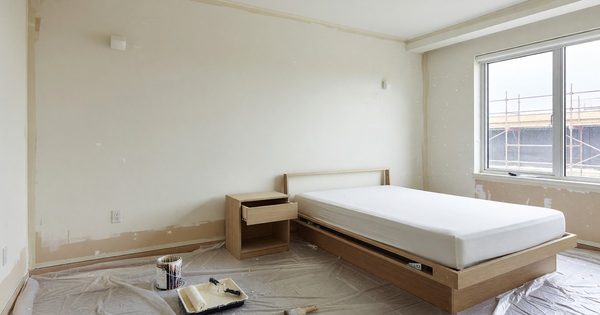
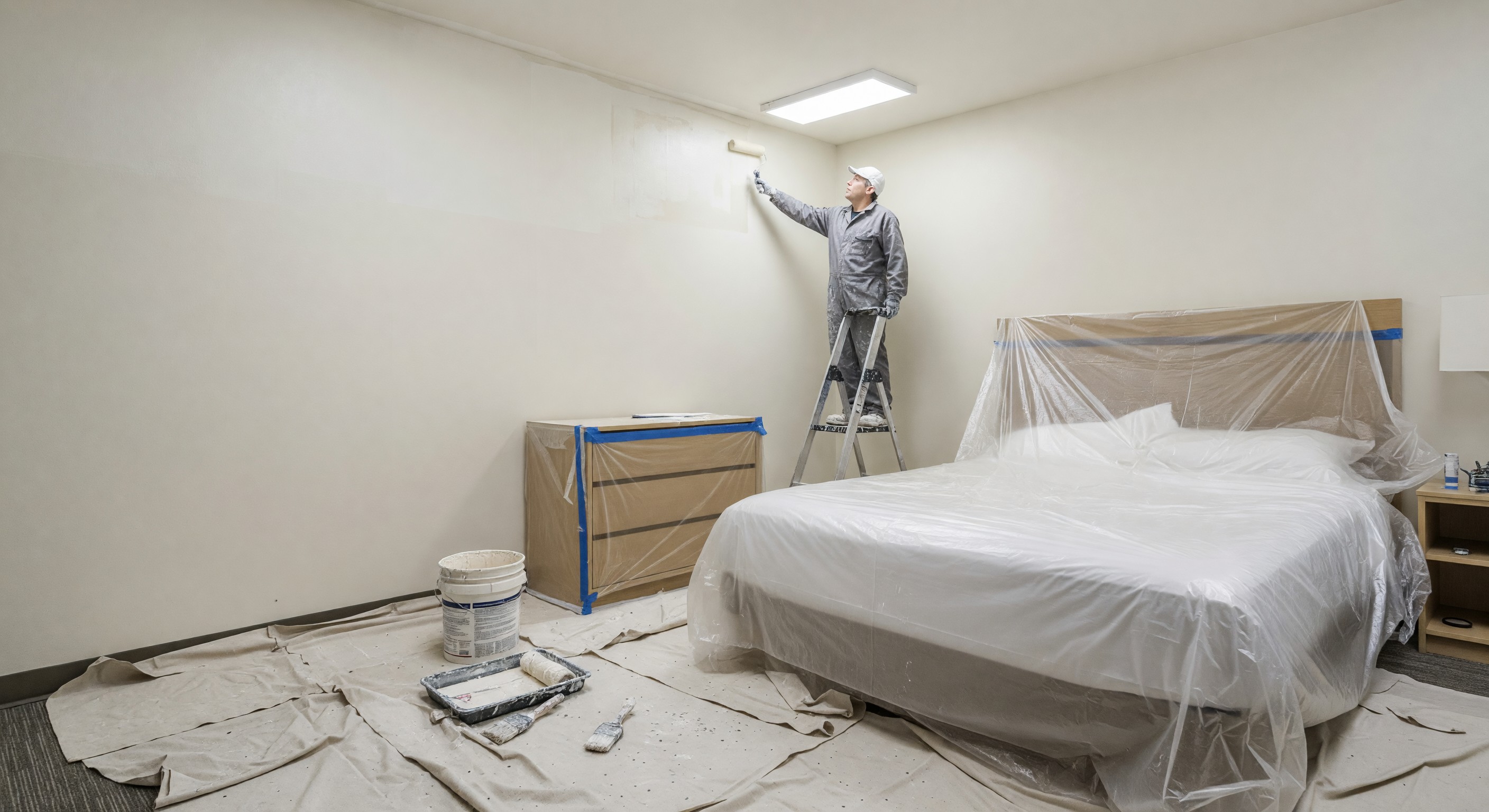
Guest rooms: Commercial-grade interior paint in flat or eggshell finishes (brand standard dependent) on wall surfaces, semigloss on doors, trim, and bathroom surfaces. Guest room paint programs typically operate on 5–8 year full repaint cycles, with annual touch-up programs addressing scuffs, marks, and door frame wear. High-touch areas — around light switches, outlet plates, and door handles — wear faster and should be touched up more frequently.
Corridors: Corridors experience higher traffic and more physical abuse than guest rooms. Scuff-resistant coatings and washable finishes are standard. Corridor paint programs typically operate on 4–6 year cycles. Chair rails and wainscoting in corridors serve a dual purpose: design element and protection for the lower wall surface where luggage carts and housekeeping carts create most damage.
Public areas (lobbies, meeting rooms, restaurants): High-traffic public areas justify premium product investment. Commercial-grade washable paints with greater durability, combined with semi-annual touch-up programs, maintain appearance between full repaints. Ceiling surfaces in these areas are often protected by height from guest contact and can extend longer between full repaints.
Restrooms: High-moisture environments require vapor-resistant paint with mold-inhibiting additives. Flat and eggshell finishes are inappropriate for restroom walls — semi-gloss or gloss provides the washability and moisture resistance the environment demands. Commercial restrooms should be repainted on 4–5 year cycles, with immediate attention to any evidence of mold staining or peeling.
Commercial kitchens: Kitchen surfaces must comply with health code requirements for smooth, cleanable, light-colored surfaces. Epoxy paint systems on walls and floors are the standard for areas subject to grease, moisture, and frequent cleaning. Commercial kitchen surface finishes are typically addressed as part of periodic health department compliance upgrades.
Product Selection Considerations
The premium over consumer-grade paint for commercial hotel applications is typically $15–$30 per gallon — a cost that pays back through longer service life and better washability. Key product attributes for hotel applications:
Scrub resistance: Measured in ASTM scrub cycles. Products rated for 10,000+ scrub cycles maintain appearance through cleaning far better than standard interior latex at 2,000–4,000 cycles.
Color consistency: Commercial paint programs specify paint by manufacturer code to ensure color consistency across touch-up applications over years. Keep color codes in the property’s finish schedule — a document that records paint color, sheen level, and product for every space in the hotel.
Volatile organic compounds (VOCs): Low-VOC formulations allow occupied spaces to be repainted with minimal guest disruption. Zero-VOC formulations allow paint work in occupied corridors with adequate ventilation. Many hotel paint programs have shifted to low/zero-VOC products exclusively to enable more flexible scheduling.
Specialty coatings: Impact-resistant coatings for elevator cabs, epoxy systems for concrete floors, fire-retardant coatings for areas with fire code requirements, and anti-microbial formulations for healthcare-adjacent hotel spaces are all available from major commercial paint manufacturers.
Refresh Cycle Planning
Hotel paint refresh cycles should be incorporated into the long-term capital and operating budget plan:
Guest room rolling program: Rather than repainting all rooms in one disruptive and expensive program, a rolling program addresses a percentage of rooms each year. A 200-room property on a 7-year cycle paints approximately 29 rooms per year — addressable during low-occupancy periods or combined with room renovation projects.
Corridor timing: Corridor repaints are most disruptive to operations but generate the most visible guest-facing impact when complete. Schedule corridor work during low-season periods and plan for 2–3 days per floor section depending on scope.
Seasonality: In northern markets, exterior painting windows are limited to temperatures above 50°F (for latex) or 40°F (for oil-based products). Plan exterior work in spring through early fall; interior work can proceed year-round.
Touch-Up Programs
Annual or semi-annual touch-up programs extend the life of full repaints significantly. An effective touch-up program:
- Designates responsibility (typically engineering or a dedicated maintenance tech)
- Maintains a rolling inventory of all specified paint products in sealed containers (paint quality in opened containers degrades significantly after 6–12 months)
- Establishes inspection frequency by space type
- Documents identified needs and completion (helps track which rooms are accumulating more wear than average)
- Addresses damage within 48 hours of identification — fresh touch-ups blend better, and prompt response prevents guests from experiencing the same deficiency on repeat visits
Exterior Paint and Stucco
Exterior repaints are major capital events at most hotels, typically on 8–12 year cycles depending on climate, product quality, and surface type. Elastomeric paint systems (thicker, flexible coatings) are standard for stucco and masonry facades — they bridge hairline cracks and provide superior moisture resistance compared to standard exterior latex.
Power washing to remove biological growth (algae, mildew, moss) before repainting is essential for proper adhesion. In humid or shaded climates, biological growth on exterior surfaces may require treatment every 2–3 years between repaints.
Managing Disruption
Interior painting inherently disrupts hotel operations. Strategies to minimize guest impact:
- Schedule guest room painting during slow periods and coordinate with housekeeping to plan room-out-of-service periods
- Conduct corridor painting during late-night and early-morning hours (midnight to 7 a.m.) to minimize encounter with guests
- Use low-odor formulations (zero-VOC products, water-based primers) to minimize smell complaints
- Maintain walk-around ventilation (open corridor doors or windows) during and after painting to exhaust any residual odor before guest use resumes
Frequently Asked Questions
How often should hotel guest rooms be repainted? Most brand standards and industry guidance recommends full guest room repaints on 5–8 year cycles, with annual touch-up programs addressing routine wear. High-occupancy properties or those with rough use may need 5-year cycles; luxury properties with careful maintenance programs may achieve 8–10 years between full repaints.
What finish (sheen level) should hotel guest rooms use? Walls: eggshell (some brands specify flat in premium properties) for a refined appearance with moderate washability. Ceilings: flat white for light distribution and to minimize ceiling surface imperfections. Trim, doors, and bathroom walls: semi-gloss for washability and moisture resistance. Check your brand standards document for any franchise-specific requirements — some brands specify exact product lines.
How should hotels store leftover paint for touch-up programs? Store in original sealed containers in a temperature-controlled space (40°F–80°F). Label each container with the room/area, color code, sheen, and date. Inspect annually — if paint has skinned over, gelled, or developed an odor, it should be disposed of properly (not poured down drains — latex paint is accepted at most municipal hazardous waste facilities). Most commercial latex paint remains usable for 2–5 years in properly sealed containers.
Is there a standard for documenting a hotel’s paint specifications? The industry standard is a finish schedule — a document listing every space in the hotel with wall color/product code, trim color/product code, ceiling color/product code, and sheen level for each. This document lives in the engineering files and is updated whenever any space is repainted. Without a finish schedule, matching touch-up colors years later becomes guesswork that produces visible mismatches.
Further Reading from Authoritative Sources
- EPA VOC standards and paint disposal guidance — The EPA sets VOC emission standards for architectural coatings and provides guidance on proper paint disposal, applicable to hotel paint program product selection and waste management compliance.
- IFMA interior finishes maintenance and capital planning guidance — IFMA provides facility management professionals with interior finishes maintenance standards, lifecycle planning guidance, and capital budgeting frameworks applicable to hotel paint and finishes programs.