The exterior facade is a hotel’s public face — the first thing guests and passersby see, and a significant contributor to the property’s perceived quality. A clean, well-maintained facade signals a well-run hotel; a streaked, stained, or visibly deteriorated exterior communicates neglect before a guest ever enters the lobby. Managing exterior cleaning and facade maintenance requires specialized equipment, safety planning, and a frequency calibrated to local climate and environmental conditions.
This guide covers the systems, safety requirements, and operational planning for hotel exterior facade and window cleaning programs.
Facade Types and Cleaning Requirements
Hotel exteriors vary significantly in material composition, and each material has distinct cleaning requirements:
Glass curtain walls: Full-glass or glass-dominated facades require cleaning every 1–4 times per year depending on urban pollution levels, coastal salt exposure, and bird activity. Glass cleaning is the highest-visibility maintenance task — streaking is immediately apparent. Proper technique, appropriate cleaning solutions (non-abrasive, non-etching), and squeegee work are essential.
Precast concrete and GFRC (glass fiber reinforced concrete): Porous concrete surfaces accumulate biological growth (algae, moss, lichen) in humid climates and atmospheric staining in urban or industrial environments. Cleaning typically involves low-pressure washing with appropriate biocide treatments, followed by sealant reapplication every 5–7 years to reduce future porosity and staining.
Brick and masonry: Brick facades require gentle cleaning — high-pressure washing can damage mortar joints and force water into the building envelope. Efflorescence (white salt deposits) is common and requires specific chemical treatments. Pointing (mortar repair) is typically integrated with cleaning cycles.
Metal panel systems (aluminum composite, steel, copper): Panel systems are generally lower-maintenance than masonry, but are susceptible to oxidation, paint degradation, and sealant joint failure. Annual inspection of sealant joints is critical — failed sealants allow water infiltration that can damage interior finishes and structural elements.
Stone cladding (granite, limestone, marble): Natural stone requires pH-neutral cleaning agents — acidic or alkaline cleaners can etch stone surfaces permanently. Annual cleaning with appropriate sealant maintenance preserves stone appearance and reduces maintenance costs.
Access Systems for High-Rise Hotels
Safe exterior access is the central challenge of hotel facade maintenance. Methods:
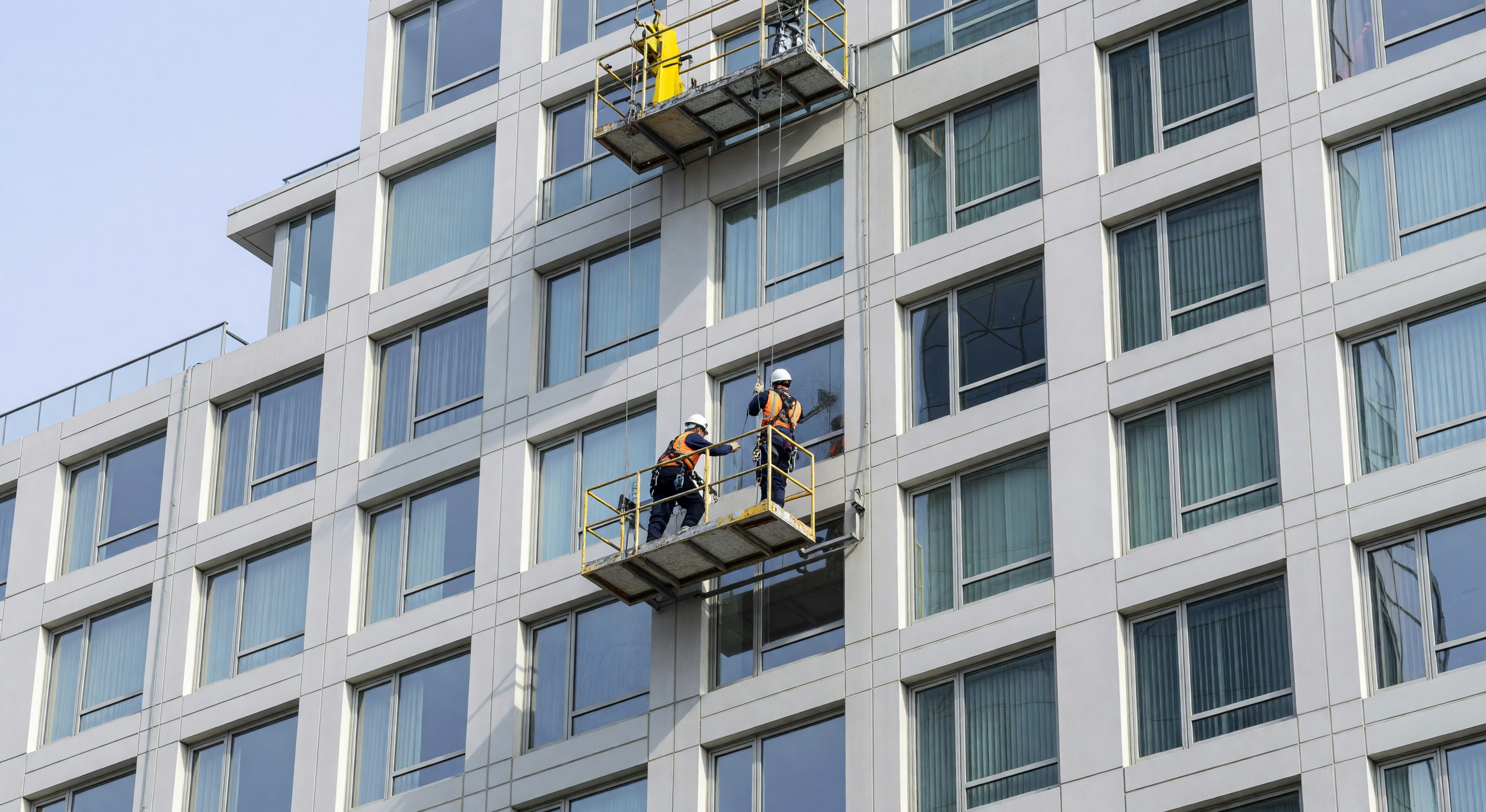
Building Maintenance Unit (BMU): A permanently installed mechanical platform (gondola) mounted on a track at the roofline that descends along the building exterior, providing a stable working platform for cleaning and maintenance. BMUs are common at purpose-designed high-rise hotels. They require annual inspection and load testing, operator certification, and regular mechanical maintenance of the hoist and track systems. BMUs represent a significant capital investment ($250,000–$800,000 for a high-rise installation) but provide the safest and most efficient access for regular maintenance programs.
Powered Industrial Work Platforms (Suspended Scaffolding): Temporary suspended platforms rigged from roof anchor points, used at buildings without permanent BMUs. More flexible than BMUs for irregular facade geometry, but each deployment requires rigging time and safety inspection.
Rope Access (IRATA/SPRAT): Trained rope access technicians descend on ropes from roof anchor points, performing cleaning and inspection work with specialized equipment attached to their harness systems. Rope access is more economical for infrequent work and buildings with limited roof access for scaffold rigging, but worker speed and capacity are lower than platform-based methods.
Mobile Elevated Work Platforms (MEWPs): Boom lifts and scissor lifts provide access to lower floors without roof rigging. Practical for buildings under 6–8 stories or for ground-level work on taller buildings. Requires accessible ground surface without landscaping, service equipment, or obstacles that prevent vehicle positioning.
Safety and Regulatory Requirements
Exterior facade work is among the highest-risk activities in hotel facility management. OSHA Subpart R (Steel Erection) and OSHA 1910.28 (Walking-Working Surfaces) establish requirements for suspended work platforms and fall protection. Key compliance elements:
- Anchor point certification: Roof anchor points used for suspended platform or rope access must be certified for load (typically 5,000 lbs per anchor point) and inspected annually by a qualified rigger
- Equipment inspection: Suspended platforms and rigging equipment require pre-use inspection and periodic load testing
- Worker training: Operators of suspended platforms must be trained and authorized; rope access technicians must hold current IRATA or SPRAT certification
- Emergency rescue plans: Written rescue procedures for workers suspended on ropes or platforms in case of equipment failure or medical emergency
- Weather restrictions: Wind speed limits for suspended access work (typically 25 mph for suspended scaffolds, lower for rope access)
Most hotels contract exterior cleaning to specialized vendors rather than self-performing, specifically because of the training, certification, and equipment investment required. Vendor qualification should include verification of insurance (minimum $2M general liability, workers’ compensation), certifications, and safety incident history.
Facade Inspection Integration
Exterior cleaning visits are the ideal time for concurrent facade inspection — workers are at the exterior surface and can directly observe conditions invisible from grade or interior. Formal facade inspection programs should be integrated with cleaning cycles:
Annual cleaning inspection: Visual inspection of caulk/sealant joints, window glazing seals, masonry joints, and panel attachment points. Note any deterioration, spalling, cracking, or sealant failure for engineering review.
Periodic engineering inspection: ASCE 7 and local building codes increasingly require formal facade inspection by a licensed engineer at defined intervals (New York Local Law 11 requires periodic reports on buildings over 6 stories; other jurisdictions have similar requirements). Engineering inspection supplements but does not replace cleaning-cycle visual observation.
Moisture intrusion investigation: When water intrusion is reported from interior spaces, facade inspection should follow the leak path from interior evidence to likely exterior source — failed window perimeter seals, masonry cracks at structural movement joints, and compromised through-wall flashings are the most common sources.
Scheduling and Frequency Planning
Climate factors that increase cleaning frequency:
- High traffic urban environments with elevated particulate pollution
- Coastal locations with airborne salt
- Properties near industrial activity or major roadways
- High bird nesting activity (pigeons, starlings)
- Areas with high pollen loads (deciduous tree surroundings in spring)
Typical cleaning frequencies by property type:
- Urban luxury full-service hotels: 2–4 times per year (facades are a brand statement)
- Urban select-service hotels: 1–2 times per year
- Suburban/airport hotels: 1 time per year minimum
- Resort properties (coastal): 2–4 times per year (salt exposure)
Scheduling around hotel operations: Suspended access work is disruptive for guests. Early morning starts (6–8 a.m.) and completion before peak check-in hours (3–4 p.m.) minimize guest impact. Advance guest communication (digital key notifications, lobby signage) reduces complaints about exterior equipment visibility or noise.
Frequently Asked Questions
How much does hotel exterior window cleaning cost? Cost varies significantly by building height, facade complexity, and access method. A 100-room mid-rise hotel (5–8 floors) with ground-accessible access typically costs $3,000–$8,000 per cleaning cycle. A high-rise full-service hotel requiring BMU or rope access may spend $15,000–$50,000+ per cleaning cycle. Annual program costs are typically $15,000–$100,000+ depending on property.
Are hotels required to maintain building facades by local law? Yes — most major jurisdictions have building maintenance codes that require facade upkeep and impose inspection requirements on buildings above specified heights. New York City Local Law 11 is the most well-known, but similar requirements exist in Chicago, Los Angeles, Boston, and many other cities. Hotels in these jurisdictions should confirm compliance requirements with local building officials or a facade engineering consultant.
How should hotels handle bird fouling on building exteriors? Bird fouling (pigeon droppings) on hotel facades is a significant maintenance and health issue. Address it at two levels: remediation (professional cleaning with appropriate biocide treatment for biological waste) and deterrence (physical bird deterrents including ledge spikes, tension wire systems, and slope deterrents at nesting ledges). Persistent bird populations may require acoustic deterrents or professional wildlife management intervention. Standard window cleaning does not address heavy biological fouling — it requires specialized chemical treatment and additional cleaning time.
What should hotels specify in exterior cleaning vendor contracts? Key contract elements: (1) Scope of work specifying all surfaces, access levels, and cleaning materials; (2) Safety plan submission requirements (site-specific safety plan for each cleaning campaign); (3) Insurance minimums and additional insured status; (4) Certification documentation requirements for operators; (5) Schedule flexibility provisions (weather delays); (6) Damage liability provisions for window breakage, water infiltration from improper technique, or surface damage from inappropriate cleaning chemicals; (7) Deficiency reporting requirements (vendor must document and report observed facade defects during cleaning operations).
Further Reading from Authoritative Sources
- OSHA suspended platform and rope access safety requirements — OSHA Subpart R and 1910.28 establish the fall protection and suspended platform requirements applicable to hotel exterior facade and window cleaning operations, contractor qualification standards, and safety plan requirements.
- IFMA building envelope maintenance and facade management standards — IFMA provides facility management professionals with building envelope maintenance standards, facade inspection program guidance, and exterior access system frameworks applicable to hotel facade maintenance programs.