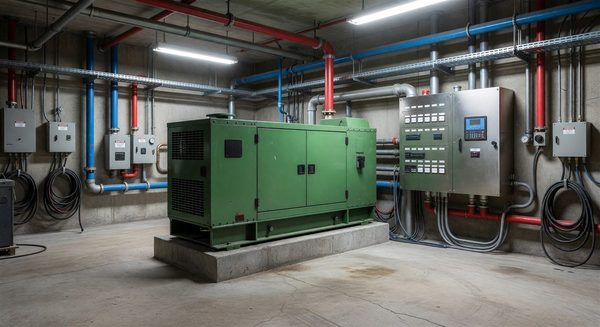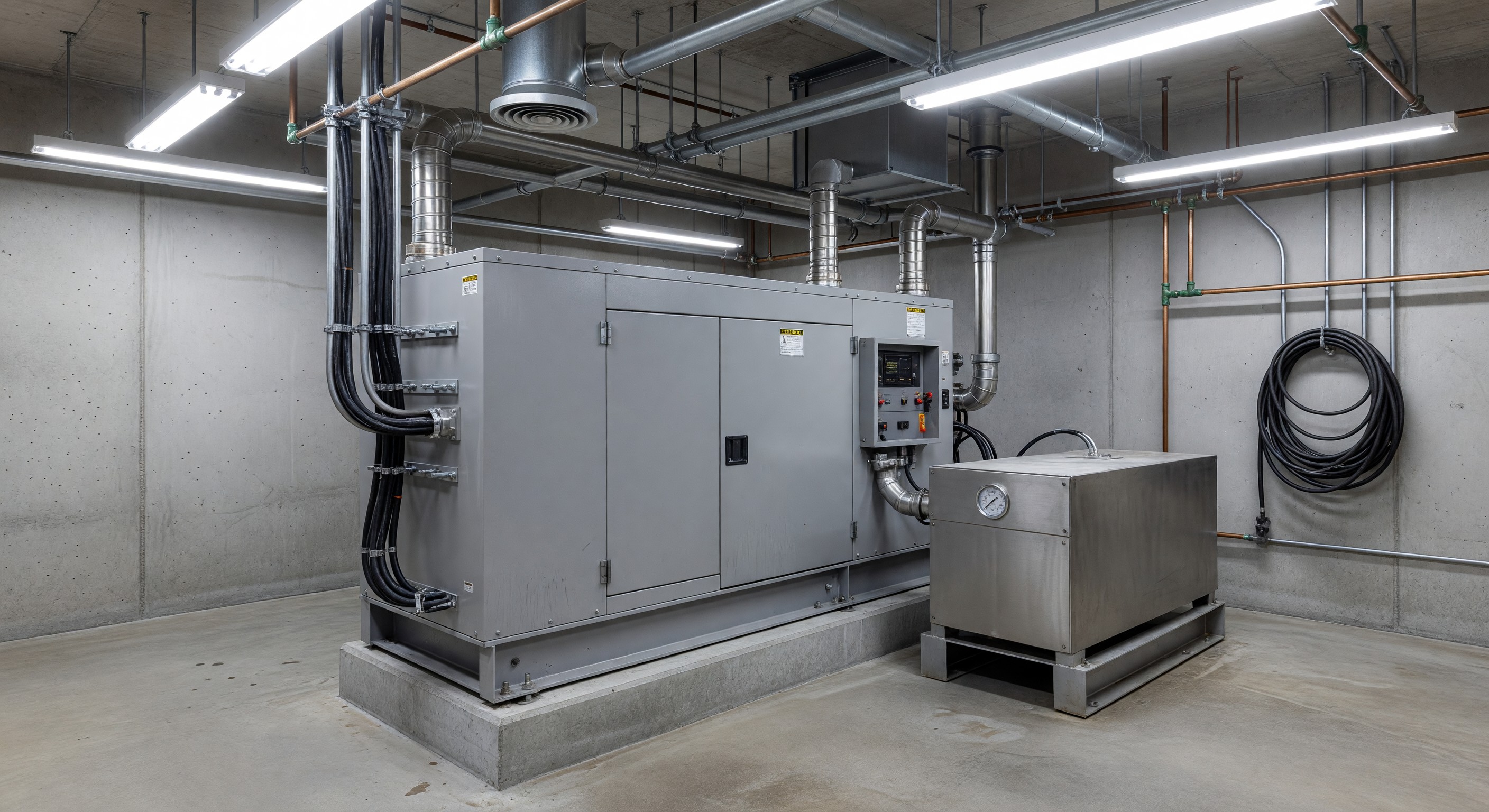
Emergency generator systems are the backbone of hotel life safety infrastructure. When utility power fails — from storms, grid events, or equipment failures — the generator ensures that life safety systems (fire alarm, emergency lighting, exit signage, fire pumps, elevators) continue operating. For full-service hotels, the generator also supports critical operational loads: refrigeration, select lighting, guest room power in some configurations, and emergency communications.
Understanding the sizing, testing, maintenance, and code requirements for hotel emergency power systems is essential for any director of engineering. A generator that fails during an actual emergency is worse than a known vulnerability — it creates false confidence and real risk.
Code Requirements for Hotel Emergency Power
Hotel emergency generator requirements flow from several overlapping codes and standards:
NFPA 110 (Standard for Emergency and Standby Power Systems): The primary standard governing emergency generator installation, operation, testing, and maintenance. Defines Level 1 (essential to life safety — cannot fail) and Level 2 (important but not life-critical) equipment classifications. Most hotel life safety systems are Level 1.
NFPA 101 (Life Safety Code): Specifies which hotel systems must be connected to emergency power: emergency lighting, exit signage, fire alarm systems, fire suppression systems requiring electrical power (sprinkler control, fire pumps), and elevators (at least one elevator must be operable on emergency power in buildings above 4 stories).
NEC Article 700 (Emergency Systems): National Electrical Code requirements for the electrical distribution from the generator through the automatic transfer switch to the load.
Local building codes: Many jurisdictions impose additional requirements beyond model codes — particularly for hotels in hurricane-prone areas, where Florida and other Gulf/Southeast states have enacted post-storm legislation requiring generators at properties that serve as disaster shelters or critical infrastructure.
Emergency vs. Standby Power Classification
This distinction affects code compliance:
Emergency power: Required by code to support life safety loads. Must be supplied within 10 seconds of power failure. Must have fuel for minimum 2 hours (NFPA 110) or as required by local AHJ — many jurisdictions require 96 hours. Must be tested regularly per NFPA 110 requirements. Failure is a code violation.
Standby power (optional loads): Non-life-safety operational loads — refrigeration, guest room power, non-emergency HVAC, food and beverage operations. Hotels may choose to supply these on the emergency generator (if sized for the additional load) or accept loss of these systems during power outages.
Most hotels operate with a single generator that supplies both emergency (code-required) and standby (optional) loads, sized to support the combined load.
Generator Sizing
Generator capacity (expressed in kilowatts, kW) must be sized to carry all connected loads simultaneously, with margin. Undersized generators that overload during a power event will trip offline — potentially during an emergency.
Life safety loads (always on emergency circuits):
- Fire alarm and detection system
- Emergency lighting and exit signs
- Fire pump (if electric; can be 50–200+ kW alone)
- Elevator motor(s) (one elevator minimum; others optional)
- Stairwell pressurization fans
- Smoke exhaust systems
Operational standby loads (optional, sized based on property needs):
- Commercial kitchen refrigeration (walk-in coolers, freezers)
- PMS servers and front desk operations
- Select guest room circuits (luxury properties may back up all guest rooms)
- Food and beverage critical equipment
- Security and surveillance systems
- Communications (IP phone, WiFi APs)
A full-service 200-room hotel emergency-plus-standby generator is typically 500–1,500 kW, with the fire pump being the largest single variable. Hotels with significant conference and kitchen operations trend toward the higher end.
Generator sizing process: Electrical load calculations performed by a licensed electrical engineer. Load calculations account for running watts plus starting surge (motors draw 3–6× running current at startup; simultaneous starting of large motors can exceed generator capacity unless soft-start controls are used).
Automatic Transfer Switch (ATS)
The ATS is the critical interface between utility power and generator power. It monitors utility voltage and frequency, signals the generator to start when utility power fails, and transfers the building electrical loads from utility to generator when the generator is stable (typically 10–30 seconds after start). When utility power is restored and stable, the ATS transfers loads back to utility and signals the generator to cool down and stop.
ATS maintenance requirements: Annual ATS inspection, exercise (transfer operation test), and contact inspection. Worn or pitted contacts in an aging ATS can fail to transfer — the most catastrophic possible failure mode. ATS units have 15–20 year service lives; replacement is warranted when contacts show significant wear or when parts availability becomes limited.
Open transition vs. closed transition ATS: Standard open transition switches drop power briefly during transfer (load sees a momentary interruption). Closed transition switches overlap utility and generator sources briefly to achieve a “make before break” transfer with no power interruption — appropriate for data-sensitive loads like PMS servers and security systems.
Testing Requirements (NFPA 110)
NFPA 110 requires:
Monthly exercise: Generator must run under load for at least 30 minutes. Load bank testing (connecting artificial load) is required when building load available during monthly testing is insufficient to achieve at least 30% of generator nameplate rating.
Annual full-load test: Generator must be tested at 100% of nameplate rating for at least 2 hours annually. This is typically performed with portable load bank equipment.
Transfer test: ATS must be exercised (load transferred to generator and back) as part of periodic testing.
Test documentation: All tests must be documented with date, duration, load level, voltage, frequency, and any anomalies observed.
Fuel Management
Most hotel generators run on diesel fuel. Fuel management is a significant operational consideration:
Fuel storage: On-site diesel tank (typically 500–2,000 gallons). Tank must comply with environmental regulations for above-ground or underground petroleum storage. Above-ground tanks are more common for new hotel installations.
Fuel degradation: Diesel fuel deteriorates over time — water contamination, microbial growth, and fuel stratification can cause generator failure from fuel quality issues rather than mechanical failure. Annual fuel polishing (filtration) or fuel replacement maintains fuel quality.
Fuel quantity monitoring: Automatic fuel level monitoring with alarm when tank falls below a defined level. For extended outages, fuel delivery contracts with priority service providers ensure restocking capability.
Runtime planning: At 100% load, a 1,000 kW generator consumes approximately 70 gallons per hour. A 1,000-gallon tank provides approximately 14 hours of full-load operation — often insufficient for extended outage events without refueling.
Frequently Asked Questions
How often should hotel emergency generators be replaced? Commercial diesel generators have service lives of 20–30 years with proper maintenance. Replacement drivers are typically: (1) obsolete emissions compliance (older generators may not meet current EPA Tier 4 requirements in some jurisdictions); (2) inability to source parts for major repairs; (3) accumulated major repairs exceeding replacement economics; (4) load growth exceeding generator capacity. A 15-year-old generator in good mechanical condition with available parts and adequate capacity is not a replacement candidate.
What happens if a hotel’s generator fails during an inspection? Jurisdictions that test emergency generator compliance through the AHJ (Authority Having Jurisdiction) — typically the fire marshal — can issue violations for failed generator tests, inoperable ATS units, or documentation deficiencies. Violations may require corrective action plans with deadlines and reinspection. Repeated failures or major deficiencies can result in occupancy restrictions. Hotels should conduct internal testing before scheduled AHJ inspections.
Should hotel guest rooms be on emergency generator power? It depends on property tier and strategy. Luxury and full-service hotels increasingly back up all or significant portions of guest room electrical systems on emergency generator power, as extended power outages without guest room power are a significant reputation and guest satisfaction issue. Limited-service hotels typically provide generator power only to life safety and critical operational loads. The incremental generator capacity required to back up guest room power is significant — consult with an electrical engineer before expanding generator-backed circuits.
What is a load bank test and why is it required? A load bank is a portable electrical resistance device that provides artificial electrical load to a generator during testing. When a generator test cannot achieve minimum 30% loading from actual building loads (common during low-occupancy periods or when non-essential loads are off during tests), a load bank provides the required load to test generator performance at meaningful capacity. Load bank tests verify that generators perform correctly under load, identifying issues (voltage regulation, cooling capacity, fuel delivery) that may not appear at low-load idle operation.
Further Reading from Authoritative Sources
- NFPA 110 emergency power system testing and maintenance standards — NFPA develops and maintains NFPA 110 (Emergency and Standby Power Systems) and NFPA 101 (Life Safety Code), the primary standards governing hotel emergency generator requirements, testing frequencies, and compliance documentation.
- DOE backup power and building energy resilience resources — The DOE Buildings program provides backup power system sizing guidance, energy resilience planning resources, and efficiency standards applicable to hotel emergency generator selection and operational planning.