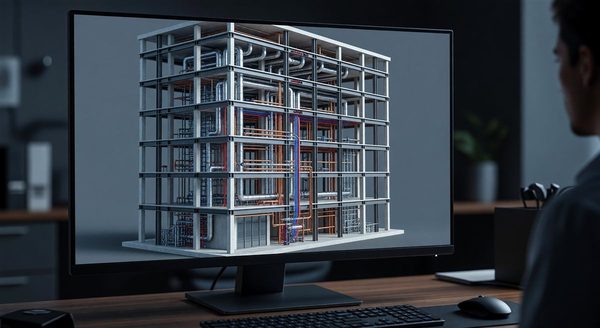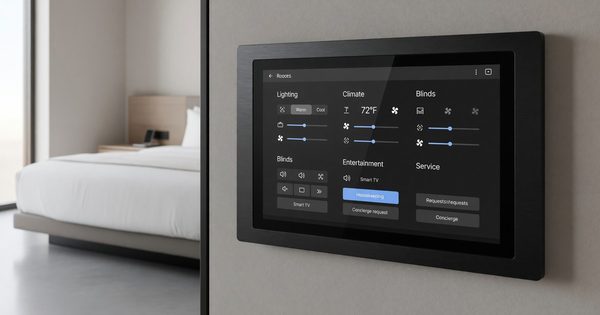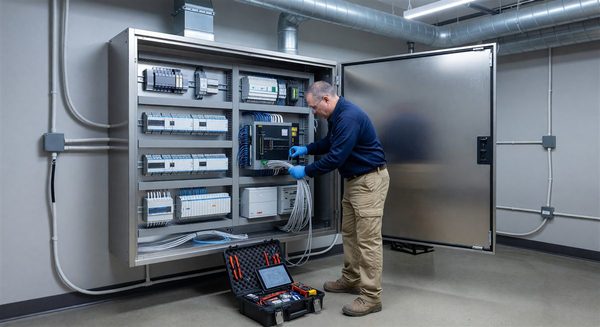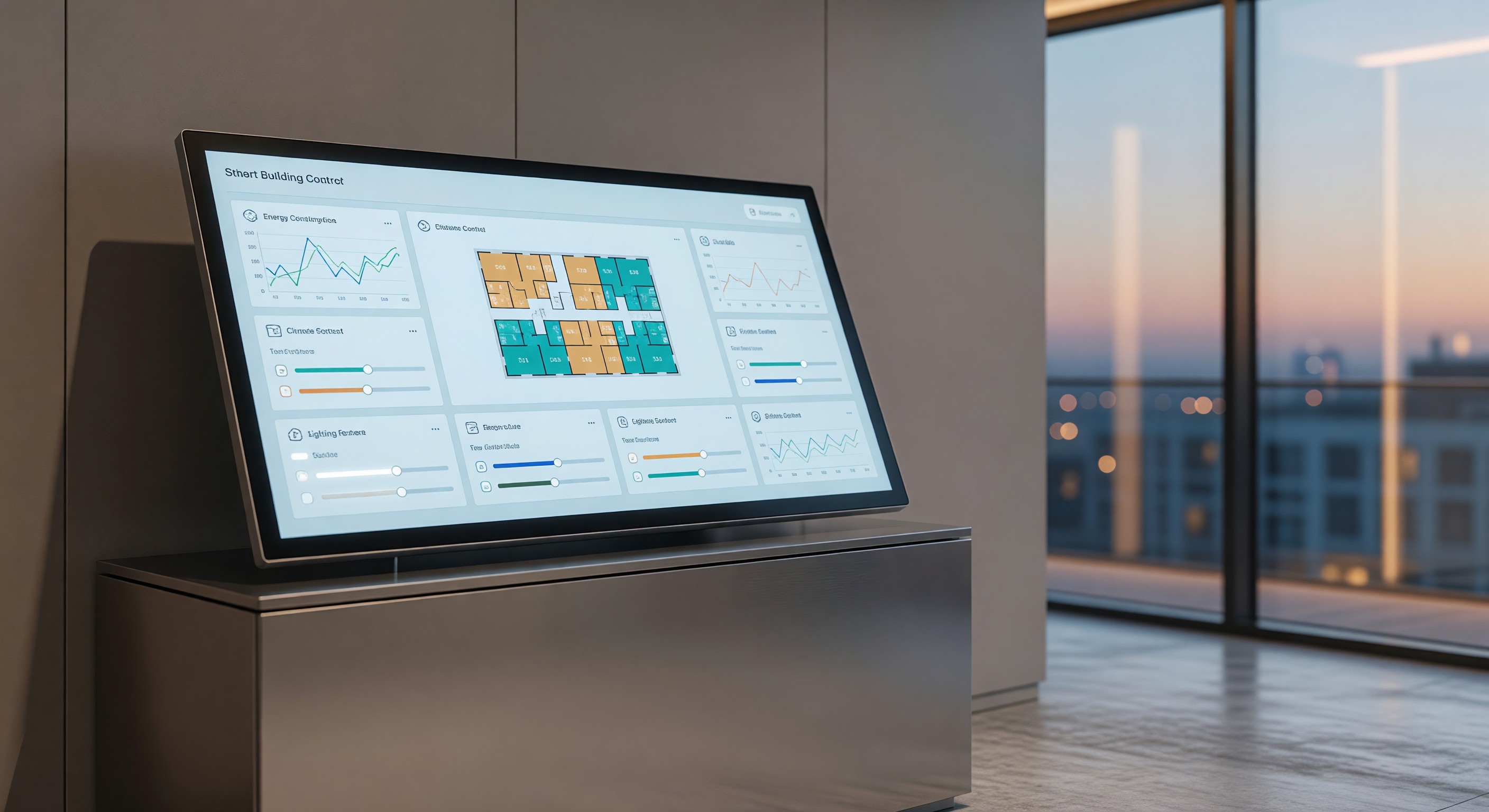
Smart building technology in hotels has moved from a speculative future to a present operational reality. IoT sensors, integrated building management platforms, and cloud-based analytics are being deployed at properties across the quality spectrum — not just at luxury flagship properties, but at upscale and upper-midscale hotels where the ROI case has become clear enough to justify the investment.
For directors of engineering and facility managers, “smart building” is no longer a concept to think about in the future. It’s a capability set that’s being evaluated for current properties and specified as baseline in new construction and major renovations.
What “Smart Building” Actually Means for Hotels
The marketing around smart buildings tends toward aspirational and broad. In practical hotel operations, smart building technology encompasses:
Connected building systems: HVAC, lighting, access control, and other building systems that can be monitored and managed via software rather than only through physical interaction with equipment.
IoT sensor networks: Distributed sensors (temperature, occupancy, water flow, air quality, vibration, etc.) that provide real-time data about building conditions and equipment performance.
Integrated platform: Software that aggregates data from multiple building systems and sensors into a unified management interface — often called a building management system (BMS) or building automation system (BAS) at the traditional level, or an integrated workplace management system (IWMS) at a more comprehensive level.
Analytics and intelligence: Data analysis that converts raw sensor data into actionable insights — anomaly detection, predictive maintenance alerts, energy optimization recommendations, and operational pattern analysis.
Automation and control: Automated system responses based on sensor data and defined rules or AI-driven optimization — HVAC adjusting based on occupancy and outdoor conditions, lighting dimming when rooms are unoccupied, water systems flushing automatically on schedule.
High-Value Smart Building Applications for Hotels
Guestroom Environmental Optimization
The guestroom is the highest-impact application of hotel smart building technology. IoT-enabled guestrooms can:
Detect occupancy precisely: A network of door sensors, keycard readers, and PIR motion sensors determines whether a guest is in the room with high confidence — enabling HVAC and lighting setback in vacant rooms that significantly reduces energy consumption.
Pre-condition based on arrivals: Integration with the PMS feeds arrival data to the building management system. Rooms are pre-conditioned to comfort temperatures before guests arrive, providing a better first impression without the energy waste of conditioning vacant rooms all day.
Detect maintenance issues automatically: Temperature sensors that show a room consistently warmer than setpoint during cooling mode alert the engineering team to a potential HVAC issue before a guest complaint is filed. Water sensors in the bathroom can detect slow leaks. Vibration sensors on PTAC units can flag abnormal operation patterns.
Monitor environmental conditions: CO2, humidity, and air quality sensors in guestrooms provide data for ventilation optimization and can flag conditions that affect guest comfort or health.
Equipment Performance Monitoring
Smart building technology enables continuous monitoring of mechanical equipment that previously could only be assessed during scheduled maintenance visits.
Chiller performance monitoring: Flow meters, temperature sensors, and power meters continuously track chiller efficiency (kW/ton). Deviation from expected performance triggers an alert — allowing engineering to investigate and address issues before they become failures.
Cooling tower monitoring: Conductivity sensors, flow meters, and water temperature sensors enable automated chemical dosing and blowdown control (reducing water consumption) and flag conditions that indicate Legionella risk (temperature drops, flow disruptions).
Pump and motor monitoring: Vibration and power consumption monitoring of pumps and fans detects developing bearing failures and imbalance months before the equipment fails.
Elevator performance: Smart elevator systems continuously monitor car position, door operation, and electrical parameters, enabling predictive maintenance rather than time-based maintenance.
Water System Intelligence
Water management is an area where IoT sensors provide particularly clear value:
Leak detection: Ultrasonic flow meters on main water supply lines detect flow anomalies that indicate leaks — even slow leaks that would go undetected for months by observation alone. In a hotel that experienced a significant water leak event, the cost of a comprehensive leak detection system ($15,000–$40,000) is typically recovered in a single incident prevented.
Hot water temperature monitoring: Distributed temperature sensors throughout the domestic hot water distribution system verify that Legionella-prevention temperatures are maintained throughout the building — not just at the water heater where the thermostat is set.
Water quality monitoring: pH, conductivity, and ORP sensors in the cooling tower and domestic water system track treatment parameters continuously, enabling earlier detection of treatment failures.
Energy Management Integration
Smart building platforms that integrate energy management with operational systems deliver better results than standalone energy management:
Demand response: Integration with the utility company’s demand response program enables automated load reduction during peak pricing events — turning off non-critical loads, raising cooling setpoints slightly, and shifting controllable loads to off-peak periods.
Predictive cooling: Weather forecast integration allows the BAS to anticipate the next day’s cooling demand and pre-cool the building during off-peak rate hours, shifting energy consumption to lower-cost periods.
Submetering and attribution: Smart metering at the circuit or equipment level enables attribution of energy consumption to specific systems, floors, or amenities — enabling more targeted efficiency improvements than property-level energy data.
Integration Architecture Challenges
The most significant operational challenge of smart building deployments is integration — getting multiple building systems, IoT devices, and software platforms to share data coherently.
The Protocol Landscape
Building systems communicate over a variety of protocols:
- BACnet: The dominant open protocol for building automation (HVAC, lighting, fire alarm). Well-supported, extensive device ecosystem.
- Modbus: Common for industrial and electrical equipment. Simpler than BACnet, widely supported.
- MQTT: Lightweight IoT messaging protocol, common for sensor networks.
- Proprietary protocols: Many equipment vendors (PTAC manufacturers, elevator companies, lock systems) use proprietary protocols that require vendor-specific gateways.
- REST APIs: Modern platforms increasingly provide web service APIs for data integration.
A comprehensive smart building deployment requires either a single platform that supports all needed protocols, or integration middleware that bridges between them. The middleware layer adds cost and complexity but is often unavoidable in a building with multiple legacy systems.
Avoiding Vendor Lock-In
The smart building vendor landscape includes both open-architecture platforms (that integrate with many systems) and proprietary platforms (that work best with the same vendor’s products). For hotels that want long-term flexibility:
- Prefer open standards (BACnet, MQTT, REST APIs) over proprietary protocols where the market supports it
- Require that data can be exported in standard formats (not locked in a vendor-proprietary database)
- Clarify ownership of operational data — the data generated by your building systems belongs to the hotel, not the software vendor
Network Requirements
IoT sensors and connected building systems require network infrastructure:
- Dedicated IoT VLANs separate from guest WiFi and administrative networks
- Adequate bandwidth for continuous sensor data transmission
- Reliable WiFi coverage or wired connections throughout the building
- Cybersecurity measures appropriate for building control systems (see the cybersecurity-physical security intersection discussion elsewhere on this site)
Making the Business Case
Smart building technology represents meaningful capital investment. The ROI case typically draws from:
Energy savings: The most quantifiable return. A comprehensive smart building implementation typically reduces total building energy consumption by 15–25% through HVAC optimization, occupancy-based controls, and demand response.
Maintenance cost reduction: Predictive maintenance prevents costly emergency repairs and extends equipment life. The cost savings are real but harder to quantify prospectively.
Labor efficiency: Automated monitoring reduces the manual checking and routine inspections that consume engineering staff time.
Guest satisfaction: Rooms that are at the right temperature when guests arrive, with no environmental complaints, contribute to higher satisfaction scores.
Water savings: Leak detection and cooling tower optimization reduce water consumption in ways that are directly billable.
FAQ
What’s a realistic budget for a smart building implementation at a 200-room hotel? A phased implementation over 3 years, starting with guestroom environmental controls and high-value equipment monitoring, typically runs $300,000–$600,000 total. The energy savings alone usually pay back this investment in 4–7 years. New construction costs significantly less because smart infrastructure is specified from the start.
Should we deploy smart building technology property-by-property or portfolio-wide? For multi-property operators, portfolio-wide deployment with a common platform creates significant advantages: shared learning, common training, unified reporting, and better vendor negotiating position. However, piloting at one or two properties before full portfolio commitment is prudent.
How do we ensure staff can manage the technology after deployment? Training and documentation are critical. Every system requires:
- Initial training for all engineering staff at deployment
- Role-specific training (what the chief engineer can do vs. what line technicians can do)
- Quick reference documentation for common tasks
- Vendor support contact information and escalation path
- Annual refresher training as staff turns over
What happens if the smart building platform is down? Well-designed systems fail gracefully: individual building systems (HVAC, lighting) continue to operate locally using their last setpoints or default modes. The smart building platform’s value is in optimization and monitoring — its outage should not cause any building system to stop functioning.
Further Reading from Authoritative Sources
- ASHRAE BACnet and building automation integration standards — ASHRAE develops BACnet and the building automation standards applicable to hotel smart building deployments, integration architecture requirements, and HVAC controls frameworks that form the technical foundation of smart building programs.
- DOE smart building technology and energy analytics resources — The DOE Buildings program provides smart building technology research, IoT sensor deployment guidance, and energy analytics frameworks applicable to hotel smart building ROI analysis and implementation planning.