Natural gas remains the primary fuel for heating, domestic hot water, and commercial cooking at most full-service hotels. For many properties, gas represents 30–50% of total energy expenditure — a cost center that warrants careful management. At the same time, gas systems present the most serious safety risks in hotel building operations: gas leaks can cause explosions, fires, and carbon monoxide poisoning if systems are improperly maintained or emergency protocols are inadequate.
This guide covers the gas system components found in hotel facilities, maintenance requirements, emergency response protocols, and the evolving conversation around electrification as regulatory and economic pressures shift.
Hotel Gas System Components
Supply infrastructure: Natural gas enters the building through a utility service connection at the meter. The main shutoff valve — facility managers must know exactly where this is and be able to operate it in an emergency — controls all gas supply to the building. From the meter, distribution piping routes gas throughout the building to individual appliances.
Gas distribution piping: Interior gas piping must be inspected for corrosion, improper support, and proximity to heat sources or electrical equipment. NFPA 54 (National Fuel Gas Code) governs installation requirements; local authorities having jurisdiction (AHJs) adopt and may amend these requirements.
Pressure regulation: Most hotel gas systems operate at medium pressure at the building entry point, stepped down by regulators to appliance operating pressure (typically low pressure, 3.5–7 inches water column for most appliances). Commercial cooking equipment may require medium pressure at the appliance level. Pressure regulators require periodic inspection for proper operation and wear.
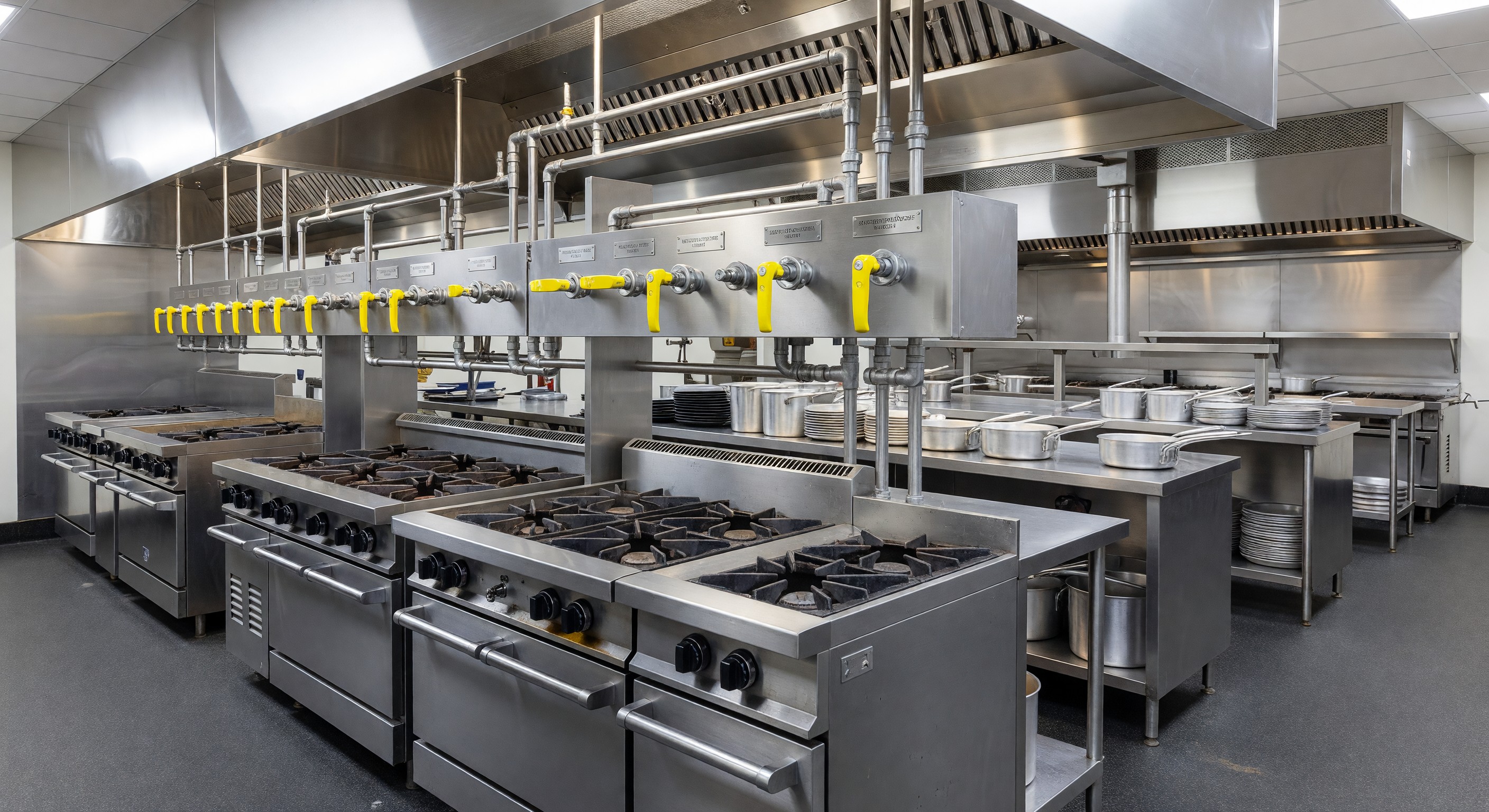
Gas appliances: Hotels typically operate natural gas-fired water heaters, boilers (space heating), commercial cooking equipment, laundry equipment (gas dryers), pool/spa heaters, and standby generator systems (in some configurations). Each appliance has specific maintenance requirements and safety controls.
Combustion safety devices: Gas-fired appliances include multiple safety controls: thermocouples and thermopile sensors that detect flame failure, excess-flow valves that shut off supply if flow rates indicate a broken line, pressure relief devices, and high-limit controls that shut off burners if operating temperatures exceed safe limits. These safety controls require periodic testing and must be functional at all times.
Preventive Maintenance Requirements
Annual inspections: All gas-fired appliances should receive annual inspection and service by a licensed contractor. Inspection scope includes: burner condition and adjustment, heat exchanger inspection for cracks or leaks, combustion analysis (confirming complete combustion and appropriate CO2/CO levels in flue gas), safety control function testing, and flue and draft hood inspection.
Combustion analysis: A combustion analyzer measures flue gas composition to verify efficient and safe combustion. High CO (carbon monoxide) in flue gas — even at levels that don’t trip safety controls — indicates incomplete combustion that reduces efficiency and increases CO risk. Annual combustion analysis identifies burner adjustment needs before they become safety issues.
Heat exchanger inspection: Cracked heat exchangers in furnaces, boilers, and water heaters allow combustion products (including CO) to mix with supply air or water. Visual inspection of accessible heat exchanger surfaces, combined with pressure testing for gas-fired hot water heat exchangers, is essential. Replace any heat exchanger with confirmed cracks immediately — operating a cracked heat exchanger is a life-safety violation.
Flue and vent inspection: Gas appliance flues must be properly pitched, connected, and free of blockages. Disconnected flue sections can allow combustion products to spill into mechanical rooms. Annual inspection of all flue connections, particularly after any HVAC or building work that may have disturbed ductwork or mechanical connections, is a minimum standard.
Carbon Monoxide Management
Carbon monoxide (CO) poisoning is the most serious operational risk associated with gas-fired equipment. CO is colorless, odorless, and potentially lethal at concentrations well below what most people can perceive. Hotels are particularly vulnerable because guests may be sleeping when CO levels rise gradually.
CO detectors: NFPA 720 (Standard for the Installation of Carbon Monoxide Detection and Warning Equipment) and local codes require CO detectors in hotel guest rooms, corridors, and areas adjacent to fuel-fired appliances. Verify detector installation meets applicable code for your jurisdiction, test detectors monthly, and replace per manufacturer recommendations (typical service life: 5–7 years).
Response protocol: If a CO detector activates, immediately evacuate the affected area, ventilate, and call the fire department. Do not reoccupy until the source is identified and repaired, and a qualified technician verifies safe CO levels. Do not assume the detector was a false alarm — CO events at hotels have resulted in deaths when evacuations were not taken seriously.
Emergency Protocols
Every hotel should have a written gas emergency protocol that includes:
- Main shutoff location: Every engineering and management staff member must know where the main gas shutoff valve is and how to operate it.
- If gas odor is detected: Evacuate the immediate area, do not operate electrical switches (could ignite gas), call the gas utility’s emergency line and 911 from outside the building, do not reenter until the gas company has confirmed safe conditions.
- If gas-fired appliance fails unsafe: Shut off the individual appliance shutoff valve, ventilate the space, and contact a licensed service technician before restarting.
Conduct annual tabletop exercises with engineering staff covering gas emergency scenarios. Real gas emergencies move quickly — staff who have rehearsed the protocol respond more effectively than those who must think through steps under pressure.
Efficiency Optimization
Gas systems can be operated more efficiently with relatively modest investments:
Boiler condensing upgrade: Older non-condensing boilers operate at 70–80% thermal efficiency. Condensing boilers achieve 90–95% efficiency by recovering heat from flue gases. In cold climates with significant heating loads, condensing boiler replacement often pays back in 4–6 years.
Demand-controlled water heating: Linking water heater output temperature and operating schedules to occupancy and time-of-day patterns reduces standby losses. BAS integration that reduces DHW setpoints during low-occupancy overnight periods can reduce gas consumption by 8–15% without guest impact.
Commercial kitchen hood controls: Variable-speed hood fans controlled by cooking demand sensors (temperature or vapor sensing) reduce exhaust volume — and the corresponding makeup air that must be heated or conditioned — during low-cooking periods. Kitchen hood energy management systems typically reduce HVAC energy in the kitchen by 30–50%.
Electrification Considerations
Regulatory momentum — particularly in California, New York, and other states with aggressive building electrification policies — is pushing hotels to evaluate gas-to-electric conversion pathways. Key considerations:
- Heat pump technology (for space heating, water heating, and pool heating) now provides viable electric alternatives to gas-fired equipment across most hotel applications
- Induction cooking has matured significantly and is increasingly adopted in commercial kitchen upgrades at properties seeking gas-free operations
- Economics: In markets with high natural gas prices and favorable electricity rates (particularly time-of-use rates with off-peak billing), electrification economics have improved substantially since 2021
- Grid carbon intensity: In markets with high-renewable electricity grids, electrification also delivers meaningful greenhouse gas reductions
Properties undertaking major HVAC or water heater replacements should evaluate heat pump alternatives as part of the replacement decision, incorporating applicable federal and state incentive programs (IRA Section 25C and 179D provisions for commercial properties are particularly relevant through 2032).
Frequently Asked Questions
How should hotels respond if guests report a gas smell? Treat every reported gas odor as a real emergency. Evacuate guests from the affected area, do not operate any electrical switches or call from within the suspected area, call the utility’s 24-hour gas emergency line and 911 from outside the building. Do not allow guests or staff to reenter until the utility company has investigated and confirmed safe conditions. Document the incident and followup with a licensed contractor inspection even if the utility finds no active leak.
How often should hotel gas piping be inspected? Gas distribution piping inside hotel buildings should be visually inspected annually as part of the overall mechanical system inspection program. In areas with underground or concealed piping, periodic pressure testing (every 5–10 years) by a licensed contractor verifies pipe integrity. Any work that involves cutting into walls or floors near gas piping requires verification of pipe location and condition before restoration.
What is the typical lifespan of hotel gas appliances? Commercial gas boilers: 20–30 years with proper maintenance. Gas water heaters (commercial storage): 15–25 years. Commercial cooking equipment: 15–25 years depending on type and use intensity. Gas-fired pool heaters: 10–20 years. Replacement decisions should be based on maintenance cost trends, efficiency performance, and parts availability rather than age alone — well-maintained equipment at the lower end of these ranges may still operate economically.
Are there hotel brands or jurisdictions that are moving toward gas-free facilities? Yes. Several major hotel brands have published sustainability commitments that include transitioning away from fossil fuel combustion, with targets ranging from 2030 to 2050. In California, new construction in many jurisdictions is subject to reach codes that limit or prohibit natural gas in new buildings. Hotels undergoing major renovations in affected jurisdictions should engage a mechanical engineer familiar with local codes early in the design process.
Further Reading from Authoritative Sources
- NFPA 54 National Fuel Gas Code and NFPA 720 CO detection standards — NFPA develops NFPA 54 (National Fuel Gas Code) and NFPA 720 (Carbon Monoxide Detection), the primary standards governing hotel natural gas system installation, CO detection requirements, and emergency response protocols.
- DOE building electrification and commercial gas efficiency resources — The DOE Buildings program provides commercial building electrification guidance, gas system efficiency resources, and heat pump technology information applicable to hotel natural gas management and electrification planning decisions.