HVAC is the single largest energy consumer in most hotel properties — typically 40–60% of total energy spend — and it’s the system guests complain about most when it fails. Temperature complaints are the leading driver of negative reviews across all hotel categories. For directors of engineering, understanding HVAC at both the operational and systems level isn’t optional; it’s core to the job.
This guide covers the fundamental HVAC configurations found in hotels, how to think about system performance, and what separates well-managed HVAC operations from reactive ones.
HVAC System Types in Hotel Properties
Hotels use several distinct HVAC configurations, often in combination within a single property.
PTAC Units (Packaged Terminal Air Conditioners)
PTACs are the self-contained units common in guestroom windows or through-wall sleeves. Each unit serves a single room and operates independently. They’re the dominant solution in limited-service, midscale, and many upscale properties.
Advantages: Simple to maintain, easy to replace individual units, gives guests direct control, no complex distribution system to manage.
Disadvantages: Less energy efficient than central systems at scale, higher noise levels, aesthetic limitations, short equipment lifespan (8–12 years).
Managing a PTAC fleet means managing a large inventory of aging equipment at different lifecycle stages. A 300-room property might have 350+ PTAC units with a mix of vintages. Effective management requires tracking age by unit, planning systematic replacement rather than waiting for failure, and maintaining an inventory of replacement units for rapid swap-outs when a unit fails mid-stay.
Fan Coil Units (FCUs) with Central Plant
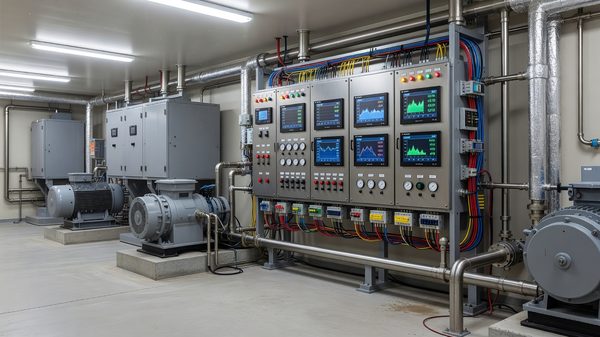
FCUs are the common alternative to PTACs in full-service and upper-upscale hotels. A central plant (chillers for cooling, boilers for heating) produces chilled water and hot water that circulates through the building via a pipe network. Individual fan coil units in each room or zone connect to this distribution network and condition the air.
Advantages: More energy efficient at scale, quieter operation, longer equipment life, better humidity control, more design flexibility.
Disadvantages: Complex central plant to maintain, higher installation cost, a single plant failure can affect the entire property, requires skilled technicians.
VRF/VRV Systems (Variable Refrigerant Flow)
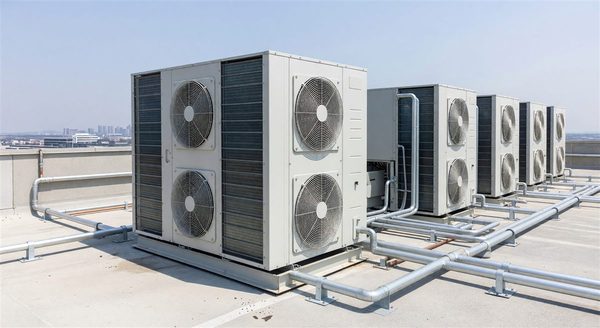
VRF systems use refrigerant — rather than water — as the distribution medium. Multiple indoor units connect to outdoor compressor units via refrigerant piping. This configuration offers high efficiency and zoning flexibility without a central plant.
VRF adoption in hotels has grown significantly over the past decade, particularly in boutique properties and smaller full-service hotels where a traditional central plant would be oversized.
Dedicated Outdoor Air Systems (DOAS)
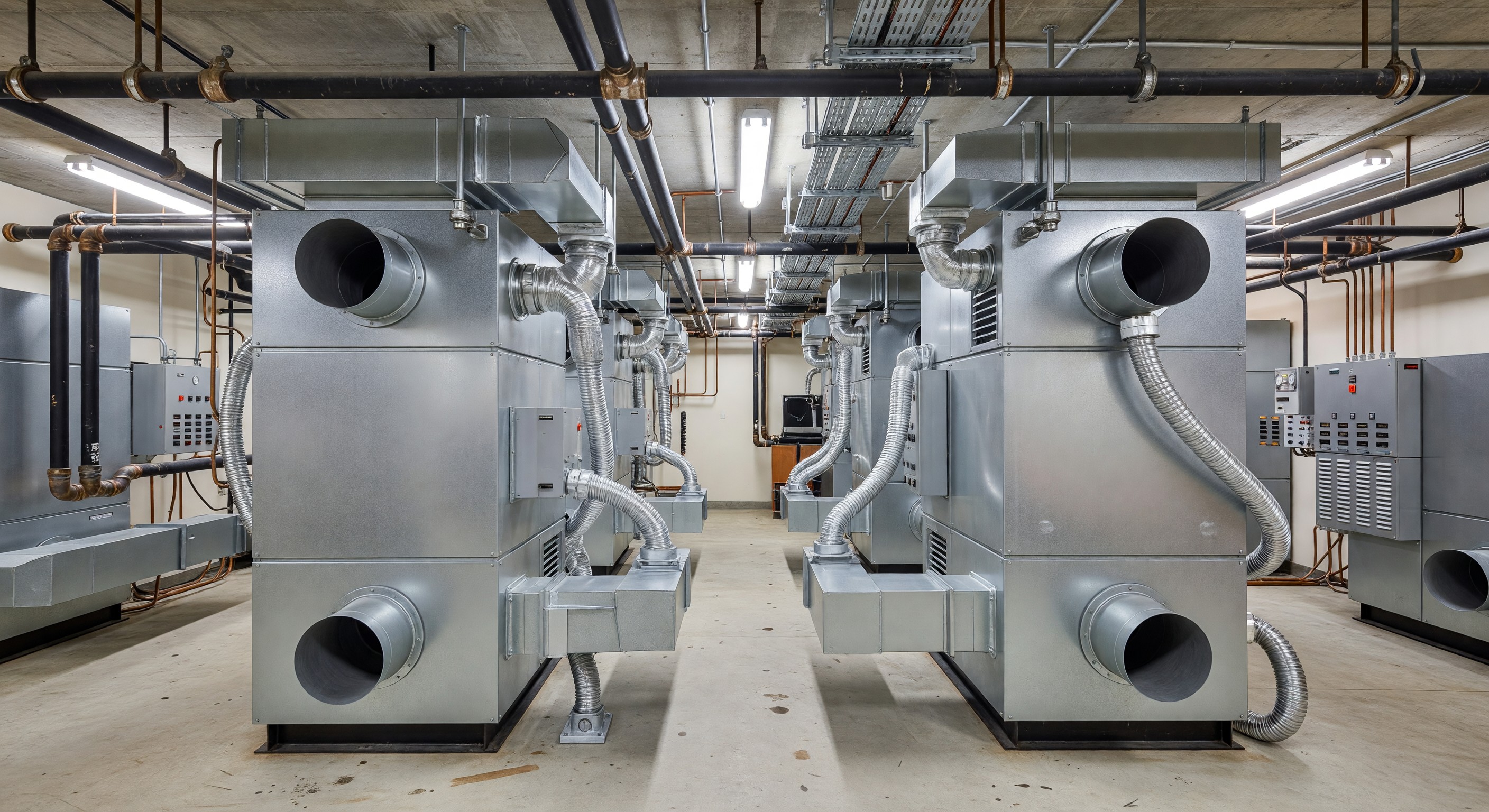
DOAS handles ventilation separately from space conditioning. A central unit brings in and conditions outdoor air, which is then distributed throughout the building. Individual room units handle only the heating and cooling load. This approach improves indoor air quality, simplifies maintenance, and can improve energy performance.
Guest Comfort Standards
The most important performance metric for hotel HVAC isn’t efficiency — it’s guest comfort. The two are often in tension.
Temperature: Standard guestroom temperature should be maintainable between 68°F and 76°F (20–24°C) under all outdoor conditions. The HVAC system must be able to cool to 68°F on the hottest day of the year and heat to 76°F on the coldest.
Humidity: Relative humidity in guestrooms should stay between 40% and 60%. Below 40%, guests experience dry air complaints. Above 60%, mold risk increases. Humidity control is particularly challenging in coastal properties and in summer months.
Noise: HVAC noise is one of the most common guestroom complaints. PTAC units are the worst offenders — newer models are significantly quieter than units from the 2000s and early 2010s. Fan coil systems are generally quieter. Target noise levels for guestrooms are under 35 dBC.
Response time: When a guest calls to report a temperature issue, the system should be able to reach setpoint within 30–45 minutes of the complaint. Systems that take longer indicate either undersized equipment or maintenance issues.
Energy Management Integration
Modern hotels increasingly connect HVAC to an energy management system (EMS) that:
- Detects room occupancy via door sensors, keycard readers, or motion sensors
- Sets back temperature to energy-saving levels when rooms are vacant
- Returns to comfort settings as guests approach (some systems use predictive algorithms)
- Monitors system performance and flags anomalies
A well-configured EMS can reduce HVAC energy consumption by 15–25% without any impact on guest comfort — the savings come entirely from not conditioning empty rooms to full comfort levels.
Common Maintenance Failures and How to Prevent Them
Dirty Filters
The single most common cause of HVAC performance problems is neglected filter maintenance. Dirty filters restrict airflow, reduce efficiency, and cause coils to freeze or overheat. PTAC filters should be cleaned monthly and replaced quarterly or per manufacturer recommendation. Central system filters follow their own schedule based on filter type and system design.
Coil Fouling
Evaporator and condenser coils collect dust, debris, and biological growth over time. Annual coil cleaning is standard for PTAC units. Central system coils should be inspected twice yearly and cleaned as needed. Fouled coils can reduce system capacity by 20–30% and significantly increase energy consumption.
Refrigerant Leaks
Refrigerant leaks cause gradual loss of cooling capacity. Technicians should check refrigerant charge during every preventive maintenance visit. Properties managing large PTAC fleets should track refrigerant consumption per unit — units requiring repeated recharging are approaching end of useful life.
Thermostat Calibration
Thermostats drift over time. A thermostat showing 70°F while the actual room temperature is 74°F will generate guest complaints that seem to defy explanation. Calibration should be part of every PM visit.
Seasonal Changeover
Hotels in climates with distinct seasons must manage the changeover between heating and cooling modes. In many systems, this changeover requires manual intervention — switching valves in a 2-pipe chilled water/hot water system, for example.
The timing of this changeover is a judgment call that creates problems when it’s wrong. Switching to cooling mode during a late-season cold snap generates heating complaints. Staying in heating mode during an early warm period causes cooling complaints. The best practice is to monitor 10-day forecasts carefully and plan changeover to minimize exposure.
Capital Planning for HVAC
Major HVAC capital items and typical replacement horizons:
| System | Expected Lifespan | Replacement Cost (200-room property) |
|---|---|---|
| PTAC units | 10–12 years | $600–$900 per unit |
| Chillers | 20–25 years | $200,000–$500,000 |
| Cooling towers | 15–20 years | $100,000–$300,000 |
| Boilers | 20–25 years | $50,000–$150,000 |
| AHU units | 20–25 years | $30,000–$80,000 each |
| VRF outdoor units | 15–20 years | $15,000–$40,000 each |
HVAC capital planning should look at least 10 years forward and account for energy efficiency improvements — in many cases, replacing aging equipment ahead of end-of-life pencils out due to energy savings.
FAQ
How often should PTAC units be completely replaced vs. repaired? The general rule is: if a repair costs more than 30–40% of the replacement cost and the unit is more than 7 years old, replacement is usually the better economic choice. Maintain a fleet replacement schedule that targets 8–10% of units per year to avoid a “cliff” of simultaneous failures.
What’s the best way to manage guest temperature complaints? Create a clear escalation protocol: front desk to engineering within 15 minutes, engineering response within 30 minutes, room move offered if the issue can’t be resolved within 45 minutes. Track every HVAC-related complaint by room number to identify chronic problem rooms.
Should we invest in smart thermostats for guestrooms? For properties with a network backbone that can support it, smart thermostats with occupancy sensing typically pay back in 2–3 years through energy savings. They also generate data useful for diagnosing system performance issues.
How do we benchmark our HVAC energy performance? Energy Use Intensity (EUI) for HVAC in hotels ranges from 60,000–100,000 BTU/sq ft/year depending on climate and property type. Compare your HVAC EUI against ENERGY STAR benchmarks for your property category. Your utility bills and a basic building survey are enough to calculate a starting EUI.
Further Reading from Authoritative Sources
- ASHRAE hotel HVAC standards and guestroom comfort guidelines — ASHRAE provides the primary technical standards for hotel HVAC system design, ventilation requirements, thermal comfort specifications, and energy efficiency guidance applicable to PTAC fleet management, FCU central plant operations, and EMS integration programs.
- AHLA hotel HVAC capital planning and guestroom comfort standards — AHLA provides hospitality industry guidance on hotel HVAC system lifecycle management, capital planning frameworks, and guestroom comfort standards applicable to PTAC fleet planning, central plant investment decisions, and energy management system integration.