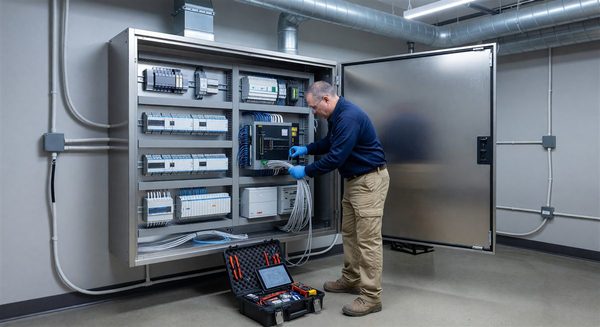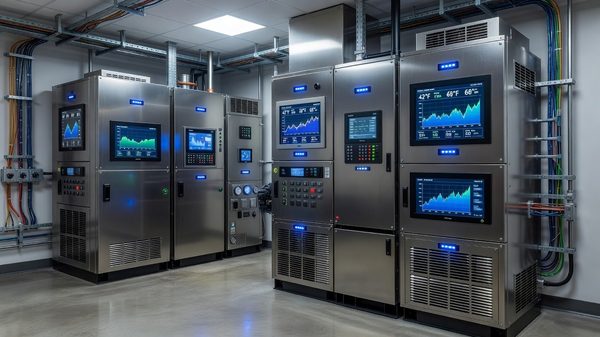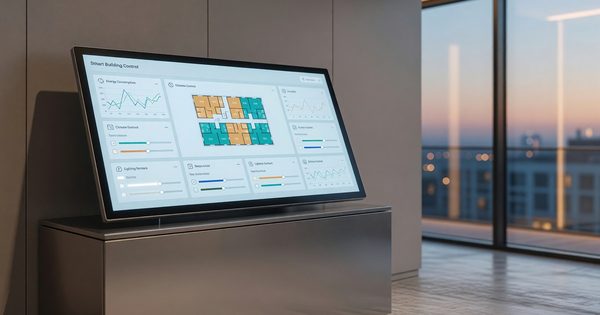
Aging HVAC controls are one of the most consequential capital investment decisions facing hotel facility managers in 2025. Properties built in the 1970s through 1990s may still be operating on pneumatic controls or first-generation direct digital controls (DDC) that predate modern BACnet open protocols, web-based dashboards, and cloud integration. Properties built in the 2000s and 2010s may have DDC systems whose controllers are now discontinued, whose software cannot be updated, and whose integration with modern hotel operations — PMS, IoT sensors, demand response programs — is effectively impossible.
This guide addresses the HVAC controls upgrade decision: when legacy systems reach the point where upgrading is warranted, what modern controls can provide, and how to approach the transition.
The Legacy Controls Problem
Pneumatic controls: Compressed air-operated thermostats and valve actuators were the standard for commercial buildings through the 1980s. Pneumatic systems are reliable in their mechanical simplicity but provide no digital monitoring, no energy data, no remote setpoint adjustment, and no fault detection. Troubleshooting requires physical inspection of each control component. Energy optimization is extremely limited. Pneumatic systems in 2025 are typically maintained by a shrinking pool of specialized technicians — the knowledge base for pneumatic maintenance is retiring.
First-generation DDC (pre-BACnet): Proprietary DDC systems installed in the 1990s and early 2000s often use proprietary communication protocols, discontinued hardware controllers, and software that no longer receives manufacturer support. These systems may provide digital monitoring and logging but cannot integrate with current building management platforms, cannot be accessed via modern web interfaces, and often require the original installing contractor (or expensive reverse-engineering) to modify programming.
BACnet DDC (late 2000s–2015): Open-protocol DDC systems that technically support integration but may run on hardware approaching end of support life or software platforms that have not kept pace with current cybersecurity requirements. These systems may be upgrade candidates for software/controller refresh without full replacement.
What Modern Controls Provide
Modern building automation systems (BAS) provide capabilities that fundamentally change how hotel HVAC is managed:
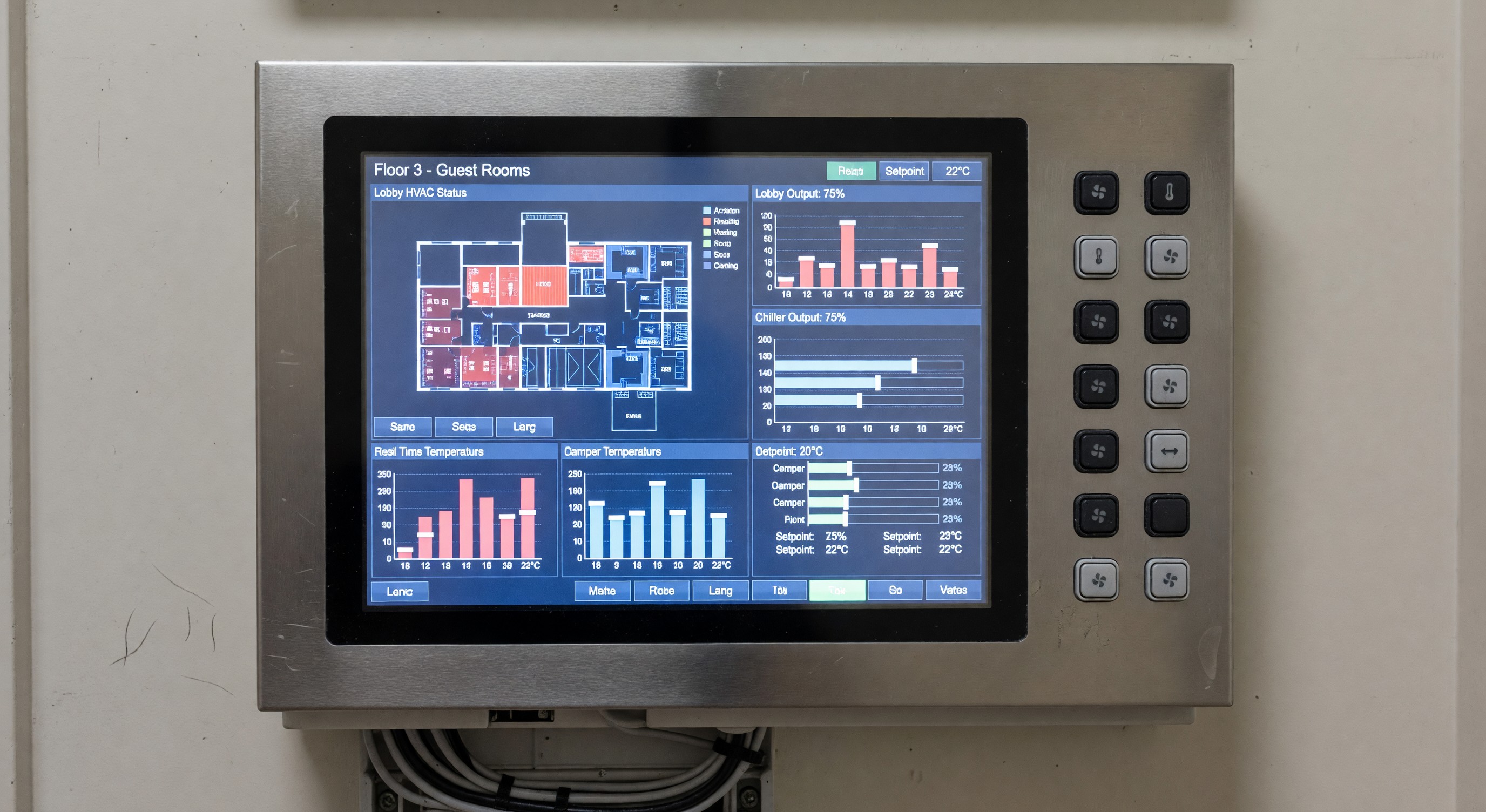
Integrated dashboard and monitoring: All HVAC equipment — air handling units, chillers, cooling towers, boilers, VAV boxes, fan coil units, and guest room thermostats — visible in a single graphical interface. Real-time status, setpoints, temperatures, and alarms visible from any browser.
Fault detection and diagnostics (FDD): Automated analysis of system performance data against equipment models identifies faults before they cause failures. A chiller whose efficiency is declining, a VAV box that’s stuck in one position, a cooling tower fan that’s cycling abnormally — modern FDD identifies these conditions and generates actionable notifications.
Energy reporting and analytics: Utility-grade energy metering integrated with HVAC control systems provides end-use energy breakdown, benchmarking against historical periods, and identification of energy waste. ENERGY STAR Portfolio Manager integration enables automated benchmarking score updates.
Demand response integration: Grid-interactive controls that can automatically reduce HVAC load during utility demand response events — shifting chiller setpoints, pre-cooling before demand periods, cycling non-critical loads — while maintaining acceptable comfort conditions.
Guest room control integration: Integration between BAS and guest room control units (GRCUs) allows setpoint limits, occupancy-based setback, and real-time monitoring of individual room conditions from a central dashboard.
PMS integration: Receiving check-in and checkout events from the PMS allows the controls system to prepare rooms (pre-conditioning arriving guest rooms) and set back unoccupied rooms after checkout — without guest room card-activated switches.
Remote access: Cloud-connected or VPN-accessible systems allow engineers to monitor and respond to HVAC issues remotely — including after-hours alarms — without requiring physical presence on property.
Controls Upgrade Approaches
Full controls replacement: Complete removal of legacy control devices (thermostats, controllers, sensors, actuators) and replacement with a unified current-generation DDC system. Highest upfront cost, maximum capabilities, cleanest integration. Appropriate when existing system is pneumatic, when proprietary legacy hardware prevents any integration, or when the scope of desired improvements exceeds what can be achieved through overlaying new technology on old infrastructure.
Controller-level upgrade: Replace legacy DDC controllers with current-generation hardware while retaining functional field devices (sensors and actuators that remain in calibration and good condition). Reduces installation cost versus full replacement by preserving working field devices. Requires compatibility assessment of existing field devices with new controllers.
Overlay/integration layer: Add a modern BAS layer that integrates with legacy controllers through gateway devices, providing modern monitoring and reporting capabilities without replacing the underlying control logic. Lowest cost, least disruption, but inherits the limitations of the legacy system — FDD and advanced control sequences may not be achievable.
Phased approach: Replace controls system-by-system or zone-by-zone rather than all at once. Allows capital costs to be spread across multiple years and hotel operations to continue with minimal disruption. Requires careful planning to manage the mixed legacy/new-generation environment during the transition period.
Implementation Considerations
Sequences of operation: The programming that tells the BAS how to operate equipment (occupied/unoccupied setpoints, stage sequencing, economizer control, demand limiting) is as important as the hardware. Poorly programmed controls waste as much energy as legacy systems — the upgrade investment should include experienced controls programming and commissioning, not just hardware replacement.
Commissioning: New controls must be commissioned — systematically tested and verified against the sequences of operation — before the project is considered complete. Functional performance testing (simulating fault conditions, verifying alarm response, confirming setpoint enforcement) identifies programming errors before they result in guest comfort complaints or energy waste.
Operator training: A new controls system provides value only if engineering staff can use it. Vendor training on dashboard navigation, alarm management, report generation, and basic troubleshooting is an essential project deliverable.
Cybersecurity: Modern BAS systems connected to hotel networks and accessible remotely require cybersecurity configuration — network segmentation (BAS on its own VLAN, isolated from guest WiFi), authentication requirements for remote access (VPN plus MFA), and regular software updates.
Frequently Asked Questions
What is the ROI of a hotel HVAC controls upgrade? ROI depends heavily on the baseline system being replaced and the scope of the upgrade. Properties replacing pneumatic or first-generation DDC systems with modern BAS typically report 15–25% HVAC energy savings from improved setpoint management, fault detection, and occupancy-based control. At average commercial energy rates, a $500,000 controls investment in a full-service hotel may return $80,000–$150,000 annually in energy savings — plus reduced maintenance costs from early fault detection and avoided emergency repairs. Simple payback of 4–7 years is achievable at properties with significant existing energy waste.
How long does an HVAC controls upgrade take at a hotel? A phased controls upgrade at a 200-room full-service hotel typically takes 6–18 months, depending on system complexity, the number of control points, and phasing strategy. Mechanical room and air handling unit controls can often be upgraded during off-peak periods with minimal guest impact. Guest room control upgrades may require brief room outages coordinated with housekeeping and occupancy management.
Can hotel HVAC controls be connected to the cloud without compromising security? Yes — with proper architecture. Cloud connectivity for BAS should route through a secure VPN tunnel (not open internet exposure of control system ports), use encrypted data transmission, and employ strong authentication for any remote access. Network segmentation places the BAS on an isolated VLAN that prevents lateral movement from compromised BAS devices to hotel operational or guest networks. Work with vendors who have documented cybersecurity practices and SOC 2 or equivalent certifications for cloud-hosted BAS platforms.
What is the difference between BAS, BMS, and EMS? These terms are often used interchangeably but have distinctions: Building Automation System (BAS) is the broadest term — the integrated digital control system for all building systems (HVAC, lighting, access control). Building Management System (BMS) is effectively synonymous with BAS in most hospitality usage. Energy Management System (EMS) is a subset that specifically focuses on energy monitoring, optimization, and reporting — it may be a component of the BAS or a separate overlay layer. When vendors use these terms, ask specifically what systems and control points are included to understand the scope being proposed.
Further Reading from Authoritative Sources
- ASHRAE building automation and control system standards — ASHRAE develops and maintains BACnet (the open protocol standard for building automation) and HVAC control standards used in modern hotel building automation systems.
- DOE advanced building controls and fault detection resources — The DOE Buildings program provides research, case studies, and technical assistance on advanced building controls including fault detection, diagnostics, and demand response for commercial facilities.