Energy is the second largest operating expense for most hotels, after labor. In a full-service property, energy costs typically run $2,000–$4,000 per guestroom per year. For a 300-room hotel, that’s $600K to $1.2M annually — before any operational improvements.
An energy management system (EMS) is the primary technology tool available to hotel facility managers for systematically reducing that cost. When properly selected, configured, and maintained, a hotel EMS can reduce guestroom energy consumption by 15–30%, which at scale represents a meaningful and recurring bottom-line improvement.
This guide covers how hotel EMS works, what drives system performance, and how to evaluate whether an investment makes sense for your property.
What a Hotel EMS Does
A hotel EMS is a networked control system that manages energy-consuming equipment — primarily HVAC, but often lighting — in hotel guestrooms and sometimes in public areas. The core function: adjusting temperature setpoints and HVAC operation based on whether a room is occupied or vacant.
The energy logic is simple: a fully vacant room doesn’t need to be maintained at guest comfort temperatures. Reducing the heating or cooling load in vacant rooms while maintaining comfort in occupied rooms is pure energy savings with no guest impact.
Occupancy Detection
How the EMS knows whether a room is occupied is the most important design decision. Methods include:
Door switch sensing: The door sensor detects whether the main guestroom door is open or closed. Entry and exit events trigger occupancy state changes. Simple and low-cost but unreliable — a guest leaving the door propped open, or remaining in the room without triggering the door, confuses the system.
Keycard sensing: The EMS integrates with the electronic lock system. When a guest inserts or removes their keycard, the occupancy state changes. More reliable than door-only sensing but requires PMS/lock system integration.
Motion/infrared sensing (PIR): Passive infrared sensors detect motion and body heat in the room. More granular detection — can distinguish between a sleeping guest (minimal motion) and a truly empty room. Prone to false negatives if the guest is very still for an extended period.
Window sensor integration: Sensing whether the PTAC sleeve window is open (a guest behavior pattern in many cases) provides an additional occupancy signal.
Multi-sensor fusion: The best performing EMS systems combine multiple signals — keycard + PIR + door switch — and apply logic to determine the most likely occupancy state. This reduces both false-positive (treating an occupied room as vacant) and false-negative (treating a vacant room as occupied) errors.
Setpoint Management
When a room is detected as vacant, the EMS adjusts the temperature setpoint to a “standby” level — typically 4–8°F toward ambient vs. the guest’s last setting. A room set to 70°F by the guest goes to 74°F cooling mode (or 66°F heating mode) when the guest leaves.
When occupancy is detected, the system returns to the guest’s preferred setpoint — or a system default comfort setpoint if no guest preference has been set.
The setback temperature is a critical configuration parameter. Too little setback (2°F) produces minimal energy savings. Too aggressive a setback (10°F+) means the room won’t return to comfort temperature by the time the guest returns, generating complaints. The right value depends on your HVAC system’s capacity to recover quickly.
Pre-Arrival Setup
Advanced EMS systems integrate with the PMS arrival data to begin pre-conditioning rooms before guest arrival — bringing them to comfort temperature before the guest arrives rather than after they detect the room is cold or hot. This requires real-time PMS integration and adds meaningful complexity, but the guest experience payoff can be significant.
Public Area Control
Beyond guestrooms, an EMS can control energy consumption in:
Meeting rooms: Occupancy-based HVAC and lighting control in meeting spaces saves energy during periods between bookings. Integrate with the event management system to pre-condition rooms before scheduled meetings.
Fitness center: Occupancy-sensing control of HVAC and exhaust in fitness spaces. These rooms often run at full blast 24/7 regardless of whether anyone is using them.
Corridors: Lighting control in guestroom corridors — dimming to 20–30% during overnight hours and full illumination when motion is detected — can save 40–60% of corridor lighting energy.
Back of house: Mechanical rooms, storage areas, and laundry facilities are often lit and conditioned continuously without occupancy-based control.
Financial Analysis
Energy Savings
Documented energy savings from hotel EMS implementations consistently fall in the 15–25% range for HVAC energy. At a mid-size hotel spending $800,000/year on energy with 60% attributed to HVAC, a 20% HVAC reduction saves $96,000 annually.
Actual savings depend on:
- Current occupancy patterns and average occupancy rate
- Climate (more savings in extreme climates where setback matters more)
- Quality of occupancy detection
- Baseline HVAC efficiency (more savings on older, less efficient systems)
- Correct system configuration and maintenance
Capital Cost
EMS system costs vary widely based on system complexity, room count, and integration requirements:
- PTAC-integrated systems (control module plugs into PTAC unit): $300–$600 per room
- Thermostat replacement systems (replace existing thermostat with EMS-connected unit): $400–$800 per room
- Full HVAC system control (integration with FCU or central system): $600–$1,500 per room
- Public area and back-of-house: Varies significantly by scope
For a 200-room property with PTAC-integrated system, total installed cost is typically $80,000–$150,000, yielding a payback period of 2–4 years based on energy savings alone.
Vendor Evaluation
Key Evaluation Criteria
Integration capability: Does the system integrate with your PMS? Your electronic lock system? Your HVAC equipment? Integration depth significantly affects both cost and performance.
Occupancy detection reliability: What methods does the system use? What false-negative (vacant room treated as occupied) and false-positive rates does the vendor document from comparable installations?
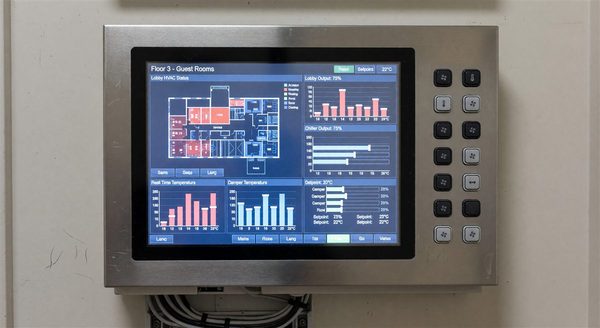
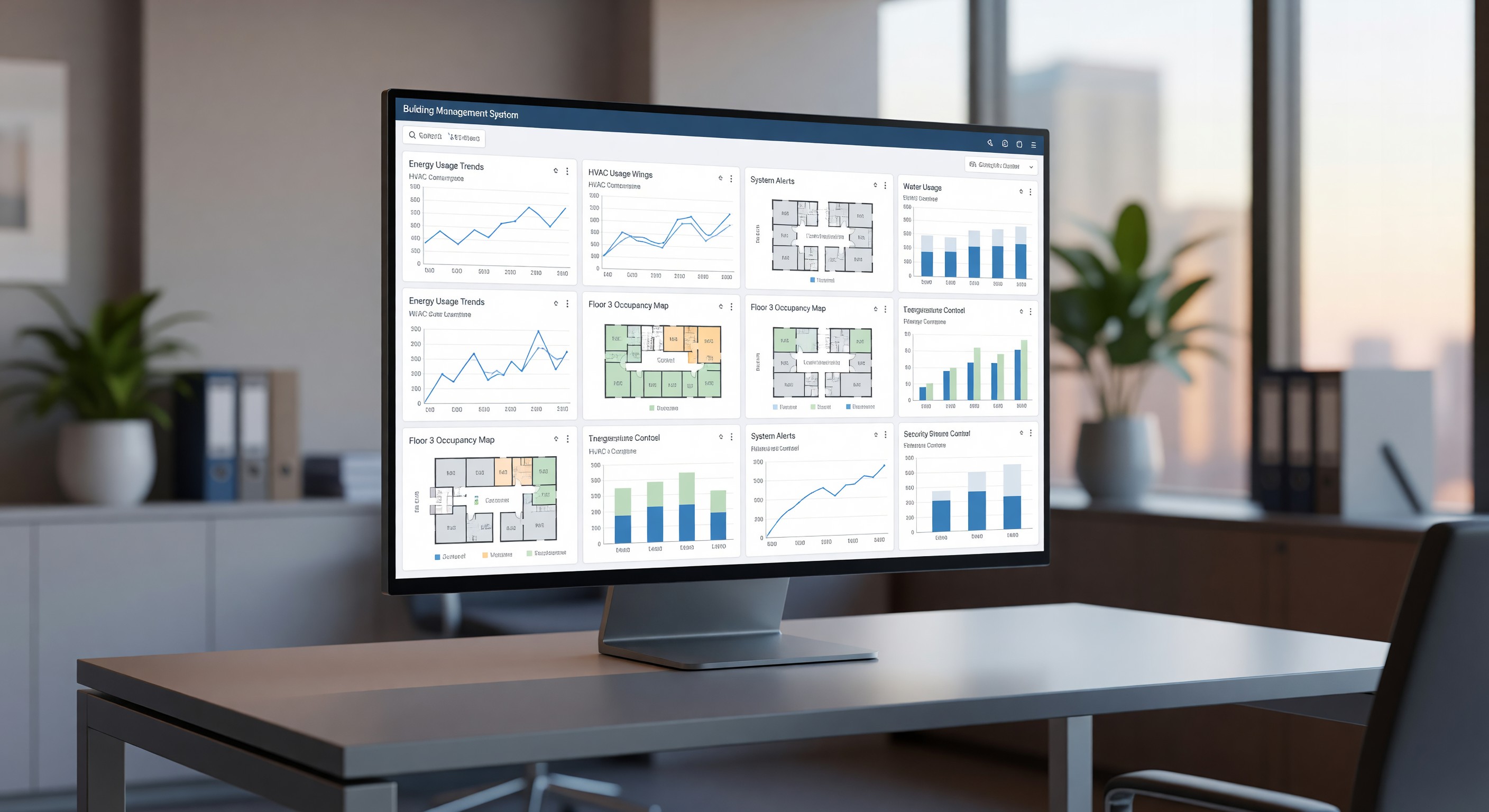
Monitoring and reporting: What does the management interface look like? Can you see room-level data on energy consumption, setpoint deviations, and system faults? Can you access this remotely?
Remote management: Can the vendor’s support team troubleshoot remotely, or does every issue require an on-site visit?
Commissioning support: The configuration of setback temperatures, occupancy logic parameters, and integration settings significantly affects performance. What support does the vendor provide for initial commissioning and optimization?
Warranty and support: What is the hardware warranty? What are the software update terms? What does ongoing support cost?
Red Flags in EMS Vendor Pitches
- Energy savings claims above 30% for an already-modern HVAC system (unrealistic)
- No documented case studies from comparable properties
- Inability to provide customer references in your market
- Proprietary hardware lock-in with no competitive parts availability
- Vague integration claims without specific PMS and lock system compatibility documentation
Operational Best Practices
Commissioning
A new EMS requires careful commissioning to deliver its promised savings. This includes:
- Verifying that every room’s control unit is communicating properly
- Adjusting setback temperatures based on HVAC system recovery tests
- Validating occupancy detection accuracy with physical walk-throughs
- Testing PMS integration with real reservation data
- Establishing baseline energy monitoring to measure actual savings
Ongoing Management
EMS systems require periodic attention to maintain performance:
- Monthly review of system-reported data (any rooms showing anomalies?)
- Quarterly audit of occupancy detection accuracy (spot-check detected vs. actual occupancy)
- Annual review of setpoint configurations (seasonal adjustment may be appropriate)
- Include EMS control units in guestroom PM cycle
FAQ
How do guests interact with the EMS? Guests interact through the thermostat or room control panel. A properly configured EMS is transparent to guests — they adjust the temperature as they normally would, and the system manages the setback when they’re away. Guests shouldn’t notice the EMS; if they do (because the room is uncomfortable when they return), the system is misconfigured.
Will guests complain that their room is too warm or cold when they return? A small percentage of guests will notice temperature variation. The key is proper configuration of the setback magnitude and the recovery trigger. A room that begins returning to setpoint when the keycard is removed from the elevator landing (rather than when the guest enters the room) gives a much better experience.
What’s the ROI for EMS in a high-occupancy hotel? Higher occupancy actually reduces EMS savings, because fewer rooms are vacant at any given time. The highest savings occur at properties with typical occupancy in the 55–70% range. Properties running 85%+ occupancy year-round will see lower percentage savings.
Does an EMS affect maintenance requirements? Yes — EMS control units add components to maintain. Include them in your guestroom PM cycle. HVAC equipment controlled by an EMS may run fewer hours and wear less quickly, which can extend equipment life. The net maintenance impact is generally neutral to slightly positive.
Further Reading from Authoritative Sources
- DOE commercial building energy management resources — The DOE Buildings program provides benchmarking data, technology guidance, and case studies on energy management systems in commercial buildings including hotels.
- American Hotel & Lodging Association energy efficiency resources — AHLA tracks hotel industry energy benchmarking and provides member resources on energy management technology adoption across property types and segments.