A digital twin is a virtual replica of a physical system — in hotel applications, typically the building itself — that is continuously updated with real-time sensor data to mirror actual operating conditions. When a chiller’s refrigerant pressure changes in the physical plant, the same change is reflected in the digital model. When a zone of rooms experiences higher-than-normal HVAC load, the digital twin shows why — and can model the downstream effects on the entire HVAC system.
Digital twin technology originated in aerospace and manufacturing, where NASA has used detailed equipment models since the 1970s. The hospitality application of digital twins is newer, maturing from BIM (Building Information Modeling) tools used in construction to dynamic, sensor-connected operational platforms. For hotel facility managers, the question is no longer whether digital twin technology is technically feasible — it is — but whether it is economically justifiable and operationally practical for their specific property.
Layers of the Hotel Digital Twin
Hotel digital twin implementations range from basic to comprehensive:
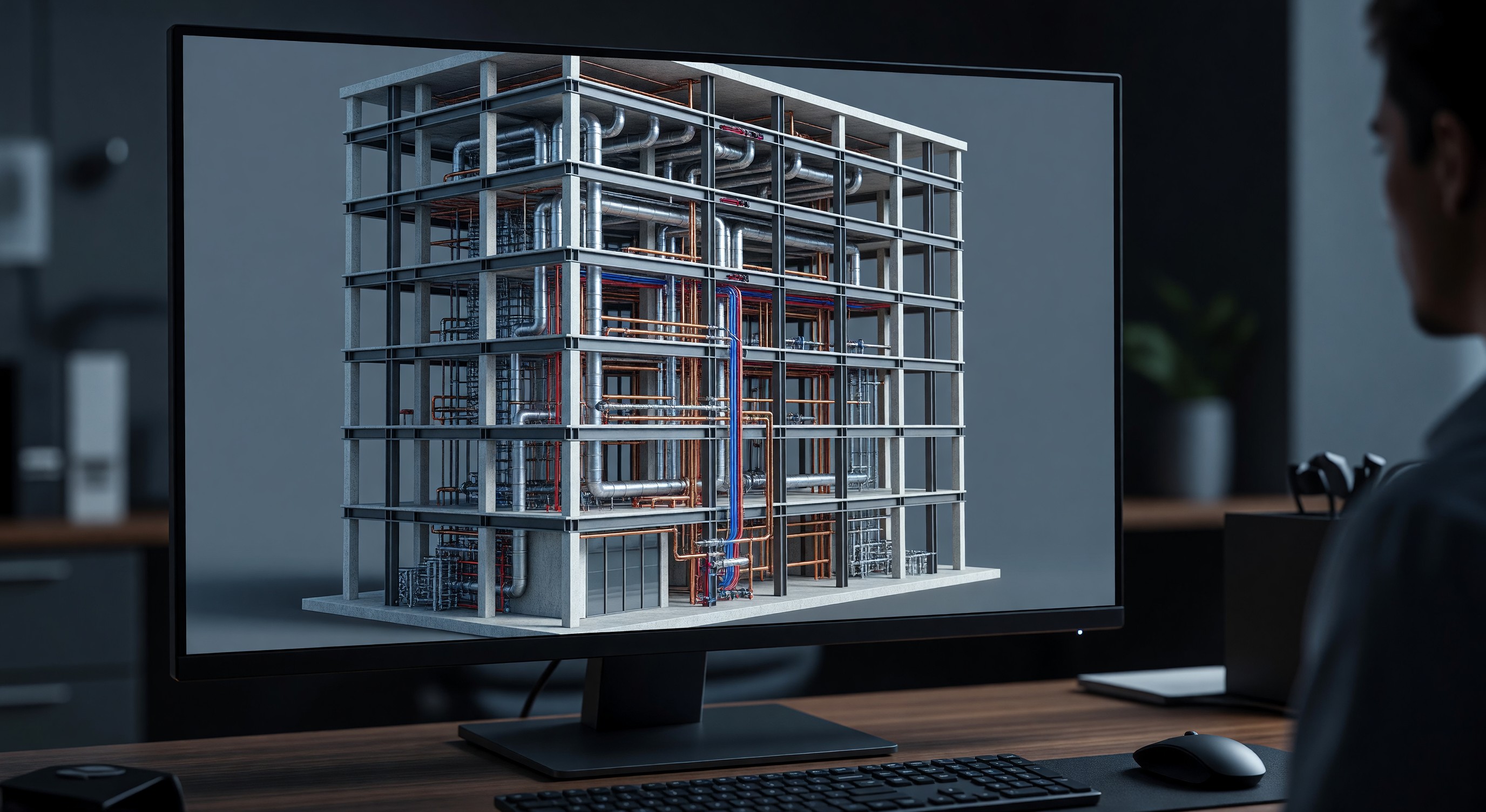
Layer 1 — 3D building model: A spatially accurate 3D representation of the building, including structural elements, mechanical systems, electrical systems, and architectural features. This layer provides the foundation on which all other digital twin capabilities are built. BIM models created during construction are the natural starting point; as-built verification against actual conditions is typically required.
Layer 2 — Asset registry integration: The building model is populated with specific asset data — equipment serial numbers, installation dates, maintenance history, warranty status, and service records. This transforms the 3D model from a geometric representation to a navigable asset management interface where a facility manager can click on a chiller in the 3D view and see its complete maintenance history.
Layer 3 — Real-time sensor integration: IoT sensors connected to building systems feed real-time operating data into the digital model. Temperature, pressure, flow rate, current draw, occupancy, and vibration data continuously update the virtual model, making it a live representation of current building conditions rather than a static record.
Layer 4 — Simulation and prediction: The highest-value layer adds simulation capability — the ability to model “what if” scenarios and predict future states based on current operating trends. How will the HVAC system perform if the cooling load increases by 15%? What is the remaining useful life of the chiller compressor given current vibration trends? Which maintenance action would have the highest impact on energy efficiency this month?
Current Applications at Hotels
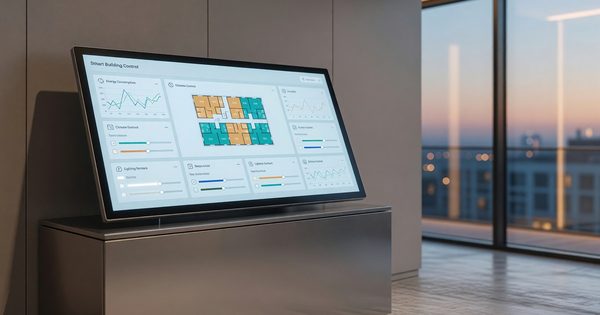
Energy management: Digital twin platforms with sensor integration enable visualization of energy flows through the building — identifying which zones, systems, or equipment are consuming disproportionate energy relative to output. Thermal model integration allows the digital twin to compare actual HVAC energy consumption against what the model predicts for current weather and occupancy, flagging deviations that indicate equipment inefficiency or control problems.
HVAC optimization: Real-time BAS integration allows the digital twin to visualize zone temperatures, supply air conditions, and equipment status across the entire building simultaneously — providing a situational awareness that no engineer can achieve through physical inspection. Anomaly detection highlights zones where conditions differ from model predictions.
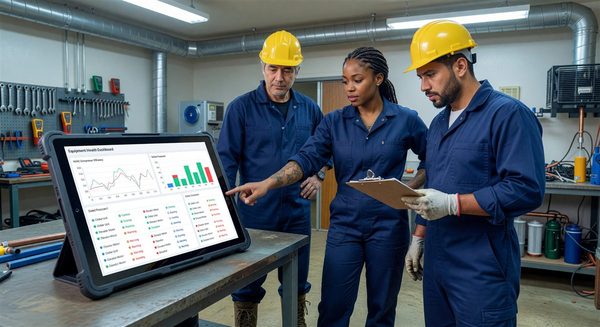
Maintenance planning: The asset registry layer supports condition-based maintenance planning — with equipment age, maintenance history, and current performance data all visible in a single interface, maintenance prioritization becomes data-driven rather than schedule-based.
Capital planning support: When a major HVAC upgrade or building renovation is being evaluated, the digital twin allows planners to model the performance impact before committing capital. What change in energy consumption can be expected from replacing the central chiller? How will room temperature distribution change if the HVAC zoning is modified? These questions are answerable in simulation before a dollar is spent.
Training and onboarding: New engineering staff can navigate the building’s mechanical systems through the digital twin interface before ever entering a mechanical room — understanding equipment locations, system connections, and control sequences through an accessible visual interface.
Implementation Considerations
Data foundation requirements: A digital twin is only as useful as the data feeding it. Before investing in a digital twin platform, assess your current data infrastructure: Do you have a functioning BMS/BAS with connected sensors? Is your asset database current and accurate? Is there WiFi or wired network connectivity throughout the mechanical areas where sensors would be located? Gaps in data infrastructure must be addressed first.
BIM model availability: If your hotel was constructed recently enough to have a BIM model (most post-2010 construction), this provides the 3D building foundation. Older properties may require 3D scanning (LiDAR scanning services) to create a 3D as-built model. LiDAR scanning of a mid-size hotel typically costs $15,000–$50,000 and requires 1–3 days of building access.
Platform selection: Digital twin platform providers with hotel/commercial building applications include Siemens (Building X), IBM (Maximo Application Suite), Willow, Spacewell, and Bentley Systems iTwin. Platform selection should be driven by your existing technology stack, IT infrastructure capability, and whether the vendor has specific hospitality reference cases.
Phased implementation: Full Layer 4 digital twin capability is not a day-one achievement for most hotels. A phased implementation starting with 3D asset registry (Layer 2) and adding sensor integration (Layer 3) and simulation (Layer 4) over 18–36 months is more realistic and allows the facility team to develop digital twin literacy alongside the technology deployment.
ROI Framework
Digital twin ROI sources for hotels:
Energy savings: Identify and correct inefficiencies more quickly than traditional monitoring. Quantify in kWh and dollars.
Maintenance cost reduction: Condition-based maintenance reduces unnecessary PM labor and parts, while earlier detection of developing faults reduces emergency repair costs. Industry data suggests 10–25% maintenance cost reduction at mature digital twin deployments.
Capital project optimization: Better modeling of capital project impacts reduces the risk of expensive design errors and enables more accurate ROI projections. Even one major capital decision improved by digital twin simulation can justify platform cost.
Staff efficiency: Faster problem diagnosis (the digital twin shows where the anomaly is, engineers go directly to the source rather than investigating the entire system) reduces mean-time-to-resolve for building system issues.
Frequently Asked Questions
What is the difference between a BIM model and a digital twin? BIM (Building Information Modeling) is a 3D building representation used primarily for design and construction — it’s a detailed static record of how the building was designed and built. A digital twin goes further by connecting the 3D model to real-time operational data, making it a dynamic representation of current building conditions. Many hotel digital twin implementations start from a BIM model and add the operational data layer — the BIM provides the geometric foundation, and sensor integration makes it live.
Can small hotels benefit from digital twin technology? Full digital twin platforms with real-time simulation capability are primarily economically justified for large, complex properties — 300+ rooms with extensive mechanical plant (chillers, cooling towers, complex HVAC zoning). Smaller hotels can benefit from lighter-weight versions of the same concept: a digital asset registry in CMMS software with attached equipment documentation, combined with BAS-based monitoring dashboards. The core ideas — centralized equipment data, visual building mapping, real-time system monitoring — are valuable at any scale, even if the full 3D simulation platform is not.
How does digital twin technology relate to predictive maintenance? Digital twin and predictive maintenance are complementary and increasingly integrated. Predictive maintenance sensors generate the condition data that feeds the digital twin’s real-time layer. The digital twin’s simulation capability contextualizes predictive maintenance alerts — understanding that a vibration anomaly in a specific pump affects the entire chilled water distribution system requires the system-level model that a digital twin provides. Vendors in both spaces are increasingly offering integrated platforms.
What cybersecurity considerations apply to hotel digital twins? Digital twin platforms are connected to building infrastructure and contain detailed physical security information (equipment locations, access points, system configurations). They require the same cybersecurity attention as any connected building system: network segmentation, access controls, encrypted data transmission, regular security updates, and vendor security practices review. The building information in a digital twin would be valuable to bad actors — treat its security accordingly.
Further Reading from Authoritative Sources
- IFMA digital twin and smart building technology standards — IFMA provides facility management professionals with digital twin deployment standards, IoT integration guidance, and smart building technology ROI frameworks applicable to hotel digital twin program planning and implementation.
- DOE advanced building operations and digital analytics resources — The DOE Buildings program provides research on digital twin applications in commercial buildings, building energy analytics platforms, and advanced operations technology applicable to hotel digital twin energy management use cases.