Loss prevention in hotels encompasses the protection of guests, employees, and assets from theft, fraud, injury, and reputational harm. While many properties have a dedicated security or loss prevention team, the facility management function plays a critical supporting role through physical plant decisions, access control infrastructure, and the operational standards that create a secure environment.
This guide focuses on the facility-side contributions to an effective hotel loss prevention program.
Understanding What Hotel Properties Lose
Loss in hotel operations takes several forms:
Guest property theft: Items taken from guestrooms, vehicles, or public areas. This is the loss prevention function most visible to guests.
Revenue theft: Theft at point of sale (F&B, parking, gift shop), payroll fraud, fictitious vendors, or kickbacks in purchasing. These are internal fraud risks.
Hotel property theft: FF&E, linens, electronics, and operational equipment that leave the property through guest or employee theft.
Liquor and inventory theft: Particularly in F&B operations, uncontrolled inventory creates significant theft opportunity.
Workers compensation fraud: Staged injuries and exaggerated claims represent a meaningful cost in hotels with high manual labor workforces.
Liability claims: Slip-and-fall, crime on premises, and other incidents that result in claims against the property. Not theft, but a financial loss that facility conditions directly influence.
Physical Security Design
Defensible Space Principles
Crime prevention through environmental design (CPTED) applies well to hotel environments. The core principles:
Natural surveillance: Design spaces so that legitimate users can observe what’s happening around them. Open lobby layouts, eliminating blind corners, good lighting — all reduce the cover that criminal activity requires.
Natural access control: Guide movement through the property using physical cues — paths, landscaping, lighting, architectural features — that direct guests and visitors toward legitimate access points and away from unauthorized areas.
Territoriality: Clear delineation of public vs. private spaces. A guest-only corridor without a clearly marked “Private — Hotel Guests Only” sign and a controlled-access door is an invitation for unauthorized presence.
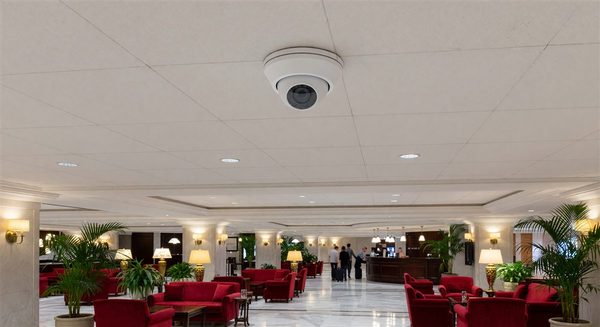
Maintenance: A well-maintained property signals that the space is actively cared for and monitored. Broken lighting, failed CCTV cameras, and visible deferred maintenance are correlated with higher incident rates.
Lighting as a Security Tool
Lighting is the most cost-effective security investment in most properties. Areas that require particular attention:
Parking structures and lots: Lighting levels in parking areas should meet IESNA (Illuminating Engineering Society) standards for hotel parking — typically 3–5 footcandles minimum for covered structures, 1–2 footcandles for surface lots. Dark zones in parking facilities are a liability magnet.
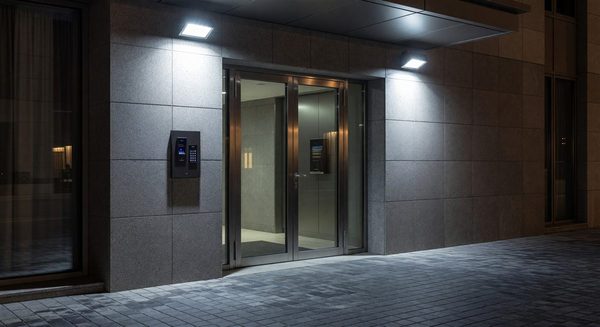
Entry and exit points: The primary building entrance, emergency exits, and service entrances should all be well lit. Camera effectiveness in these areas depends on adequate lighting.
Stairwells: Often inadequately lit in older properties. Minimum 10 footcandles is a common code requirement; more is appropriate in high-use stairwells.
Grounds and perimeter: Pathways, landscaped areas, and building perimeters should be lit to eliminate dark zones where criminal activity could occur unobserved.
Emergency lighting: Separate from general lighting — emergency lighting activates when primary power fails. Test monthly and maintain batteries or generators on a defined schedule.
Access Control as Loss Prevention
A properly designed and maintained access control program is one of the most powerful loss prevention tools available to hotel facility managers.
Guestroom Access
The electronic lock system is the primary protection for guest property in guestrooms. Its effectiveness depends on:
Audit log utilization: Every entry and exit event is logged in a modern electronic lock system. When a guest reports theft, the audit log of who accessed the room and when is the first investigative resource. Many properties don’t access this data routinely — it should be reviewed immediately following any theft report.
Staff credential management: Housekeeping and maintenance master keys should be individually issued (not shared), and usage should be auditable. When a master key is used for room access, the event should appear in the log with the specific key/credential identifier.
Unauthorized access detection: Some lock platforms can alert when a room is accessed by a credential outside of expected patterns — a housekeeper accessing a room during a shift when they’re not scheduled for that floor, for example.
Back-of-House Access Control
The separation between guest-accessible areas and back-of-house areas is a fundamental physical security control. Every door connecting back-of-house to guest areas should be controlled access — a door that a guest can push open from the guest side but that requires a credential from the back-of-house side.
Common failures:
- Propped-open back-of-house doors (a fire safety issue as well as a security issue)
- Laundry chute rooms and service corridor access points left unlocked
- Service elevator without credential control from back-of-house floors
Loading Dock and Service Entrance
The loading dock is a high-risk access point — it’s a legitimate entry point for many people (vendors, delivery personnel, caterers) who are not hotel employees. Controls:
- All vendor access through a controlled check-in process
- Escort requirement for vendors in non-public areas
- Camera coverage of the dock itself and the adjacent corridor
- Receiving procedures that verify delivery contents against purchase orders
Cash Handling Controls
Hotels handle cash at multiple points: front desk, bars and restaurants, gift shops, parking. Each cash handling point is a loss prevention risk.
Physical controls: Safes, cash drawers with individual employee access codes, and secure drop processes.
Procedural controls: Double-count at start/end of shift, supervisor witness for safe drops, regular blind audits.
Technology controls: POS systems with transaction-level reporting, exception monitoring for voids and no-sales.
The facility team’s role in cash handling security: ensuring that the physical environment supports the procedural controls. A cash drawer in an open public area is a design problem. A safe in the back office with a sight line to the street is an installation problem.
Parking and Vehicle Security
Vehicle and parking security is discussed elsewhere in the context of parking operations, but the loss prevention dimensions deserve specific mention:
Guestroom key correlation: In a significant percentage of vehicle-theft-from-hotel incidents, the thief obtained the room key (and thus the vehicle key or key fob) from within the hotel before accessing the vehicle. Guestroom security and vehicle security are linked.
Valet key handling: Valet operations should use a key management system that prevents unauthorized access to vehicle keys. Each key should be tagged, stored in a secure key box, and require a staff credential to retrieve. The audit log for key access should be reviewed regularly.
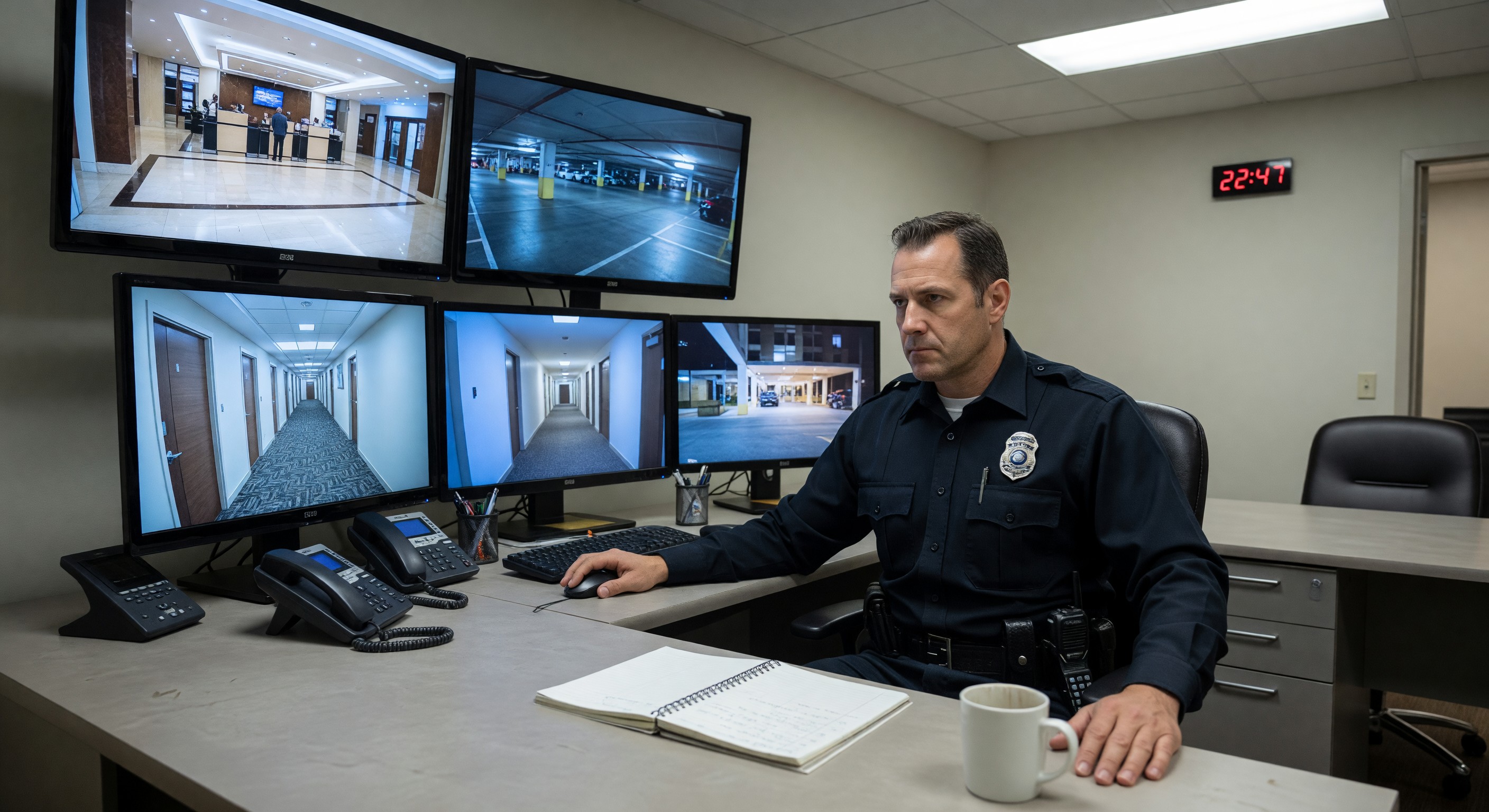
Parking camera placement: Camera coverage in parking areas should be designed to capture faces and license plates at entry and exit, not just general lot coverage.
Training and Culture
Physical security design and technology work best when supported by a trained, security-aware staff. Facility managers contribute to this through:
Security awareness in maintenance staff: Maintenance technicians are in guestrooms and back-of-house spaces regularly. Training them to recognize and report security anomalies (an unsecured door, a suspicious person in a non-public area, a sign of unauthorized access) adds a layer of distributed situational awareness.
Incident reporting discipline: Create and maintain a clear process for reporting security incidents — including near-misses. A culture where staff don’t report incidents because they think it won’t matter or might cause problems is a culture where incidents become patterns before they’re addressed.
FAQ
What’s the most common source of guest theft claims at hotels? Crimes of opportunity in guestrooms — often committed during housekeeping service when the door is propped open. The second most common: theft from vehicles in parking areas. Both are addressed primarily through access control and staff training rather than technology.
Should hotels conduct background checks on vendors with property access? For vendors with unescorted access to guestrooms or sensitive areas, yes — and this is increasingly a brand standard requirement. At minimum, require that contracting companies have background check policies for their employees and certify compliance in the service contract.
How do we handle a guest who reports theft from their room? Immediately: secure the room, pull the access log, notify security/management, document the report with the guest. The access log review is time-sensitive — some systems overwrite older data. Proper incident documentation protects the property in any subsequent claim.
What insurance implications does the loss prevention program have? Most property and liability insurers consider loss prevention program quality in their underwriting. Properties with documented security programs, functional CCTV, adequate lighting, and access control generally see better pricing and coverage terms than those without. Annual reviews of your loss prevention program with your insurance broker is a worthwhile practice.
Further Reading from Authoritative Sources
- AHLA hotel loss prevention program standards and security management resources — AHLA provides hospitality industry loss prevention program standards, guest security practices, and incident documentation guidance applicable to hotel loss prevention program design, staff training, and incident response procedures.
- OSHA hotel workplace safety and loss prevention standards — OSHA provides workplace safety and incident recording standards applicable to hotel loss prevention programs covering workers compensation controls, incident investigation requirements, and occupational safety practices that reduce injury frequency and associated claim costs.