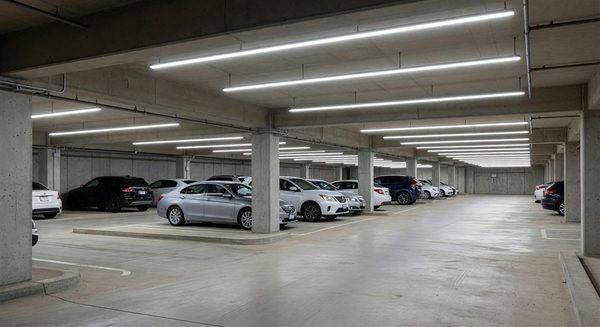
The parking structure itself — the concrete, steel, and infrastructure of the garage — is among the most capital-intensive assets in a hotel property’s portfolio. A multi-level parking structure for a 200-room hotel represents $5–15 million in replacement value, and that structure can last 50+ years with proper maintenance or require major rehabilitation in 15–20 years without it.
The maintenance of parking structures is a specialty that intersects civil engineering, chemistry (coatings and waterproofing), and facility management. Many hotel properties manage their parking structure equipment (gates, pay stations, lighting) through the facility team but don’t have a specific program for the structure itself — the concrete, drainage, coatings, and expansion joints that determine the structure’s long-term health.
Understanding Parking Structure Deterioration
Parking structures are exposed to a uniquely aggressive combination of deterioration factors:
Chloride (salt) penetration: In cold climates, vehicles bring road salt into the parking structure on their undercarriage and tires. Chloride penetrates concrete over time and causes corrosion of the reinforcing steel within. As reinforcing steel corrodes, it expands, which spalls (breaks away) the concrete around it. This is the most common cause of parking structure deterioration in cold-climate markets.
Freeze-thaw cycles: Water that enters concrete cracks or pores freezes and expands, widening cracks and causing surface spalling. Repeated over many winters, this process progressively deteriorates unprotected or inadequately protected concrete.
Vehicle load: Repeated loading from vehicles causes fatigue in concrete and steel over time. The structural design accounts for this, but damage or overloading accelerates deterioration.
Carbonation: Carbon dioxide in air reacts with the alkaline environment of concrete, eventually reducing its pH enough to allow reinforcing steel corrosion even without chloride penetration. A slower process than chloride corrosion but a factor in older structures.
Inadequate drainage: Standing water on parking decks dramatically accelerates chloride and freeze-thaw deterioration. Proper drainage is a fundamental structural protection measure, not just an operational convenience.
Inspection Program
Annual Inspection
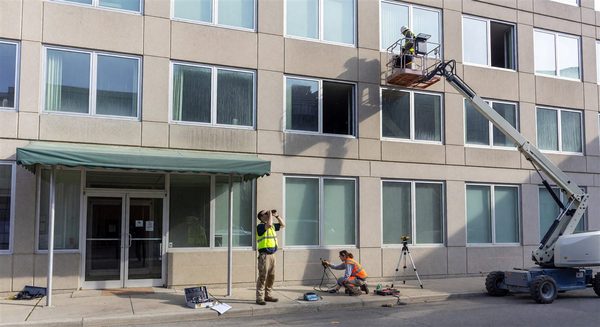
A visual inspection of all accessible surfaces, conducted by the facility team or a qualified parking structure inspector:
What to look for:
- Concrete spalling (chunks of concrete that have broken away from the surface)
- Cracks (classify by width, location, and orientation)
- Joint sealant condition (expansion joints and control joints)
- Drain and scupper condition and clearance
- Evidence of water staining or efflorescence (white mineral deposits indicating water movement)
- Rebar exposure (reinforcing steel visible where concrete has spalled away)
- Coating or waterproofing membrane condition
- Structural deflection (visible bending in beams or slabs under load — this is serious)
Documentation: Photograph and map all observations. A simple floor plan markup with photo references creates a repeatable record that enables trend tracking.
Professional Structural Assessment
Every 3–5 years, commission a professional parking structure assessment by a licensed structural engineer with parking structure experience. This assessment goes beyond visual inspection to include:
- Core samples to measure chloride penetration depth
- Half-cell potential testing (electrochemical method for identifying corrosive conditions in the rebar)
- Ground-penetrating radar (GPR) to identify delaminated concrete and rebar corrosion below the surface
- Structural calculation review to verify the structure’s continued adequacy for current loading
The professional assessment provides the objective data needed for capital planning and for demonstrating due diligence in structure management.
Protective Coatings and Waterproofing
The most effective way to extend a parking structure’s service life is to prevent water and chloride penetration with a proper coating or waterproofing system.
Traffic Deck Coatings
The driving surface of a parking deck is the primary exposure surface — it’s directly contacted by wet, salt-laden vehicles. Traffic deck coatings protect the concrete substrate and the reinforcing steel within.
Types of deck coatings:
Penetrating sealers (silane or siloxane): Penetrate below the surface and line pore walls with water-repellent material. Good for sound concrete as preventive treatment. Don’t bridge existing cracks. Low-cost, short service life (3–5 years).
Epoxy-polyurethane systems: A coating applied to the surface. Bridges minor cracks, provides physical barrier. Used in many parking structures.
Membrane waterproofing (polyurethane or similar): A thick membrane that provides complete waterproofing protection and crack-bridging ability. Applied to the structural deck with a traffic-wearing course on top. The most durable protection for exposed decks. Higher installation cost but longer service life (10–15+ years).
Traffic topping systems: Combined waterproofing and wearing surface systems specifically engineered for vehicular traffic. Provide excellent protection and slip resistance.
Expansion Joint Systems
Expansion joints allow the structure to move as temperature changes cause concrete and steel to expand and contract. Failed expansion joint seals are one of the most common paths for water infiltration into parking structures.
Inspect all expansion joints in the annual inspection. Replace joint sealant that shows cracking, separation, or significant wear. This is a high-priority maintenance item — a failed expansion joint seal can allow significant water entry into the structure below.
Concrete Repair
When concrete has spalled or cracks have developed, repair is required before water penetration worsens the condition:
Spall repair: Remove all deteriorated concrete to sound substrate. Apply concrete bonding agent. Fill with polymer-modified repair mortar. Seal the repaired area.
Crack repair: Narrow cracks (hairline to 1/16") may be sealed with epoxy injection. Wider cracks require routing and sealing with a flexible polyurethane sealant. Structural cracks require engineering evaluation before repair.
Delaminated concrete: Areas where concrete has separated from the underlying reinforcement but hasn’t yet spalled must be removed and replaced before they become spalls with exposed rebar.
Drainage Maintenance
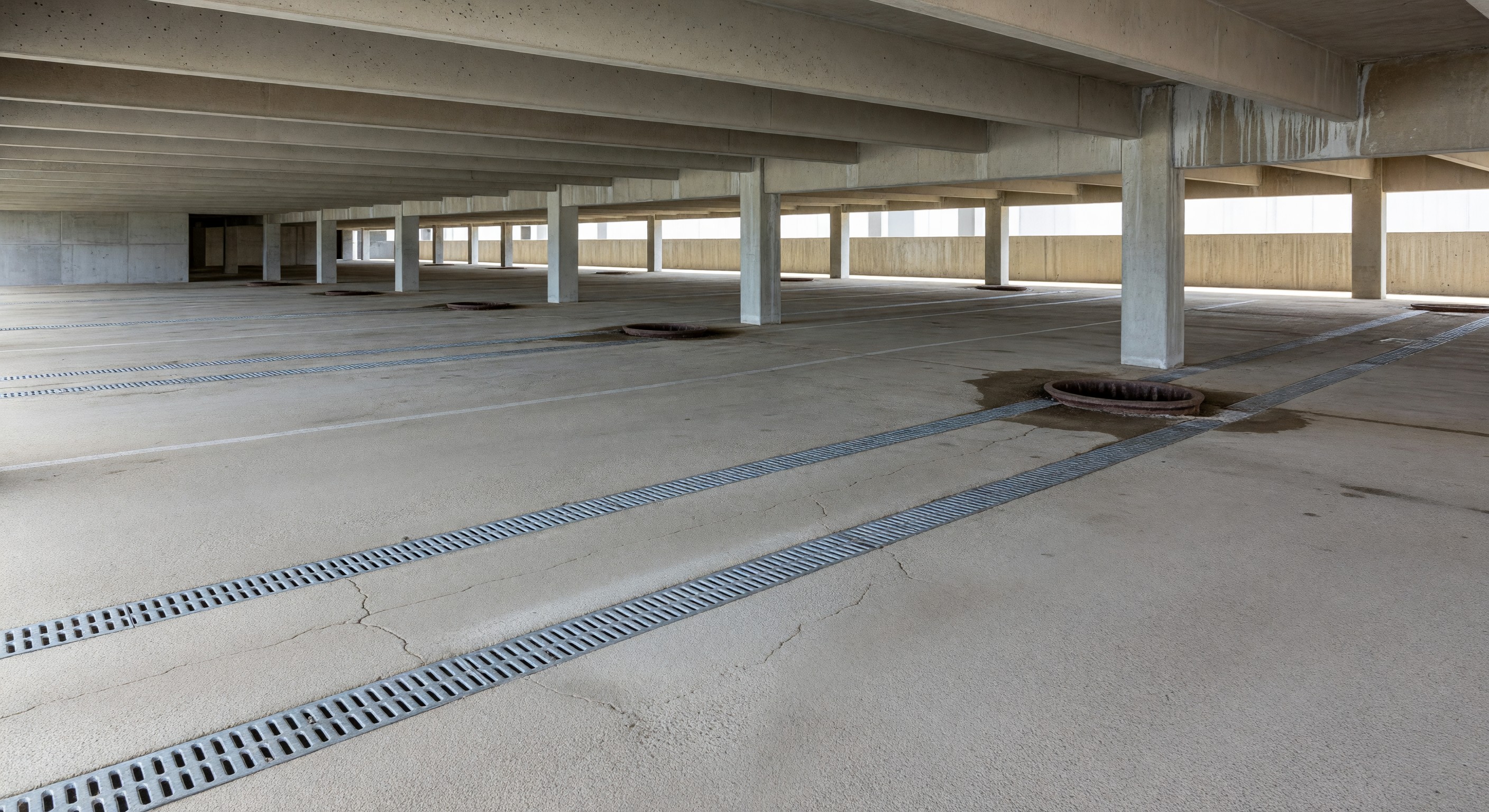
Proper drainage is the most fundamental parking structure maintenance practice. Without adequate drainage, every other protective measure performs less effectively.
Regular maintenance:
- Clear drains of debris after every significant weather event
- Clean drain grates and verify clear flow monthly
- Test that all drains flow freely during low-usage hours (run water from a hose if needed to verify)
- Inspect the drain pipe system from accessible points to verify no blockages or settled areas
Identifying drainage problems:
- Ponding water after rain that persists more than 4 hours
- Staining patterns that indicate water flowing in unexpected directions
- Cracks or deterioration localized to areas where water consistently ponds
Poor drainage is also a slip-and-fall liability issue in addition to being a structural maintenance concern.
Structural Lighting and MEP in Parking Structures
Beyond the concrete and coatings, parking structure maintenance includes:
Structural lighting: Covered elsewhere in this guide (LED retrofit) but worth noting that lighting replacement in parking structures is more complex than standard interior work due to heights and the presence of parking below the work area.
Electrical conduit and wiring: Parking structures in cold climates see significant temperature and humidity variation. Inspect conduit hangers, junction boxes, and wiring insulation as part of the annual inspection.
Standpipes and fire suppression: Open parking structures may not require fire suppression, but enclosed structures typically do. Include the parking structure suppression system in the annual fire suppression inspection.
Vehicle impact protection: Concrete walls, columns, and mechanical equipment in vehicle paths take hits from cars. Inspect and repair wheel stops, column guards, and wall protection regularly.
Capital Planning for Parking Structure Rehabilitation
The capital planning for parking structures differs from equipment capital planning because the investment categories are different:
Routine maintenance (annual operations budget): Drain cleaning, joint sealant replacement, minor crack repairs, coating spot repairs.
Periodic maintenance (5-10 year capital): Full deck coating reapplication, expansion joint system replacement, structural concrete repair of identified deficiencies.
Rehabilitation (major capital): When deterioration has progressed significantly, a full rehabilitation including structural repair, waterproofing membrane installation, and coating systems. Cost: $20–$60/sq ft depending on scope.
Replacement (rare): Structures that have deteriorated beyond practical rehabilitation. Usually 40–60 years for a well-maintained structure; potentially 20–30 years for a neglected one.
FAQ
How do we know if our parking structure has a chloride problem? The definitive answer requires core samples analyzed for chloride concentration, performed by a qualified engineer. Early indicators include spalling near reinforcing steel, horizontal cracking in beams and slabs (a classic sign of rebar corrosion expansion), and rust staining on the concrete surface. If your market uses road salt and the structure is over 15 years old without a coating history, a professional assessment with chloride testing is warranted.
How much does deck coating for a 400-space parking structure cost? For a typical traffic-bearing deck coating on a two-level, 400-space structure (approximately 80,000 sq ft of deck), expect $3–$8/sq ft for a quality traffic coating system. Total project cost: $240,000–$640,000 depending on scope and market. A membrane waterproofing system runs higher.
Can we do parking structure repairs in-house? Minor repairs (sealing small cracks, replacing joint sealant) can be done by trained maintenance staff with the right materials. Structural concrete repair, major crack repair, and coating application are specialty trades — use contractors with specific parking structure experience.
How often should expansion joints be replaced? Quality expansion joint systems have a service life of 10–15 years. Lower-quality installations may require replacement in 5–7 years. Include joint condition in the annual inspection and replace before significant water infiltration occurs.
Further Reading from Authoritative Sources
- IFMA hotel parking structure maintenance and capital planning standards — IFMA provides facility management standards for parking structure inspection programs, maintenance planning frameworks, and capital planning methodologies applicable to hotel parking structure condition assessment, maintenance program development, and rehabilitation capital budgeting.
- OSHA hotel parking structure structural safety and slip-and-fall liability standards — OSHA provides structural safety standards, slip-and-fall prevention requirements, and employer liability guidance applicable to hotel parking structure drainage maintenance obligations, deterioration response protocols, and guest and employee safety management in parking facilities.