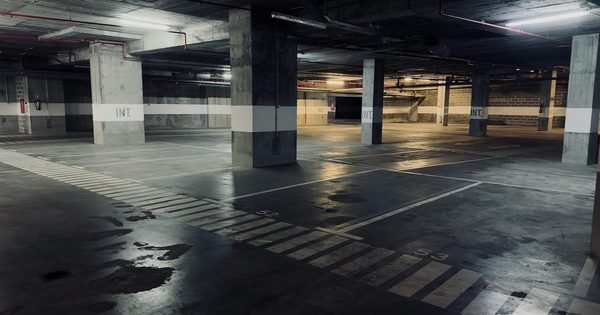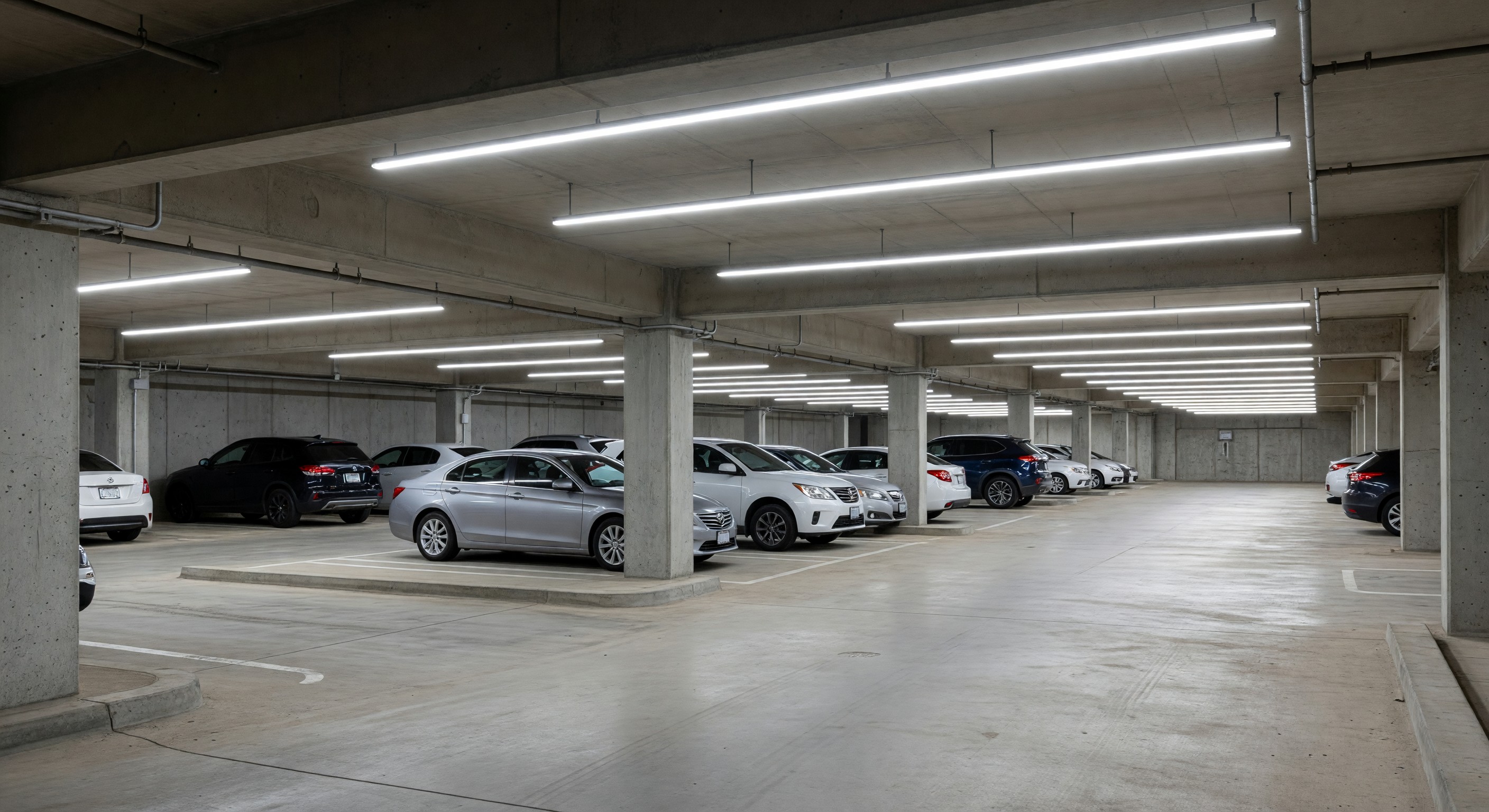
Rising energy costs in 2022 have pushed facility managers across the hotel industry to scrutinize every energy-consuming system on the property. Hotel parking structures — often overlooked in energy management programs because they’re not guest-facing in the same way as the hotel tower — are significant energy consumers and offer real efficiency improvement opportunities.
A 400-space covered parking structure can consume $60,000–$120,000 in electricity annually, depending on its lighting and ventilation configuration. Applying systematic energy management to parking can yield $20,000–$50,000 in annual savings — recoverable within 2–4 years with the right investments.
The Energy Profile of a Hotel Parking Structure
Parking structure energy consumption is dominated by two systems:
Lighting: The largest single energy consumer in most parking structures. Traditional high-bay fluorescent (T8 and T5HO systems) and high-intensity discharge (metal halide and high-pressure sodium) fixtures are energy-intensive and operate for 10–24 hours per day. In covered structures with no daylighting, lighting runs continuously.
Ventilation: Enclosed parking structures require mechanical ventilation to remove vehicle exhaust gases (carbon monoxide and nitrogen oxides). The ventilation systems required for an enclosed structure — typically large exhaust fans and makeup air — are significant energy consumers.
Smaller loads: Elevator power, access control equipment, security systems, and EV charging (increasingly significant as the installed base grows).
LED Lighting Retrofit
Parking structure LED retrofits are among the highest-ROI energy investments available in the hotel industry. The combination of 24/7 operation, high fixture power levels, and dramatic LED efficiency advantages produces payback periods of 18–36 months in most market conditions.
Technology Selection
LED high-bay fixtures: Replace fluorescent high-bay or T5HO multi-lamp fixtures. Modern LED high-bays deliver equivalent or better light levels at 50–65% of the energy consumption.
LED area lights: For surface parking lots and covered structures with lower ceiling heights.
LED canopy lights: For covered entry and exit areas, typically mounted at lower heights.
Occupancy-sensor integration: This is where parking LED retrofits differentiate from simple lamp swaps. LED fixtures that include occupancy sensors can dim to 10–20% in areas where no motion is detected and return to full brightness when a vehicle or pedestrian is detected. In low-traffic hours (overnight or between guest arrivals), the savings from dimming empty sections of the garage are substantial.
Motion-activated dimming protocol:
- Normal hours: 100% output
- No motion detected for 5 minutes: Dim to 30%
- No motion detected for 15 minutes: Dim to 10%
- Motion detected: Restore to 100% within 2 seconds
This protocol can reduce parking structure lighting energy consumption by 40–50% compared to LED at constant full output — and 70–75% compared to the original fluorescent system.
Implementation Approach
Parking structure LED retrofits can often be completed during off-peak hours without closing the structure. Work level by level, moving vehicles to other levels temporarily if needed.
Specify commercial-grade fixtures rated for parking structure environments (humidity, temperature variation, and exhaust gas exposure). Cheap commercial LED fixtures fail prematurely in parking structure environments.
Get competitive quotes from at least three contractors. Fixture selection and installation quality vary significantly. Look for contractors with specific parking structure LED experience.
Ventilation Energy Management
CO-Based Demand Control Ventilation
Traditional parking structure ventilation systems run fans at fixed speed continuously — or on a time schedule — regardless of the actual concentration of vehicle exhaust gases. This is highly energy-inefficient.
Carbon monoxide (CO) sensors distributed throughout the parking structure measure actual CO concentrations. When CO levels are below threshold (which is most of the time in a moderately occupied hotel parking structure), fans run at low speed or stop. When CO rises (during heavy vehicle movement in and out), fan speed increases to dilute and exhaust the gases.
CO-based demand control ventilation typically reduces parking structure ventilation energy by 40–60%. The sensor and controller infrastructure investment pays back in 2–4 years in most applications.
Sensor placement: CO sensors should be placed at vehicle height (approximately 3–4 feet above the floor) in locations likely to accumulate exhaust — near vehicle travel lanes and exit ramps. The number and placement of sensors depends on the structure’s airflow patterns and should be specified by a mechanical engineer.
NO2 monitoring: Diesel vehicles (delivery trucks that may use the structure) emit nitrogen dioxide (NO2) as well as CO. In structures with diesel vehicle access, combine CO and NO2 monitoring for comprehensive exhaust management.
Variable Frequency Drives
Parking ventilation fans that run at fixed speed waste energy whenever less than full ventilation is required — which is most of the time. Variable frequency drives (VFDs) modulate fan speed based on the CO/NO2 control signal, delivering exactly the ventilation required by conditions.
If your parking ventilation fans don’t have VFDs, installing them in conjunction with CO-sensor controls is the complete solution for ventilation energy management.
EV Charging Load Management
As hotel EV charging installations grow, the unmanaged electrical load from simultaneous charging can spike demand charges — the utility billing component based on peak power demand — to levels that offset the EV charging revenue.
Smart charging systems with load management capabilities limit total EV charging power draw and distribute available capacity across connected vehicles based on:
- Available electrical capacity at the parking structure’s panel
- Time of day (minimize charging during peak demand windows)
- Vehicle state of charge (prioritize vehicles that have been waiting longest or are most depleted)
- Revenue opportunity (paid chargers receive priority over complimentary chargers)
With load management, a property can install twice as many chargers as the electrical infrastructure could support at simultaneous full charge — because simultaneous full demand is unusual and the load management system fills in the gaps efficiently.
Solar Carport Opportunity
Hotels with large surface parking lots have an additional energy opportunity: solar carport structures that shade the parking area while generating on-site solar electricity.
Solar carports are capital-intensive projects ($25,000–$60,000 per stall depending on market and structure type) but can generate meaningful electricity over their 25–30 year useful life. In high-solar markets with favorable net metering policies, the ROI can be compelling.
Key considerations:
- Structural engineering of the carport to handle snow loads, wind, and the weight of panels
- Utility interconnection requirements and net metering policy
- Whether a Power Purchase Agreement (PPA) with a solar developer shifts the capital cost to a third party
- EV charging integration (combine solar canopy with EV charging for a compelling amenity and marketing story)
Benchmarking Your Parking Energy Performance
Calculate your parking energy performance metrics to identify where you stand and track improvement:
Energy per space per year (kWh): Total parking structure electricity ÷ number of spaces ÷ 12 months. Compare against published benchmarks — an efficiently managed covered structure should consume 600–1,200 kWh per space per year depending on climate and ventilation requirements.
Lighting energy intensity (W per square foot): Total lighting wattage ÷ total structure square footage. Current T5HO-lit structures run 1.5–2.5 W/sq ft. LED-optimized structures with dimming run 0.5–1.0 W/sq ft.
FAQ
Is it worth replacing parking structure lighting if we’re considering a full renovation in 3–5 years? Yes — even with a 3-5 year renovation timeline, a parking LED retrofit typically pays back in 18–36 months. Three years of energy savings before a renovation is still a net positive. New LED fixtures installed today can be retained through a renovation if the structure itself isn’t being demolished.
What’s the most cost-effective first step for reducing parking energy costs? If the structure still has fluorescent or HID lighting, LED retrofit with occupancy sensor dimming is almost always the highest-ROI first step. It requires minimal operational disruption and delivers immediate measurable savings.
How do we know if our parking ventilation is oversized? Commission a ventilation performance evaluation from a mechanical engineer. If fans run at full speed continuously regardless of vehicle activity or CO levels, the system almost certainly has more capacity than conditions require. CO monitoring and VFD controls will quantify the savings opportunity.
Can EV charging generate net revenue after accounting for electricity costs? Yes — in markets with reasonable transient charging demand and appropriate pricing, EV charging can generate $2,000–$8,000+ per charger per year in net revenue after electricity costs. The key is pricing the charging at a rate that covers electricity cost plus a margin, and ensuring utilization is adequate to generate the revenue.
Further Reading from Authoritative Sources
- DOE hotel parking structure LED lighting and energy efficiency resources — The DOE Buildings program provides parking structure LED lighting efficiency data, demand control ventilation standards, and renewable energy resources applicable to hotel parking energy cost reduction analysis, LED retrofit planning, and solar carport feasibility evaluation.
- EPA hotel parking structure energy efficiency and environmental standards — EPA provides energy efficiency standards, carbon emission reduction guidance, and environmental compliance requirements applicable to hotel parking structure energy management programs, CO/NO2 monitoring requirements for enclosed parking structures, and EV charging environmental benefit documentation.