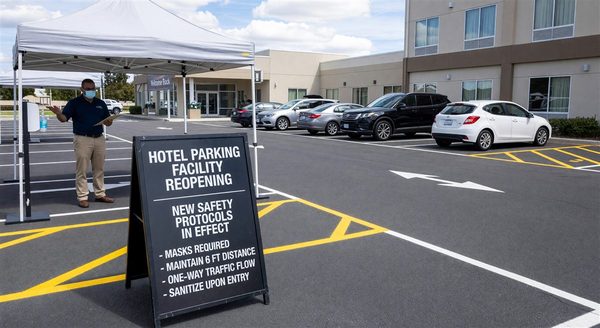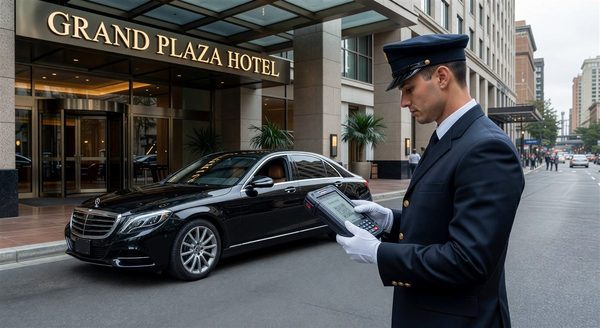
The hotel industry’s labor shortage, which became acute in mid-2021 as travel demand recovered faster than workforce availability, has had particular impact on parking operations. Valet programs that require multiple attendants at peak hours have been among the hardest positions to fill. For hotel operators who had already reduced parking staff during the pandemic, rebuilding the team to pre-COVID levels has proven difficult or impossible in many markets.
The practical result: hotels are being pushed toward parking automation faster than they might have chosen on their own timeline. This acceleration, while uncomfortable in the short term, is likely to produce operations that are leaner and more technology-enabled than what existed pre-pandemic.
The Labor-Revenue Arithmetic in Parking
Traditional valet parking operations are labor-intensive. A full-service valet program at a 200-room hotel might require:
- 2–3 attendants on morning shift (7 AM – 3 PM)
- 3–4 attendants on evening shift (3 PM – 11 PM)
- 1–2 overnight (11 PM – 7 AM)
At 2021 wage rates in competitive markets ($18–$22/hour base before benefits), labor costs for a fully staffed valet program run $150,000–$250,000 annually — often exceeding the parking revenue the program generates.
This arithmetic was always challenging but sustainable in markets with plentiful labor at lower wage rates. In 2021, the combination of higher wages and reduced labor availability has pushed many properties to hard questions about the value of maintaining full-service valet.
Technology Substitution for Labor
The parking industry has a growing toolkit of technologies that can substitute for labor at various points in the operation:
License Plate Recognition (LPR)
LPR cameras at entry and exit lanes eliminate the need for a ticket dispenser and can eliminate the need for an attendant to verify credentials or collect payment. The system reads the plate, validates against the guest database, charges the appropriate rate, and opens the gate — all without human intervention.
LPR is the most impactful single technology for reducing parking labor requirements. Properties that have deployed LPR for guest access typically report that exception calls (intercom requests for assistance) run at 3–8% of transactions — a level that can be managed by the front desk or a remote monitoring center rather than requiring a dedicated on-site attendant.
Pay-on-Foot Kiosks with Enhanced UX
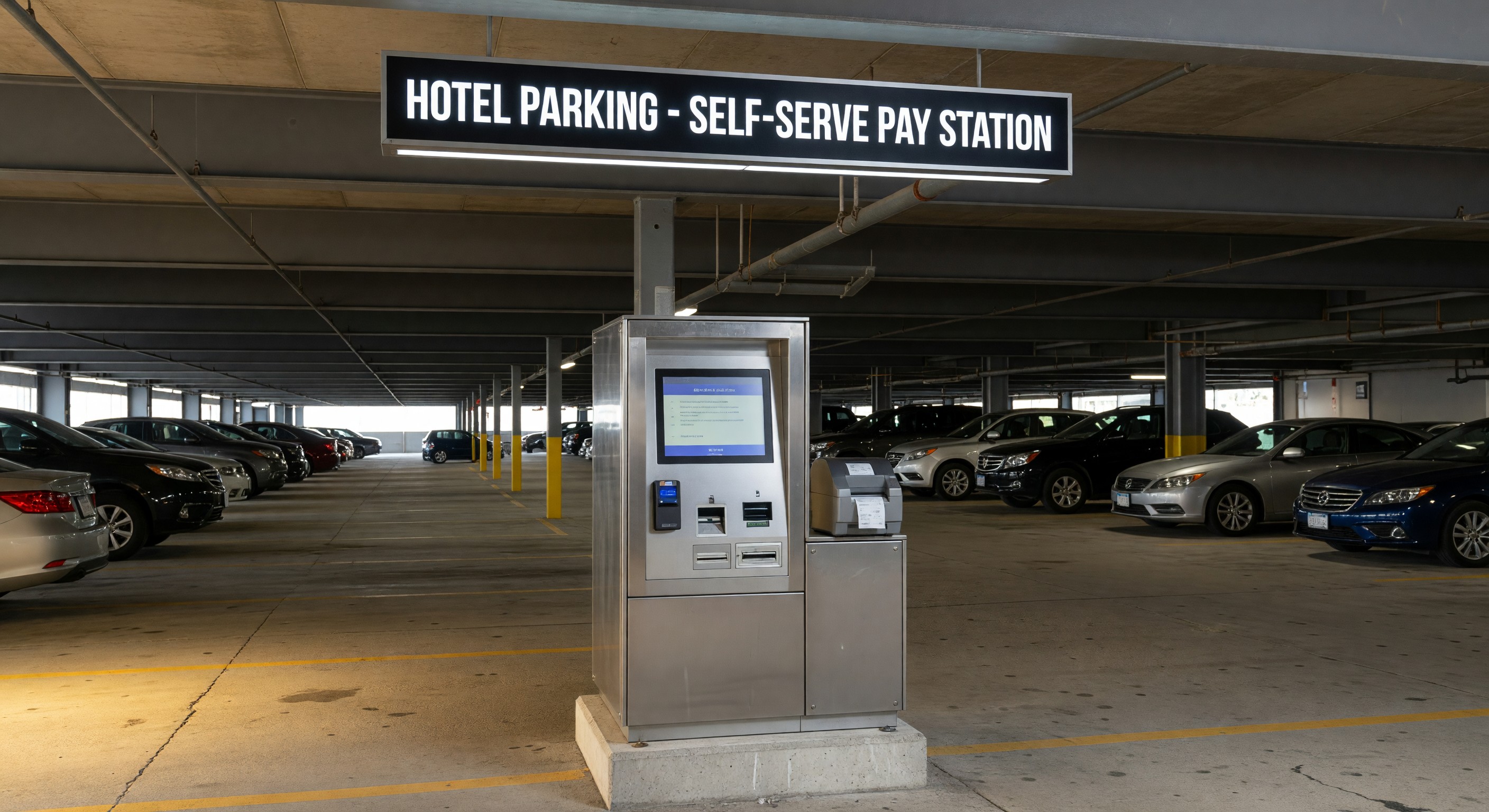
Modern pay-on-foot kiosks accept credit cards, mobile payments, validation QR codes, and in some implementations allow guests to pay by room number. The guest experience on current hardware is significantly better than on earlier generations of pay stations, reducing the assistance requests that previously required on-site staff.
Key features that reduce labor dependency:
- Touchscreen interface with clear guidance
- Multiple payment types including contactless
- On-screen help and escalation to remote support via video call
- Clear validation workflow (scan your restaurant receipt for free parking)
Remote Management Centers
Some parking operators — particularly third-party management companies — have deployed remote operations centers that provide virtual attendant coverage for multiple properties. When a parker needs assistance, they use the lane intercom, and the call connects to a remote operator who can see the lane camera, verify credentials, and remotely open the gate.
This model allows one remote operator to support multiple lanes at multiple properties simultaneously — the staffing economics that on-site attendants can’t match.
Automated Valet Systems
Automated (robotic) valet systems, which use mechanical systems to park vehicles in tightly packed automated storage, are deployed in a handful of hotel properties globally. These systems essentially eliminate parking labor while maximizing space efficiency.
The capital cost is very high ($30,000–$50,000+ per space), which limits practical applications to high-density urban markets where land is extremely expensive and construction costs are high. For most hotel applications, automated parking systems are not economically justified.
Restructured Staffing Models
For properties that still want a human presence in parking without pre-pandemic staffing levels:
Hub-and-Spoke
A central parking office or parking captain position serves multiple areas of the parking operation, supported by technology for routine transactions. The captain handles exceptions, provides guest assistance, and manages the system — but isn’t required to be in a specific lane for every transaction.
Shared Staffing with Other Departments
In smaller properties, parking oversight can be shared with other departments. A security officer who also monitors the parking intercom and handles gate exceptions. A bellman who assists with parking questions as part of their guest services role. A front desk agent who can remotely open a gate when called by intercom.
Valet on Request
Rather than maintaining a valet program as a standard offering, some properties have moved to “valet on request” — guests who specifically want valet can arrange it (often for an upcharge), and it’s accommodated with staff who also perform other functions when valet demand is low.
Hours Reduction
Full-service valet from 6 AM to midnight, with self-park and automated systems overnight, reduces staffing requirements by 30–40% while covering the high-demand windows when valet is most valued by guests.
Technology Investment Decisions in a Constrained Market
Properties that were on the fence about parking technology investments pre-pandemic are increasingly finding that the labor economics make the case clear. The question is no longer “should we automate some parking functions” but “which functions to automate first.”
Highest priority:
- LPR for automated guest validation (eliminates the need for lane attendants for routine transactions)
- Pay-on-foot kiosks with remote support capability (eliminates exit lane congestion and cashier requirements)
- Remote intercom with video (enables off-site management of exceptions)
Medium priority: 4. Mobile payment and pre-paid parking (reduces pay station congestion) 5. Valet management software (makes smaller valet teams more efficient) 6. PMS integration for automatic folio posting (reduces front desk labor for parking reconciliation)
Evaluate based on specific circumstances: 7. LPR for transient pricing automation 8. Occupancy counting and guidance systems for multi-level structures 9. EV charging integration with parking management
Guest Experience in a Labor-Light Parking Operation
The concern about reducing parking staff is usually about guest experience. In reality, technology-managed parking often produces better guest experience scores than staffed operations — when properly implemented. The reasons:
- Faster transactions (technology processes a credential in 2–3 seconds vs. an attendant who’s juggling multiple tasks)
- Consistent application of policies (LPR doesn’t give informal discounts or wave through friends)
- 24/7 availability without shift change gaps
- No language barriers
The key word is “properly implemented.” Technology that frequently fails, confuses users, or forces them to wait for intercom support they can’t reach produces worse guest experience than an imperfect human attendant. Implementation quality matters enormously.
FAQ
Is it realistic to operate hotel parking with no on-site staff at all? For limited-service properties with low parking volume and a front desk that can handle parking exceptions, yes. For full-service hotels with valet service, large transient volumes, or complex access scenarios, fully unstaffed operation is not realistic — but staffing levels can typically be reduced 50–70% from pre-pandemic levels with the right technology.
How do we handle the valet service expectation at luxury properties? Luxury valet is a guest experience differentiator and should be maintained, but it can be managed efficiently with better technology support. Digital ticketing, key management systems, and SMS retrieval notification allow smaller valet teams to handle higher transaction volumes. The guest experience of a well-organized, technology-enabled valet with 3 attendants is often better than a less-organized operation with 6.
What’s the intercom call rate we should expect from an LPR-equipped lane? In a well-configured LPR system where the majority of parkers are hotel guests whose plates are pre-registered, intercom call rates of 5–10% of transactions are typical. In a more mixed environment (significant transient volume, many guests who didn’t pre-register plates), the rate can be 15–25%. Target your configuration to minimize the exception rate.
How do we communicate the technology transition to guests used to a staffed parking operation? Proactive communication is key. Update your website, confirmation emails, and arrival instructions to describe the self-parking or technology-managed valet process before guests arrive. Guests who know what to expect are far more tolerant than guests who expected something else.
Further Reading from Authoritative Sources
- HFTP hotel parking automation technology and labor substitution standards — HFTP provides hospitality technology standards for parking automation systems, LPR configuration guidance, and remote operations center frameworks applicable to hotel parking labor substitution technology evaluation, implementation planning, and guest experience optimization.
- AHLA hotel parking staffing models and labor shortage response standards — AHLA provides hospitality operations guidance on parking staffing models, labor cost management, and technology substitution strategies applicable to hotel parking labor shortage response, valet program rationalization, and guest experience management in automated parking environments.