Waste management has evolved from a back-of-house operational function to a front-and-center sustainability metric that hotel brands, third-party certifiers, and increasingly guests use to evaluate property environmental performance. The Marriott International “Serve 360” program, Hilton’s LightStay platform, IHG’s Green Engage system, and virtually every major sustainability certification (LEED O+M, Green Key, Green Globe) include waste diversion as a core performance indicator.
Beyond brand compliance and sustainability marketing, effective waste management has direct operating cost implications. Waste hauling costs, food cost management through waste reduction, and utility impacts of organic waste disposal all affect hotel NOI. This guide covers the full scope of hotel waste management: baseline measurement, program development for recycling and composting, food waste reduction, and cost management.
Establishing a Waste Baseline
Effective waste management begins with measurement. A waste audit — sorting and weighing actual hotel waste output — establishes the baseline that all subsequent improvement targets are measured against.
A basic hotel waste audit methodology:
- Select a representative operational period (avoid holidays or atypical events)
- Collect all waste output over a defined period (typically 3–7 days)
- Sort waste into categories: recyclables (paper, cardboard, plastic, glass, metal), compostables (food waste, paper napkins, food-soiled cardboard), landfill (materials that can’t be recycled or composted), and hazardous materials (batteries, lamps, chemicals)
- Weigh each category and calculate percentages of total waste stream
- Document findings by waste-generating area (kitchen, rooms, meeting rooms, offices)
Industry benchmarks suggest that well-run hotel waste programs achieve landfill diversion rates of 40–70%. Properties with composting programs can reach 60–80% diversion. Properties without formal recycling programs typically divert less than 15–25%.
Recycling Program Foundations
Hotel recycling programs vary significantly in what materials can be diverted, based on local recycling market conditions. Single-stream recycling (all recyclables in one container) is the most guest-friendly approach but results in higher contamination rates; dual-stream (paper separate from containers) achieves better material quality.
Guest room recycling: The most guest-visible recycling program element. Dual-bin systems (landfill and recycling in each room) provide convenience but require clear labeling and consistent guest education. Many properties opt for a single-bin approach in guest rooms with primary recycling sorting done in housekeeping — this reduces recycling contamination from guest error.
Public area recycling: Lobby, restaurant, and meeting room recycling stations should mirror the format available in guest rooms. Multi-stream stations in F&B areas (landfill, glass/bottles, paper) achieve higher diversion rates than single-stream.
Back-of-house recycling: Commercial operations generate high volumes of recyclable cardboard (the single highest-value recyclable in most hotel waste streams), glass, and metals. Cardboard baling — using a commercial baler to compress cardboard into bales for resale — converts waste cost to revenue at high-volume properties. Commercial food service generates significant glass volume that can be recycled or, for deposits in some markets, redeemed.
E-waste and specialty materials: Batteries, fluorescent lamps, electronics, and other specialty waste streams require vendor-specific disposal. Many communities have drop-off programs; hotel engineering departments generate significant lamp waste from group re-lamping programs that warrants a scheduled pickup arrangement with an e-waste vendor.
Composting and Food Waste
Food waste is typically the largest single category of hotel waste by weight — often 30–50% of total waste output — and represents dual-value reduction opportunities: reducing waste costs and reducing food purchasing costs through better inventory management.
Pre-consumer food waste (kitchen trim, spoilage, prep waste) is the highest-priority target because it represents purchased food that was never used. Tracking pre-consumer waste by category (produce trim, spoiled protein, starch waste) identifies purchasing, storage, and menu engineering opportunities.
Post-consumer food waste (plate waste from restaurant and banquet operations) is harder to reduce because it reflects guest consumption behavior, but can be measured and used to right-size portion sizes, buffer quantities at banquets, and adjust menu offerings.
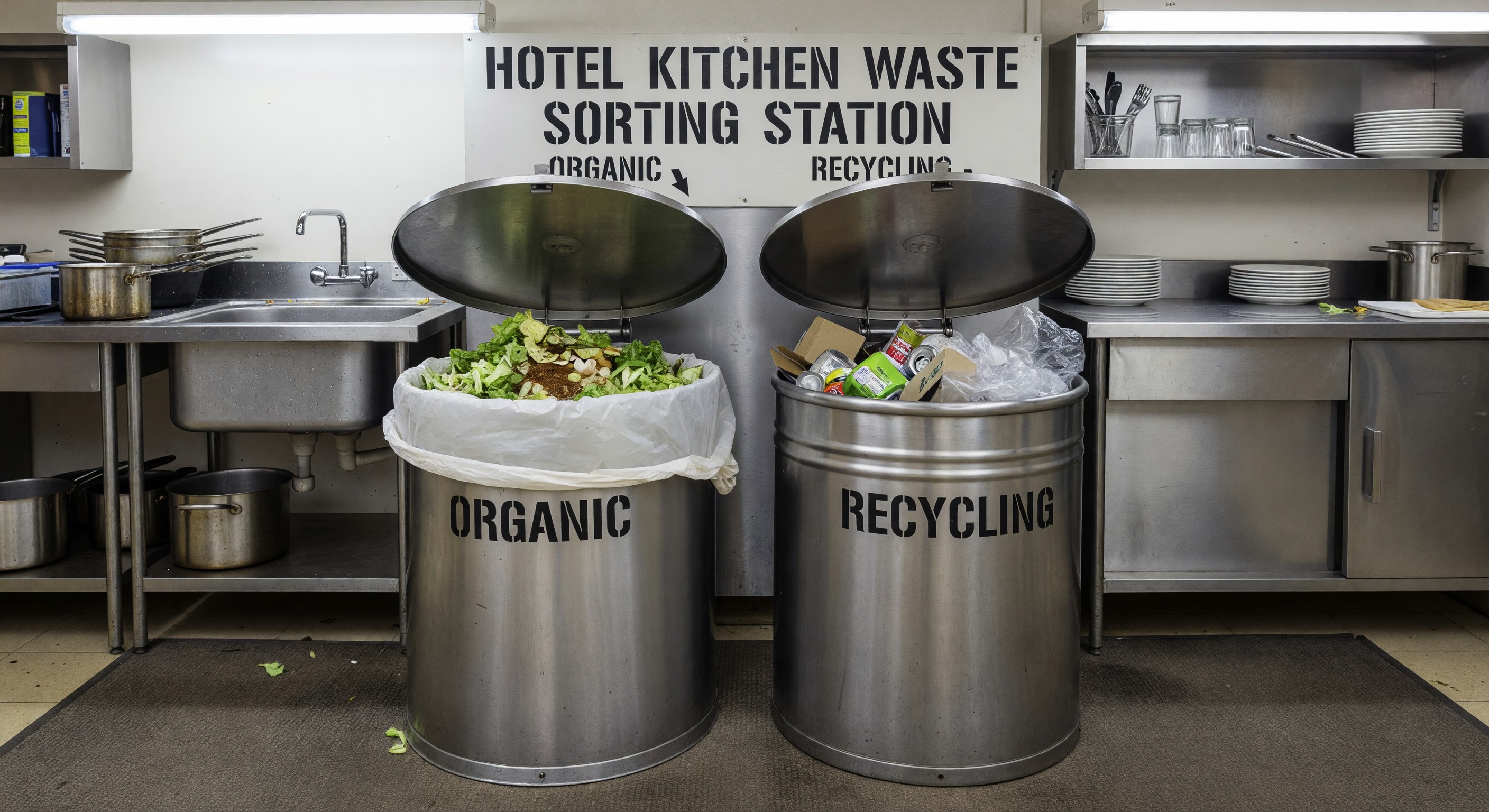
Composting programs: Industrial composting accepts food waste, paper napkins, and food-soiled cardboard — materials that cannot go to recycling but can be diverted from landfill. Commercial composting requires a contract with a composting vendor (availability varies significantly by market), appropriate storage containers, and staff training. Some markets support in-vessel composting systems within the hotel — units that process food waste on-site, reducing storage and transport.
Food donation programs: Food that is safe for human consumption but cannot be used due to overproduction, event cancellation, or approaching dates should be donated through partnerships with local food banks or food rescue organizations. Food donation programs require proper documentation for tax purposes and food safety protocols, but generate both community benefit and meaningful tax deductions in many cases.
Waste Cost Management
Hotel waste management costs include:
- Hauling fees: Based on container size, pick-up frequency, and material type. Recycling pick-up may be no-cost or revenue-generating in markets with strong recycling commodity markets; landfill hauling always represents a cost.
- Tipping fees: In some markets, hauling fees include per-ton tipping fees at landfill or processing facilities. Higher-density materials cost less per ton to haul but may have higher tipping fees.
- Equipment costs: Balers, compactors, composting equipment, and storage containers require capital investment and maintenance.
Typical opportunities to reduce waste costs:
- Right-size containers to actual volume (over-sized containers that aren’t filled each pickup are a waste)
- Increase pick-up frequency only when containers are consistently overfull, reduce frequency when they’re consistently underfull
- Convert cardboard to baling revenue rather than paying to haul it
- Reduce waste volume through food waste programs (direct cost reduction on hauling and food purchasing)
Brand Reporting and Certification
Major hotel brands require waste performance reporting through their sustainability platforms (Marriott’s Serve 360, Hilton’s LightStay, IHG’s Green Engage). Ensure your waste management program generates the data these platforms require:
- Monthly waste volume by material category (in pounds or metric tons)
- Landfill diversion rate calculation
- Documentation of third-party hauling and processing for verified reporting
Third-party sustainability certifications (Green Key, Green Globe, LEED O+M) require verified waste performance data and ongoing audit documentation. Begin maintaining records in the format required by applicable certifications well before the certification audit.
Frequently Asked Questions
What is a typical hotel landfill diversion rate? Properties without formal recycling programs divert less than 20–25% from landfill. Properties with active recycling programs (cardboard, glass, plastics, paper) typically achieve 35–55% diversion. Properties with comprehensive recycling plus composting programs achieve 60–80% diversion. Leading hotels — typically large resorts or major city properties with strong composting infrastructure — report 85%+ diversion rates.
How can hotels reduce food waste from banquet and event operations? Strategies that have demonstrated effectiveness: guarantee minimum food quantities based on historical consumption per guest rather than registered attendance (consumption rates for buffets rarely exceed 70–80% of registered attendees), implement end-of-event donation protocols for safe surplus food, track waste by event type and adjust future planning accordingly, and shift from pre-plated buffet presentations to batch-cooking with replenishment, which reduces the food committed to display early in an event.
Is composting cost-effective for hotels? The business case for composting depends on local hauling costs and composting vendor pricing relative to landfill tipping fees. In many markets, composting pick-up costs are comparable to or less than landfill hauling costs for the same weight, while also providing brand sustainability value and reducing waste volume. The break-even analysis should account for the staff labor in food waste collection and the capital cost of collection containers. Most medium-to-large hotels find composting programs cost-neutral to cost-positive when food waste reduction is included in the analysis.
How do hotels track waste management performance? Best-practice tracking uses a monthly waste log that records hauling volumes by material type from invoices, complemented by periodic (annual or semi-annual) waste audits that verify composition estimates. Simple spreadsheet tracking aligned with brand reporting platform inputs is sufficient for most properties. Larger properties may use dedicated sustainability management software (such as those from Verdantix, Urjanet, or integrated into property management systems) to automate data collection from utility and waste hauling invoices.
Further Reading from Authoritative Sources
- EPA food recovery hierarchy and commercial composting resources — The EPA’s Food Recovery Hierarchy and commercial food waste guidance provide the regulatory and best practice framework for hotel food waste reduction, donation programs, and composting operations.
- USGBC LEED waste management and sustainability certification — The USGBC’s LEED certification program provides the waste management performance framework used by many hotels pursuing sustainability certification, including diversion rate benchmarks and documentation requirements.