Every piece of equipment in a hotel has a lifespan. Every major system will eventually fail or become obsolete. The only variables are when and whether the property is financially prepared for the replacement. Capital planning is the discipline of managing these realities proactively — building a long-range view of what needs to be replaced, when, and at what cost, and ensuring that financial reserves or budget authority are available when the time comes.
Hotel properties that lack a rigorous capital planning process typically experience one of two failure modes: either they defer maintenance until equipment fails catastrophically (at higher cost and with guest impact), or they make reactive capital investments without the context to prioritize effectively. Both outcomes are expensive.
The Asset Inventory Foundation
A capital plan is only as good as the asset inventory it’s based on. Before any meaningful planning can happen, you need to know what you have and when it was installed.
A capital planning asset inventory for a hotel should include:
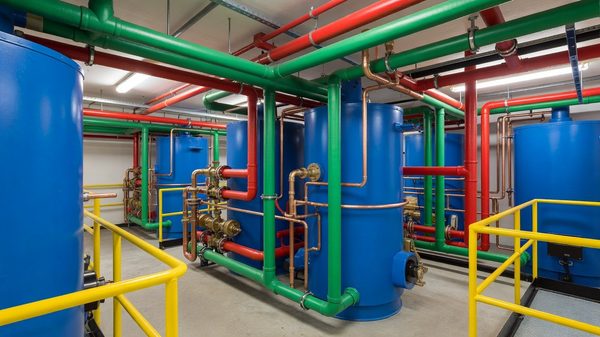
Mechanical equipment: All HVAC units (PTACs, FCUs, AHUs, chillers, boilers, cooling towers), pumps, fans, and motors. Record manufacturer, model, installation date, and estimated remaining useful life.
Elevators: Each elevator unit, installation date, last major modernization, and remaining equipment life.
Electrical systems: Electrical panels, transformers, emergency generator, UPS systems, and switchgear.
Plumbing equipment: Water heaters (individual or central plant), recirculation pumps, booster pumps, backflow preventers.
Roof and building envelope: Roof system (type, installation date, warranty expiration), window assemblies, exterior wall systems.
Life safety systems: Fire alarm panel and field devices, fire suppression system (sprinkler heads, pumps, controllers), emergency lighting.
Guestroom FF&E: Furniture, fixtures, and equipment in guestrooms — tracked by room count and renovation cohort (all rooms renovated in 2015 vs. 2019, for example).
Parking equipment: Gate systems, pay stations, access control infrastructure, lot lighting.
Technology systems: WiFi infrastructure, PMS hardware, phone systems, CCTV, electronic locks.
For each asset category, document: age, expected useful life, replacement cost estimate (in today’s dollars), and priority.
Useful Life Standards
Industry benchmarks for major hotel asset categories:
| Asset Category | Useful Life |
|---|---|
| PTAC units | 10–12 years |
| Central chillers | 20–25 years |
| Cooling towers | 15–20 years |
| Boilers | 20–25 years |
| AHU/FCU units | 20–25 years |
| Elevators (full replacement) | 30–35 years |
| Elevator modernization | 20 years |
| Emergency generator | 20–25 years |
| Roof (flat membrane) | 20–25 years |
| Roof (pitched, architectural) | 30–50 years |
| Electrical panels | 25–30 years |
| Hot water heaters | 8–12 years |
| Guestroom FF&E (soft goods) | 5–7 years |
| Guestroom FF&E (case goods) | 12–15 years |
| Electronic locks | 12–15 years |
| CCTV system | 7–10 years |
| WiFi infrastructure | 5–7 years |
| PMS hardware | 5–7 years |
These are general benchmarks. Actual lifespan depends on usage intensity, maintenance quality, and environmental conditions.
Building the 10-Year Plan
Step 1: Age the Asset Inventory
For each asset, calculate the projected year of replacement based on installation date plus useful life. A PTAC unit installed in 2014 with a 12-year life is projected to need replacement in 2026.
Note that “projected year” represents the central estimate — replacement might happen a year or two earlier (if failures accelerate) or later (if equipment proves more durable or budget is deferred).
Step 2: Estimate Replacement Costs
For each asset, estimate replacement cost in today’s dollars. Apply a cost escalation factor (typically 3–4% annually) to project future-year costs.
For equipment where technology is rapidly evolving, consider that replacement equipment may offer significantly different cost or performance characteristics — EV charging infrastructure, WiFi equipment, and some building automation categories fall into this zone.
Step 3: Identify Clustering Opportunities
Capital projects that happen simultaneously can often capture cost savings through combined mobilization, shared contracting, or reduced guest disruption. Review the 10-year plan for projects in the same physical area that might be clustered:
- Guestroom renovation (FF&E) + PTAC replacement: Coordinate to eliminate duplicate disruption
- Roof replacement + rooftop mechanical equipment upgrade: Access is provided by the roofing project
- Parking infrastructure replacement + parking lot lighting: Single mobilization
Step 4: Review Brand and Franchise Requirements
If the property operates under a brand flag, the brand’s Property Improvement Plan (PIP) requirements directly affect the capital plan. PIPs are typically triggered at license renewal or sale and specify what must be upgraded to maintain brand affiliation.
Even between formal PIPs, brand standards evolve. A 2018 renovation that met brand standards may have elements that fall below current standards. Understanding where the brand is heading — from guest technology expectations to FF&E design standards — helps avoid renovating to a standard that will need revision in five years.
Step 5: Prioritize Within Year Budgets
With a complete 10-year picture assembled, the annual budget allocation decisions become more systematic. The prioritization framework:
Tier 1 — Non-negotiable: Life safety systems (fire alarm, sprinkler, emergency lighting), regulatory compliance items (elevator certificates, backflow preventers), and items that are actively failing and affecting guests.
Tier 2 — High priority: Items at end of useful life with significant operational or guest experience impact, and projects with clear revenue or cost reduction payback.
Tier 3 — Planned but flexible: Items approaching but not yet at end of life, improvements rather than replacements, and projects where deferral extends an already-working asset.
Tier 4 — Desirable: Brand enhancements, technology upgrades, and improvements that are beneficial but can be deferred without operational consequence.
Reserve Fund Management
Calculating Required Reserves
The industry standard approach uses a “reserve for replacement” fund — money set aside annually to fund future capital expenditures. The typical calculation:
Reserve contribution = Replacement cost of all assets ÷ weighted average useful life
For a 200-room full-service hotel with total asset replacement value of $8 million and average asset life of 15 years, the theoretical annual reserve contribution is approximately $533,000.
In practice, reserve fund contributions at hotels vary from 2–5% of total revenue, with the appropriate level depending on asset age, condition, and brand standards requirements.
Owner and Operator Perspectives
In managed or franchised hotels, capital expenditure decisions typically involve multiple parties: the property owner, the management company, and the brand. Understanding who is responsible for funding what type of capital is essential context for any director of engineering.
FF&E reserve accounts: Many management contracts require the owner to fund an FF&E reserve — a separate account funded annually that can only be used for capital expenditures. The management company often has approval authority over draws.
Owner-funded vs. management-funded: In most hotel structures, the owner funds all capital; the management company advises. Understanding your property’s structure clarifies where capital requests should go.
FAQ
How do we justify major capital requests to ownership? Frame capital investments in financial terms: ROI, payback period, cost of deferral, and risk exposure. “The chillers are old” is not compelling. “Chiller failure during peak summer season would result in $200,000 in revenue displacement, emergency rental costs, and guest compensation — replacement now at $350,000 is the lower-cost option” is compelling.
What happens when we defer capital too long? The cost of deferred maintenance compounds over time. Equipment that fails under emergency conditions costs significantly more to address than planned replacement. The guest impact of a failure during peak season has cost consequences that don’t appear in the maintenance budget. Deferred capital also concentrates the capital spend into a smaller future window, creating cash flow challenges.
How often should the 10-year capital plan be updated? Formally updated annually during the budget planning cycle. Updated informally whenever a major assumption changes — a piece of equipment fails ahead of schedule, a brand PIP is received, or the property’s ownership or management structure changes.
Should small capital items be in the 10-year plan? Set a threshold (typically $2,500–$5,000) for capital plan inclusion. Below-threshold items go through the operating budget. Within the capital plan, focus on assets with meaningful lifecycle implications rather than small replacement items.
Further Reading from Authoritative Sources
- IFMA hotel asset lifecycle management and capital planning standards — IFMA provides facility asset management standards, capital planning frameworks, and lifecycle cost analysis methodologies applicable to hotel 10-year capital plan development, reserve fund calculation, and capital prioritization decision-making.
- AHLA hotel capital planning and reserve fund management standards — AHLA provides hospitality industry guidance on hotel capital planning, FF&E reserve fund structures, brand PIP management, and owner-operator capital investment frameworks applicable to hotel facility capital plan development and ownership engagement.