Hotel guest WiFi standards expectations have moved faster than most property renovation cycles. In 2015, 10 Mbps per device was considered adequate; by 2025, guests arrive with multiple high-bandwidth devices, expect 4K streaming without buffering, conduct video conferences from their rooms, and increasingly need low-latency connectivity for cloud gaming and mixed reality applications.
The WiFi 6 (802.11ax) standard, widely deployed since 2020, addressed many of the capacity and latency limitations of WiFi 5 (802.11ac). WiFi 6E, which extends WiFi 6 capabilities into the 6 GHz spectrum band, is now the leading-edge commercial deployment standard. WiFi 7 (802.11be), entering commercial availability in 2024–2025, promises theoretical throughput improvements that address even the highest-demand guest device scenarios.
This guide helps hotel technology and facility managers understand what these generational upgrades actually mean for hotel operations, how to evaluate whether an upgrade is justified for their specific property, and how to plan an infrastructure refresh that will remain competitive for the next 7–10 years.
What WiFi 6E Adds Versus WiFi 6
WiFi 6 improved efficiency, capacity, and performance within the same frequency bands (2.4 GHz and 5 GHz) that prior generations used. WiFi 6E adds a third band: the 6 GHz spectrum, which became available for unlicensed use in the US in April 2020 (FCC ruling).
Key benefits of the 6 GHz band for hotels:
Clean spectrum: The 6 GHz band has minimal legacy device interference — unlike the congested 2.4 GHz band where legacy devices, Bluetooth, and microwave ovens create interference, 6 GHz is populated only by WiFi 6E and newer devices. This provides the cleanest wireless environment available.
More non-overlapping channels: The 6 GHz band provides 59 non-overlapping 20 MHz channels in the US (compared to 3 non-overlapping channels in 2.4 GHz and about 25 in 5 GHz). More non-overlapping channels allow denser AP deployments without co-channel interference — critical for hotel environments where multiple APs serve adjacent rooms.
Higher throughput: The wider channels available in 6 GHz (up to 160 MHz) enable higher peak throughput for compatible devices.
Limitation: WiFi 6E requires devices that support the 6 GHz band. As of 2025, high-end smartphones, laptops, and tablets support 6E; many legacy devices, IoT sensors, and older guest devices do not. A WiFi 6E deployment must maintain backwards compatibility on 2.4 GHz and 5 GHz bands for non-6E devices.
WiFi 7: What Hotels Should Know
WiFi 7 (802.11be) commercial products entered the market in 2024–2025. Key improvements relevant to hotels:
Multi-Link Operation (MLO): WiFi 7 allows a single device to simultaneously connect to multiple frequency bands (2.4, 5, and 6 GHz). This improves reliability (if one band is congested, the device seamlessly uses others) and throughput aggregation.
Higher peak speeds: 320 MHz channel width (versus 160 MHz in WiFi 6E), 4096-QAM modulation (versus 1024-QAM), and MLO combine to provide theoretical throughput over 40 Gbps — though practical hotel speeds are a fraction of theoretical maximums.
Lower latency: Improvements in multiple resource unit (MRU) and multi-AP coordination in WiFi 7 target further latency reductions below WiFi 6E’s already-improved latency performance.
Hotel deployment consideration: WiFi 7 enterprise access points began shipping in 2024 from Cisco, HPE Aruba, Juniper Mist, and others. Early adoption makes sense for new construction and major renovation projects with 7–10 year deployment horizons. For properties with existing WiFi 6 or recent WiFi 6E deployments, the incremental gain over WiFi 6E may not justify early refresh — evaluate device ecosystem maturity and specific guest use case requirements.
Hotel-Specific Deployment Considerations
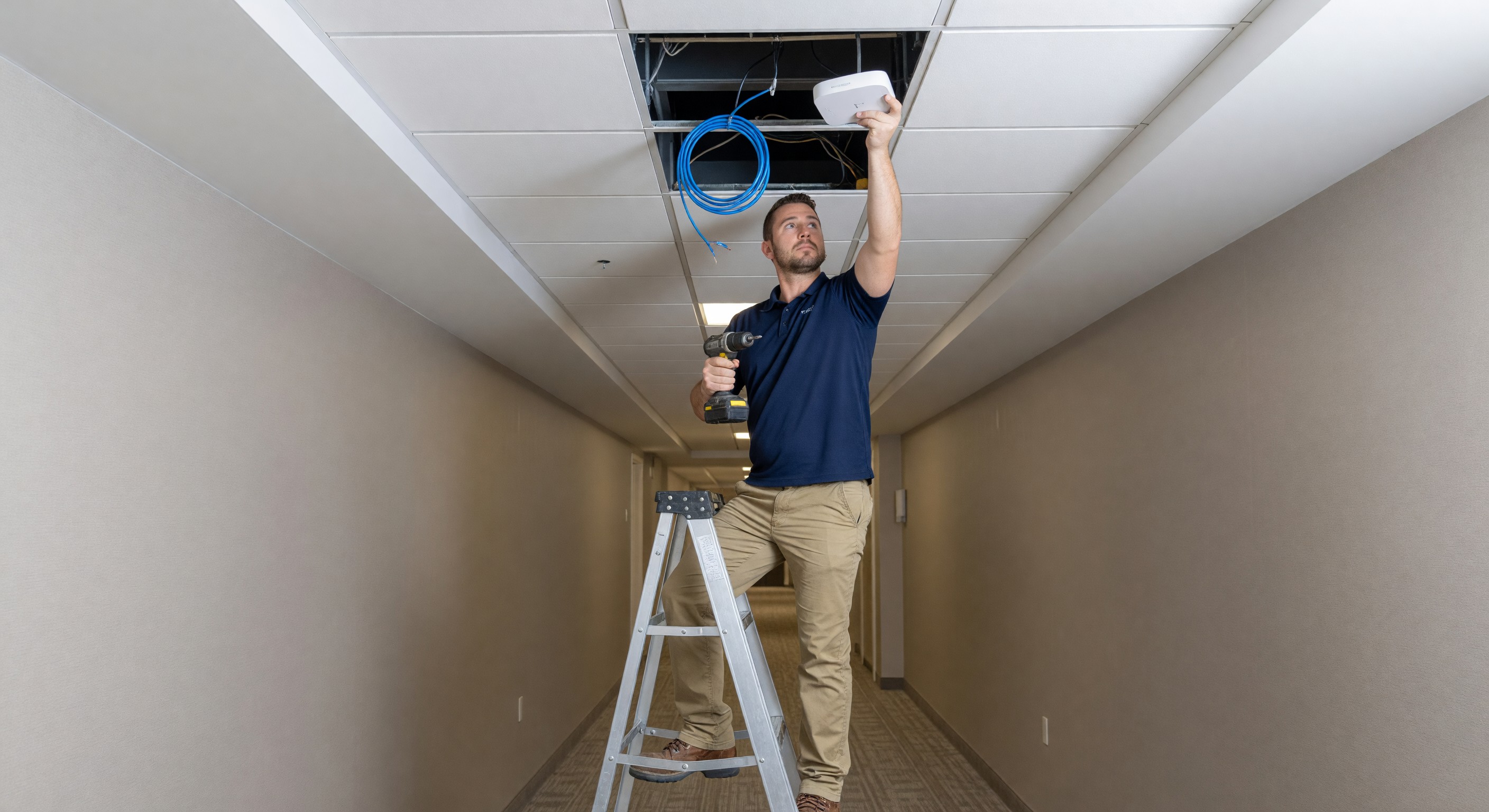
Dense deployment requirements: Hotel environments require more APs per square foot than typical office buildings because concrete and steel corridor walls attenuate WiFi signals significantly. Hotel-standard AP placement typically targets one AP per 2–4 guest rooms (either in-corridor ceiling placement or in-room wallplate APs that serve the room directly). Higher-density placement is appropriate for conference areas and F&B spaces with high device concentration.
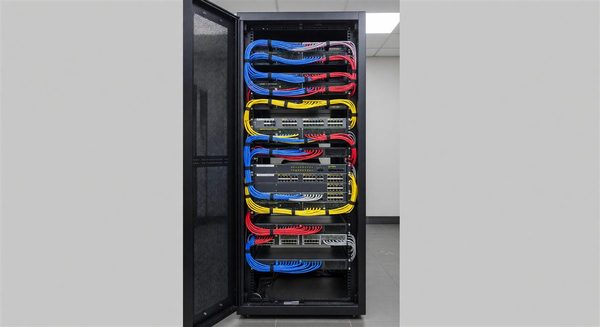
Backhaul infrastructure: WiFi 6E and 7 APs generate higher traffic volumes than previous generations — the wired network infrastructure connecting APs to the core must support the increased throughput. Multi-gigabit switches (2.5G, 5G, or 10G uplinks) replace legacy Gigabit Ethernet for AP connections in WiFi 6E/7 deployments.
Internet bandwidth scaling: Higher-capacity wireless infrastructure is only as useful as the internet connection feeding it. Hotel internet bandwidth requirements continue to increase; 1 Gbps symmetrical is a reasonable current target for full-service properties, with planning for 5–10 Gbps as 4K streaming, remote work, and IoT device proliferation continue.
Legacy IoT device support: Hotel IoT devices (smart thermostats, occupancy sensors, in-room tablets, digital signage) may operate on 2.4 GHz or older WiFi standards. The wireless infrastructure must continue supporting these legacy devices even as it advances toward WiFi 6E/7 for guest devices.
When to Upgrade
Hotel WiFi infrastructure typically reaches end of useful life at 5–8 years of operation. Drivers that accelerate the timeline:
- Guest satisfaction scores below competitive set on WiFi
- AP hardware reaching end-of-vendor-support (security patches no longer available)
- Inability to support new IoT deployments (mobile key, smart thermostats, connected AV)
- Conference and meeting bookings lost to competitors with more current connectivity
- Current infrastructure not supporting expected device density
For properties with WiFi 5 (802.11ac) infrastructure installed 2017–2020, WiFi 6E is the clear current upgrade target. For 2020–2022 WiFi 6 installations, evaluate WiFi 6E or 7 at the next planned refresh window (2025–2029).
Frequently Asked Questions
What WiFi standard should hotels specify for a major renovation in 2025? WiFi 6E is the current commercial standard recommended for hotel deployments in 2025. It provides meaningful improvements in performance, capacity, and spectrum cleanliness over WiFi 6, with broad device support among current-generation guest devices. WiFi 7 is appropriate for properties planning deployments with 10+ year horizons and willing to pay the early-adopter cost premium.
How much does hotel WiFi infrastructure typically cost per room? New WiFi infrastructure installation (hardware, cabling, configuration, management platform) for hotel properties typically costs $1,000–$3,000 per room depending on property configuration, mounting complexity (corridor ceiling versus in-room wallplate versus mixed), and whether structured cabling must be upgraded or replaced. Higher-spec deployments with WiFi 7 APs and multi-gigabit switches are at the upper end of this range.
What is the main WiFi guest complaint at hotels and how does better infrastructure address it? The most common WiFi guest complaints are: (1) slow speeds during peak periods (mornings and evenings), and (2) dead spots and connection drops when moving through the property. WiFi 6E addresses both: the 6 GHz band’s cleaner spectrum and higher channel count reduces congestion during peak periods; proper AP density planning eliminates coverage gaps. The third common complaint — being required to repeatedly enter credentials — is addressed by captive portal design decisions rather than radio technology.
Can hotels use WiFi 6E to reduce dependence on wired Ethernet in guest rooms? WiFi 6E’s reliability and throughput are sufficient for most guest use cases without wired Ethernet. However, wired Ethernet in hotel rooms remains valuable for: guests who require guaranteed bandwidth for video conferencing or remote work, gaming connections that benefit from lower latency, and in-room AV system connections (TVs, casting systems) that perform better on wired connections. Removing wired Ethernet from guest rooms entirely is premature for full-service properties serving business travelers.
Further Reading from Authoritative Sources
- HFTP hotel WiFi infrastructure standards and guest connectivity technology guidance — HFTP provides hospitality technology standards for wireless network infrastructure, guest connectivity specifications, and technology investment guidance applicable to hotel WiFi upgrade planning, AP density specifications, and IoT device compatibility requirements.
- DOE building connectivity and smart hotel IoT infrastructure resources — The DOE Buildings program provides smart building connectivity standards, IoT infrastructure guidance for building automation and energy management systems, and technology integration resources applicable to hotel WiFi upgrade planning for IoT device compatibility and smart building energy optimization.