Hotel network infrastructure has evolved from a simple guest internet connection to a complex multi-tenant environment supporting guest devices, staff communications, building automation, security systems, IoT sensors, video surveillance, parking management, and increasingly sophisticated guest-facing technology. The network that was adequate in 2018 is often significantly undersized for 2026 requirements.
This guide addresses hotel network infrastructure from a planning perspective: how to assess current capacity against current and projected demand, the key architectural principles for a well-designed hotel network, and the specific upgrade investments that provide the most value for most properties.
The Modern Hotel Network: What It Must Support
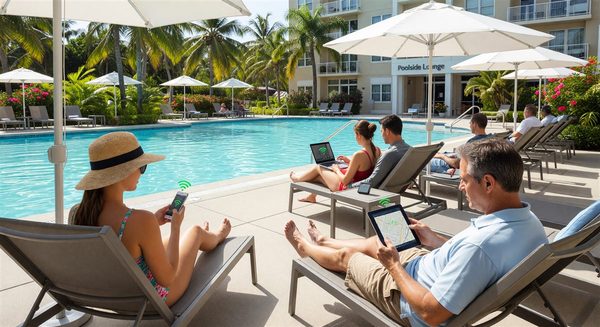
Guest devices: Average hotel guests bring 3–5 connected devices. A 200-room hotel at full occupancy may have 600–1,000 active guest devices simultaneously — a figure that continues to increase as each guest’s device count grows.
Staff communication systems: Two-way radio (increasingly IP-based), staff messaging platforms, housekeeping management apps, and POS terminals all depend on reliable network connectivity.
Building automation: BAS systems that monitor and control HVAC, lighting, and access control are increasingly IP-networked. The BAS network must be maintained separately from guest WiFi for security reasons but shares the underlying physical infrastructure.
Security systems: IP cameras (30–200+ cameras at a full-service hotel), access control panels, parking management systems, and intrusion detection all require network connectivity.
IoT sensors: Smart thermostats, occupancy sensors, water leak detectors, predictive maintenance sensors, and in-room entertainment systems all add to the device count. A 200-room hotel with full IoT deployment may have 2,000–5,000 IoT endpoints.
Administrative systems: PMS servers, file shares, printer servers, digital signage players, PBX (if IP-based), and management workstations all require reliable wired network connectivity.
Internet Bandwidth Planning
Hotel internet bandwidth requirements are driven by the number of concurrent active sessions and the bandwidth each session consumes. Planning benchmarks for 2026:
- 4K streaming (Netflix, Apple TV+, Disney+): 25 Mbps per stream
- Video conferencing (Zoom, Teams): 10–25 Mbps per session (HD, multi-participant)
- Cloud gaming: 25–50 Mbps per session
- General web browsing and email: 5–10 Mbps per session
- IoT devices: 0.1–1 Mbps per device (typically)
For a 200-room hotel assuming 15% of guests streaming 4K, 10% on video calls, 5% gaming, and 60% on general use simultaneously during peak evening hours:
- 4K streaming: 30 streams × 25 Mbps = 750 Mbps
- Video conferencing: 20 sessions × 15 Mbps = 300 Mbps
- Gaming: 10 sessions × 35 Mbps = 350 Mbps
- General use: 120 devices × 7 Mbps = 840 Mbps
- IoT: 2,000 devices × 0.5 Mbps = 1,000 Mbps
- Total estimated peak: 3.2 Gbps
This calculation indicates that a 1 Gbps internet connection — which was considered adequate in 2020 — may be insufficient for a fully connected 200-room hotel in 2026. 5–10 Gbps internet service, while expensive, is the planning target for full-service properties with significant IoT deployment.
In practice, not all devices are simultaneously active at peak bandwidth, and contention management (QoS policies that prioritize certain traffic types) allows lower bandwidth totals to serve realistic usage patterns. However, the trajectory is clearly toward multi-gigabit internet requirements.
Network Segmentation: The Security and Performance Imperative
A well-designed hotel network operates as multiple logically separate networks on a shared physical infrastructure:
Guest WiFi network: Internet access for hotel guests. Isolated from all hotel operational systems. Typically implements guest-to-guest isolation (guests cannot communicate directly with each other’s devices — preventing unauthorized device access between rooms). Bandwidth-managed to ensure fair use across all guest devices.
Hotel operational network: PMS servers, POS terminals, management workstations, staff communication systems. Restricted to hotel staff devices and servers; no guest device access. Should be on a separate VLAN with firewall between it and guest WiFi.
Building automation system (BAS) network: HVAC controls, lighting controls, energy management. Isolated from both guest WiFi and hotel operational networks. Internet-accessible only through a controlled connection for remote vendor management, with VPN and MFA required.
Security system network: IP cameras, access control panels, intrusion detection. Isolated from guest and operational networks. Bandwidth-managed for video traffic.
IoT device network: Smart thermostats, occupancy sensors, predictive maintenance sensors. Separate from guest WiFi (prevents guest devices from interacting with building systems) and from operational systems. Internet connectivity managed through a dedicated IoT gateway.
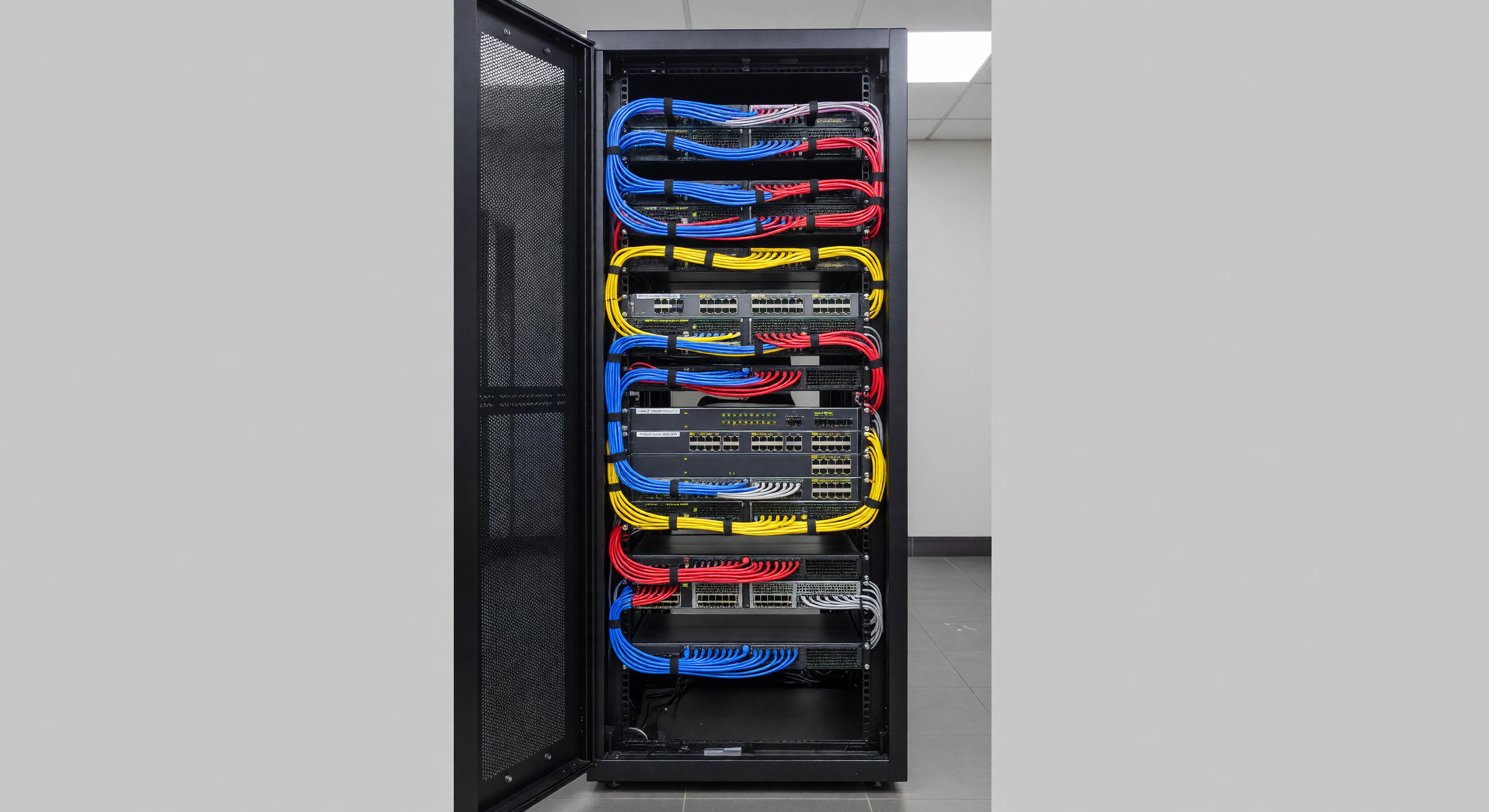
This segmentation requires managed switches with VLAN capability throughout the property, a capable firewall/router that enforces rules between segments, and network management that maintains the segmentation as devices are added or changed.
Switch and Cabling Infrastructure
Switch capacity: Access layer switches (connecting devices to the network) must support the bandwidth required for all connected devices. With IoT and WiFi 6E/7 APs generating multi-gigabit traffic, 10G uplinks from access switches to distribution switches are appropriate in 2026 designs. 2.5G or 5G access ports for AP connections (replacing legacy Gigabit ports) match the throughput capability of current-generation APs.
PoE (Power over Ethernet): WiFi 6E and 7 APs, IP cameras, VoIP phones, and many IoT devices are powered via PoE — eliminating the need for separate power supplies at each device location. PoE switch selection must account for total PoE power budget; newer WiFi 7 APs may require PoE++ (90W, IEEE 802.3bt) versus the PoE+ (30W) standard of prior generations.
Cabling: Cat6A cabling supports 10G at distances up to 100 meters — the appropriate specification for new hotel cable installations in 2026. Existing Cat5e or Cat6 cabling supports Gigabit and may not support 10G at longer distances; audit existing cabling performance before assuming it will support next-generation network speeds.
Wireless Management
Modern hotel wireless networks require a cloud-managed wireless controller platform (Cisco Meraki, HPE Aruba Central, Juniper Mist, Ubiquiti UniFi) that provides:
- Centralized AP configuration and management
- Real-time RF monitoring and interference detection
- Client connection history and troubleshooting tools
- Automated band steering (directing capable devices to 5 GHz or 6 GHz)
- Guest SSID management with captive portal and bandwidth policies
- Firmware update management
Cloud-managed wireless reduces the IT expertise required for ongoing network management compared to traditional on-premises controller platforms, but creates dependency on cloud service availability and introduces ongoing subscription costs.
Frequently Asked Questions
What internet connection speed should a 200-room hotel have in 2026? Minimum: 1 Gbps symmetrical fiber internet. Recommended for full-service properties with significant IoT deployment: 5–10 Gbps. Hotels that support major conference and meeting business with simultaneous video conferencing across many rooms may need higher. Secondary internet connections from a different ISP for redundancy are increasingly standard practice for properties where internet availability is operationally critical.
How often should hotel network switches be replaced? Managed switches in hotel distributions typically have 7–10 year service lives. The driver for replacement is usually port speed (upgrading from Gigabit to 2.5G/5G/10G for AP and uplink connections) rather than physical failure. Plan for access and distribution switch refresh on a 7-year cycle, with AP upgrades coordinated to match.
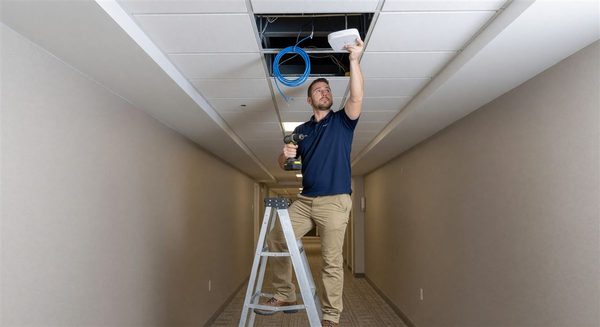
What is the most common hotel network mistake that causes guest WiFi complaints? The most common cause of guest WiFi complaints at hotels is insufficient AP density in guest rooms — APs placed in corridor ceilings serving 8–12 rooms rather than 2–4 rooms, resulting in marginal signal at the far end of the coverage zone. The second most common cause is inadequate internet bandwidth — the access points and switches are adequate, but the internet pipe is saturated during evening peak hours. Diagnose which is the issue before investing in infrastructure upgrades.
Should hotels manage their own network or outsource to a managed network service provider? For most hotels without dedicated IT staff, managed network service providers (hospitality-focused MSPs like GuestTek, Nomadix, Eleven2, or general IT MSPs with hospitality experience) provide professional network management at monthly costs typically lower than in-house staffing. The MSP handles monitoring, troubleshooting, firmware updates, and 24/7 support — the hotel engineering team handles physical issues that require on-site presence. This model is appropriate for properties below 300 rooms without complex IT requirements.
Further Reading from Authoritative Sources
- HFTP hotel technology infrastructure standards — HFTP provides hospitality technology professionals with network infrastructure standards, benchmarking data, and implementation guidance for multi-segment hotel network architecture.
- DOE smart building network and IoT infrastructure resources — The DOE Buildings program provides technical guidance on integrating building automation, IoT, and smart building systems into hotel network infrastructure while maintaining security segmentation.