Hotel parking is often treated as an afterthought — a necessary amenity bolted onto the property’s operational plan. For directors of engineering and facility managers who understand the numbers, that’s a costly mistake. Parking is one of the few revenue centers within the facility portfolio that can be actively optimized without significant capital outlay.
This guide covers the operational fundamentals every hotel facility professional should understand before evaluating systems, vendors, or technology upgrades.
Why Parking Operations Deserve Dedicated Management Attention
A mid-size full-service hotel with 200 rooms and a 150-space parking structure can generate $400,000 to $800,000 annually in parking revenue depending on market, pricing strategy, and demand management. That figure rivals or exceeds food and beverage contribution margins at many properties.
Yet the same property might have a parking “system” consisting of a gate arm, a ticket dispenser from 2009, and a part-time attendant who handles exceptions manually. The gap between what parking could generate and what it actually produces is often a management problem, not a demand problem.
Core Components of a Hotel Parking System
Entry and Exit Control
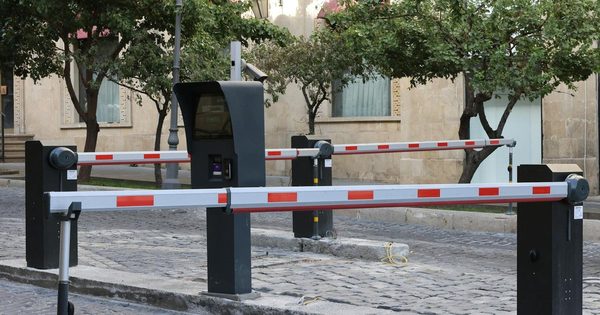
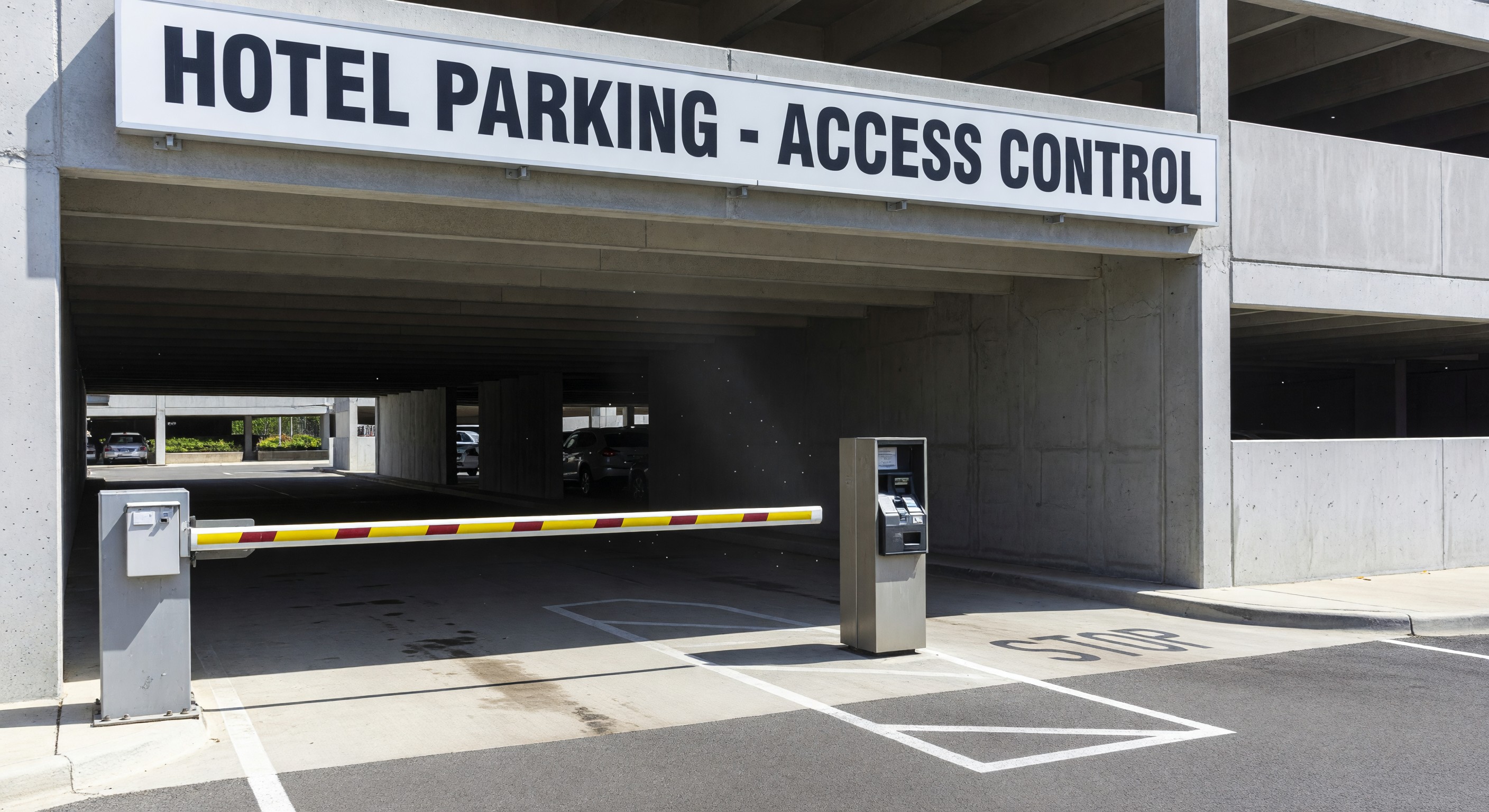
The foundation of any managed parking operation is controlling who enters and exits. This means physical barriers — typically a gate arm — combined with some form of credential verification or payment collection. Modern systems integrate these functions into a unified platform.
Entry control options range from simple ticket-on-entry with pay-on-foot stations to fully automated license plate recognition (LPR) systems that don’t require any ticket at all. The right approach depends on your property’s volume, staffing model, and guest experience goals.
Hotel guests typically expect frictionless entry — they don’t want to reach for a ticket from a dispenser while managing luggage. Valet-oriented properties often bypass the entry barrier entirely for guests and use it only for public or transient parkers.
Payment Processing
How parkers pay determines much of your operational complexity. Options include:
- Pay-on-foot stations: Parkers pay before returning to their vehicle at a kiosk in the lobby or garage
- Pay-at-exit: Payment happens at the gate upon exit, which can create queuing at peak times
- Pre-payment via app or website: Parkers reserve and pay in advance, then receive a validated credential
- Room charge integration: Hotel guests charge parking to their folio — requires PMS integration
For properties with significant transient (non-guest) parking, pay-on-foot is generally the preferred model because it reduces exit lane congestion and enables faster throughput.
Revenue Control
Revenue leakage in parking operations is common and often invisible without proper controls. Complimentary parking, validation abuse, and manual overrides add up quickly. A property giving away 30% of its parking capacity through informal validations may not realize the scope of the problem without transaction-level reporting.
Effective revenue control requires:
- Every transaction recorded and attributed
- Validation limits enforced by the system, not by staff discretion
- Reconciliation between gate transactions and payment records
- Exception reporting that flags voids, overrides, and free exits
Access Control for Hotel Guests
Guest parking access is a customer service function as much as a security function. The goal is making it effortless for registered guests while preventing unauthorized use of guest-designated spaces.
Common approaches include:
- Key card integration with the property management system (PMS), so the guest’s room key activates the parking gate
- RFID hang tags issued at check-in
- LPR where the guest’s license plate is captured at registration and automatically recognized
- QR or barcode-based passes sent via email confirmation
Properties with access control systems integrated into their parking infrastructure can automate much of this, reducing front desk workload while improving the guest experience.
Staffing Models
The degree of staffing your parking operation requires depends heavily on the technology deployed and your service model.
Fully staffed: Attendants manage every transaction, assist with exceptions, and handle valet. High service level, high labor cost. Typical of luxury full-service properties.
Hybrid: Technology handles standard transactions; staff handles valet, exceptions, and customer service. Most common at upscale and upper-midscale full-service hotels.
Unstaffed / automated: Technology handles all transactions. Staff intervention only for exceptions via intercom or mobile response. Common at select-service and extended-stay properties with lower parking volumes.
The trend across the industry has been toward hybrid and automated models as labor costs have risen. However, properties that have eliminated all staffing from parking operations sometimes see guest satisfaction impacts that offset the labor savings.
Pricing Strategy Basics
Hotel parking pricing should account for:
- Overnight rate: What guests pay for the duration of their stay
- Transient hourly rate: What non-guests pay for shorter-term parking
- Event pricing: Premium rates during high-demand periods
- Monthly/long-term: Rates for employees or nearby commercial tenants
Dynamic pricing — adjusting rates based on occupancy and demand — is increasingly common and can meaningfully improve revenue per space. The technology to implement it exists in most modern parking management platforms.
Integration with Property Management Systems
Perhaps the most important single integration in a hotel parking system is the connection to the PMS. Without it, parking charges must be posted manually to folios — an error-prone process that creates reconciliation problems and guest service issues.
PMS-integrated parking systems can automatically post charges, validate guest credentials, and reconcile transactions at checkout. This integration has been standard in upper-upscale properties for years and is now becoming accessible to midscale operations.
Capital Planning Considerations
Parking system infrastructure has a useful life of 10–15 years for gates and entry/exit equipment, and 5–7 years for payment processing hardware before technology obsolescence becomes a management problem. Cloud-based software platforms have improved the update cycle for the software layer.
When planning capital for parking systems, consider:
- The total cost of ownership over a 10-year horizon, not just initial installation
- Integration compatibility with current and future PMS platforms
- Vendor support lifecycle for the hardware components
- Scalability as the property’s needs evolve
FAQ
What is the typical ROI timeline for a new hotel parking management system? Most properties see payback within 24–36 months when accounting for revenue recovery from leakage control, reduced labor costs from automation, and incremental revenue from improved pricing capability. Properties with significant transient parking often see faster payback.
Should hotel parking be outsourced to a third-party operator? It depends on the property’s scale, management bandwidth, and location. Third-party operators offer expertise and remove operational burden but take a margin. Properties in high-demand urban markets often find self-operation more profitable once the right systems are in place.
How do I evaluate whether our current parking system is underperforming? Start with a revenue-per-space analysis. Divide total parking revenue by the number of spaces and divide by 365. Compare against market benchmarks for your property type and location. If you’re significantly below market, the gap is likely a combination of pricing, leakage, and occupancy management issues.
What’s the minimum technology investment needed to professionalize a hotel parking operation? At a minimum: a networked gate system with proper revenue controls, a pay station or PMS integration for payment, and transaction-level reporting. Everything above that is incremental improvement.
Further Reading from Authoritative Sources
- HFTP hotel parking management systems and revenue control standards — HFTP provides hospitality technology standards for parking access and revenue control systems, PMS integration specifications, and parking revenue management frameworks applicable to hotel parking system selection, leakage control program development, and pricing strategy implementation.
- AHLA hotel parking operations and revenue management fundamentals — AHLA provides hospitality industry guidance on parking operations management, revenue generation frameworks, and parking system investment decisions applicable to hotel parking program development, pricing strategy, and management attention prioritization.