Solar energy has crossed the economic threshold from sustainability statement to legitimate financial investment for hotel properties across most of the United States. Falling panel costs, federal Investment Tax Credit extension through the Inflation Reduction Act, and rising commercial electricity rates have created project economics that are compelling on purely financial grounds — independent of their sustainability positioning value.
This guide covers the technical and financial dimensions of hotel solar adoption: feasibility assessment, system design, financing structures, installation planning, and ongoing performance management.
Solar Feasibility Assessment
Not every hotel site is equally suited for solar. A feasibility assessment evaluates:
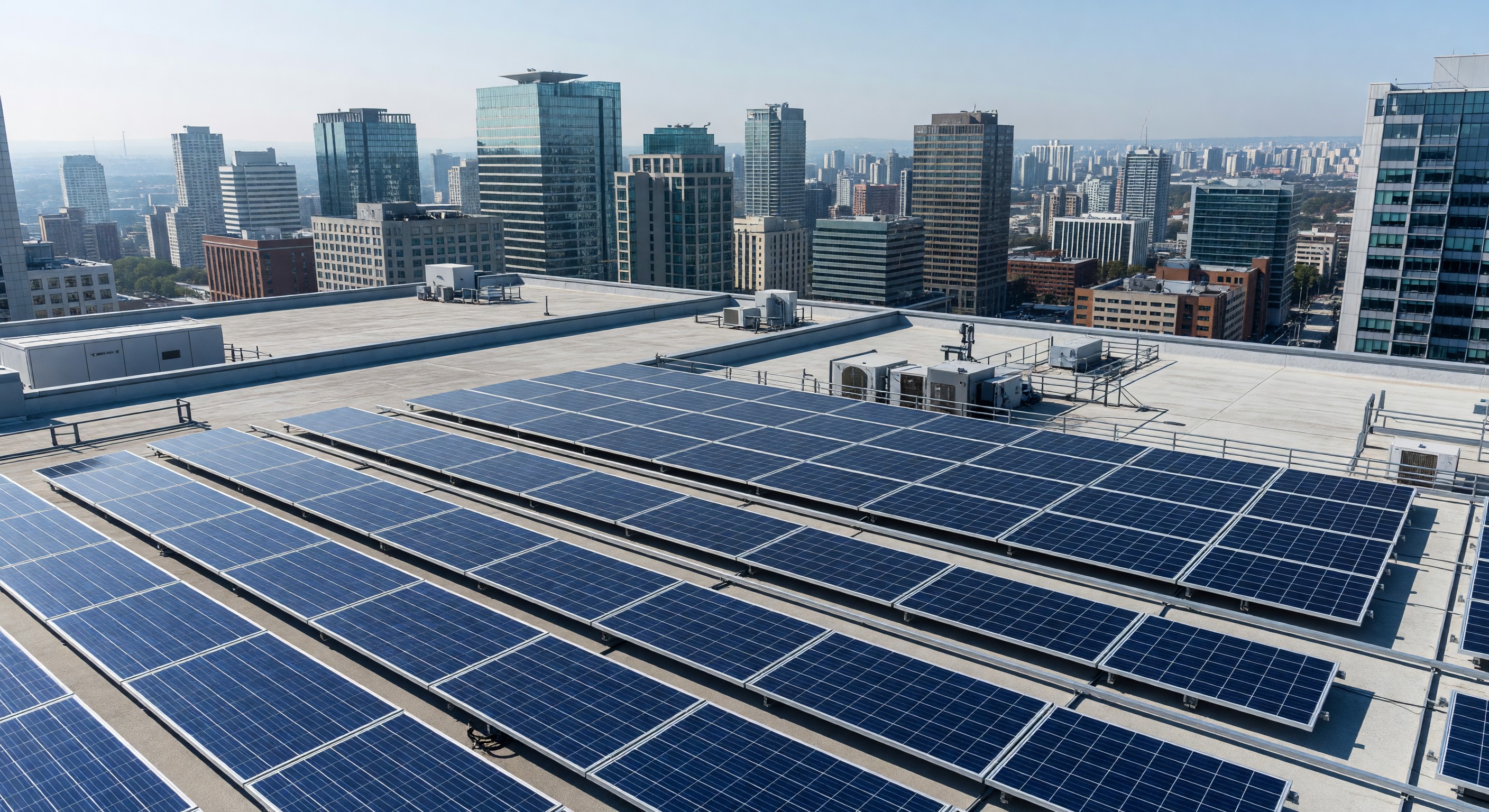
Roof or land area available: Rooftop solar requires adequate unobstructed roof area. Mechanical equipment, cooling towers, exhaust fans, and skylights reduce usable area. A standard commercial panel occupies approximately 20 square feet; accounting for maintenance access spacing, a usable roof delivers roughly 10–12 watts of solar capacity per square foot. A 10,000 square foot flat roof might support a 80–120 kW rooftop system.
Roof condition and age: Solar panels are typically installed on a 25-year production warranty; roof warranties run 15–25 years. Installing solar on a roof that will need replacement in 5–7 years means either removing the system for reroofing (costly) or integrating reroofing and solar installation into a single project. Roofs with 15+ years of remaining useful life are ideal candidates; assess and reroof before solar if necessary.
Solar resource (peak sun hours): The solar resource at your location determines how much energy a given system size will produce. Peak sun hours (PSH) range from approximately 3.5 in the Pacific Northwest and New England to 6.5+ in the Southwest. A 100 kW system in Phoenix generates roughly 50% more annual electricity than the same system in Seattle. NREL’s PVWatts calculator provides free production estimates for any US location.
Electrical system capacity: Solar output feeds into the hotel’s electrical system at specific connection points. The utility meter, main switchgear, and distribution panels must be compatible with the proposed connection. Larger systems may require utility-grade interconnection studies and equipment upgrades.
Utility interconnection and net metering: Solar economics depend significantly on the local utility’s interconnection process and net metering policy. Net metering allows solar-producing properties to “bank” excess electricity generation as utility credits, dramatically improving economics for daytime-producing systems. States and utilities vary significantly in net metering generosity — research your specific utility’s current policy before finalizing financial projections.
System Design Basics
Solar systems for hotel applications are almost universally grid-tied — connected to the utility grid to use grid power when solar production is insufficient (nights, cloudy days) and to export excess solar production when the hotel is producing more than it consumes.
Panels: Modern commercial solar panels (monocrystalline silicon) range from 380–550W per panel, with efficiency ratings of 20–22%. Panel warranties cover 25–30 years of production at 80–90% of rated output — a relatively reliable durability specification.
Inverters: String inverters convert DC panel output to AC electricity compatible with the hotel’s electrical system. Microinverters (one per panel) provide panel-level optimization and monitoring but cost more. String inverters with optimizers (one optimizer per panel, shared string inverter) are the dominant configuration for commercial installations.
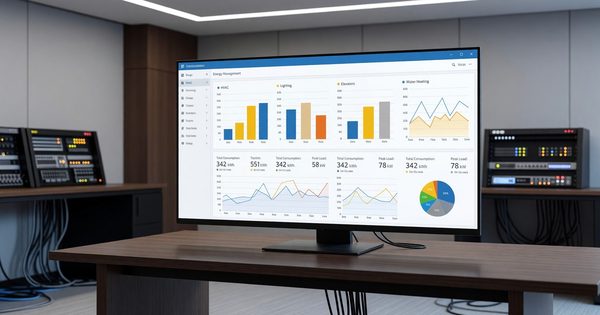
Monitoring: Commercial solar installations include production monitoring systems that track real-time and historical output, flag underperforming panels, and integrate with building management systems. Review monitoring data monthly — underproducing panels (due to soiling, shading, or inverter issues) reduce system output without obvious visible symptoms.
Financing Structures
Hotel solar installations are financed through several common structures:
Direct purchase (cash or debt): The hotel owns the system outright and captures the full federal tax credit (ITC) and MACRS depreciation benefit. For tax-paying entities, direct ownership typically provides the best long-term economics. The ITC under IRA is 30% through 2032.
Power Purchase Agreement (PPA): A solar developer installs, owns, and maintains the system at no upfront cost to the hotel. The hotel commits to purchasing the solar electricity generated at a fixed rate (typically below current utility rates) for a term of 15–25 years. The developer captures the tax benefits. Hotels that cannot effectively use tax credits (tax-exempt entities, loss-position properties) benefit from the PPA structure.
Solar lease: Similar to a PPA but structured as a fixed monthly payment rather than per-kWh. Provides budget predictability but typically offers slightly worse economics than PPAs.
PACE financing: Property Assessed Clean Energy financing allows solar investment to be repaid through property tax assessments — effectively long-term, off-balance-sheet debt tied to the real property rather than the hotel operator. Available in many states; transferable to new owner if the property is sold. Approval process is more complex than direct financing.
Battery Storage Integration
Battery energy storage systems (BESS) paired with hotel solar installations provide several additional value streams:
Demand charge reduction: Many commercial electricity tariffs include demand charges based on peak consumption in a billing period. Batteries can discharge during high-consumption periods (breakfast service, hotel check-in rush) to reduce the measured peak and lower demand charges. In markets with high demand charges ($15–$30/kW-month), demand charge reduction alone can justify battery investment.
Grid outage resilience: Grid-tied solar systems automatically shut down during grid outages (to protect utility workers). Batteries paired with solar and properly configured inverters enable continued operation during outages — powering critical loads (emergency lighting, communication systems, limited HVAC) from stored solar energy.
Time-of-use optimization: In markets with time-of-use utility rates (where electricity costs more during peak demand hours), batteries can store solar-generated electricity and discharge it during high-cost periods rather than importing expensive grid power.
Installation Planning for Hotel Operations
Solar installation is a significant construction project that requires careful coordination with hotel operations:
- Roof access: Crane lifts for panel delivery, workers, and equipment on the roof for 2–8 weeks depending on system size
- Electrical work: Panel connections in main electrical room, likely requiring temporary utility shutdown (planned outage of several hours)
- Noise and debris: Construction activity on the roof above occupied guest floors should be scheduled during low-occupancy periods and daytime hours
A pre-installation meeting with the solar contractor to review the hotel’s operational constraints — check-in times, event schedule, quiet hours — will produce a construction phasing plan that minimizes guest impact.
Performance Monitoring and Verification
After installation, verify actual performance against projected output:
- Year 1 baseline: Compare actual annual kWh produced against the pre-installation production estimate. Systems should produce within 5–10% of estimate in similar weather conditions.
- Monthly monitoring: Review dashboard data monthly for underperforming panels or inverter issues. Most monitoring platforms send automated alerts for production anomalies.
- Soiling: Panel soiling (dust, pollen, bird droppings) reduces output. In many climates, periodic washing is warranted — annual cleaning is standard; quarterly in dusty or high-pollen markets.
Frequently Asked Questions
What is the typical payback period for hotel rooftop solar? At current (2024) installation costs and incentive levels, payback periods for direct-purchase hotel solar installations range from 5–10 years in most markets. High-electricity-rate markets (Northeast, California, Hawaii) achieve paybacks closer to 5–7 years; lower-rate markets see 8–12 years. PPA and lease structures offer no upfront cost and immediate positive cash flow but lower long-term value than ownership.
Can solar fully power a hotel? Rarely — hotel electricity consumption typically requires system sizes that exceed available roof or parking canopy area. A well-designed hotel solar installation might offset 15–40% of annual electricity consumption, depending on available area and local solar resource. The goal is meaningful offset and fixed-cost generation, not complete energy independence (which would require battery storage of impractical scale).
What happens to solar performance in cloudy climates? Solar panels generate electricity in diffuse light conditions, not just direct sunlight. The production reduction in cloudy climates versus clear climates is captured in the peak sun hours metric — a Seattle installation produces roughly 60% of what a comparable system in Phoenix produces annually. Solar remains financially viable in most US climates; the payback period is longer in lower-resource areas but the ITC and net metering economics can still support positive NPV projects.
Do solar panels require much maintenance? Solar panels have no moving parts and very low maintenance requirements. Annual inspection of mounting hardware and electrical connections, periodic cleaning in soiling-prone environments, and inverter monitoring are the primary maintenance tasks. Most panel manufacturers and installers offer monitoring and maintenance agreements for $500–$2,000/year for commercial hotel systems.
Further Reading from Authoritative Sources
- DOE hotel solar energy feasibility and renewable energy resources — The DOE Buildings program provides solar energy feasibility tools including NREL PVWatts, federal incentive program guidance including IRA ITC provisions, battery storage integration resources, and renewable energy performance standards applicable to hotel solar project evaluation, financing, and performance monitoring.
- USGBC LEED hotel solar energy and renewable energy credit standards — USGBC provides LEED O+M credit standards for on-site renewable energy generation, solar installation performance verification requirements, and sustainability certification frameworks applicable to hotel solar adoption decisions and the sustainability positioning value of renewable energy investments.